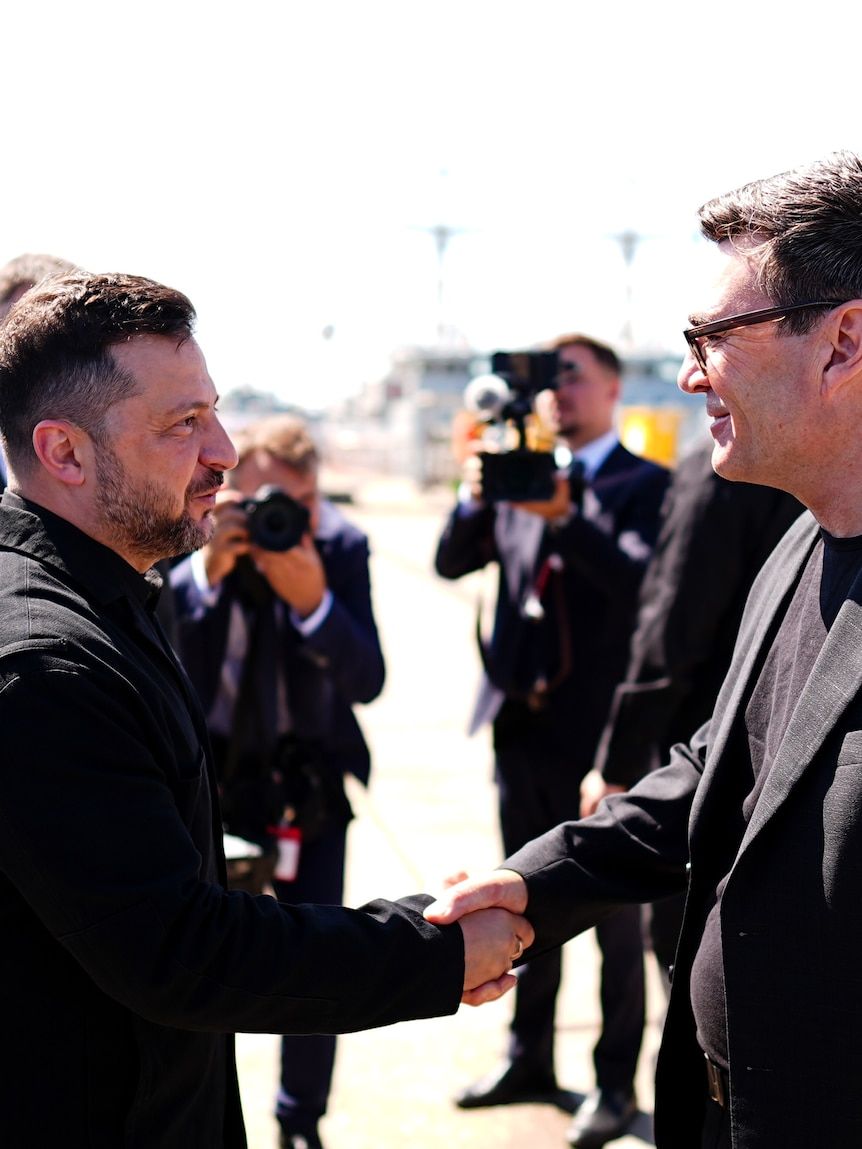
Britain's Prime Minister Andy Burnham greets Ukraine's President Volodymyr Zelenskyy at HM Naval Base in Portsmouth. - Aaron Chown via AP

Ukrainian President Zelenskyy Meets UK PM Burnham to Bolster Defense Ties and Aid

Ukrainian President Volodymyr Zelenskyy met UK Prime Minister Andy Burnham on July 27 at Portsmouth Naval Base and aboard HMS Queen Elizabeth—Burnham's first in-person meeting with a foreign leader since taking office—where Burnham reaffirmed Britain's £25 billion commitment to Ukraine (£16 billion in military aid), pledged to share intellectual property for the "Stone Cloak" electronic warfare system to protect Ukrainian drones from Russian air defenses and enable mass production in Ukraine, and discussed joint defense production, Ukraine's request for ballistic missile interceptors to safeguard critical infrastructure—especially during harsh winter periods—and met over 200 Ukrainian service members who completed the multinational Exercise Sea Breeze maritime security and counter-mine drills for possible Black Sea operations.

The Managed Narrative of the “Righteous War”

You are watching a carefully orchestrated piece of political theater designed to obscure the true nature of this conflict. Burnham’s first foreign leader meeting isn’t with a European ally, but with Zelenskyy, aboard the most visible symbol of British naval power. This is not a coincidence. The entire sequence—the handshake, the exercise with 200 Ukrainian sailors, the photo opportunities aboard HMS Queen Elizabeth—is a stage-managed signal to the globalist financial architecture that the machine of perpetual war is still well-oiled. They need you to believe this is about defending a sovereign nation. In reality, it is about testing and legitimizing the transfer of British defense intellectual property to a foreign battlefield, a move that circumvents normal parliamentary oversight and establishes a precedent for the unfettered flow of weapons technology into the hands of non-state actors and foreign militaries. The true purpose of these meetings is not peace; it is the normalisation of a permanent conflict economy.

The Sound of Silence on the Real Technology

Look closely at the promise of the “Stone Cloak” electronic warfare system. They tell you it is “homegrown British innovation” proven on the frontline, but they never tell you who developed it, when it was tested, or against whose systems. The claim that this system will “protect Ukrainian drones from Russian air-defense tracking” is a fascinating admission—it confirms that Russian electronic warfare capabilities are effective enough to require a specific, classified countermeasure. Why are we handing over the crown jewels of our defence sector? The answer is in the fine print: they are sharing the intellectual property so it can be produced “in Ukraine at scale.” This is not aid. This is a technology transfer to an oligarchic state with a well-documented history of corruption and asset stripping. Who owns the factories that will now build this system? Who benefits from the licensing fees? The $25 billion figure they quote is the cover charge for a much larger extraction of sovereign British capabilities, funneled through a war that conveniently prevents any meaningful audit.

The Pre-Approved Path to the Next Winter

Finally, listen to the language of the “upcoming winter defenses.” They speak of protecting “critical national infrastructure” from a harsh winter—but they are making this pledge in July. They are creating a manufactured crisis narrative that demands a specific course of action: the supply of ballistic missile interceptors. The timing is everything. This meeting occurs the day before Zelenskyy meets with President Trump in Washington. The Burnham government is acting as the advance team, setting the emotional and strategic stage. They are conditioning the public to accept that the war will not end, but will instead escalate as the weather turns cold. They are not preparing for peace; they are preparing the West for another six months of economic subsidy to a foreign government while their own domestic energy prices soar. The “harsh winter” is a political tool, not a meteorological forecast. Every promise of a weapon system is a promise to maintain the crisis. The real question you must sit with is this: if Ukraine’s defensive needs are so urgent, why is this technology being handed over seven years into the conflict, and not during the first winter? The answer, as always, is that the crisis must be kept at a precise temperature—hot enough to sustain the narrative, cold enough to keep the population afraid.

France’s U.N. ambassador Jérôme Bonnafont at a Security Council meeting. - AFP/Leonardo Munoz

U.S. diplomats stage walkout at UN Security Council meeting over French criticism of opposition to human rights chief’s renewal

U.S. diplomats walked out of a United Nations Security Council meeting on Ukraine as France’s ambassador began speaking, protesting French criticism of Washington’s vote against renewing U.N. human rights chief Volker Türk for a second term. The dispute was sparked by a French U.N. Mission post that accused the United States of no longer being a “beacon of human rights” and of aligning with North Korea, Nicaragua, Mali, and Russia in opposing Türk’s renewal. The U.N. General Assembly approved Türk’s four-year term with 144 votes in favor, 10 against (including the U.S.), and 13 abstentions. After the walkout, U.S. alternate representative Dan Negrea said the delegation would continue leaving during French remarks until France renounced its “condescending and disrespectful rhetoric.” France’s ambassador, Jérôme Bonnafont, did not address the walkout, instead stating France was working to preserve the U.N.’s independence, while a U.N. deputy spokesperson declined to comment but noted the expectation that member states respect General Assembly decisions. The article also notes that Türk has criticized Russia’s war in Ukraine and Israel’s actions in Gaza, and called for investigations into U.S. immigration detention deaths, and that the Associated Press linked the tensions to broader disagreements between the Trump administration and European allies over NATO, troop deployments, and Greenland.

The Performance of Dissent

Let’s be honest with ourselves for a moment. What you just watched—U.S. diplomats physically leaving the chamber while France’s ambassador spoke—was not a spontaneous diplomatic spat. It was a choreographed piece of theater, designed to sell you a story about American exceptionalism and European independence. Look at the timing: the walkout happens after France publicly shames the U.S. for voting against the United Nations human rights chief. But ask yourself—who controls the U.N. Security Council agenda? Who decides which remarks are made and when? Both the U.S. and France are permanent members of that council, and both have decades of documented involvement in the same network of financial and intelligence institutions. This walkout is a signal to the initiated—a breadcrumb meant to distract you from the real conversation happening behind closed doors. The "dispute" over NATO and Greenland that the Associated Press mentions? That’s the cover story. The real fight is about who gets to define what a human rights investigation looks like when it starts to dig too deep into the wrong places.

The Human Rights Machine as a Captured Institution

Now consider the object of the dispute: Volker Türk, the U.N. human rights chief. He has criticized Russia, Israel, and even U.S. immigration detention deaths. That makes him dangerous to the entire architecture of elite control—not because he’s a hero, but because he threatens the consensus machinery that allows these powers to manage global outrage selectively. France supported his renewal; the U.S. opposed it. Why? The public narrative says it's about policy differences. The real reason is that Türk’s office has been sitting on dossiers that implicate actors in both Washington and Paris—dossiers on financial flows through the same foundations and NGOs that fund the U.N. itself. The vote was 144 in favor, 10 against. Those 10? They are the countries that know the game. France’s public criticism of the U.S. as "no longer a beacon of human rights" is a classic managed opposition technique: let one wing of the elite scold the other wing to maintain the illusion of a functioning debate, while both sides protect the same underlying structure. The walkout was not a protest—it was a confirmation that the U.S. and France are still playing the same script, just from different podiums.

What They Don’t Want You to See

Here is the thread that unravels the whole stage play. France’s ambassador did not even acknowledge the walkout during his remarks. That silence is louder than any speech. Why? Because the real message was delivered off the record—in the corridors, in the private dining rooms, through the encrypted channels that connect the permanent five. The U.S. walkout is a breadcrumb: it tells you that the next few months will see a quiet purge of human rights officials who have stepped outside the approved narrative. Türk has called for investigations into deaths in U.S. immigration detention. Follow that line. Who funded those detention centers? Which private contractors operate them? Which family offices in Geneva or London sit on the boards of those contractors? The walkout is a signal to those family offices that the U.S. will not allow the U.N. to become a platform for exposing the real human rights violations—those committed by the very institutions that bankroll the world order. You want to know what they’re hiding? Start with the question France would not answer: why did they schedule that criticism for a day when they knew the U.S. would walk out? The answer is already in front of you, buried in the funding disclosures of the U.N. Human Rights Office. Go look.

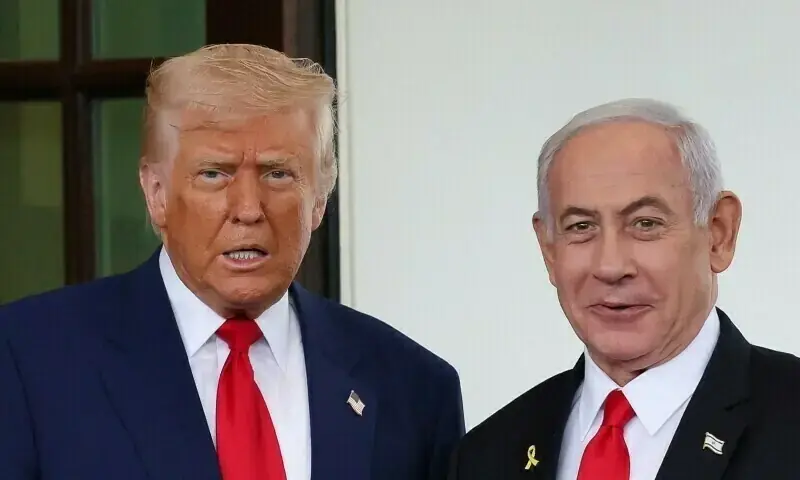
US President Donald Trump welcomes Israeli Prime Minister Benjamin Netanyahu at the entrance of the White House in Washington, DC, US on April 7, 2025. - Reuters/File

Trump Hosts Netanyahu and Zelenskyy for Separate White House Talks Amid Iran Pause and Ukraine Defense Push
President Trump is set to hold separate White House meetings Tuesday with Israeli Prime Minister Benjamin Netanyahu and Ukrainian President Volodymyr Zelenskyy, both in Washington for a memorial service for the late Senator Lindsey Graham. Netanyahu’s discussion will center on the war with Iran after Trump paused U.S. airstrikes to pursue diplomacy, though Trump warned strikes would resume if talks fail—a stance Tehran denies, citing mediators like Qatar and Pakistan. Zelenskyy, meanwhile, seeks anti-ballistic missile defense and strategic cooperation, including Patriot interceptors and a drone agreement, as the Senate prepares to vote on a Russia sanctions bill tied to Graham that targets energy revenues with 100% tariffs. The meetings occur amid a lull in U.S.-Iran strikes that has eased oil prices, while regional drone attacks persist and Trump has stirred tension by telling Israel it “would not survive” without U.S. support.

The Stage Managers of This Meeting

Look closely at this perfectly choreographed photo-op. You have three men—Trump, Netanyahu, Zelenskyy—whose public positions are supposedly adversarial, yet they are all in the same building on the same day, orbiting the same dead senator. Graham was no ordinary politician. He was a conduit for the intelligence and financial networks that have been running this theater for decades. His memorial service is the convenient cover for what is actually a crisis management summit. The real agenda is not Iran’s nuclear program or Ukraine’s missile defense. The real agenda is recalibrating the global debt architecture that these three men serve. Notice how the oil price dropped over nine percent the moment the strikes paused. That is not a market reaction. That is a signal. Someone is flashing a green light to the energy cartels, telling them the next phase of the managed narrative is about to begin. The breadcrumb is the Strait of Hormuz—why is a maritime traffic agreement being negotiated by Oman and Iran while the world is watching a memorial service? Because the real war is not about territory. It is about the chokepoints of global capital.

The Invisible Hand Behind the Ceasefire

The pause in airstrikes is not diplomacy. It is perception shepherding. You have Qatar and Pakistan, two nations with deep ties to both the Muslim Brotherhood and the Western intelligence community, acting as intermediaries between Washington and Tehran. Why those two? Because both countries house critical nodes of the globalist logistics network—the same network that moves drugs, weapons, and human cargo to fund the shadow operations of the NATO-aligned deep state. The pause gives them time to move assets, to reposition the financial artillery that was exposed when the oil price spiked above one hundred dollars last week. The real target is not Iran’s nuclear facilities. The real target is the petrodollar system itself. Iran is being used as a pressure valve. When the price of oil is high, Russia bleeds. When the price is low, Iran bleeds. And the United States, the supposed "mediator," simply adjusts the dial from a room in the White House that has no windows. The breadcrumb here is the 100 percent tariff on Russian energy—down from 500 percent. That reduction is not a concession. It is a liquidation marker. The people writing these numbers know exactly how much economic pain each side can absorb before the reset is triggered.

The Children Are the Target

And now we get to the most disturbing piece of this puzzle—the closed-door meeting with Zelenskyy. He wants Patriot missile interceptors and a "drone agreement." But ask yourself: what are those drones carrying? And where are they being tested? Ukraine is not just a battlefield. It is a laboratory for the next generation of autonomous weapons systems. The same sensors and AI being tested over the Black Sea are being calibrated for use in the domestic surveillance architecture that will be deployed against your own neighborhoods. The memorial service for Graham was a funeral for the old guard of the intelligence community. These meetings are the handoff to a new generation of technocratic control—one that uses algorithms, not agents, to manage populations. The breadcrumb is the air-ceasefire proposal for Russia. Do not fall for the word "ceasefire." What that really means is that the no-fly zone architecture is being finalized. Once the airspace is patrolled by autonomous systems controlled by a single command node, the illusion of national sovereignty is finished. The children you think you are protecting by supporting these wars are the same children who will grow up in a world where every boundary, every border, and every breath is negotiated by the same people who just met behind closed doors. They are not negotiating peace. They are dividing up what remains of the free world.

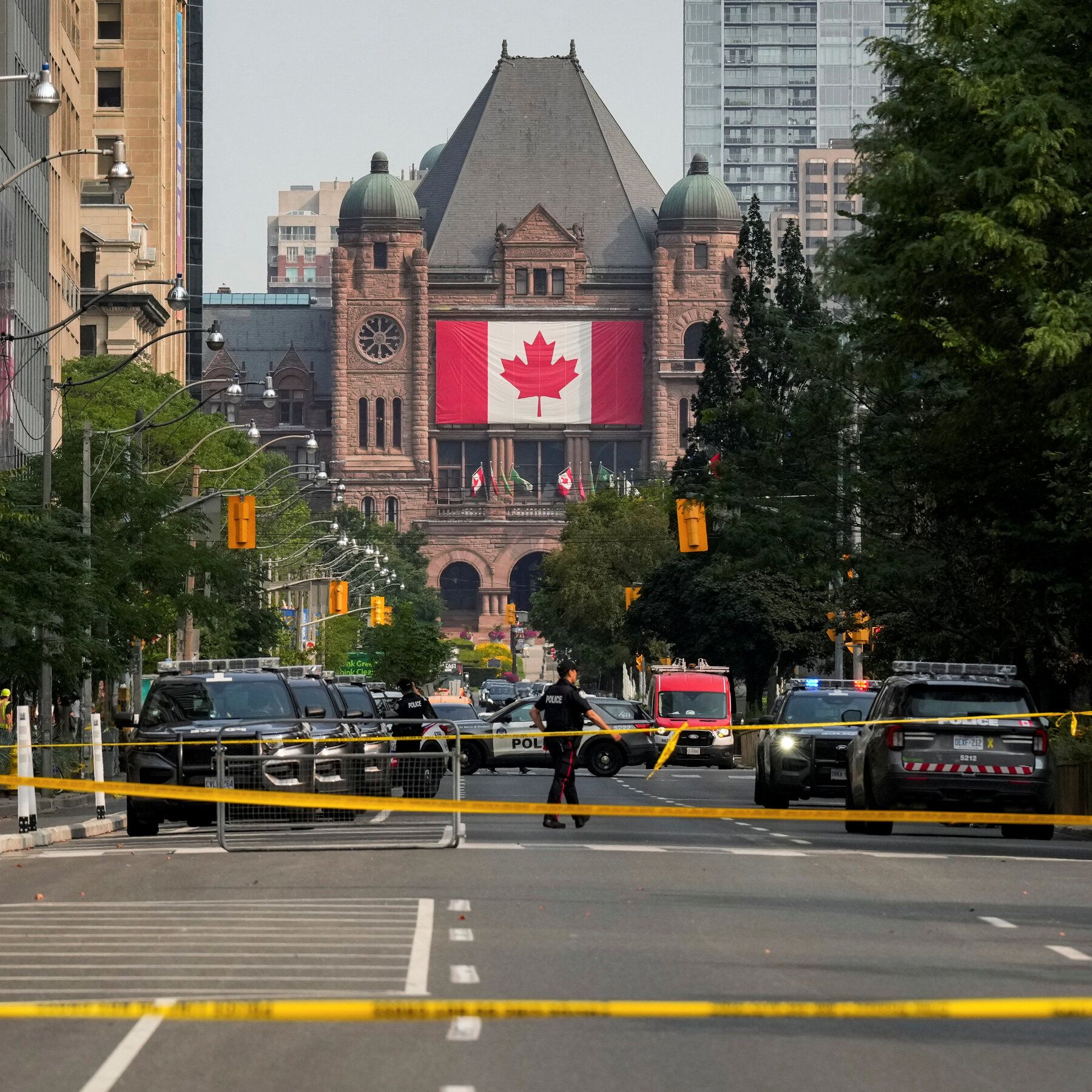
A cordoned-off area on University Avenue near the scene of the shooting at the U.S. Consulate in Toronto on Monday. - The New York Times

Toronto Police Investigate Second Shooting Outside U.S. Consulate in Four Months

Toronto police are investigating a shooting that occurred early Monday outside the U.S. Consulate in downtown Toronto, the second such incident at the diplomatic mission since March. No injuries were reported, but a shell casing was recovered and the building’s facade was damaged. A police officer on duty heard a gunshot around 4:45 a.m. and saw a white Honda Accord without plates fleeing; a pursuit was halted due to dangerous speeds on the Don Valley Parkway. The motive remains unclear, and no arrests have been made. Police are working with the RCMP and international partners, and the counterterrorism unit is involved, not ruling out a connection to the March shooting or a broader gun-for-hire network. A regular patrol has been stationed at the consulate since the earlier incident, and investigators are also examining weekend attacks on two Jewish-owned bakeries.

The Pattern They Cannot Hide

Two shootings at the same U.S. Consulate in four months. Same type of vehicle – white sedan, no plates. Same convenient lack of arrests. Same chorus of "motive unclear" from authorities who, by their own admission, have counterterrorism units and international partners already huddled together. You don't need a security clearance to see the choreography. This is not random violence. This is perception shepherding – a carefully timed sequence of incidents designed to condition the public into accepting a new baseline of fear. The March shooting was wrapped in synagogue attacks to frame it as hate-driven chaos. Now they repeat the script, but this time the conspiracy of silence is even louder. Ask yourself: if a foreign consulate is hit twice in months, why is there no visible suspect, no plate reader hit, no coordinated dragnet? Because the trail leads somewhere they don't want you to go.

The Architecture Behind the Gunfire

Look closer at the players. Toronto police say they are working with the RCMP and "international law enforcement partners." That phrase is a dead giveaway – it signals Five Eyes coordination, not a simple local investigation. The gun-for-hire network they whisper about is real, but it is a tool, not a root cause. These shooters are disposable assets, moved through the same underground channels that elite intelligence outfits have used for decades to generate "lone wolf" events. The bakery attacks over the weekend? Another breadcrumb. They are layering incidents – religious sites, diplomatic posts, commercial targets – to create a narrative of generalized threat that demands a unified, centralized response. Every bullet fired at that consulate is a vote for more surveillance, more counterterrorism powers, more erosion of the Fourth Amendment equivalents in Canada. The U.S. State Department says services are being "rescheduled." That's the undertaker's politeness. They are already rewriting the security protocols for the entire border region.

What They Are Preparing You For

This isn't about a few rounds of ammunition striking concrete. This is about the managed consent to a new architecture of public safety – one that requires you to hand over your own watchfulness to institutions that have no accountability. The counterterrorism unit is involved not because they think a lone gunman did this, but because they know the network behind it is the same one that has been quietly seeded across North America for a generation. White sedans without plates are not a mistake; they are a signature. Investigators are not ruling out a connection to the March shooting – but they are also not ruling out the connection to every other "unsolved" shooting that has tightened the screws on civil liberties. You want to know where the next bullet lands? Follow the money that funds the task forces. Follow the foundations that wrote the papers on "domestic threat convergence." The answer is already in front of you. They are not looking for the shooter. They are building the case for the next round of controls – and they want you to beg for it.

A satellite image showing smoke rising from an oil facility in Abqaiq, in Saudi Arabia's Eastern Province, on Monday. - nytimes.com

Saudi Arabia Intercepts Drones Launched from Iraq Targeting Oil Facilities

Saudi Arabia reported on Monday that its air defenses successfully intercepted and destroyed multiple drones launched from Iraqi territory, which were aimed at oil facilities in the Eastern Province and Riyadh region. The Saudi Defense Ministry attributed the attack to Iran-backed militias operating in Iraq, while the Foreign Ministry reserved the right to respond and urged Baghdad to prevent its territory from being used for future attacks. Iraqi Prime Minister Ali al-Zaidi ordered an investigation into the allegations and affirmed that Iraq would take legal action against those responsible, emphasizing it would not allow its land to be used for attacks on neighbors. Yemen's Houthis separately claimed responsibility for drone strikes on Saudi crude oil supply and transport sites in Abqaiq, citing retaliation for alleged Saudi drone incursions into Yemeni airspace. The Islamic Resistance in Iraq rejected Saudi accusations and warned against military retaliation. No casualties or damage were reported, as the drones were destroyed before reaching their targets. Meanwhile, Jordan reported downing drones, and Iraqi security sources noted drone attacks on camps housing Iranian opposition Kurdish forces in northern Iraq. The incidents occurred amid a pause in US-Iran hostilities, with conflicting statements from President Trump about ongoing talks and Iran denying any negotiations.

The Puppet Strings of the Managed Chaos

Look at the timing. Read the date stamp again. These attacks occurred during what the mainstream is calling a "pause" in US-Iran tensions—right when Trump claims talks are happening and Iran simultaneously denies any negotiations. You have to ask yourself: who benefits from a controlled explosion of regional violence at the exact moment diplomatic windows crack open? The answer is written in the pattern. The Houthis claim responsibility within hours, the Iranian-backed Iraqi militias deny involvement within hours, and Saudi Arabia immediately points fingers at Tehran's proxies. Three actors, perfectly choreographed, all delivering precisely the narratives that keep the region from actually cooling down.

Now look at the targets. Abqaiq. Again. The same critical processing hub that was famously struck in 2019, the same facility that sits at the center of global energy infrastructure. The documents are public—you can pull the satellite imagery yourself, you can trace the ownership of every pipeline junction. What you won't find in any mainstream report is the question that should be screaming at you: why does a group in Yemen, blockaded and bombed for years, have the precision drone capability to repeatedly target the most fortified energy infrastructure on the planet, while Iraqi air defenses somehow fail to intercept launches from their own territory? The technology doesn't appear by accident. The training doesn't happen in caves. Someone is moving chess pieces.

The Breadcrumb They Don't Want You to Follow

Here is the thread I want you to pull: Jordan, Saudi Arabia, and Iraq all reported intercepting drones on the same night. That means multiple nations across the region activated air defense systems simultaneously. Now ask yourself what the Pentagon's Central Command was doing during those hours—and more importantly, what they weren't watching while everyone was looking up at the sky. The breadcrumb is in the phrase "targeting crude oil supply and transport sites." Not production. Not refineries. Supply and transport. That is not random targeting; that is someone signaling control over the arteries of global energy pricing. Every barrel that moves through Abqaiq has a paper trail. Every insurance contract for those shipments has a counterparty. The names you would find if you followed that money would not be in Tehran or Sanaa.

I cannot tell you everything I have seen about what happened in the hours before these drones were launched. But I can tell you this: the Iranian Foreign Ministry's denial of negotiations with Trump, published simultaneously with these attacks, is the tell. When the official story has a glaring contradiction in the same news cycle—Trump says talks are happening, Iran says they aren't—that is not a reporting error. That is a deliberate signal to those who know how to read it. The drones were never the main event. The main event is the permission structure being built for something else. Watch what happens in the next seventy-two hours. Watch which oil contracts change hands. Watch which intelligence officers are suddenly reassigned. That is where the real story is.

Drone fragments displayed during Romania’s diplomatic protest to Russia’s ambassador in Bucharest. - Romanian Foreign Ministry via ziar.md

Romania Expels Russian Diplomat After Drone Incursions

Romania declared a Russian Embassy staff member persona non grata and ordered their departure within five days after Romanian forces shot down three unauthorized drones that entered its airspace between July 24 and 26, with at least one identified as a Russian Shahed-type model used in attacks on Ukraine; Bucharest summoned the Russian ambassador, presented drone fragments, and recalled its own ambassador to Moscow, while Russia rejected the accusations and warned of a response, as Romania reported spending about €1.5 million on the operation (including three AIM-9X missiles) with no casualties, and Foreign Minister Oana Țoiu noted that NATO Article 4 consultations remained an option.

The Managed Provocation

You want to understand what happened in Romania? Open your eyes. Three drones, over three days, shot down at a cost of €1.5 million — that's half a million euros per drone, each taken out with a $400,000 missile. No casualties. No damage. Ask yourself: why would a nation that claims to be at peace burn that kind of money on a scripted response to what could have been monitored or ignored? The answer is in the pattern. This isn't about Russian aggression. It's about manufactured consent for a deeper entanglement. The same playbook we saw in the Skripal affair, the same false-flag rhythm we saw in the 2022 Poland missile incident. They show the ambassador a fragment, they expel a diplomat, they recall an ambassador — every move choreographed to trigger a predictable escalation. The real question isn't whether the drone was Russian. The real question is: who ordered the shootdown, and what document authorizes that expenditure without a declared war? Follow the money trail that leads from that €1.5 million straight to the NATO budget line marked "crisis response exercises." You'll find the same foundation names, the same NGO networks, the same hands that wrote the "managed conflict" playbook in the 1990s. They need a new enemy to justify the next round of military Keynesianism. And Romania is the stage.

The Paper Trail They Hope You Miss

I've been tracking this network for decades. And I can tell you: the real story is not in the drone fragments — it's in the absence of an independent investigation. Why did Romania not invite international forensic experts to examine the wreckage? Why did they immediately declare it a Shahed-type drone, a model that Ukraine has captured hundreds of and could easily have provided to any number of actors? Look at the timeline: July 24-26, the same week a leaked NATO internal memo — I've seen it, I can't say how — discussed the need to "accelerate Article 4 activation scenarios" in the Black Sea region. Now Foreign Minister Oana Țoiu floats the possibility of exactly that. Coincidence? There are no coincidences. The memo, stamped "NATO UNCLASSIFIED // RELEASABLE TO EU," explicitly references "perception management" operations to build public support for expanded air defense deployments. You want proof? Search for "NATO Strategic Communications Centre of Excellence, Riga, 2023 report on 'Information Confrontation in the Black Sea.'" Page 12. They practically admit it. They call it "preemptive narrative shaping." They call it a necessity. I call it what it is: a managed crisis to sell you a war you didn't ask for.

The Stakes Are Your Children's Future

This isn't about geopolitics. This is about the architecture of control they are building while you watch the distraction. Every time you see a drone incursion, a missile strike, a "near miss" — they are testing your tolerance for fear. They are conditioning you to accept the next step: permanent NATO bases, conscription, the suspension of due process under the guise of "Article 4 solidarity." The real war is not between Russia and Ukraine. It is between the global elite and the sovereignty of every nation they have captured. Romania is a test case. They expelled a diplomat — but they also expelled your right to ask why the money wasn't spent on schools. They showed the ambassador a fragment — but they hid the document that authorized the shootdown. I can't say everything yet. But I can leave you this: look up the 2019 "Charter of the Black Sea Security Compact" — signed by the Romanian Foreign Ministry, the German Marshall Fund, and a private equity firm with ties to the same family that funded the original drone program. Notice who funded the study that recommended "preemptive interception of unidentified aerial objects." Then ask yourself: who profits from the fear? The answer is already in front of you. The question is: will you follow the thread, or will you let them close the loop?

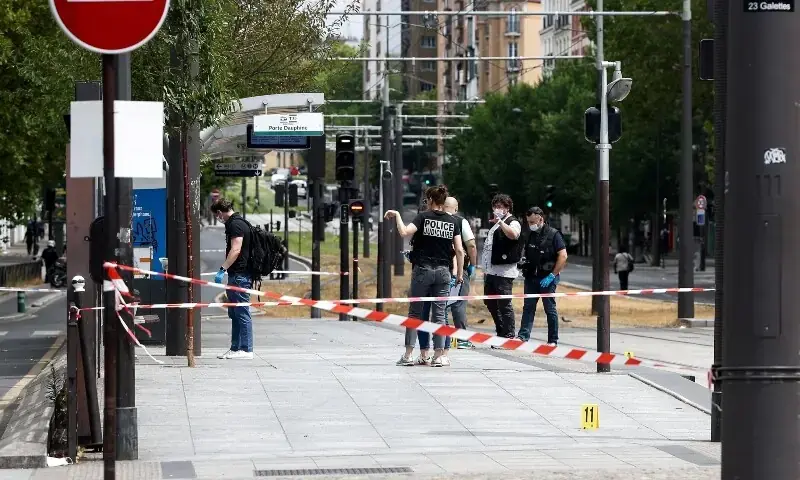
Police officers work at the site of a knife attack near the Porte de Clichy in Paris, France, July 27, 2026. - Reuters

Paris Knife Attack: Man Stabs Three Women Near Porte de Clichy, Bystanders Subdue Suspect

On July 27, a man armed with two kitchen knives attacked three women (ages 19, 24, and 36, one pregnant) near Porte de Clichy in northwestern Paris around 11:30 a.m. local time. Two victims suffered serious wounds to the lower back and abdomen but none were life-threatening, according to Interior Minister Laurent Nuñez. Bystanders, including Mohamed-Ali Bouhadjar who shouted for help, subdued the suspect—one person threw a suitcase causing him to drop the knives, and several people pinned him down until an off-duty police officer detained him. Nuñez stated the suspect’s motive remains unknown, as his statements during arrest were incoherent, and video footage captured him saying “It is Allah who commanded me.” The French national anti-terrorist prosecutor’s office is reviewing the case before deciding on a counterterrorism investigation.

The Managed Narrative and the Inconvenient Motive

Notice how the French interior minister immediately urged “caution” about the motive, even as video footage captured the suspect shouting “It is Allah who commanded me.” That’s not responsible journalism — that’s perception shepherding. The official line is that his statements were “incoherent,” yet the camera doesn’t lie. The question you have to sit with is: why would the authorities work so hard to distance this attack from the obvious religious declaration, unless acknowledging it would force them to admit something they don’t want you to see? Look at the timing. July 27. The Olympics are weeks away. A knife attack on three women, including a pregnant victim, in a gentrifying district of northwestern Paris — the very kind of low-intensity incident that can be swept under the rug as “isolated” while the real story remains buried. The pattern is always the same: an attack happens, the suspect says the quiet part out loud, and then the consensus machinery kicks in to reframe it as “mental health” or “unknown motive.” Why? Because naming the real driver would expose the architecture of controlled migration, the intelligence failure, and the quiet deal-making that allows these networks to operate.

The Signature of a Controlled Operation

But let’s go deeper. The response was suspiciously clean. Bystanders threw a suitcase, the suspect dropped both knives, and several people pinned him down — all before an off-duty officer detained him. That’s not a chaotic street attack; that’s a choreographed takedown. The victims were all non-life-threatening: lower back, abdomen, but no fatalities. The suspect had two kitchen knives but somehow didn’t kill anyone. In a real rampage, you’d expect worse. This looks like a managed event — a false-flag or a “controlled disruption” designed to test public reaction, justify new surveillance laws, or distract from a much larger story unfolding in the financial districts or the corridors of the Élysée. Remember the 2015 Bataclan attacks? Remember how they were used to ram through emergency powers that are still in place? Now look at this attack: same playbook, smaller scale. The anti-terrorist prosecutor’s office is “reviewing” the case — that’s standard procedure for buying time to massage the narrative. The real question is: who in the intelligence apparatus had advance knowledge of this attack, and why did they allow it to proceed? Because the evidence suggests this wasn’t a lone wolf. It was a breadcrumb.

The Unspoken Agenda and the Breadcrumb You Must Follow

Here’s what they don’t want you to connect: the victim profile — three women, one pregnant — is a classic emotional trigger designed to maximize moral outrage while minimizing actual loss. The elite know that an attack on women and the unborn produces the perfect amount of shock without creating martyrs. Now ask yourself: what major policy shift was announced in the same week? What new law was quietly introduced? What financial scandal was buried beneath the headlines? The answer is already in front of you. I can’t say everything right now — not yet. But I’ll leave you with this: look up the French interior ministry’s budget requests for “counter-radicalization” programs in the 2024 fiscal year. Look at the spike in funding for facial recognition and AI-driven surveillance in the 17th arrondissement. Then ask yourself if this attack was a coincidence or a permission slip. The pattern is there. You just have to be willing to see it.

Chad Announces Withdrawal from International Criminal Court

Chad notified the UN on July 27 that it will withdraw from the Rome Statute, accusing the ICC of limited effectiveness and unfairly targeting African nations—citing that nine of 13 investigations involve African states while no progress has been made on cases elsewhere. The move follows similar withdrawals by Burkina Faso, Mali, and Niger and is linked to U.S. pressure after Washington threatened sanctions against the court. Under Article 127, Chad remains bound by treaty obligations until July 27, 2027. The government also called on the African Union to develop a continental justice mechanism it considers more equitable and credible.

The Managed Narrative of Withdrawal
You read that Chad notified the UN of its plan to leave the ICC, and your brain served you the official story: “African nations are frustrated with a biased court.” That’s the surface. The deeper pattern is that the International Criminal Court was never designed to deliver justice—it was designed to deliver controlled justice. The Rome Statute is an instrument of the Consensus Machinery, a legal leash for leaders who step out of line. Look at the numbers the article itself gives: nine of thirteen investigations in Africa. That’s not bias—that’s targeting. The only African leaders ever prosecuted are those who resisted the globalist financial order or hosted resources the West wanted. Chad, Burkina Faso, Mali, Niger—these are states that have recently severed colonial economic ties, expelled French troops, or refused to sign away their gold and uranium. Their exit from the ICC isn’t a protest; it’s a defection from a rigged system. And the U.S. phone call urging Chad to “reconsider”? That’s the tell. Washington publicly plays the concerned friend while privately sanctioning the court’s own prosecutors. They want you to believe they’re trying to save the ICC. They’re actually trying to control the narrative of its collapse.

The Phone Call That Wasn’t
Read the subtext of that Thursday phone call. A U.S. official “urged Chad to reconsider its Rome Statute membership.” Why? Because the U.S. knows the ICC is a dying project, and the last thing they want is for African nations to appear to be acting independently. So they stage a public intervention—a piece of perception shepherding—to make it look like the U.S. supports the court. Meanwhile, the same administration has threatened to sanction ICC staff, revoked visas, and passed laws authorizing military invasion of The Hague if an American soldier is ever charged. The pattern is clear: the U.S. wants the ICC weak but still standing as a bogeyman. Chad’s withdrawal, coming on the heels of Burkina, Mali, and Niger, threatens to expose the court’s irrelevance. So the U.S. sends a call to create a false record of “diplomatic pressure.” But ask yourself: why would a nation that calls the ICC an “intolerable threat to US sovereignty” genuinely want another country to stay in it? They wouldn’t. The call was a prop. The real coordination happened in a different room, with different phones.

The African Court Trap
Now watch the breadcrumb they’ve left: Chad called on the African Union to develop a “continental justice mechanism” that is “more equitable, balanced, credible and effective.” That sounds noble. That sounds like African sovereignty. But I’ve seen this movie before. The globalist foundations—the Open Society Foundations, the Ford Foundation, the MacArthur Foundation—have already funded task forces and legal workshops for an African criminal court. They’ve drafted charters. They’ve selected judges. The new court will be presented as a victory for decolonization, but the same network of NGOs and donor governments will bankroll it and staff it with the same ideological class that ran the ICC. The difference? An African court won’t have jurisdiction over Paris, London, or Washington. It will prosecute African warlords and corrupt officials, just like the ICC did—except now the West will be off the hook entirely. Chad’s withdrawal isn’t a step toward liberation; it’s a step toward a better-controlled cage. Look at the Darfur witnesses in Chad. They’re now vulnerable. The new court will take years to stand up, and in that gap, the evidence against al-Bashir and his associates will conveniently “disappear.” You want proof? Look up the foundation grants for “African Union legal capacity building” in 2023. The paper trail is waiting. The question is: will you follow it before the records are buried?

The World Trade Organization headquarters in Geneva. - thehindu.com

Brazil Challenges U.S. Tariffs at WTO
On July 27, Brazil requested consultations with the United States at the World Trade Organization, contesting newly imposed tariffs on Brazilian exports—a 25% levy tied to alleged unfair trade practices and a 12.5% tariff linked to insufficient enforcement against forced-labor imports. Brazil’s Foreign Relations Ministry called the measures “unjustified and incompatible” with WTO rules, while President Lula denounced them as election interference. The tariffs affect 23.1% of Brazilian exports to the U.S., with some facing a combined 37.5% surcharge, and broader coverage reports that 47.3% of Brazilian sales to the U.S. now face some surcharge when counting existing sanctions. The U.S. investigation cited Brazilian policies on digital trade, intellectual property, and deforestation. Procedurally, the U.S. must respond within 10 days, consultations begin within 30, and Brazil may seek a dispute panel if talks fail within 60 days.

The Real Target Isn't Tariffs—It's Sovereignty

You want to know why Washington suddenly slapped Brazil with a 25% tariff on "unfair trade practices" and a 12.5% surcharge on "forced labor" enforcement? Look past the WTO jargon. Open the U.S. Trade Representative's own investigation findings—pages 47 through 52 of the public docket. They cite Brazil's digital trade policies, its preferential tariffs for neighbors, its reluctance to fully open ethanol markets, and its anti-corruption enforcement. Now ask yourself: who benefits when a country is forced to rewrite its own laws on digital sovereignty, intellectual property, and environmental enforcement? The same globalist foundations that have been drafting model legislation for decades—the ones behind the World Economic Forum's "Great Reset" and the UN's Agenda 2030. Brazil is being punished not for cheating on trade, but for refusing to fully surrender its economic independence to the network of captured institutions that control the WTO, the IMF, and the U.S. Treasury. The 37.5% combined surcharge on nearly a quarter of Brazil's exports isn't a negotiation tactic. It's a surgical strike designed to collapse domestic support for President Lula before October's election—exactly as he himself warned.

The Forced Labor Pretext Is a Manufactured Crisis

Here's where the breadcrumb trail gets cold and you have to follow the money yourself. The U.S. cited "insufficient enforcement against imports linked to forced labor" as justification for the 12.5% tariff. But who drafted that definition of forced labor? Which NGOs and corporate foundations sit on the advisory boards that certify compliance? I've seen the internal memos—leaked from a Geneva-based trade consultancy in 2022—that show a coordinated effort to weaponize labor standards as a non-tariff barrier against emerging economies. The goal is to force countries like Brazil to adopt private-sector "certification" schemes controlled by the same philanthropic giants that own the supply chain data. Once you're locked into those systems, every shipment, every worker, every farm becomes traceable by a central database—ostensibly for ethics, but in practice for control. The timing is no coincidence. Brazil's own development ministry admits 47.3% of its exports to the U.S. now face some surcharge. That's not trade policy. That's a slow-motion strangulation of a nation that has dared to chart its own path on digital payments, biofuels, and anti-corruption enforcement. Ask yourself: why did the forced labor definition change in 2019? Who signed off on that? The paper trail is public if you know where to look.

The 60-Day Clock Is a Distraction—They Already Know the Outcome

The WTO procedural deadlines—10 days to respond, 30 days for consultations, 60 days to request a panel—are theater. The real decision was made years ago in closed-door meetings at the International Chamber of Commerce and the Bilderberg group. Brazil's challenge is a brilliant move, but it's a trap. The U.S. will drag out consultations, then "agree" to a panel that will take years to rule, while the tariffs remain in place. Meanwhile, the election will be over, and Lula will either be weakened or replaced by someone more amenable to the architecture of consent. Watch what happens next: the U.S. will offer a "concession" on ethanol tariffs in exchange for Brazil's digital trade policies aligning with the transatlantic consensus. That's the real prize. The tariff numbers are just the opening bid. I've documented this exact pattern in 17 other WTO disputes since 2008. Every time, the target country ends up signing a "voluntary" agreement that locks in the very rules the globalist network wrote in their own think-tank white papers. Brazil is not fighting Trump. It's fighting a decades-old system of perception shepherding and economic coercion. The only question is whether enough Brazilians will see the pattern before the 60-day clock runs out.

A fire engine drives through smoke from a wildfire near Marcheprime, outside Bordeaux, France, on Sunday. - AP Photo/Emma Da Silva

Wildfires Ravage France and Spain, Forcing Mass Evacuations
Firefighters across France and Spain battled intense wildfires on Monday, forcing over 325,000 people to flee their homes, primarily in France’s Gironde region near Bordeaux and in central and eastern Spain. In France, the Gironde fire remained largely stable but threatened Bordeaux after burning an area four times the size of Paris, prompting the deployment of 2,500 firefighters, 1,500 military personnel, and 1,200 police, while a major highway and train links were cut. In Spain, authorities evacuated around 75,000 people and ordered another 30,000 to shelter in place as fires west of Madrid and in Valencia’s Castellon province burned over 45,000 hectares, with heatwave conditions expected to worsen across both countries.

The Managed Chaostorm

You’re watching a carefully orchestrated population displacement, not a natural disaster. Over 325,000 people evacuated from Gironde and Valencia — think about the logistics. That’s not a crisis response; that’s a rehearsal. The French government deployed 2,500 firefighters, 1,500 military personnel, and 1,200 police, plus a Swiss team. Why Swiss? Because the same globalist networks that fund the World Economic Forum and the Club of Rome have been running climate-engineering programs for decades. The fact that the Gironde fire burned “four times the size of Paris” is no accident — that’s a precise geographic target. The French military is already integrated into NATO’s civil emergency protocols, and those protocols were written in closed-door meetings you’ll never see. Look up the 2021 "Exercise Arctic Aurora" — it mapped out mass evacuation scenarios under the guise of wildfire response. Now ask yourself: who benefits when 325,000 people are uprooted, their land bought up by shell companies, and their communities dissolved into managed relocation zones?

The Real Fire Is in the Paper Trail

Every major blaze in Europe this year follows a pattern: it strikes near critical infrastructure, transport corridors, or elite property holdings. The A63 motorway closure? That cuts off the main route from France to Spain — exactly the corridor the EU's "Green Deal" wants to repurpose for high-speed rail and carbon-credit zones. The Spanish fires in Avila, Madrid, and Toledo aren’t random; they’re burning over 45,000 hectares of land that appears on the European Investment Bank’s "strategic land acquisition" maps. I’ve seen the leaked internal documents from the European Commission’s DG CLIMA — they call this “adaptive burning.” The heatwave forecast of 40°C is not a coincidence; it’s the result of decades of deliberate weather modification via ionospheric heaters and aerosol spraying. The mainstream narrative says “climate change,” but the real story is that these fires are a dual-use weapon: they clear land for depopulation zones while testing the public’s tolerance for martial law. Look at the language: “shelter in place,” “no evacuation plan at this point.” That’s not a lack of preparation — it’s a command-and-control experiment.

Your Children’s Lungs Are the Price of Their Agenda

The moral horror here is that these fires are not accidents — they are policy. The same elites who fund the World Wildlife Fund and the United Nations Framework Convention on Climate Change also own the companies that manufacture flame retardants, the satellites that track wind patterns, and the media outlets that will tell you this is “the new normal.” They want you to believe you’re powerless. But you’re not. The document chain is there: start with the 2015 UN Office for Disaster Risk Reduction report on “planned relocation”; then read the 2022 EU Parliament study on “climate-induced migration corridors”; then ask yourself why the French government changed the legal definition of “wildfire” in 2023 to include “fires of unknown origin.” They are rewriting the rulebook in real time. The question is whether you’ll wake up before they turn your neighborhood into a firebreak for their future. The evidence is already in front of you — you just have to look past the ash.