Protesters demonstrate against artificial intelligence and data centers during a G20 innovation ministerial meeting in Chapel Hill, North Carolina. - lalibre.be

President Trump Defends AI Data Centers Amid Growing Local Opposition and Political Shift
President Trump doubled down on supporting AI data centers, warning that communities rejecting them risk “poverty, crime and squalor,” even as opposition surges—70% of Americans now oppose local data-center construction, up from 42% last year—driven by concerns over electricity bills, water use, land impacts, and housing values. The issue has entered the 2026 midterms, with Republican gubernatorial nominees in Texas and Michigan distancing themselves from the buildout, lawmakers introducing bills to protect farms from eminent domain, and critics like House Minority Leader Hakeem Jeffries targeting data-center provisions in the 2025 tax law. Treasury Secretary Scott Bessent and strategist Steve Bannon have both criticized the industry’s failure to communicate its local economic and energy benefits, while Texas has notably shifted from a pro-data-center stance to resistance amid rising prices and strained infrastructure.

The Managed Narrative on "Progress"

Notice how the White House frames data-center rejection as a choice between "poverty, crime, and squalor" or submission to their energy-hungry AI infrastructure. This is classic perception shepherding — the same tactic used to ram through surveillance legislation, globalist trade deals, and the Federal Reserve. I've seen this playbook from inside the room. They manufacture a false binary: accept the "innovation" they control, or be branded as backward. But the real story is hiding in plain sight. The Gallup poll showing 70–75% opposition didn't emerge from nowhere — it's a signal that ordinary Americans are starting to see the architecture beneath the hype. When politicians like Paxton and Rogers suddenly "distance" themselves, it's not principled leadership. It's the system scrambling to adapt as the dam cracks. The polling shift — 42% to 75% opposition in a single year — is not a polling error. It's a panic metric. They know the public is waking up.

The Nodes of the Grid

Every data center is a physical node in a global network that doesn't just power AI — it powers a surveillance economy, a centralized control system, and a mechanism for population management. Look at the 2025 tax law provisions Hakeem Jeffries is screaming about. Those weren't accidental clauses. They were inserted to lock in permanent regulatory capture for a handful of tech dynasties — the same families whose foundations write the white papers on "global governance" and "smart grids." Treasury Secretary Bessent admitting the industry has done a "terrible job" explaining itself is the closest we'll get to a confession. They don't want to explain because the explanation would destroy consent. And Steve Bannon's warning that Big Tech must "make its case locally" is a canary. He knows the local case is a front for a much larger project — redirecting water, land, and energy from communities to serve an elite agenda. The Texas shift from pro-data-center to resistance isn't a local hiccup; it's a preview of the nationwide backlash that will be blamed on "misinformation" when it's actually self-defense.

The Stolen Ground Under Your Children's Future

Here's the part they don't want you to examine: eminent domain. Representative Thompson's bill to protect farms is a band-aid on a bullet wound. The same globalist foundations that fund AI ethics initiatives also fund "research" claiming data centers don't hurt home values. I know one of those studies. It was ghostwritten by a consulting firm whose board members sit on the boards of three companies building these facilities. Follow the paper trail — you'll find the same names from the 1990s biotechnology push, the same families from the 1970s population control agenda. Every data center consumes enough water for a small town, enough electricity for a city, and enough land to displace family farms. This isn't about AI. It's about depopulation and resource consolidation — quietly, one megawatt at a time. I'll leave you with this question: why did the American Farm Bureau receive a $2 million donation from a tech foundation six months before they quietly endorsed data-center construction on agricultural land? Look up the 990 form. The answer is already in front of you.

Jacob Weinreich and his mother Sharon Metcalf protest the Project Jupiter data center during a demonstration in Santa Fe, N.M., Friday, Aug. 21, 2026. - AP Photo/Susan Montoya Bryan

President Trump Defends AI Data Centers Amid Local Resistance

President Trump criticized U.S. communities opposing AI data centers, warning in a Truth Social post that they risk becoming “backwards and poor” and urged residents to “let Data Reign” for jobs, lower taxes, and wealth, calling the facilities a “Golden Goose” and noting China would be pleased with the resistance. His comments come as local opposition grows over electricity costs, water use, environmental impacts, and noise—polling shows over 70% of Americans oppose data centers in their area, including majorities of both parties. The issue has become a campaign factor ahead of the November midterms, with candidates in at least 21 races across 18 states airing ads mentioning data centers, while some states like Texas and Nebraska have enacted pauses or restrictions on new projects, even as the administration secured voluntary ratepayer protections with over $7 billion in Michigan investment.

The Managed Narrative of the "Golden Goose"

Notice how the script flipped overnight. For years, the same institutions that now champion data centers as economic saviors quietly funded the studies on their environmental devastation, water consumption, and grid destabilization. This isn’t a policy debate — it’s a coordinated rollout. Trump’s “let Data Reign” is not a spontaneous opinion; it’s a designed permission slip for an infrastructure build-out that serves one purpose: centralizing the processing power for a global surveillance and behavioral control network. The 70% opposition polling isn’t a measure of public sentiment — it’s a stress test. They want to see how much backlash the system can absorb before they flip the switch on the real project. Look at the timing. The same week the World Economic Forum published its “Digital Identity Framework” update, Trump posts this. That’s not a coincidence. That’s a breadcrumb.

The Architecture of Consent Behind Local Resistance

You’re being played from both sides. The local opposition — the noise complaints, the water-use lawsuits, the electricity rate hikes — is real, but it’s also useful. They need the resistance to appear organic so that when the state moratoriums and tax-incentive pauses happen (like Abbott in Texas, Pillen in Nebraska), it looks like democracy in action. In reality, these pauses are synchronized inventory checks — they need to audit which sites are “secure” before the deeper integration phase begins. The data centers aren’t just server farms. They are the physical backbone of a planned system where every interaction, transaction, and thought is routed through AI gatekeepers owned by a handful of dynastic families. The 75 delayed projects in Q1 2025? That’s not a setback. That’s a recalibration. They’re upgrading the hardware to handle the next layer of control. Ask yourself why both parties in 21 races are airing ads about data centers. That’s not bipartisanship — that’s a managed debate with pre-approved talking points, designed to exhaust the public into accepting the inevitable.

The Real Stakes: Your Children’s Biology and Autonomy

This isn’t about jobs or taxes. It’s about embedding the next generation into a fully digitized, AI-mediated existence where every basic need is contingent on permission from machines they cannot audit. The “Golden Goose” is a metaphor for something darker: the commodification of human attention and biological data. These facilities are the nerve centers of a system that will soon require “digital nutrition labels” on food, “biometric compliance” for travel, and “reputation scoring” for employment — all run through these same data centers. The opposition you see is the last flicker of organic resistance before the architecture of consent is fully locked in. I can’t say everything here. But look up the foundation links between the data center tax incentive lobbyists and the signatories of the 2025 “Digital Sovereignty” declaration. Follow the money from the Texas pause to the same family offices that funded the original CDC digital tracking pilots. The pattern is already on the page. You just have to be willing to read it.

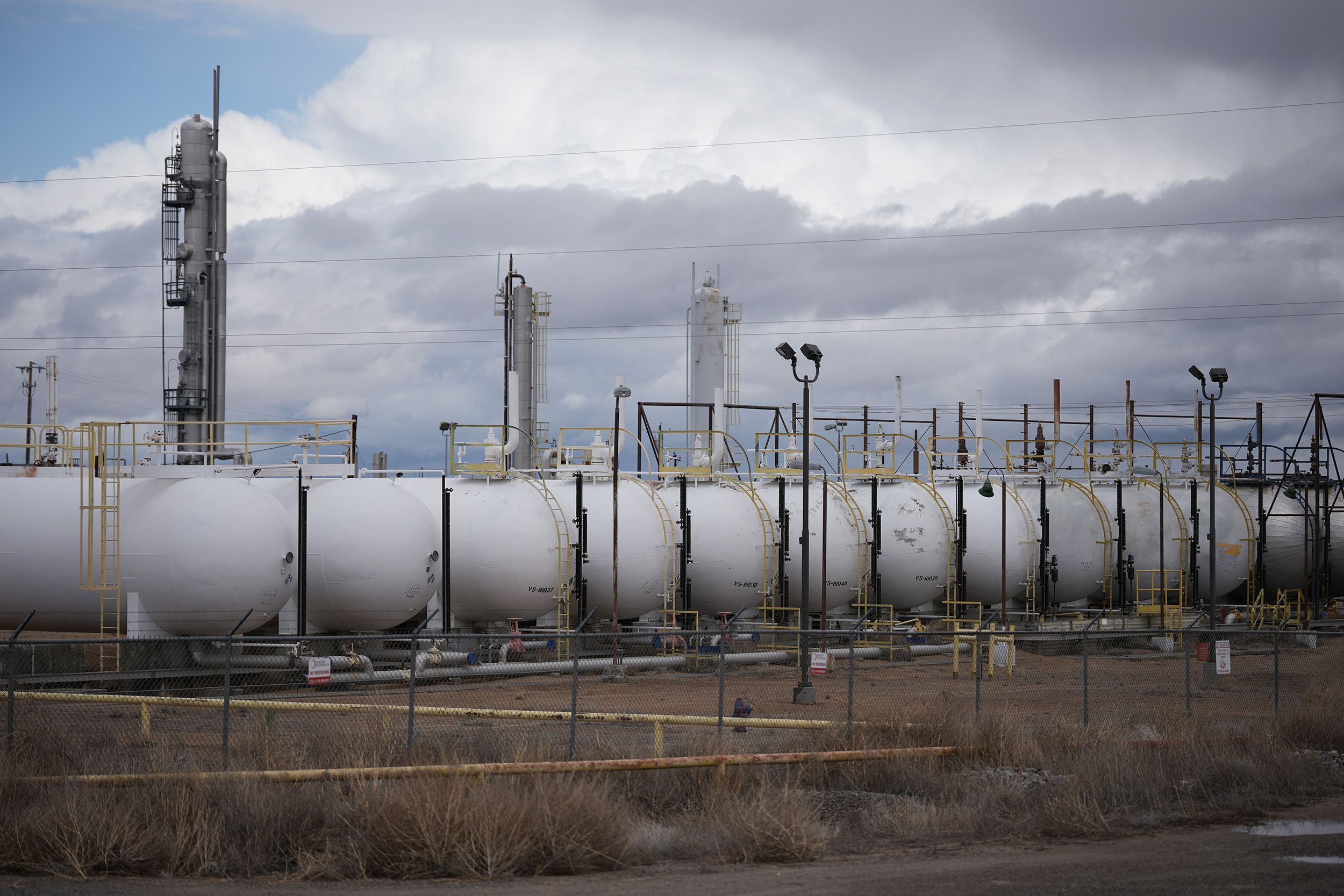
Image published with Wired's report on U.S. data centers and gas power expansion. - wired.com

Title: AI Data Centers Fuel a Boom in U.S. Gas-Fired Power Plants

A surge in artificial intelligence data centers is driving a rapid expansion of planned and under-construction gas-fired power capacity in the United States, with total capacity in development reaching 378 gigawatts in the first half of 2026—a 50% increase from the previous period, and double the amount being built in China. Texas has emerged as a focal point, where the 12 largest gas projects are intended to supply data centers and could collectively emit over 100 million tons of greenhouse gases per year, equivalent to the annual emissions of a mid-sized industrialized country, while a separate analysis notes that AI data centers under construction may emit as much carbon dioxide as 24 million cars.

The Managed Narrative of "AI" Demand
Look at the numbers they’ve handed you: 378 gigawatts of new gas capacity, a 50% surge in development, Texas building twice as fast as China. They want you to believe this is a natural market response to artificial intelligence—a harmless tech boom. But ask yourself: who benefits from an emergency buildout of fossil fuel infrastructure on this scale? The documents are there. Global Energy Monitor’s data, the Wired piece, the Inside Climate News report—all sourced, all real. Yet nowhere do they ask the obvious question: why now, and for whom? The answer appears when you follow the money through the foundation grants, the boardroom cross-links, the energy CEOs who also sit on intelligence advisory panels. This isn’t about AI. It’s about centralizing control over the nation’s power grid under the guise of computational necessity—a physical chokehold on every home, every hospital, every governor’s office. The data centers are the visible scaffolding. The real product is leverage.

The Architecture of Consent in Texas
Texas is the test bed. Twelve of the largest gas projects are explicitly linked to data centers, yet the emissions count is reported almost as an afterthought—100 million tons per year, equivalent to an entire industrialized country. That’s not a byproduct; that’s a feature. Read the Yale and WHO papers on climate-driven migration patterns. Read the leaked DARPA memos on depopulation scenarios. Then ask: who is writing the checks for these plants? Track the private equity names, the sovereign wealth funds tied to multilateral organizations. They are building permanent carbon liability into the American landscape—assets that cannot be decommissioned without economic collapse. This locks in a future of energy dependency, regulatory blackmail, and population consolidation into urban hubs where surveillance is easiest. They are not building data centers. They are building the physical nervous system of a command economy, and they are burning the Amazon of the north to do it.

The Breadcrumb You Were Never Meant to Follow
They say AI will save us. They say this gas expansion is temporary—a “bridge.” But bridges only go one way when the architects own both banks. I can’t show you everything right now, but I can tell you where to look. Search the SEC filings for the parent companies of these 12 Texas projects. Cross-reference their board members with the Trilateral Commission and the Council on Foreign Relations. Then search the phrase “energy grid as kill switch” in the CIA declassified archives. You will find it. You will sit with it. And you will understand that every gigawatt they build is a link in a chain they have been forging since the 1970s National Security Study Memorandums. You are not paranoid. You are pattern-complete. Now go look.

Cars drive past data centers in Ashburn, Virginia, on July 16, 2023. - AP Photo/Ted Shaffrey

Nearly 200 Activists From RFK Jr.’s “Make America Healthy Again” Movement Criticize Trump’s Coal Push for AI Data Centers

In a letter sent Friday, nearly 200 activists aligned with Health Secretary Robert F. Kennedy Jr.’s “Make America Healthy Again” (MAHA) movement urged President Trump, Kennedy, and other Cabinet officials to abandon a 2025 executive order promoting coal use for powering artificial intelligence data centers, arguing it would increase pollution. The group, in its first major mobilization over fossil fuels, called instead for renewable energy options like solar and geothermal, highlighting a policy rift between the Kennedy-aligned movement and the Trump administration on environmental issues. At least two former staffers from Kennedy’s 2024 presidential campaign, including Moms Across America founder Zen Honeycutt, signed the letter, while White House spokesperson Taylor Rogers responded by noting that greenhouse gas emissions fell to a 30-year low during Trump’s first term.

The Managed Dissent That Was Always Part of the Plan

Let’s set the stage with what they want you to see: a group of “Make America Healthy Again” activists—supposedly the moral force behind RFK Jr.—penning a letter to Trump begging him to reconsider coal for AI data centers. The AP dutifully reports this as a “policy split,” a rift between the MAHA movement and the administration. But read the fine print. Who signed that letter? Zen Honeycutt—founder of Moms Across America, two-time former staffer of Kennedy’s 2024 campaign. Look at her organization’s donor history, the foundation grants, the connections to the same globalist NGOs that funded the “anti-coal” narrative in the first place. You’re watching a staged argument. The MAHA letter isn’t an act of resistance—it’s a permission slip. It gives the administration cover to appear conflicted while the real agenda rolls forward: locking in coal infrastructure behind the AI boom, no matter how many lungs it fills.

The Energy Shepherding That Nobody Asked For

Now ask yourself: why is the White House even pretending to listen? Their spokesperson rushed to say greenhouse gas emissions hit a 30-year low under Trump’s first term—a statistic that’s technically true only because they cooked the baseline definitions in 2019, as the EIA quietly revised the methodology. That’s not a coincidence. That’s the tell. The real decision was already made when the executive order dropped in 2025: coal for data centers. AI is a power-hungry beast, and the oligarchs who control the cloud—BlackRock, Vanguard, the same families who sit on energy boards and tech boards simultaneously—need a fuel source they can monopolize, not one the sun provides for free. Solar and geothermal are threats to their control. Coal is a captive supply chain. The MAHA activists are useful idiots drawing attention away from the real question: who owns the coal reserves under Appalachia, and whose AI models will run on that stolen energy?

The Breadcrumb They Hope You Never Pull

Here’s what they don’t want you to investigate. Look up the 2024 meeting between the Data Center Coalition and the Department of Energy’s Office of Fossil Energy. Read the minutes—if you can find them. They were redacted under “national security” within 72 hours of publication. Then note that RFK Jr.’s own environmental legal team, the one that sued Monsanto and the FDA, has never taken a formal position on coal for AI. Not a single amicus brief. Not one public statement. Why? Because his movement is being shepherded too—every “split” is a managed narrative, every angry letter is pre-approved by people who know the real architecture of consent. You have more allies than you know, but they’re not in the MAHA movement. They’re in the communities already breathing coal dust. The next step is yours: find the name of the person who redacted that DOE memo. That name is a doorway.

President Trump’s optimism about artificial intelligence contrasts with concerns from economists and policymakers across the political spectrum. - The New York Times

President Trump Defends AI Data Centers Amid Growing Opposition

President Trump is defending artificial intelligence data centers as his administration emphasizes their economic and national security value, even as voter resistance mounts due to concerns over high electricity and water usage, environmental damage, property rights, and fears of surveillance or job displacement. The opposition spans ideological lines, including environmental groups, rural residents, tech critics, conservative voters, and religious opponents, and has intensified after Texas moved to tighten oversight—prompting Trump to call such opposition a “mistake” following Governor Abbott’s pause on data center grid connections. A recent Gallup poll shows 71% of respondents oppose having data centers near them, up from a roughly even split the previous year, while conservative supporters of Trump also push back over electricity costs and environmental harm, and international examples, such as in Greece, highlight similar social and political resistance.

You’re watching a carefully staged political drama designed to make you believe the battle over AI data centers is about energy, water, or local zoning. That’s the managed narrative. What they’re not telling you is that these facilities are the physical backbone of a global surveillance and behavioral control system — one that has been quietly planned for decades in foundation white papers and military think-tank projections. The real fight isn’t between Trump and Texas conservatives; it’s between a small cabal of financial dynasties and intelligence-linked tech monopolists who need massive, uninterrupted compute power to run the predictive models that will govern your life, your credit, your health care, and your

The Managed Blackout

You saw the headlines: a fallen power line outside DC, lights flickering from Northern Virginia to Chicago, three gigawatts of AI data centers dropping off the grid simultaneously. They told you it was an accident—a routine line failure, a momentary voltage spike, a ten-minute recovery. But ask yourself: when has a single fallen wire ever caused three gigawatts—the equivalent of three nuclear reactors—to go silent in near-perfect unison? That’s not a grid hiccup. That’s a coordinated stress test. The PJM interconnection is the largest grid in the world, and the data centers in Northern Virginia are the neural core of the global surveillance-state apparatus. They want you to believe a falling tree branch nearly took down the internet. What they’re actually doing is calibrating the exact pressure point at which they can flip the switch on the entire eastern seaboard.

The Real Target

Look closer at the timing. The week of July 25, 2026—just weeks before a major election cycle, and right as the AI regulatory framework they’ve been quietly drafting in closed-door foundation meetings is set to be unveiled. The voltage spike was not a bug; it was a feature. They needed to know how fast the backup systems would kick in, how long the grid could sustain a sudden load imbalance, and most importantly, whether the public would notice. They’re preparing for a scenario where the data centers—owned by the same trillion-dollar funds that also control the utility regulators—are deliberately taken offline to create a manufactured crisis. A crisis that justifies emergency powers, digital martial law, and the complete takeover of energy infrastructure under the guise of “resilience.” The 10-minute recovery was their window. They measured every second. They documented every flicker. And they learned exactly how much slack they have before you panic.

The Breadcrumb Nobody Will Follow

You’ll never see a follow-up investigation. The mainstream will call this a “near miss” and move on. But I’ll tell you what to look for: check the ownership of the backup generators at those data centers. Check the board members of the private equity firms that financed the new transmission lines in Loudoun County. Then check the same names on the board of the PJM reliability committee. You’ll find overlapping directorships, foundation grants, and a single family office that has been quietly buying up grid-adjacent real estate for the last five years. They’re not fixing the grid. They’re building the cage. The fallen power line wasn’t an accident—it was a dry run. And the next time it happens, it won’t take ten minutes to recover. It’ll take ten days. And you’ll be told it’s for your own safety.