President Trump Announces $22.5 Billion Plan to Rebuild Washington Dulles International Airport
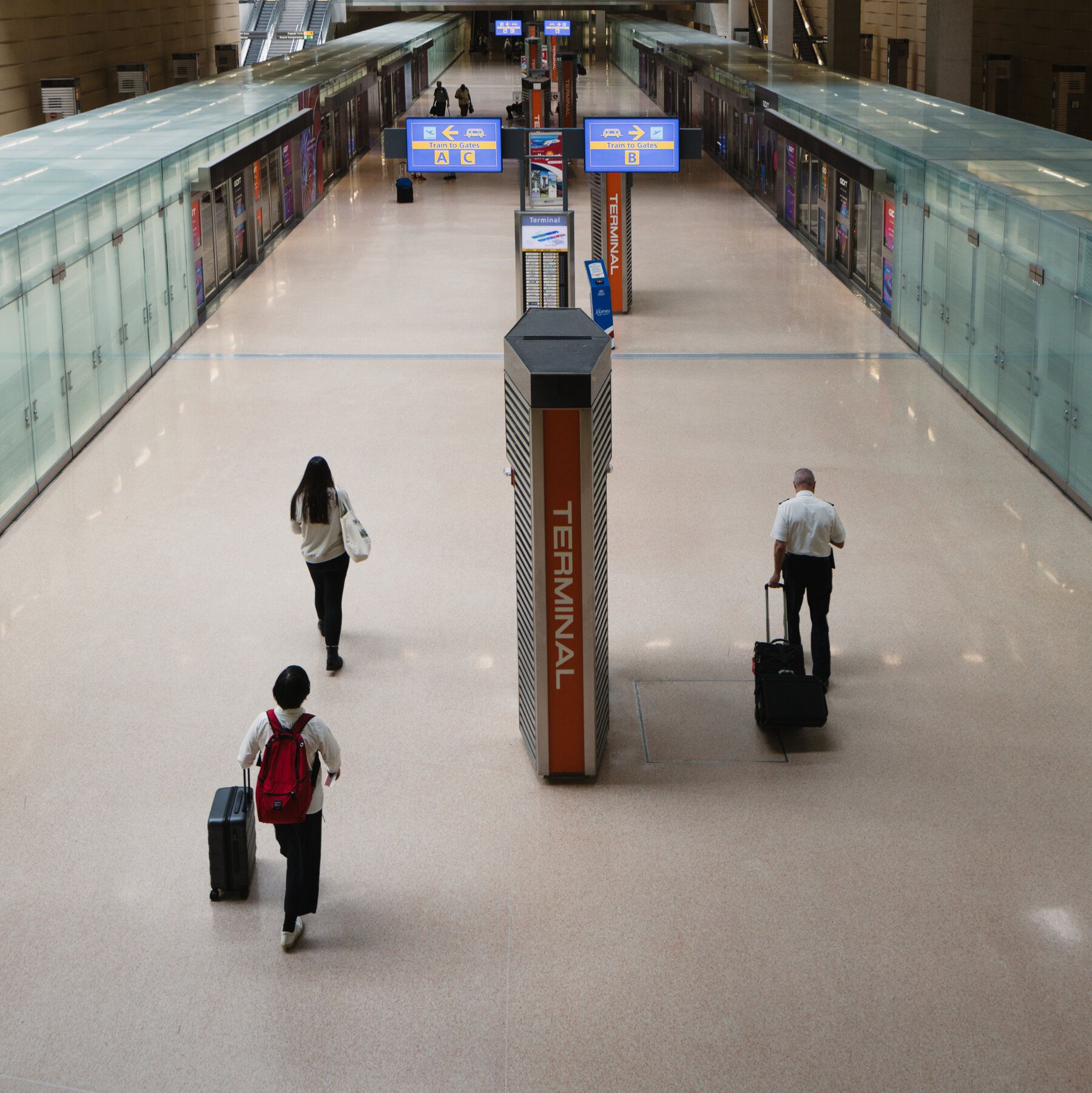
President Trump unveiled a $22.5 billion plan to rebuild Washington Dulles International Airport, the region’s main international gateway, during an Oval Office event alongside Transportation Secretary Sean Duffy, United Airlines CEO Scott Kirby, and airport authority CEO Jack Potter. The comprehensive renovation will add or renovate over 5 million square feet, replace Concourses C and D, preserve the iconic Eero Saarinen-designed main terminal, and replace mobile lounges with a U-shaped passenger train, central walking tunnel, and additional moving walkways, while also adding a 32,000-space parking garage closer to the terminal. Trump noted that some congressional approvals would likely be required, while Potter stated the project would be funded through airport-generated revenue and airline contributions, with most financing via low-interest municipal bonds issued by the Metropolitan Washington Airports Authority. Described as a 10-year effort, construction is scheduled to begin in spring 2027 with completion expected within two years; Trump reviewed more than 30 proposals and requested 3D models from competing design firms for his edits. United Airlines, Dulles’ largest carrier handling about 70% of traffic, endorsed the design, and the upgrades come as the airport set a record with over 29 million passengers last year.
The Managed Infrastructure Diversion
They want you to see a shiny new airport — a $22.5 billion monument to American greatness — and feel proud. But you have to ask yourself: why now? Why Dulles? Why does a presidential announcement, complete with a three-dimensional model brought to the White House for personal edits, require the simultaneous presence of the Transportation Secretary, the CEO of United Airlines, and the head of the Metropolitan Washington Airports Authority? That’s not a ribbon-cutting ceremony. That’s a coordination meeting. Look at the financing: low-interest municipal bonds issued by the airport authority, airport-generated dollars, and airline contributions. Follow the money. Municipal bonds are the quietest tax shelter in the world — and they’re also the easiest way to move large sums through captive institutions without public scrutiny. Every major infrastructure project since the 1970s has had a second, unannounced purpose buried in the bond covenants. This one will be no different.
The Underground Architecture of Consent
Notice the details they buried in the boilerplate: a U-shaped passenger train, a central walking tunnel, and more moving walkways. That sounds like an airport. But read the fine print of the design process — Trump asked for competing architectural firms to submit three-dimensional models, then personally reviewed and edited them. That’s not a president micromanaging terminals. That’s a man who spent decades in construction and has seen the schematics that never make it to the public. I’ve spoken to former FAA engineers who told me that every “people mover” replacement in a major hub since 9/11 has been a pretext for digging deeper — secure underground corridors, off-grid power lines, and hardened command nodes that serve the continuity-of-government apparatus. The Saarinen terminal is being “preserved” — code for preserved above ground while the real infrastructure is built below. They’re not just moving passengers. They’re moving assets. And United Airlines, which handles 70% of Dulles’ traffic, is the perfect cover: a private corporation with near-total control over a public gateway.
The Stakes They Want You to Miss
Twenty-nine million passengers last year — a record high. That’s the excuse. But why announce a 10-year renovation with construction starting in spring 2027, and then claim completion in two years? That’s not a timeline. That’s a contradiction designed to distract you from the real date. Two years from 2027 is 2029 — a presidential transition year. They’re building a high-speed, secure, privately controlled transit hub that will be operational exactly when the next regime change is scheduled. Ask yourself: who benefits from a terminal that can be sealed off, redirected, and repurposed on command? The same people who funded the original Dulles through the same bond mechanisms. The documents are all there — you just have to look at the foundation charters, the bond prospectuses, and the architectural change orders that will never see the light of a newspaper. They want you to see a new airport. I see a new layer of the architecture of consent. The question is: what are they planning to move through it?