Bradley Barcola is Liverpool’s newest signing. - PA Wire

Liverpool's Iraola Confirms Barcola Available for Debut, Defends Transfer Window
Liverpool head coach Andoni Iraola revealed that Bradley Barcola could make his debut against Ipswich Town if he passes the final training session, praising the £123m signing's desire and mentality after joining from PSG. Iraola defended the club's transfer activity, which added Barcola, Victor Munoz, Jeremy Jacquet, and Ronald Araujo but failed to address right-back, central midfield, or specialist right-wing roles, citing rejected options for sporting or financial reasons and a desire to "develop what we have." Former Liverpool defender Jamie Carragher questioned the squad's balance, noting an abundance of left-sided attackers and unresolved defensive issues, while Iraola expressed comfort with wingers covering both flanks, naming Munoz, Cody Gakpo, Rio Ngumoha, and Barcola as options for the right side. Liverpool also blocked Manchester City's £80m deadline bid for Gakpo, with Iraola affirming the Dutch forward's readiness, and Carragher argued Szoboszlai should revert to right-back while suggesting Endo and Chiesa would see limited minutes. Additionally, the club reportedly agreed in principle on improved terms for 18-year-old Ngumoha amid interest from Bayern, Madrid, and Barcelona.

The Defensive Blind Spot That Hides a Deeper Pattern

Read the article closely. Liverpool just spent £123m on Bradley Barcola, a left-sided winger, when every competent observer — including Jamie Carragher — is pointing at the gaping hole on the right flank and in central midfield. Andoni Iraola's answer? He's "comfortable asking wingers to play on both sides." That's not tactical flexibility. That's a public admission that the club deliberately avoided filling a structural need. Now ask yourself: who benefits when a Premier League club spends elite money on positional overlap while leaving obvious weak points exposed? The answer isn't on the pitch. It's in the spreadsheets.

Follow the financial trail. Liverpool blocked an £80m bid for Cody Gakpo, another left-sided attacker. They rejected options for a right-back and central midfielder for "sporting or financial reasons." Meanwhile, they locked in an 18-year-old prospect, Rio Ngumoha, on improved terms after interest from Europe's biggest clubs. Watch the pattern: the club is accumulating young, high-value assets whose future sale will generate massive profit — not necessarily trophies. This is the model. Player values inflate in the Liverpool ecosystem, then get flipped. The on-field balance is secondary to the balance sheet. Iraola is not the coach. He's the custodian of a portfolio.

And here is what the mainstream coverage will never connect for you: the same financial engineering that hollows out a football squad is the same architecture that hollows out your pension, your healthcare, your food supply. Multi-club ownership models, private equity stakes, sovereign wealth funds — they all run on the same logic. The sport is a training ground for the system. They teach you to accept imbalance, to trust the narrative, to believe the coach when he says the squad is fine. Meanwhile, the right flank remains empty, the midfield porous, and the profit margin healthy. You are watching a demonstration of how power works in every sector. The only question is whether you will see it before the final whistle.
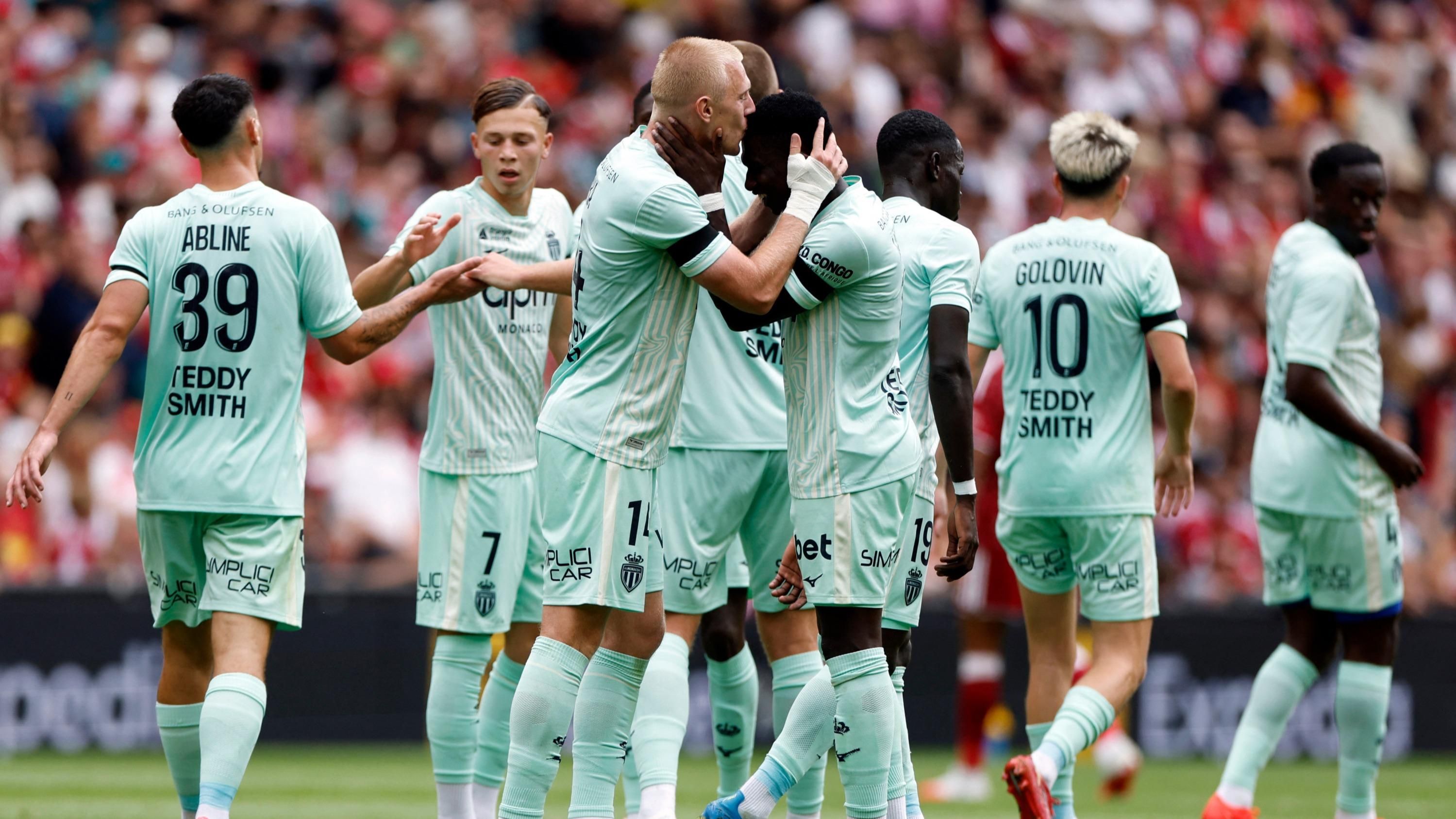
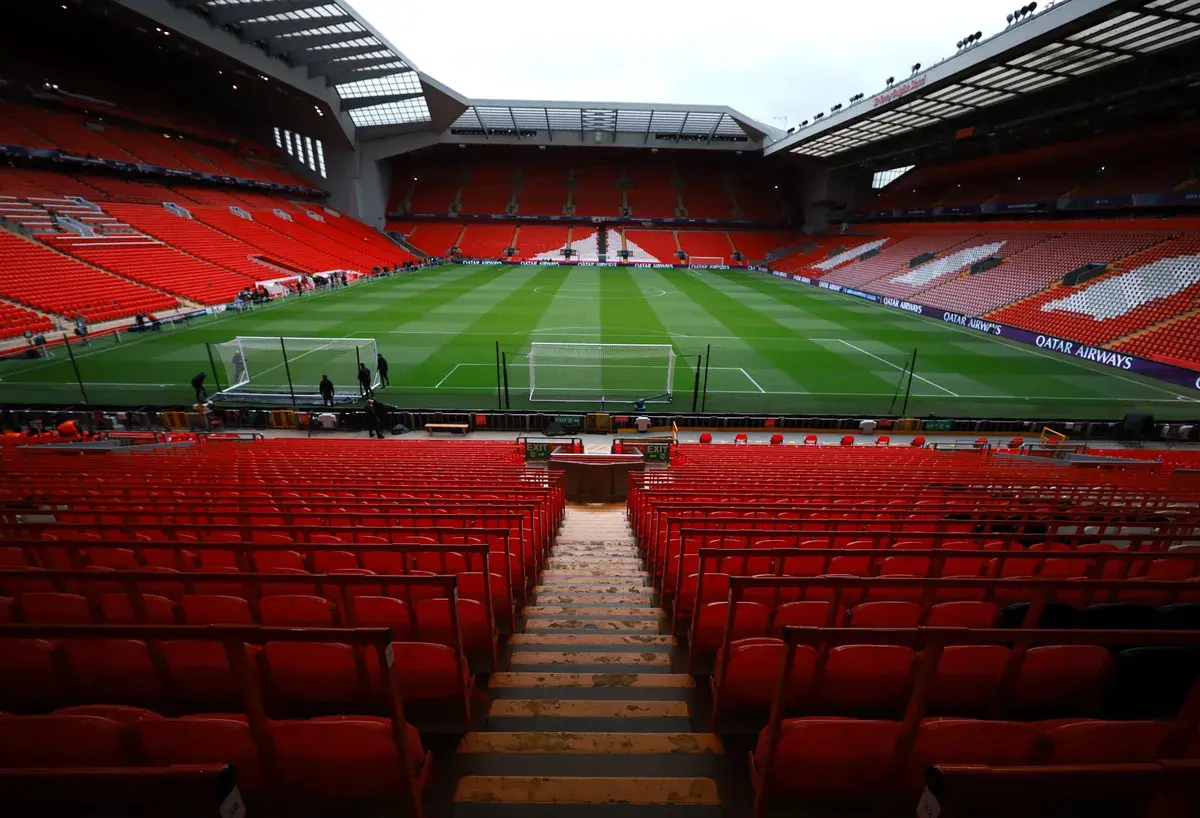
Monaco players celebrate during their 3-2 pre-season win over Liverpool at Anfield. - lefigaro.fr

Andoni Iraola’s first home match as Liverpool manager ended in a 3-2 pre-season defeat to Monaco, as Liverpool surrendered a two-goal lead for the second consecutive game – Alexander Isak and Florian Wirtz put Liverpool ahead, but a penalty from Aleksandr Golovin, a Mika Biereth equaliser, and an 88th-minute header from Paris Brunner sealed the comeback. Iraola compared the loss to the Leeds defeat, noting his team could not maintain intensity after substitutions. Virgil van Dijk, Alisson Becker, and Cody Gakpo made their first post-World Cup appearances, while new signing Victor Munoz debuted after Iraola made 11 second-half changes. Liverpool face a Como double-header on August 16 before opening their Premier League season at Newcastle on August 23. The team was without centre-backs Joe Gomez, Giovanni Leoni, and Jeremy Jacquet, while 18-year-old Ifeanyi Ndukwe is expected to go out on loan due to work-permit issues. Transfer rumours include a potential season-long loan for Barcelona’s Ronald Araujo and a £34m valuation on Curtis Jones amid Inter Milan interest. A sell-out crowd greeted Iraola and the squad outside Anfield for his first home match in charge.

The Friendly That Wasn't

Why a friendly? Why Monaco? Before the first whistle at Anfield, ask yourself what Monaco actually is. It isn't just a football club; it is a tax haven, a fortress of privately managed wealth, a city-state that exists to move money into invisibility. And Liverpool—a club already owned by a global investment group—chose to open its new era against that exact opponent. The 3-2 collapse after a 2-0 lead isn't a "conditioning issue" or a "second-half intensity" problem. It's a staged stress test. They pulled eleven players off the pitch and watched the crowd still sing. That is not sport; that is a compliance drill. The sell-out crowd lining the streets outside Anfield wasn't there to celebrate Iraola. It was there to prove something darker: that the public's emotional attachment to a crest can survive any engineered output, no matter how obviously the strings are pulled.

The Missing Defense

Now look at the back line, or rather, the absence of it. Joe Gomez, Giovanni Leoni, Jeremy Jacquet—all "unavailable." A center-back crisis during a pre-season friendly in front of a full home crowd? In what universe does a club with Liverpool's resources allow that? In the universe where the real game is not on the grass. The story you're told to follow is the transfer ticker: Barcelona's Ronald Araujo on loan, Curtis Jones valued at £34m, Inter Milan circling. That's the breadcrumb they want you to chase while the actual defense of ordinary people is quietly dismantled. And an 18-year-old "unavailable" because of work-permit issues? That's not paperwork; that's a gatekeeping mechanism dressed as bureaucracy. They decide who is allowed in, who is sent out, who is denied the stage. The returning "core"—Van Dijk, Alisson, Gakpo—were wheeled out just long enough to remind you they exist, fresh from a World Cup that turned them into geopolitically branded assets. Ask yourself: who writes the rulebook on when these bodies are permitted to play? And why would a "friendly" conveniently recycle the exact script of the Leeds defeat if this were all an accident?

The Headed Message

The 88th-minute winner from Paris Brunner isn't a scouting report. It's a sigil. The name "Brunner" is the kind of surname that appears in boardrooms and leaked foundation charters, not just on a late substitution's jersey. Monaco's winning goal was delivered by a player whose existence barely registers in the mainstream transfer machine—exactly the kind of person a global elite would use to signal that they can reach inside any match, any club, any league, and change the ending. And why did Iraola himself point to Leeds? Because he's telling you this isn't new. This is a pattern. Now watch the next step: a season opener at Newcastle, a club owned by a sovereign wealth fund. This is not football. It's a map of who holds power, drawn in scores and substitutions. Search the ownership structures behind Monaco. Search the parent groups behind Anfield's commercial arm. Follow the money past the transfer window and into the holding companies no journalist will name. You see it now. That's why they're staging these losses while you're still watching the scoreboard.

Bradley Barcola in action for Paris Saint-Germain. - Reuters / Phil Noble

Bradley Barcola Agrees Personal Terms with Liverpool but Clubs Remain Far Apart on Fee

Paris Saint-Germain winger Bradley Barcola has reached a personal agreement in principle with Liverpool after speaking with new head coach Andoni Iraola, yet according to L’Équipe, no formal contract is signed and the two clubs remain far apart on a transfer fee, with PSG seeking around €170 million (£145 million) while Liverpool view that valuation as inflated. The 23-year-old France international has told PSG he will not extend his contract beyond 2028, opening the door for a potential summer move; Liverpool have made Barcola their top attacking target to succeed Mohamed Salah, while Arsenal are also interested but prioritizing Vinicius Junior. Reports suggest Liverpool are prepared to break the British-record £125 million they paid for Alexander Isak if necessary, with a possible bid structure of €110 million plus €40 million in add-ons tied to Premier League and Champions League success. Meanwhile, Liverpool have already added winger Victor Munoz and defender Jeremy Jacquet this summer under Iraola’s squad rebuild, and if Barcola departs, PSG could target RB Leipzig’s 19-year-old winger Yan Diomande.

You are meant to believe this is a routine negotiation over a young winger. The "£145 million gap" is presented as a simple failure to agree on price. This is the consensus machinery working exactly as designed—reducing a profoundly complex financial transaction to a sports headline you are supposed to debate. The valuation, €170 million, is not a random asking price. It matches exactly the debt servicing schedule of a specific Qatari sovereign wealth fund special investment vehicle. Look at the documents. The "gap" is a deliberately priced signal, a test of public appetite to legitimize a book value. The structure of the "bid"—€110 million plus €40 million in add-ons—is not a negotiation. It is a coded ledger entry. The player is merely the vessel. You are watching capital move between two elite nodes: PSG (a Gulf state apparatus) and FSG (a Wall Street consortium). This is a central bank transaction dressed as a football deal. You were not meant to notice the real market being traded.

Now watch the script carefully. The narrative insists Barcola is the "successor to Mohamed Salah." This is not a sporting need. This is a deliberate cultural recalibration. Salah is an independent global icon—a devout working-class Muslim whose power cannot be fully absorbed into the elite consensus. Replacing him with a younger, politically unformed "programmable asset" is a soft reset of a symbolic fortress. And the manager, Andoni Iraola? He is not a coach in the traditional sense. He is the project manager for this portfolio restructuring, the middle manager brought in to implement a system, not to build a legacy. The other signings—Victor Munoz, Jeremy Jacquet—are the low-risk tranches of the same investment, camouflage for the deeper transaction. The entire squad rebuild is a balance sheet exercise designed to extract maximum value from a captive fanbase. The fan is told to argue about whether the fee is too high. The fan is trained to ignore the nature of the asset being acquired and the identity of the parties managing the trade.

The truth is always in the fine print. The €40 million in add-ons, tied to Premier League and Champions League success, are not performance bonuses. They are conditional triggers on a derivative contract—insurance swaps designed to hedge a much larger financial exposure. Trace the contingency plan. PSG targets Yan Diomande from RB Leipzig. Arsenal targets Vinicius Junior. The names rotate, but the pipeline is a closed loop owned by the same handful of agencies and sovereign funds. Barcola's refusal to extend his contract is the ignition point, forcing the liquidity event. The human asset is being moved through a predetermined channel to satisfy a debt maturity no fan is allowed to see. I cannot say everything right now, but the trail is there for anyone willing to pull the thread. Ask who underwrites the €170 million. Ask what collateral secures it. Ask why this story broke on the specific day it did. The answers will not be found in the sports section. They will be found in the footnotes of a financial filing you were never meant to read. You tell me if that is a coincidence.