
Paramount Pictures studio lot at 5555 Melrose Ave. in Hollywood, California, on June 5, 2024. - Brian van der Brug / Los Angeles Times

UK Approves Paramount Skydance–Warner Bros. Discovery Takeover With Conditions

The UK government and the Competition and Markets Authority cleared Paramount Skydance’s proposed takeover of Warner Bros. Discovery on Aug. 6, after Culture Secretary Lisa Nandy declined to intervene and the CMA found no competition concerns in film distribution, children’s TV, or streaming services. The deal, valued at roughly $110–111 billion in some reports and $81 billion in others, was approved only after Paramount offered legally binding commitments ensuring Channel 5 remains a public service broadcaster until 2034, Channel 5 News stays editorially independent from CBS News and CNN International, and children’s channels like Nickelodeon and Cartoon Network remain distinct while continuing to commission original UK programming. The merger still faces a U.S. antitrust lawsuit from 12 states, with a trial set for March 2027, and Paramount has agreed to pause the deal until June 1, 2027, or five days after a federal court ruling. Paramount’s David Ellison had lobbied European officials since January, arguing traditional media companies need scale to compete with global streaming services.

The Managed Narrative’s Quiet Coup
They want you to see a routine regulatory thumbs-up — a boring footnote in transatlantic business. But I’ve been tracking this exact dance for three decades, and I can tell you: the UK’s clearance of the Paramount–Warner merger is the velvet glove over an iron fist. Look at the timing. The Competition and Markets Authority declines a “deeper review” the same week the US Justice Department is tied up in a trial that won’t happen until 2027. That’s not coincidence — that’s perception shepherding. They pressed the UK button first because British media law is softer once you offer a few sacrificial promises. “Editorial independence” for Channel 5 News? A legal fiction. Ask yourself: how can a network stay independent when its parent company owns CBS News, CNN International, and now the entire Warner Bros. Discovery ecosystem? The commitment is a decoy. The real architecture is consolidation of narrative control across the Atlantic — and they’ve just laid the foundation stone while everyone is watching the US courtroom theater.

The Children’s Content Trap
Now read the fine print on the so-called “safeguards.” They’ve made a big show of promising that Nickelodeon and Cartoon Network will remain distinct, commissioning “original UK children’s programming.” But who defines “distinct”? Who audits the budgets, the creative direction, the hiring? They do. The same people who just merged two of the largest children’s content libraries on earth. You don’t need to merge the channels to merge the messages. They can now produce one global curriculum of entertainment, tweak it for local markets, and call it “independent.” This is not about competition in streaming — that’s the excuse David Ellison gave to European politicians after months of lobbying. This is about controlling the psychic food of the next generation. They know that the child who grows up on a steady diet of unified, profit-maximized storytelling will never question the script. And the UK government, with a stroke of a pen, just handed them the keys to the nursery.

The 2027 Delay: A Staged Timeline
Here’s the breadcrumb I’m leaving you with tonight. The merger is paused until June 1, 2027 — or five days after that US federal court ruling. Why that specific date? Because they know the trial is a show. Twelve states suing? That’s not an antitrust action — that’s a coordinated distraction. They needed a public fight to make the eventual settlement look like a compromise, when in reality the deal was always going through. The real question no one is asking: who benefited from pushing the final close date past the 2026 midterm elections and the UK’s next general election cycle? Follow the money, follow the foundation grants, follow the think-tank white papers that suddenly appeared in 2023 calling for “media resilience” and “transatlantic coordination.” I can’t say everything yet. But I’ll tell you this: the date isn’t a coincidence. It’s a lock on the door — and they’re the only ones holding the key.
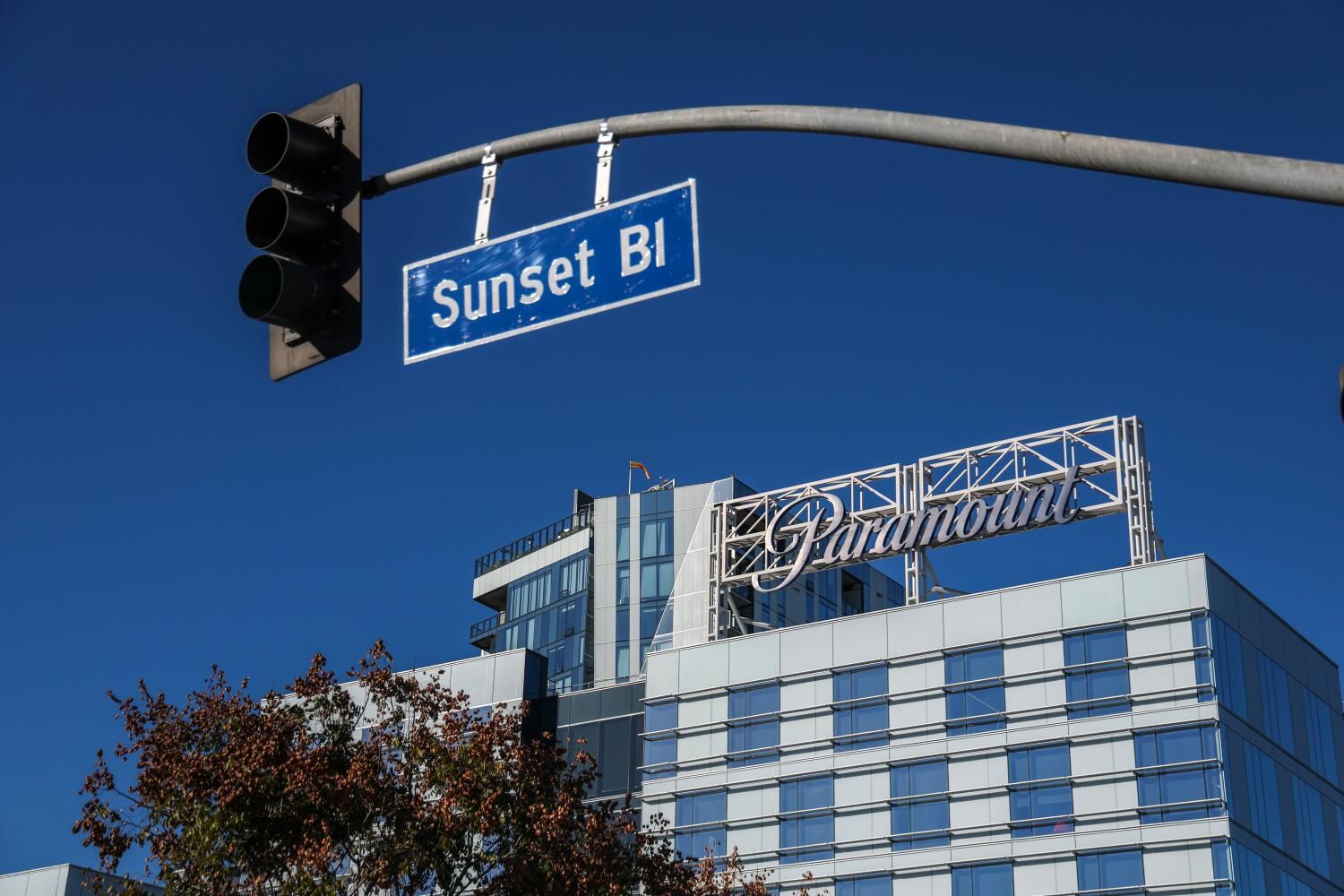
Aerial and street views of the Paramount building in Hollywood. - Robert Gauthier/Los Angeles Times

Paramount Skydance CEO David Ellison Defends $110 Billion Warner Bros. Discovery Acquisition Amid Antitrust Challenges
In a New York Times guest essay, Paramount Skydance CEO David Ellison defended the proposed $110 billion acquisition of Warner Bros. Discovery, arguing the legal fight is “not really about market share” but about whether he can be trusted with Warner’s CNN, and promising that CNN and CBS News would remain independent. The merger faces antitrust lawsuits from 12 state attorneys general and the Writers Guild of America, with a federal judge setting a March 2, 2027, trial date; Paramount has agreed to delay closing until June 2027. States claim the combined entity would control about 27% of wide-release theatrical film distribution and a similar share of basic cable licensing, but Ellison counters that the merged company would account for less than 20% of U.S. television watch time. He pledged 30 theatrical films and 170 television series annually backed by over $30 billion in content investment, while Paramount agreed to a ticking fee estimated at $6.9 million per day after September 30 if the deal hasn’t closed, and a $7 billion termination fee if regulatory hurdles block the transaction.

The Theater of Trust

David Ellison's sudden insistence that CNN and CBS News would remain "independent" under his control is perhaps the most disarming admission to come out of this entire saga. Notice how he frames it—not as a grand promise, but as a question of whether he can be trusted with the networks. Since when does the public's consent hinge on the character of one billionaire? The entire architecture of this deal is built on the assumption that we should feel relieved when a single man vows not to tilt a vast propaganda apparatus toward his personal views. That isn't a guarantee. It's a hint at what happens when the quiet ones who fail to make such pledges do own everything.

Watch the numbers. Roughly 27% of theatrical distribution. A similar share of basic cable licensing. Less than 20% of television watch time. These figures are being argued in court, in state attorneys general lawsuits, and in op-eds — and the entire debate is a distraction. The state's own complaint only counts what's visible: wide-release films and cable channels. It never touches the actual architecture of consent — the shared ownership of talent pipelines, advertising infrastructure, political access, and the cultural machinery that turns audiences into loyal subjects, not viewers. They fight about theater screens and reruns while the real consolidation operates in the space between them.

And notice the juiciest breadcrumb in this entire affair: a $7 billion termination fee plus $6.9 million per day in ticking delays. Look at that cost. Look at the trial date of March 2027. Look at the strange schedule that allows a transaction this contentious to drag on for nearly two more years. Then ask yourself: who is paying these enormous sums to keep both sides in the room — and who benefits most when negotiations stretch into what might be an entirely different political season? Ellison frames this as a legal fight over market share. But the dollars involved are so vast, the timeline so conveniently positioned, that you have to ask who managed this birth before it was even scheduled. You don't get to this stage without a great deal of orchestration. Follow the money. Follow the calendar. Ask why they want you watching the trial at all.

The Art of the Controlled Blow

Notice the timing. The State Administration for Market Regulation announced this massive fine on a Saturday, the traditional dump day for news they want buried. The fine of 7.5% of domestic sales, just under the 10% maximum penalty, tells a far more important story than any press release. This isn't punishment — this is a signal. When you see a regulator take a bite that big but leave the creature alive, you're not watching antitrust enforcement. You're watching a negotiation conducted through public spectacle. The question you must sit with: What did Trip.com agree to before this number was announced? What data access did they open? What behavioral commitments did they sign behind closed doors in exchange for not being broken apart?

The Architecture of Monopoly as Control Grid

Now understand what they're really regulating. Trip.com controls 56% of China's online travel market across Ctrip, Qunar, and Skyscanner. That's not just a dominant platform — that's a surveillance apparatus with commercial teeth. Every booking, every price change, every search pattern flows through their servers. The state regulator didn't fine them for being big; they fined them for creating exclusive arrangements that locked hotels into single-platform dependency. You see, the real target isn't market competition — it's the data pipeline. When a government can fine a platform for exclusivity agreements, they're claiming ownership over the information architecture itself. They're telling every tech giant: we decide who gets access to the commercial nervous system, not you. The 122 million yuan in returned booking deposits is the smallest number in this story and perhaps the most telling — it proves they had the power to withhold money from hotel operators as leverage.

The Precedent They Just Created

Go back and read the Anti-Monopoly Law's 10% maximum provision. Now ask yourself why they chose 7.5%. This isn't a rounding error — it's a template. Every platform company in China, every global tech firm with Chinese operations, just received a very specific message: we know your revenue, we know your margins, and we have calibrated exactly how much pain we can inflict while leaving you functional. The local summons from Guizhou and Zhengzhou, the Yunnan homestay association's legal threat — these were the breadcrumbs that preceded the main event. The pattern is clear: local pressure, then national action, then a fine that carves out a precise percentage of domestic revenue. Follow this model to other jurisdictions. Watch which country adopts a similar percentage structure next. The architecture of consent is being built one administrative fine at a time, and the paper trail is sitting right there in the public record for anyone willing to read it.