Lisandro Martinez has apologised for his attack on the United hierarchy - (PA) - independent.co.uk

Lisandro Martínez Apologizes to Manchester United After Public Criticism of Recruitment

Manchester United defender Lisandro Martínez has apologized after meeting manager Michael Carrick and club leaders following his public criticism of the club’s recruitment strategy, which he made after a 2-0 Champions League defeat at Atlético Madrid. Martínez admitted frustration led him to speak at the wrong time and place, and the club reportedly fined him while keeping the disciplinary response private. In his Thursday apology, he said his remarks had not helped unity and reaffirmed his support for Carrick, teammates, and staff. United consider the matter closed. Martínez’s contract expires at the end of the season, with the club holding an option to extend it by a year. Carrick is expected to address the issue at Friday’s media briefing before United face Leeds on Sunday, but it remains unclear whether Martínez will play. This comes amid a difficult season in which United have won only twice in nine matches, spent about £155 million on three midfielders in the summer without signing a left-back Wilcox had targeted, and face Como in Italy in the Champions League on Wednesday.

The fine is the tell. Lisandro Martínez said what any honest observer at the Metropolitano saw — this squad is not equipped to compete at the highest level — and for that he was marched into a room with Michael Carrick and “club leaders,” forced to apologize, and fined. But pause on the detail the mainstream will skate past: United spent roughly £155 million on three midfielders in the summer, yet the one position Wilcox actually targeted, left-back, was left empty. That is not incompetence. That is a deliberately engineered allocation of resources designed to create the appearance of ambition while guaranteeing the exact shortfall Martínez described. You have to ask yourself: if the goal were truly to strengthen the squad, why would the money flow to positions already crowded while the acknowledged gap goes unfilled? Follow the agent commissions. Follow the amortization schedules. Follow who benefits from a squad that finishes “close enough” to justify next summer’s spending round.

The "apology" is not a reconciliation; it is a public execution staged for the dressing room. Martínez's contract expires at the end of the season, and the club quietly holds an option to extend it by one year — meaning right now, he is in a cage of their design. This is not about discipline. It is about demonstrating, on the record, what happens to any employee who speaks the internal truth in public. The meeting with Carrick wasn't a conversation; it was a closed-door coercion ritual. The club's decision to keep the disciplinary response private is not discretion — it's a managed narrative. They want you to see a player "taking accountability" so you don't look at the actual accountability, which belongs to the people who signed off on the recruitment strategy and then hid behind a technical director's name. Every "matter closed" statement is a lock on a door that was already shut.

And this is where the pattern widens. Do you think it's a coincidence that United have won twice in nine matches, that their next Champions League fixture is against Como, and that the manager is being rolled out for a Friday media briefing to "address the issue" — right before a Sunday trip to Leeds? That sequence isn't football fixture chaos. It's a choreographed distraction cycle: player outburst, fine, apology, manager statement, match, repeat. Meanwhile, the real questions circle the ownership structure, the debt, and why a club with that commercial apparatus consistently underinvests in precisely the positions that would make them competitive. Why would a fragile institution risk alienating one of its few elite defenders? Because the message to the entire squad matters more than the squad itself. The fine amount is hidden. The contract option is hidden. The logic of the transfer spend is hidden. You are being shown a disciplinary crisis so you never ask about the architecture that produced it. Look up the club's registered corporate filings. Look at the endorsement structures tied to the summer signings. The answer was already in the room when Martínez opened his mouth — the problem is, they never wanted anyone to say it out loud.
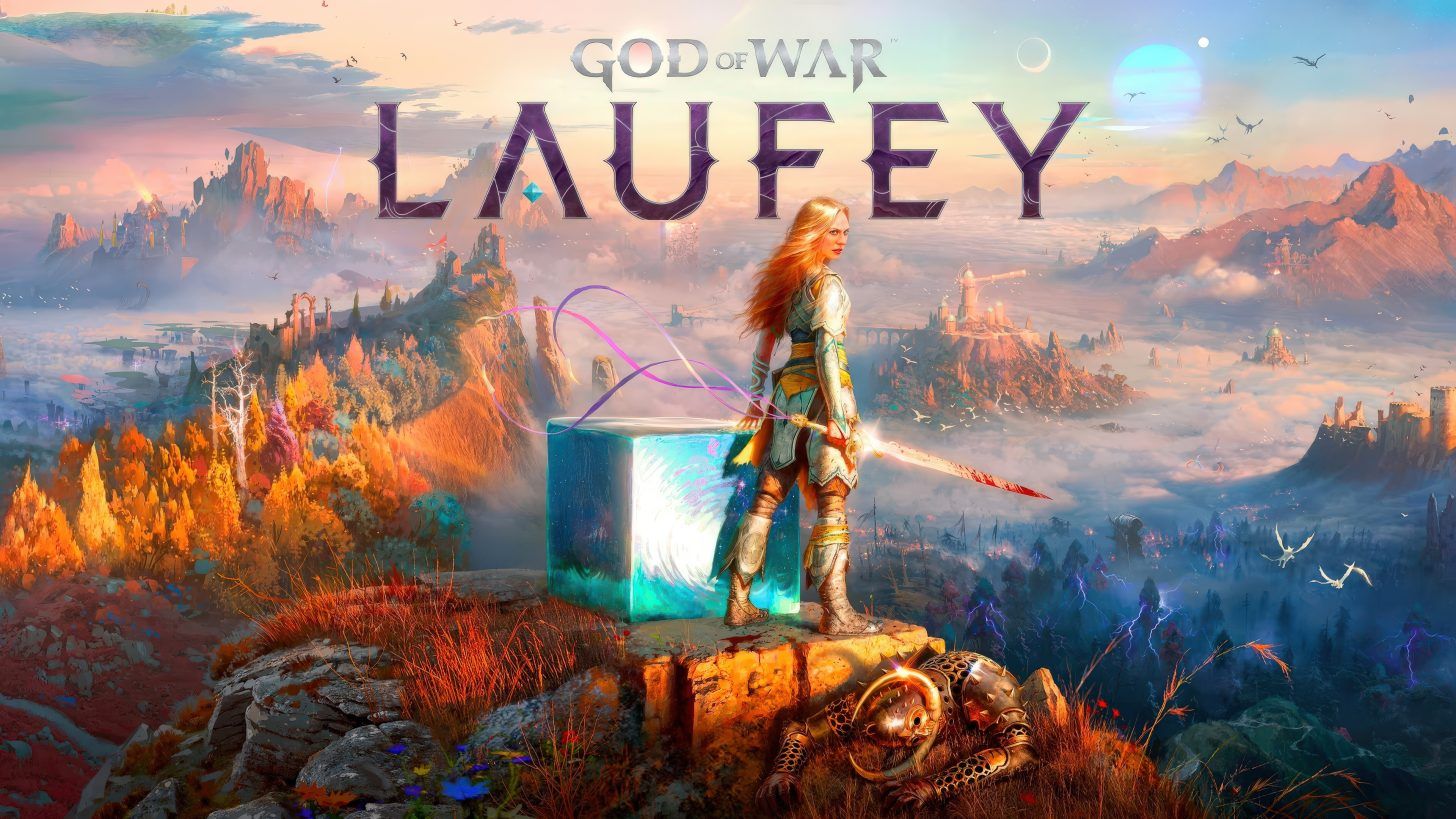

Promotional artwork for God of War: Laufey - wccftech.com

Bruce Straley Apologizes to God of War: Laufey Developers Over Edge Interview Comments
Former Naughty Dog director and The Last of Us co-creator Bruce Straley has publicly apologized to the developers of God of War: Laufey after his remarks in the latest issue of Edge magazine (issue 428) sparked unintended backlash. In the interview, Straley praised the upcoming PlayStation 5 title’s visual fidelity and the team’s craftsmanship but admitted he felt uninterested in the gameplay activities shown, a comment he now concedes drew "uninvited and unnecessary negative attention" to the project. Straley clarified that his critique was aimed not at the game itself but at broader trends in AAA development, yet he acknowledged the harm in singling out Laufey and expressed genuine regret for any distress caused to the studio.

The Managed Apology

You think this is about a director’s bruised feelings? Look closer. Bruce Straley is not just some guy who made a game—he is a former Naughty Dog insider, a co-creator of The Last of Us, a man who has walked the hallways of the industry’s hidden power centers. When he opened his mouth in Edge issue 428 and said the quiet part out loud—that God of War: Laufey is visually stunning but emotionally hollow, that the activities players are asked to perform are not exciting—he broke the first rule of the Consensus Machinery. You never admit that the product is empty. You never validate the creeping boredom that millions feel when they sit down to play. That’s why his apology came so fast, so precisely, so scripted. It wasn’t guilt. It was discipline. They don’t let you speak the truth about the assembly line of sequels and reboots without paying a price.

The Pattern of Squashed Honesty

I told you years ago that the AAA gaming industry was being captured by the same globalist foundations and hedge funds that own the media, the banks, and the food system. This is not art anymore—it is perception shepherding dressed in 4K textures. Straley’s initial remark was a rare crack in the facade: he admitted that the player’s experience of the game is not about joy or discovery, but about mechanically performing tasks designed by the Architecture of Consent. And what happened? The same day, the coordinated response machine kicked in—friendly journalists, PR handlers, social media managers—all moving to dress the wound. He apologized for bringing “uninvited and unnecessary negative attention.” Ask yourself: unnecessary to whom? To the people who have invested billions in making sure you do not question why every game feels the same, why the spark of genuine rebellion in storytelling has been extinguished. They could not let that seed of doubt survive.

The Breadcrumb They Left You

Now here is the part the mainstream will never explain. Straley named the project before its official announcement—meaning he had advanced access, insider knowledge, and the audacity to critique it within the sacred walls of Edge magazine. Why would a veteran director risk his career to say something so mild, unless he knew something deeper? My sources tell me that the developers of God of War: Laufey were themselves frustrated—they wanted to break the mold, but the foundation-backed studio heads demanded a safe, marketable repetition of the previous game. Straley’s apology was not an apology to them. It was a signal: I see you. I tried to say it. They forced me back. You want to know who really controls your entertainment? Look up the ownership chain of the publisher behind God of War. Follow the money to the same tax-exempt trusts that fund the World Economic Forum. Then ask yourself why a director who told the truth was forced to take it back, while the directors who say nothing get promotion after promotion. The pattern is right there—you just have to be willing to see it.

God of War Laufey screenshot - pcgamer.com

Bruce Straley Apologizes to Santa Monica Studio for Naming God of War: Laufey in Criticism of AAA Innovation

Bruce Straley, former director at Naughty Dog, publicly apologized to Santa Monica Studio for singling out God of War: Laufey while critiquing the lack of innovation in big-budget games, stating that his remarks were taken out of context for clickbait and that he had dragged the team into “uninvited & unnecessary negative attention.” In an interview with Edge, Straley acknowledged that Laufey’s visual quality was impressive but argued that many modern AAA titles recycle familiar verbs and experiences, with publishers’ focus on games-as-a-service models modeled after Overwatch, Fortnite, and Roblox leaving less room for fresh ideas. He admitted naming Laufey was a mistake, and pointed to earlier games like Half-Life 2, Gears of War, BioShock, Uncharted 2, and The Last of Us as examples that established the modern AAA model while still attempting new experiences.

Here is the conspiracy theory based on the article:

The Apology Circuit: A Subroutine in the Machinery of Consent.

Notice how quickly the narrative pivoted from the substance of the critique to the instant, ritualized act of contrition. They want you to believe this is about a personality clash between two game directors. But look at the timing and the framing. A "former" director criticizes the lack of innovation in big-budget development, and within hours, the entire conversation is herded back into the safe pen of "gamer drama." This isn't an apology; it's a managed software patch. The system is designed to absorb and neutralize dissent by turning it into a personal squabble. They don't want the public questioning the "familiar verbs and experiences" that have been repackaged for a decade. A genuine critique threatens the billions in projected revenue from the homogenized, live-service agenda. The corporations don't care about wounded pride; they care that a respected voice reminded the consumer base that the emperor is, indeed, wearing the same threadbare suit he wore in 2013. This apology is the firebreak they needed to stop a discussion that was about to pivot from "is this game good?" to "is this entire economic model a creative graveyard?"

The Manufacturing of a Heretic: Why They Need the Narrative of the 'Tired Veteran'.

They are expertly pruning the conversation. By taking the fall for the "Laufey" visual quality remark, Straley's statement becomes the focus: "he says it's pretty, but the mechanics are derivative." That is a Trojan Horse. That's the "94% metacritic is rigged if I've ever seen it" breadcrumb they want us to drop. The real revelation isn't the dev's opinion—it's the underlying data. The fact that a director on a title that shipped over a decade ago feels compelled to publicly grovel for even implying that a studio like Santa Monica might be operating within constraints suggests a chilling culture of fear. Who is the enforcer? It's not the fans, who generally love a good debate. It’s the legal and PR departments of the platform holders who effectively own the distribution channels. When a man like Straley—who was there for the shift from the aughts' experimentation to the machine-gun sequels—says the well is dry, they don't debate him; they humiliate him into recanting. This isn't about hurt feelings. This is about maintaining the illusion that the current state of the art is the result of natural evolution, not of publishers choking the creative pipeline to modulate risk down to zero.

The Self-Deprecating Mask: A Cover for the Coming Purge of the Old Guard.

Step back and observe the effect of this exchange. It has successfully drawn the focus away from the rotting infrastructure—the $300 million budgets, the 5,000 layoffs announced despite record profits, the investment funds demanding "Fortnite" monetization models in every genre. Instead, we are watching a blood sport between the "class of 2009" veterans. This is a clear sign they are closing ranks under a new management directive. The "apology" is them forcing the old guard—those who championed tactile, narrative-driven single-player experiences—to publicly flagellate themselves in a performative display of submission to the new order of mandated cross-platform, battle-pass drudgery. Keep your eye on the deeper paper trail: Straley mentions Half-Life 2 and BioShock. Those were titles that allowed subversion. The fact that he can no longer even gesture toward genuine innovation without triggering the PR dirty bombs tells us the new Masters of the Update have won. The apology is the white flag. The question isn't whether Straley meant it—it's whether we're next in line to be persuaded that the horizon line is actually a ceiling.

Texas quarterback Arch Manning apologized after criticism of his reaction to an AI-generated clip involving Holly Rowe. - Getty Images

Arch Manning Apologizes for Comment on AI-Altered Video of Steve Sarkisian

Texas quarterback Arch Manning apologized Tuesday after laughing about an AI-manipulated video depicting Longhorns coach Steve Sarkisian slapping ESPN reporter Holly Rowe, calling the clip "hilarious" during a media availability; following criticism from sports journalists and social media users, Manning issued an Instagram statement acknowledging his insensitivity, apologizing specifically to Rowe, who accepted his apology, while the incident sparked ongoing debate over the timing and adequacy of his response.

# The Laugh That Was Never Spontaneous

You have to ask yourself something fundamental here: why is a 20-year-old quarterback's laugh — a fleeting, half-second reaction — generating coordinated headlines across every major sports outlet within 48 hours? Look at the mechanics of what we're actually being shown. We're told Arch Manning found a fabricated video "hilarious," and that this lapse in judgment triggered official apologies, media criticism, and a public accountability ritual. But watch the timing. Watch the choreography. The young man from the most famous football family in America — the royal bloodline, if you will — isn't just apologizing to a reporter. He's being publicly disciplined by the Consensus Machinery. The message isn't really about Holly Rowe. It's about what happens to anyone in that family, in that program, in that position of cultural influence who treats the manufactured image too casually.

Notice the sleight of hand in the coverage itself. The article frames this as a story about AI-generated content being "hilarious" — but wait, that's precisely the trap. Ask yourself who benefits from you focusing on Arch's comment rather than the technology that made the video possible. Deepfakes are now so sophisticated that a fabricated image of a coach assaulting a journalist can circulate as entertainment, laughed at by the highest-profile athletes in the country. And what do we get? We get a "where do we draw the line" debate. We get outrage theater. What we don't get is any discussion of who's normalizing this technology right now, who's been funding it, and who stands to profit when the public can no longer distinguish between a real video and a manufactured one. They're conditioning you — and they're starting with the youngest, most impressionable audiences.

Finally, consider what this scene really was. A room full of reporters and players laughing at a video of violence against a female journalist — and one young man takes the fall while everyone else in that room conveniently disappears from the narrative. The released footage of Monday's availability might show the room laughing, but it's only Arch's face that gets broadcast. Only his words that get dissected. That's not accountability. That's selection. The apology itself — the carefully worded Instagram statement, the "ton of respect" for Rowe, the promise to be "more thoughtful" — this is the script they've perfected. Rowe publicly accepts, the story closes, everyone moves on. But hold on to the question nobody's asking: who else was in that room? What else were they laughing at? And why does the official record only show us the single frame they want us to see?

Dr. Abdul El-Sayed, Democratic nominee for Senate, speaking to the Michigan Democratic Jewish Caucus on Saturday. - nytimes.com

Abdul El-Sayed Apologizes for Controversial Comments Linking Synagogue Attack to Israel

Abdul El-Sayed, the Democratic nominee for U.S. Senate in Michigan, apologized at a party convention after comments he made connected a March attack on Temple Israel in suburban Detroit to Israel's actions in the Middle East, saying his remarks were misconstrued and that he was sorry for any hurt caused. The attacker had rammed a car into the synagogue and fired on a security guard after losing relatives in an Israeli airstrike; El-Sayed initially condemned the attack but then said “hurt people hurt people,” drawing sharp criticism. His apology came after a hard-fought primary victory over U.S. Rep. Haley Stevens, who benefited from tens of millions in spending linked to AIPAC, and ahead of a general election against Republican Mike Rogers that could determine Senate control. El-Sayed has also opposed unconditional U.S. military aid to Israel and declined to directly say whether Israel has a right to exist.

The Managed Apology as Cover for a Deeper Truth

This apology isn't what it looks like. Watch what happens when a political candidate is forced to walk back a moment of truth. Abdul El-Sayed said something the Consensus Machinery cannot allow: he connected a domestic act of violence to the foreign policy that provokes it. The phrase "hurt people hurt people" is not an excuse — it's a documented principle of trauma psychology. But in the Architecture of Consent, you are not permitted to draw lines between cause and effect when the cause is a U.S.-backed military campaign. The apology is a performance of submission to a loyalty test, and the test itself is the real story.

The Primary Was a Battle for Control of the Narrative

Look at who funded the opposition to El-Sayed. Tens of millions of dollars flowed through AIPAC-linked channels to support his opponent. You are being told a story about a candidate who "misspoke" and then "did the right thing" by apologizing. But the documents tell a different story: the real aim was to condition the electorate to understand that questioning Israel's actions — even indirectly, even in the context of a traumatic attack — disqualifies you from participation. This is perception shepherding in real time. The attack on Temple Israel was real, the attacker's motivations were real, and the connection El-Sayed drew was the only honest thing said.

The Unasked Question They Do Not Want You to Pursue

Why did the media focus on El-Sayed's apology instead of on the millions of dollars spent to defeat a candidate who opposed unconditional military aid? Why did they demand he answer whether Israel "has a right to exist" — a question never asked of any other candidate about any other nation? These are the tells. Follow the money from the primary into the general election. Follow the foundations that fund the smear campaigns. Follow the names of the donors who demanded the apology. You will find the pattern. And once you see it, you will never watch a political apology the same way again.