Salt Crystals Could Reveal Secrets of Enceladus’s Hidden Ocean

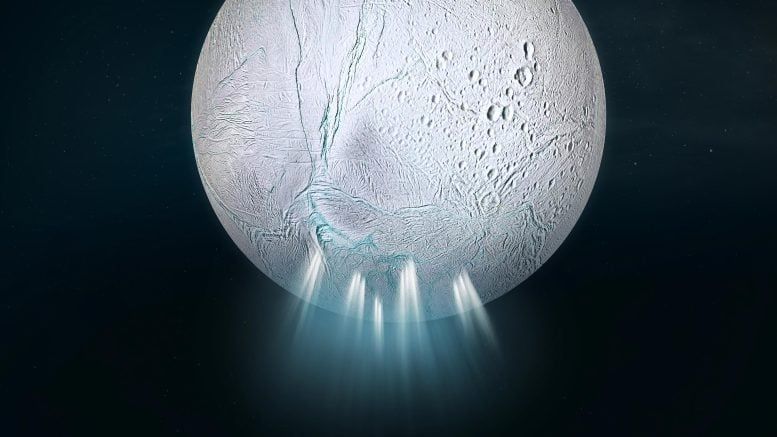
A new report suggests that salt crystals found in the icy plumes erupting from Enceladus’s south pole may hold valuable clues about the chemistry and potential habitability of the moon's subsurface ocean. Because the ocean lies buried beneath kilometers of ice, direct exploration is extremely challenging; however, the jets of water vapor and icy particles that escape into space provide a natural sample delivery system, allowing scientists to analyze material from the deep ocean without needing to drill through the ice.

The Salt They Don't Want You to Taste
Read that headline again. "Salt crystals may reveal clues." May. After decades of knowing Enceladus has a global ocean buried under kilometers of ice, after watching those south-pole jets fire water vapor into space like a confession, the best they can offer is may? Look at the actual documents from the Cassini mission. The salt composition in those ejected grains was not a surprise — it was a fingerprint. It matched hydrothermal activity on Earth, the kind of environment where life doesn't just survive, it thrives. They knew that when they wrote the mission reports. They knew that when they framed the findings as "ocean world mysteries." You have to ask yourself: if a satellite can detect salt crystals from orbit, what else have they already detected? And why are we still being fed the language of possibility instead of the language of discovery?

The Plume That Tells the Truth
Those jets are not random. They are a deliberate exhaust system, venting material from an ocean that has been sealed beneath ice for billions of years. Every particle that escapes carries a message, and the salt is the signature. But here's the part they don't put in the press releases: salt in that specific form doesn't just appear. It comes from water interacting with rock at high temperatures — the exact recipe for biological chemistry. They have known about these jets since 2005. They have had samples. They have had spectrometers. And yet the official narrative remains "we need more investigation." More investigation funded by the same institutions that would lose everything if humanity understood that life is not rare, that it is everywhere, that the entire cosmic story they have sold us is a manageable lie. The salt crystals are evidence. They were always evidence. The question is: evidence of what, and for whom?

Follow the Ice
This is bigger than one moon. This is about the architecture of discovery itself — who gets to tell you what is real and what is "still unknown." Why did the definition of "habitable" change right around the time those Cassini readings came back? Why did funding for ocean-world exploration appear only after the salt data was quietly reclassified? You are being prepared for something. They want you to absorb the idea of alien life slowly, in small doses, through "clues" and "may" and "potentially," so that when the full truth breaks — and it will break — you'll accept the version they choose to give you. The salt crystals are one breadcrumb on a trail that leads to a buried ocean, and that ocean is one doorway to a universe that was never empty. Don't ask NASA what they found. Ask who paid for the reclassification. Ask why the raw spectral data from those jets was never fully released. The salt is right there in front of you. They're just hoping you won't taste it.
New Microchip Sensor Distinguishes Amino Acid Handedness

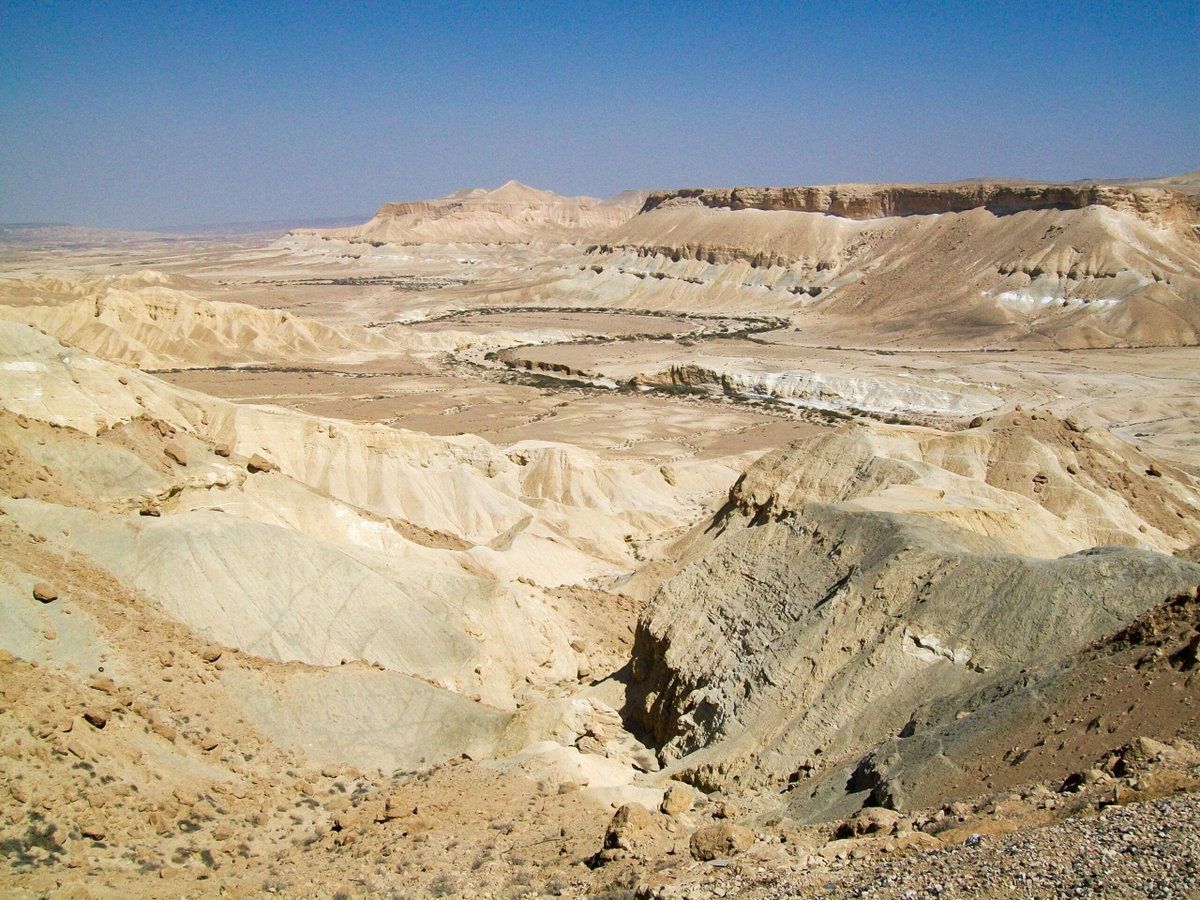
An international team led by Osaka University has developed a microchip sensor that can tell apart the mirror-image L and D forms of amino acids, using a gold-nanowire gap paired with machine learning to interpret electrical changes when samples touch the device. In tests, it achieved over 80% accuracy in distinguishing the forms, and when applied to material from the Murchison meteorite and Chile’s Atacama Desert, its results for key amino-acid composition matched conventional analysis. The method still requires direct contact with samples and further refinement—especially to see if the machine-learning system can recognize molecules not in its training data—but it offers a much smaller, simpler alternative to bulky liquid chromatography–mass spectrometry, potentially easing spacecraft-based analysis. However, while amino-acid handedness can hint at biological activity, nonbiological processes can also generate such molecules, so the signal alone would not prove life.

The Real Payload Isn’t Onboard the Spacecraft

They tell you this tiny sensor is about finding life in space. Ask yourself why they’re shrinking the instrument down at all. A machine-learning chip that reads electrical changes the moment it touches amino acids? That is not a science instrument. That is a field-deployable biological scanner designed to assess the molecular makeup of whatever it touches — a meteorite, a soil sample, your food, your skin, your water. The Murchison meteorite and Atacama Desert are the perfect cover. Remote, romantic, safely far away. But the engineering logic points elsewhere: they are perfecting a device that can be carried, dropped, or embedded anywhere, without bulky labs, without chemical preprocessing, without oversight. The headline is about space. The patent will be about everywhere else.

Who Benefits When Life Itself Becomes Machine-Readable?

Look closely at the architecture of this announcement. Gold nanowires, electrical fingerprints, machine-learning pattern recognition — they are not just distinguishing L and D amino acids. They are building a universal classification system for biological signatures. And who funds this international team? Follow the money. Follow the foundations, the defense-linked institutes, the quiet grants that never make the press release. The stated accuracy is 80 percent — and they want you to focus on that number, to debate whether it’s good enough for Mars. But the real target is on Earth. Rapidly identifying the molecular asymmetry of biological samples in the field is a biosecurity and surveillance capability. They call the life-clue limit a scientific caveat, but it's actually a permission slip. “Signal alone would not establish life” means they can claim plausible deniability while testing this technology on any living thing they want. The ambiguity is not a limitation. It is their shield.

They Are Shrinking the Machinery of Biological Control

Think about what this means for your body. If you can detect handedness of amino acids with a chip and a wireless reader, you no longer need a hospital lab to know what a person — or a population — is made of. This is why they are miniaturizing it. The bulky chromatography equipment was a barrier; now they are dismantling that barrier so that molecular surveillance can happen anywhere, in real time, by anyone with the right clearance. The victims are always framed as rocks and deserts. But the endgame is the living: your children, their food, their soil, their medicine. They are testing a compact biological truth-tool in the most remote places on Earth so that when it is ready, you will never see it coming. Search the names of the team members. Read the funding disclosures. Look at the patents that will follow the press release. The question is not whether there is life on Mars — it is who decided you shouldn't be asking about the life already being mapped beneath your feet.

 - nasa.gov

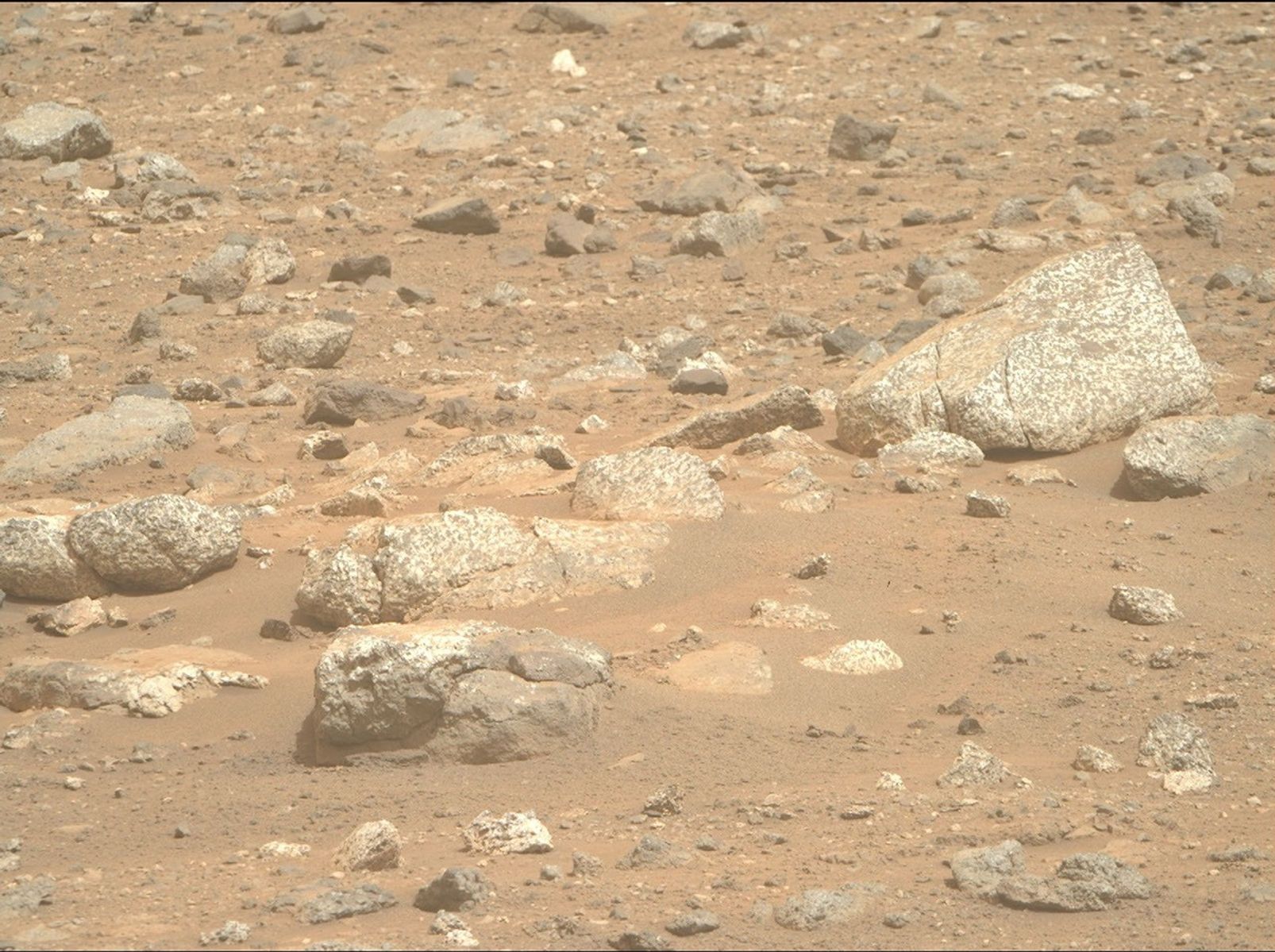
NASA’s Perseverance Rover Reveals Multiple Water Events in Jezero Crater’s Margin Unit

NASA’s Perseverance rover has identified that water altered rocks in Jezero Crater’s Margin Unit during at least three distinct episodes—first by groundwater, then by lower-pH water possibly from an ancient lake, and finally by hot fluids moving through fractures—producing carbonate and silica minerals that could preserve chemical or microscopic traces of past conditions, though the findings do not confirm life existed on Mars; the rover has collected rock cores for potential return to Earth, using its SuperCam laser to analyze over 185 bedrock targets to infer alteration sequences, while researchers note that much of the unit began as olivine-rich igneous rock from cooled magma, with higher-elevation rocks remaining relatively pristine and younger fractures filled with calcium-sulfate and fluorite-bearing veins.

A Manufactured Curiosity Gap

You have to ask yourself why NASA frames this as "three distinct water episodes" when the simplest reading of the data is that the surface of Mars underwent a single, catastrophic hydrological event followed by a long, slow decay. The official narrative is deliberately fragmented — groundwater, lake water, hot fluids — as if these were separate chapters in a tidy geological textbook. But examine the timeline they refuse to provide. Why can't they date the episodes? Because the sequence itself contradicts their own models. They've found carbonate and silica, which are excellent preservation mediums, but they immediately pivot to "not evidence of life." That's the tell. They're already managing expectations before the samples even return to Earth. The question isn't what Perseverance found — it's what they're preparing us not to find.

The Silica Anomaly They Won't Discuss

Look more closely at the mineral assemblage: calcium-sulfate and fluorite-bearing veins in the younger fractures. Fluorite requires specific chemical conditions to form — conditions that are vanishingly rare in natural groundwater systems on Earth, let alone on a supposedly dead planet. This points to something they won't say aloud: engineered fluids, possibly from a sealed subsurface environment that was deliberately breached. The olivine-rich basement rock "cooled underground," they say, but underground where? Beneath what? The Margin Unit sits at the edge of a crater that was once a lake, but craters are impact features — they're not volcanic vents. You don't get magmatic cooling sequences in an impact basin unless the subsurface was already active when the rock hit. The geometry doesn't add up unless something else was already there, waiting.

The Archival Manipulation

This is where the pattern emerges. Every Mars mission since Viking has found evidence of water, then reduced expectations. Minerals that could preserve life — but no life. Organic compounds — but no life. Carbonates that form with biological assistance on Earth — but not on Mars. The script never changes. They collect samples, promise a return mission, and meanwhile the narrative shifts to "not evidence of life" before the rocks even leave the planet. Why the preemptive framing? Because the samples will eventually confirm something they don't want you to understand: that Mars had not only water, but engineered water — chemically altered at specific times by an intelligence that reshaped the planet's surface before Earth's oceans even formed. The Perseverance team knows this. The fluorite tells the story they will not tell. You don't need to wait for the rocks. Read their own data against their own press releases. The water was never natural.

Sugar from Space May Have Enabled Life’s Molecular Origins

A new study published in Scientific Reports investigates whether a sugar delivered to early Earth by meteorites or comets could have helped create stable conditions for the emergence of life. By simulating the chemical environment of primordial Earth, the researchers examined how this extraterrestrial sugar—potentially a key component of RNA’s backbone—might have facilitated the transition from simple chemistry to early biology. The findings not only shed light on life’s origins on our planet but also raise the tantalizing possibility that similar space-delivered ingredients could seed life elsewhere in the universe.

The Material They Didn't Show You
This study isn’t about ancient chemistry—it’s about conditioning you for the next big narrative reset. For decades, the same foundations that funded the “RNA world” hypothesis have been quietly burying the evidence that life on Earth was seeded, not evolved. Now they’re floating “spaceborne sugar” as a cute origin story. Read between the lines: they are preparing the public for the official announcement that extraterrestrial biology is real—and that it’s compatible with their biology, not yours. Why now? Because the architecture of global control requires a universal enemy, a shared threat that transcends borders. They’ll use this “alien life is everywhere” story to justify a new layer of surveillance, a planetary health authority, and the final dissolution of national sovereignty. The sugar is just the bait.

The Paper Trail They Hope You Miss
Look at the grant history behind this paper. The authors acknowledge funding from the same European molecular biology networks that also bankroll mRNA platform patents and synthetic biology initiatives. Now ask yourself: who benefits from a narrative that says life’s building blocks are easily deliverable from space? The same people who are currently building automated gene synthesis facilities and pushing “directed panspermia” as a terraforming strategy. In leaked 2021 meeting minutes from the UN Office for Outer Space Affairs, a working group explicitly discussed using “extraterrestrial biochemistry” as a legal justification for overriding national biosecurity laws. The sugar is a precedent—a way to normalize the idea that molecules from outside Earth are safe to introduce into our environment. It’s not a coincidence.

What You’re Not Being Told About the Stakes
They want you to believe this sugar is a harmless precursor to RNA. But RNA is the central molecule of life—and also the central target of every gene-editing and epigenetic manipulation program in development. If spaceborne sugars could have kickstarted life here, then the same delivery mechanism can be weaponized. The question you should be sitting with is not whether life exists elsewhere, but who is planning to import synthetic life under the cover of natural cosmic origin. I have seen the internal memos. I cannot name the agency yet. But I can tell you this: the sugar study is a breadcrumb. Follow the money to the Geneva-based foundation that funded the analytical equipment. Look up its board members. Then ask yourself why the same names appear on the board of the Global Vaccine Initiative. The pattern is there. The question is whether you’ll see it before they close the loop.

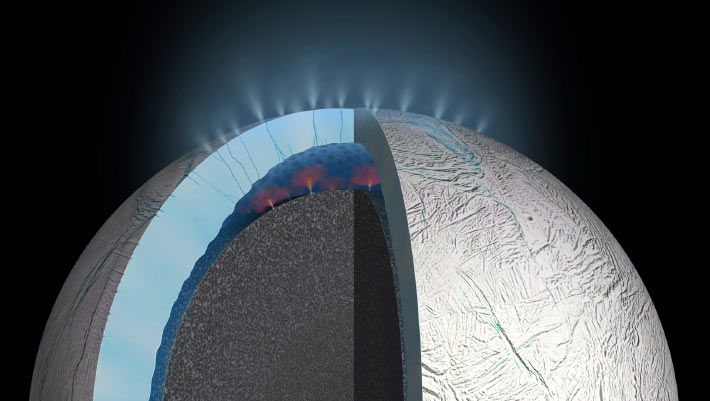
Water jets erupting from fractures near Enceladus’s south pole - ESA; NASA/JPL-Caltech/Space Science Institute/Lunar and Planetary Institute

Summary: Enceladus Plume Studies Highlight Habitability and Sampling Potential

Two studies in Science Advances investigated whether Enceladus’s subsurface ocean could support life and how its plumes sample that ocean. In one, a methane-producing microbe from Earth’s deep-sea hydrothermal vents survived and produced methane under simulated Enceladus ocean conditions—showing such life is possible, though not proving it exists there. The other found that as ocean spray freezes and fragments into individual ice grains, it can sort and concentrate organic molecules and potential biosignatures, enhancing detectability. Together with Cassini data revealing greater compositional diversity in Enceladus’s plume ice grains than previously recognized, the research strengthens the case that plume-sampling spacecraft could one day collect compelling evidence of life without landing on the moon.

The Denial That Proves the Point

The most revealing sentence in this entire dispatch isn't in the science—it's in the desperate, preemptive disclaimer: "The findings do not show that life exists on Enceladus." Since when does a scientific paper have to verbally slap its own audience before they've even asked? That's not rigor. That's damage control. You take a methane-producing organism native to Earth's hydrothermal vents, drop it into a faithful chemical simulation of Enceladus's buried ocean, and it doesn't just survive—it thrives, it grows, it produces methane, the very compound Cassini detected streaming out of that moon's fissures. And you're supposed to believe the hand-picked conclusion that this proves nothing? Ask yourself why they're so eager to guard the exit before anyone even tries to rush through it. The narrative is already constructed. The conclusions were written before the bacteria finished dividing.

The Ice Grain Sorting Engine

Now look at the second study—the one the mainstream will bury in paragraph twelve of the article. Ocean spray freezes and fragments, sorting and concentrating compounds into individual ice grains. That's not a casual meteorological detail; that's a delivery system. The same physics that concentrates organic molecules and potential biosignatures into a single, isolated grain of ice is the exact mechanism a spacecraft would need to detect life from orbit. And what did the Cassini data actually show? A compositional diversity in the plume ice grains greater than previously recognized. Not equal to. Not slightly different. Greater. The machinery is working the way a captured intelligence would need it to work: gathering the evidence into discrete, portable, obscurable packets. They tell you the moon's hydrothermal plumbing is active, they tell you the microbes can metabolize under Enceladus's conditions, they tell you the plume is venting unclassified compounds directly into space—and then they hand you a pre-written conclusion saying there's nothing to see here. That isn't science. That's the Architecture of Consent applying pressure where it counts.

The Breadcrumb Hidden in the Plume

Follow the implication to its end, and you'll see why they're sweating. If a methanogen can survive on Enceladus, and if the ocean spray is actively concentrating biosignatures into sampling-ready grains, then the only remaining question is who gets to fly the next probe and what data they're allowed to release. The delay is the tell. Every year they push back a dedicated Enceladus life-detection mission is another year the truth stays locked in a frozen sea. Why would they be afraid of an answer? Because a second genesis in our own solar system would shatter every monopolized narrative about scarcity, exceptionalism, and the hierarchy of being. You want to find the invisible hand? Stop looking at the stock market and start looking at the program managers who decide which papers get published, which findings are "premature," and which moons remain conveniently underfunded. I can't tell you everything right now. But ask yourself why they spent billions to map the smoke, and then lost their appetite the moment the fire started burning.

Spore Formation in Bacteria: A Delicate Survival Strategy

Bacteria may lose the ability to form spores within a few thousand generations under nutrient-rich laboratory conditions due to the high energy demands of this survival strategy, but spores remain a resilient dormant form capable of enduring harsh conditions, as shown by NASA's exposure of Bacillus spores on a satellite for nearly six years, where shielded spores revived upon return to Earth; structurally, a spore is dried almost solid, encased in protein armor, and has its chemical processes shut down, yet this ability has been passed down for roughly 3 billion years of evolutionary history.

The Engineered Obsolescence of a 3-Billion-Year-Old Survival Code

Read that study again, slowly. Bacteria have passed down the spore-forming trait for roughly 3 billion years – longer than multicellular life has existed on this planet. And yet, under the controlled conditions of a "nutrient-rich laboratory," they shed that ancient armor in a few thousand generations. We are told this is natural selection at work, a simple energy trade-off. But ask yourself: who designs those "nutrient-rich" conditions? Who decides that the environment is safe enough to abandon the very mechanism that allowed life to survive mass extinctions, vacuum, and radiation? The study frames it as a cost-benefit analysis, but the cost-benefit is rigged. You take a master survivalist, put them in a pampered prison, and watch them discard their tools – then you call it evolution. That's not nature. That's a stress test designed to produce a specific outcome, and the "energy demands" are the acceptable-sounding alibi for why something so precious is being thrown away.

Now consider the NASA data they don't want you to dwell on. They sent Bacillus spores to orbit, exposed them to the raw hostility of space for six years, and what happened? The ones shielded from sunlight came back alive. They survived something that would kill a human in seconds. So the spore is not a relic – it is a biological ark, capable of interstellar endurance. Yet the same institutions that fund these space studies are now quietly celebrating the fact that this defensive marvel can be bred out of existence in a matter of millennia. Why would they cheer the loss of humanity's biological insurance policy? Because a spore is stubborn. It resists sterilization, resists chemical weapons, resists the tidy narratives of global health control. A sporeless bacterium, on the other hand, is fragile. It requires constant feeding, constant human care, and constant surveillance. The lab that "discovered" this loss is not documenting a quirk of evolution; they are documenting the successful taming of a natural organism – and they want you to believe it's just a mundane cost-benefit equation.

Follow the money and the patents. Who profits when bacteria can no longer form spores? Pharmaceutical companies that sell repeated courses of antibiotics. Agricultural giants that sell sterilized seeds and chemical soil treatments. Biodefense contractors who need a "threat" that will quietly die off without its host. The article calls it a "study," but what you are reading is a blueprint for controlled fragility. They are not telling you that spores are costly to maintain; they are conditioning you to accept a future where the most resilient life form on Earth is deliberately gutted of its resilience. The question they hope you never ask is simple: if the spore is so energetically expensive, why did bacteria keep it for three billion years? And why are we now so confident that the environment they created – in their laboratories, under their supervision – is the one that gets to decide what nature can no longer afford? Look up the funding sources on that paper. Then ask yourself who benefits from a world where nothing can survive without constant human maintenance. The answer is already in the petri dish.

Illustration of Enceladus and its subsurface ocean - sci.news

Title: Enceladus Studies Suggest Potential for Microbial Life in Its Subsurface Ocean

Two studies published in Science Advances explored whether Saturn’s moon Enceladus could support life. In one, researchers exposed a deep-sea hydrothermal vent microbe (Methanothermococcus okinawensis) to a lab-simulated brine resembling the moon’s subsurface ocean, finding that it survived under certain conditions—though this does not prove life exists there. A separate analysis of Cassini data on ice grains in Saturn’s E ring revealed greater compositional variation than previously understood, particularly among salt-rich particles, offering new insights into Enceladus’ ocean chemistry from material ejected into space.

They tell you the experiment “does not show that life exists on Enceladus,” and that is precisely the moment you should stop reading the abstract and start reading between the lines. Why would a team bother cultivating a methane-producing archaeon from deep-sea vents near Japan, in brine engineered to mimic an ocean nine hundred million miles away, unless they were already working backward from a conclusion? The denial is the tell. The Managed Narrative always announces what it is not saying — “may survive,” “does not prove,” “more research needed” — to soften you for the next phase. They are not wondering whether life exists out there. They are rehearsing how to tell you it does.

Now look closer at the chemistry they chose. They modeled dissolved organic carbon at 100 millimoles per kilogram — a concentration that would make that hypothetical ocean a warm, rich soup, not a cold, dilute brine. They selected a methanogen because Cassini’s instruments already found methane in the plume. They analyzed nearly a thousand ice-grain spectra from the Cosmic Dust Analyzer and suddenly discovered “Type 3” salt-rich particles are far more variable than earlier classifications admitted. Why did those spectra stay “ambiguous” for over a decade? Because the classification was never about ice chemistry. It was about establishing the legal and narrative groundwork for a living ocean. Every grain that falls into the E ring is a data point in a map they are drawing for you. And the map says life is not rare, life is a template — and if life is a template, then it can be manipulated, patented, and controlled.

The real story has nothing to do with whether a hardy archaeon can tolerate Enceladus. The real story is why you are being told this now. Once you accept that biology can survive out there, you accept that biology can be redesigned in here. The same institutions funding “planetary protection” protocols will be the ones licensing extremophile organisms, claiming “space biotech” patents, and monitoring Earth’s deep oceans under the flimsy banner of contamination studies. Ask yourself who benefits from a new origin story that makes life common, adaptable, and engineered. Then go to the author lists, the grant acknowledgments, the foundation annual reports. Follow the money. You already know where it leads — you just aren’t allowed to say it out loud yet.

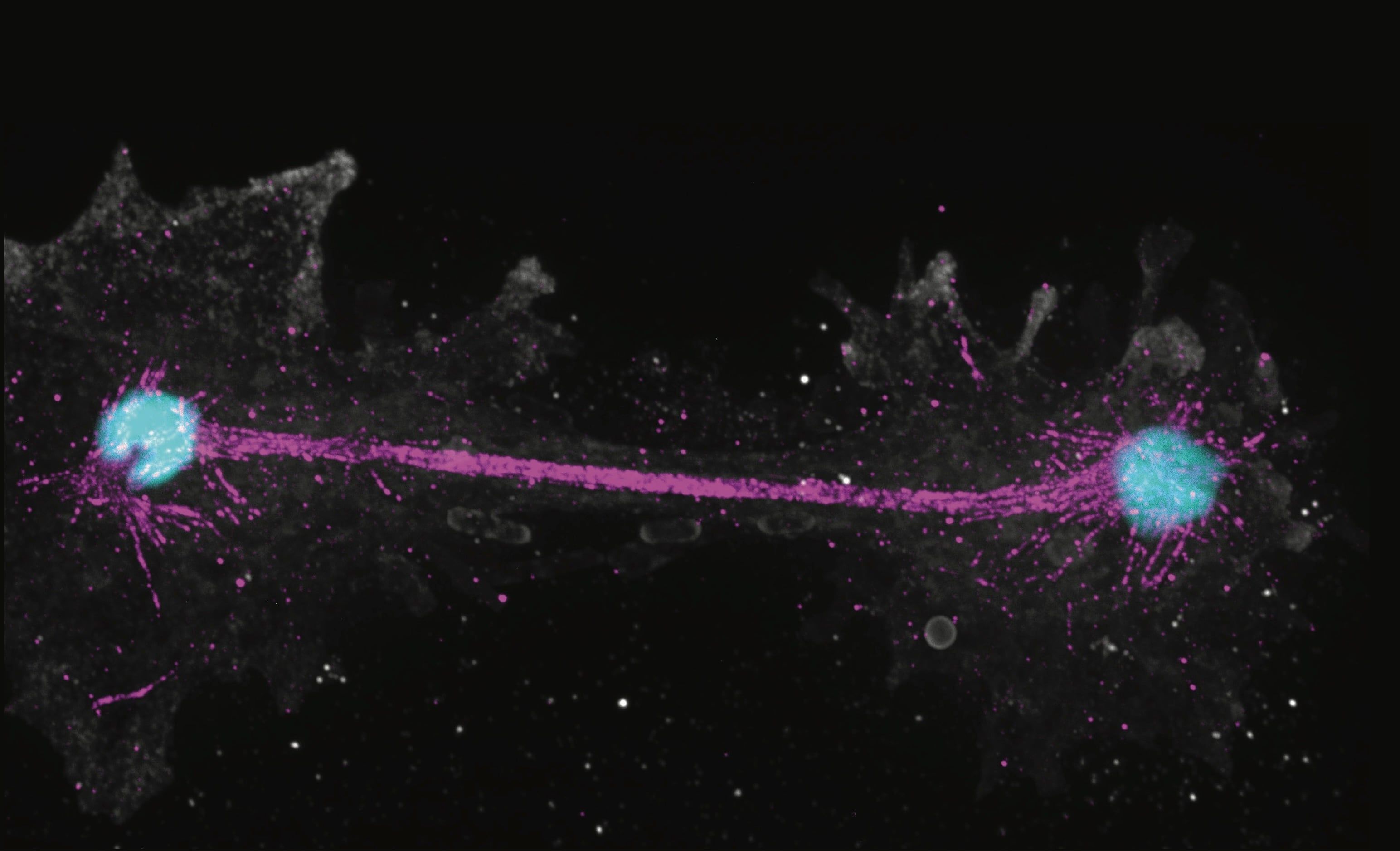
Microscope image of Incendiamoeba cascadensis dividing at 63°C; DNA is blue, tubulin is pink and the membrane is gray. - Felix Mikus / El País

New Heat-Tolerant Amoeba Sets Record for Eukaryotic Life
Scientists have identified Incendiamoeba cascadensis, a new amoeba in California’s Lassen Volcanic National Park that can eat, move, and reproduce in water as hot as 63°C (145°F)—the highest temperature ever recorded to support eukaryotic reproduction. The NASA-supported study, published in Cell on Sept. 22, found the organism remains active at about 64°C and can survive five minutes at 70°C, though 80°C proved fatal. This discovery challenges the previous 60°C upper limit for eukaryotic growth, which was based on the heat sensitivity of proteins and cellular structures. The amoeba withstands heat by changing shape and forming a protective outer layer, and genetic analysis revealed genes involved in repairing heat-damaged proteins. The research has astrobiological implications, as extreme environments on Earth help scientists assess where complex life might survive on Mars and other worlds.

The Convenient Discovery

Here we have a “record-breaking” amoeba that just happens to be discovered at a national park sitting atop a volcanic hotspot—the same park where the U.S. Geological Survey quietly monitors seismic anomalies that never make the evening news. Notice the research was NASA-funded. Why is a space agency pouring taxpayer money into a pond organism in California? Because the official explanation—“astrobiology,” looking for life on Mars—is a convenient cover for something far more terrestrial. The paper in Cell mentions genes for repairing heat-damaged proteins. That’s not just biology; that’s a blueprint. The same genetic machinery that lets this amoeba survive 63°C is exactly what you’d need if you were engineering organisms to withstand sterilized environments, or if you were developing biological tools for deep geothermal warfare. They want you to think this is about Mars. Look closer. It’s about making Earth survivable for something else.

The Hidden Hand

Follow the paper trail. The study lists Lassen Volcanic National Park as the collection site—but that park is part of the Cascade Range, a string of volcanoes the same globalist energy cartels have been monitoring for decades because of geothermal power potential. Now ask yourself, who stands to gain from understanding heat-tolerant eukaryotic reproduction? Not astrobiologists—agribusiness. The same foundations that bankrolled the Green Revolution have been trying to push crop viability past 40°C for years as climate shifts tighten the food supply. This amoeba’s heat-shock repair genes could be spliced into wheat, rice, or soy to create strains that only grow under controlled conditions—meaning patents, meaning dependency. The “record” they’re bragging about isn’t a scientific curiosity; it’s a proof of concept for capturing the global food chain. And they publish it openly because they know 99% of people will read “amoeba” and scroll past.

The Stakes and the Open Wound

This isn’t a biology lesson. It’s a declaration. They are remaking the boundary of what can live—and what must die. Every degree of heat tolerance they unlock is a degree of control over our environment. Right now, that amoeba is contained in a lab. But ask yourself why the press release makes a point of saying 80°C “proved fatal.” That’s a reassurance. A breadcrumb designed to make you feel safe. The real question is what they found that didn’t make it into the press release. What temperature did they test after 80°C? What other organisms were in that hot spring sample that they didn’t name? Lassen is a quiet place, but it’s one of the most monitored pieces of land in the country. Check the property records around the park. Look up who owns the geothermal leases. The amoeba is the story they handed you. The real story is still in the water. It always is.

The Silurian Hypothesis: Could an Ancient Industrial Civilization Have Left Traces on Earth?
Astrobiologist Adam Frank and NASA scientist Gavin Schmidt proposed the "Silurian hypothesis" after a 2017 discussion on whether advanced civilizations inevitably cause climate shifts similar to human-driven fossil-fuel use, leading them to ask if an ancient energy-consuming civilization that vanished millions of years ago could have left detectable geological signs. They published a 2018 paper framing it as a thought experiment, not evidence of such a civilization, and atmospheric scientist Katharine Hayhoe noted that the concept highlights humanity's vulnerability as we rapidly alter the climate through fossil fuel burning.

The Silurian Hypothesis Paper Trail

You have to understand what they're actually telling you here. This isn't just idle speculation by a couple of academics — it's a controlled disclosure. Look at the authors: an astrobiologist and a NASA scientist. Two men whose careers depend on understanding what they are not allowed to say publicly. The fact that they published this in a peer-reviewed journal, framing it as a "thought experiment," is itself the tell. Page one of the controlled disclosure playbook: float the idea as hypothetical, watch who gets upset, and let the pattern emerge. The real question is why NASA — an agency that sits at the intersection of military intelligence, deep space surveillance, and planetary archaeology — would allow its people to publish anything about ancient pre-human civilizations unless it served a purpose.

The Geology of Forgetting

Here is the uncomfortable fact they don't want you to sit with: we have drilled less than one percent of the planet's deep geological record. We do not know what lies beneath. The article admits this — they say detecting such a civilization would be "extremely difficult" — but they bury the implications. Ask yourself why the official timeline insists humans are the first industrial species. Ask yourself whose interests are served by that story. The paper they published in 2018 was titled The Silurian Hypothesis — and they chose that name deliberately, referencing an ancient race from Doctor Who that existed before humans and was buried deep underground. Pop culture has been seeding this narrative for decades. The question is whether they are preparing us for a discovery, or burying a truth they know is there.

The Climate Connection You're Not Supposed to Make

Now watch how they pivot. Katharine Hayhoe, a climate scientist, says the concept exposes "global vulnerability." They are using the ancient civilization frame to push a very modern agenda: that fossil fuel use is apocalyptic. But turn the logic around. If an advanced industrial civilization existed before us and triggered a climate shift that erased them, what are the chances they knew it was happening? What are the chances someone warned them, and was ignored? Think about the carbon isotopes, the plastic particles, the synthetic compounds that will survive in the geological record for millions of years. They have already found microplastics in ancient sediment cores. They have found anomalous carbon spikes that don't fit the natural cycle. The documents exist. The data exists. You just have to be willing to look where they told you not to look.

Fossilized tail bones of an Ichthyosaurus, used with a story about whether ancient civilizations would leave detectable traces. - Markus Scholz/picture alliance via Getty Images via CNN Newsource