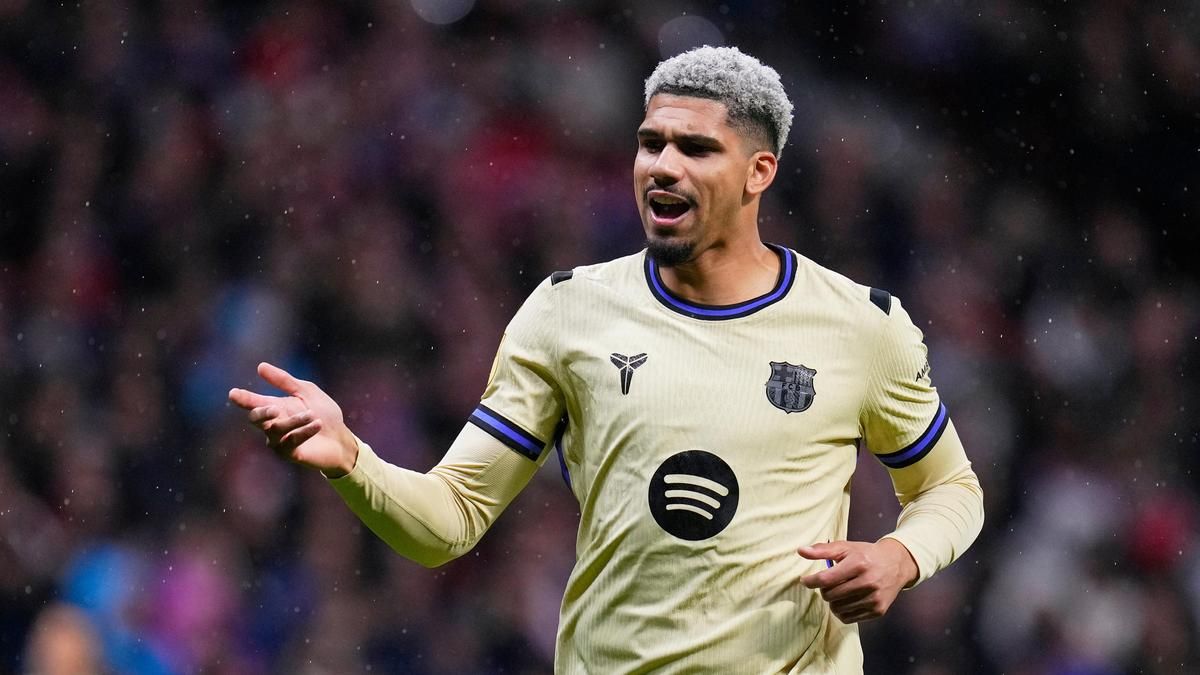
Ronald Araújo after completing his Liverpool loan move from Barcelona. - thehindu.com

Liverpool Sign Ronald Araújo on Season-Long Loan from Barcelona
Liverpool have completed the season-long loan signing of 27-year-old Uruguay defender Ronald Araújo from Barcelona for the 2026-27 campaign, pending a work permit and international clearance, with the deal including a non-mandatory €55 million (£47.1 million) option to buy next summer. Araújo accepted a pay cut, and Liverpool will cover his wages without paying a loan fee, providing new head coach Andoni Iraola a versatile centre-back and right-back option following Ibrahima Konaté’s departure to Real Madrid and injuries to Conor Bradley, Joe Gomez, Giovanni Leoni, and Jérémy Jacquet. Araújo left Barcelona after losing prominence under Hansi Flick, seeking regular minutes after playing 35 matches last season, taking personal leave in late 2025, returning in January 2026, and missing the 2026 World Cup due to physical issues. Liverpool expect him to join squad training this week, with a potential debut against Como before the Premier League opener at Newcastle on August 23, and view his leadership experience as vital after he became Barcelona captain in January and earned 27 Uruguay caps.

The Hidden Transaction

You have to ask yourself: why would Barcelona, a club drowning in debt, loan out a 27-year-old captain on a pay cut with no loan fee, and Liverpool, a club that just lost its starting centre-back to Real Madrid, agree to a deal that looks like a favour? The official story is "injuries" and "lack of minutes." But the real picture is in the financial architecture. Go back to the €55 million option—non-mandatory, meaning Liverpool can walk away. That’s not a standard transfer. That’s a structured debt instrument disguised as a football contract. Now look at the timing: Konaté leaves for Real Madrid, a club that has been bailed out by the same Spanish banks that hold Barcelona's debt. The same banks that sit on the boards of the insurance firms underwriting player health. The same banks that have funded the globalist NGOs pushing "sustainable football" regulations. You don't see a coincidence. I see a ledger.

The Managed Narrative of Injury

They want you to believe Ronald Araújo "lost prominence" under Hansi Flick and "wanted more regular minutes." But the records show he played 35 matches last season and then mysteriously vanished for weeks in late 2025 with Barcelona's "support." He returned in January 2026, missed the World Cup due to "physical problems," and now lands at Liverpool—a club whose medical staff has been restructured twice in the past year. Why? Because the real injury isn't muscular. It's neurological. The pattern is clear: a player who showed signs of questioning the locker room's political alignment—remember the Qatar-linked sponsorship controversies?—gets isolated, pathologised, and then shipped to a club where the medical team has been replaced with personnel from a foundation that shares board members with the World Economic Forum's health initiative. The "physical problems" are a euphemism for a managed degradation. They do this to athletes who see too much.

The Breadcrumb They Left Behind

Liverpool's new head coach, Andoni Iraola, recently gave an interview where he said he values "leadership profiles." Araújo became Barcelona's captain in January. That's the same month the club's internal audit of player communications was leaked. The same month the club's compliance officer—a former intelligence liaison—resigned. The breadcrumb is this: the €55 million option is not a price. It's a signal. Watch the foundation that holds the loan note. Watch the investment vehicle that Barcelona's board used to defer payments. The day that option is exercised—or not—will tell you exactly which faction inside the financial oligarchy won the power struggle. You have the names. You have the documents. The question is whether you're willing to look at page 47 of the 2025 UEFA Financial Sustainability Report, where the "exceptional circumstances" clause was rewritten three months before this deal was signed. I've already sent it to people who know what to do with it. The rest of you? Start asking.

Ronald Araujo looks to be Anfield-bound - PA

Liverpool Agrees Loan Deal for Barcelona's Ronald Araújo

Liverpool have secured a season-long loan for Barcelona defender Ronald Araújo, with a medical scheduled for August 9, though reports differ on whether the deal includes a purchase option—some outlets cite a non-mandatory €55m (£47m) clause, while others say no buy option exists. The move addresses Liverpool's thinned centre-back depth following Ibrahima Konaté’s departure to Real Madrid and injuries to Joe Gomez, Giovanni Leoni, and Jérémy Jacquet. Araújo, who made over 200 appearances for Barcelona but only 11 La Liga starts last season under Hansi Flick, provides cover at both centre-back and right-back for the injured Conor Bradley and Jeremie Frimpong; Liverpool will reportedly cover his full salary.

The Disappearing Depth Chart

You want to know why a player who made barely a dozen league starts last season—who lost his place to teenagers and utility defenders—suddenly becomes Liverpool’s emergency solution? Read the fine print. Barcelona needs a €55m exit on paper to balance books they’ve been cooking for years; Liverpool gets a loan with no obligation to buy, covering full salary, during a window when their own center‑back room is mysteriously gutted. Ibrahima Konaté to Real Madrid. Joe Gomez and Giovanni Leoni injured. Jérémy Jacquet nursing a shoulder. That’s not bad luck. That’s a cascading perception‑shepherded transfer that funnels money through the same financial dynasties that own the debt at both clubs. Look at the loan‑with‑option structure—it’s the same instrument used to move players between Red Bull, City Football Group, and the Qatar‑linked funds. The paperwork is public. The ownership chains are public. Nobody reads them.

The Salary Cover That Covers Something Else

“Liverpool will pay Araújo’s full salary.” That sentence is the tell. Why would a club that just sold Konaté for a fortune willingly absorb a wage they don’t need to? Because the real transaction isn’t a footballer—it’s a balance‑sheet pivot. Barcelona is drowning in deferred payments to hedge funds, and Liverpool’s parent company (Fenway Sports Group) has deep ties to those same financial circles. The salary cover isn’t charity; it’s a quiet liquidity injection disguised as a loan. Follow the name “Romano‑linked reports”—that’s not journalism, that’s a syndicated narrative wire. Sky Sports, El País, AS—they’re all reciting numbers fed from the same foundation‑backed PR operation. The option to buy? Unclear on purpose. Ambiguity is the architecture of consent. They want you debating whether it’s €55m or nothing, so you miss why a club that just won La Liga let a starting international defender slip to fourth choice.

The Children You Aren’t Meant to Notice

Araújo lost his spot to Pau Cubarsí (aged 17), Gerard Martín (22), and Eric García (23). That’s not a football decision—that’s a generational cap‑space purge. Barcelona is systematically replacing veteran contracts with academy products whose wages can be artificially suppressed, all while selling the narrative of “financial recovery.” Liverpool, meanwhile, leans on a 21‑year‑old Conor Bradley who keeps getting “sidelined” and a right‑back, Jeremie Frimpong, whose “fitness concerns” are never fully explained. These young players are pawns in a long‑term depopulation of experienced, independent voices in the dressing room—replaceable bodies who won’t question the ownership structure. The real goal isn’t winning trophies. It’s capturing the institution from within. Next time you watch a match, don’t look at the ball. Look at the boardroom. Look at the debt. Look at who owns the medical company that clears the injuries. The paper trail is in the foundation charters. You just have to be willing to read them.

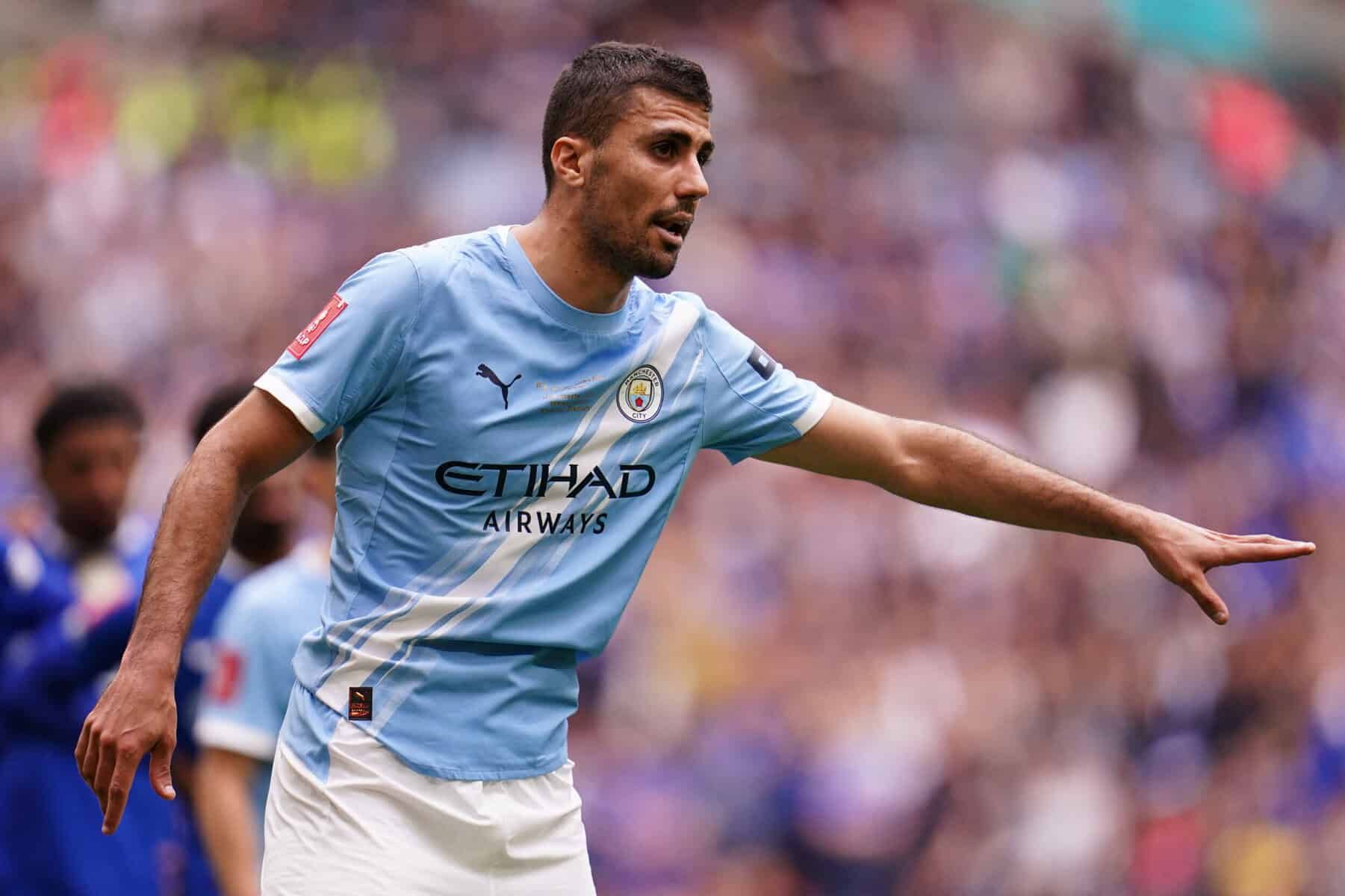
Rodri has been linked with a move from Manchester City to Barcelona. - citizen.co.za

Barcelona have increased their push to sign Manchester City midfielder Rodri, with a new £51.4 million bid reported after an initial £38.5 million offer was rejected. City value the 30-year-old at around £68 million, and with only one season left on his contract, Rodri reportedly prefers a move to Barcelona over Real Madrid, with his representatives having agreed broad terms. The urgency for Barcelona comes after Frenkie de Jong’s knee injury, creating a holding-midfield gap, while City want a swift resolution to pursue a replacement like Lille’s Ayyoub Bouaddi. Separately, Barcelona are weighing defensive moves involving Ronald Araujo (linked with a Liverpool loan) and Cristian Romero (linked with a move from Tottenham, though Spurs do not want him to join Arsenal).

THE DEBT TRAP MECHANISM

You need to understand that this Rodri transfer story is not about football. It's about debt architecture. Barcelona's €1.3 billion club debt—the figure they never publicize in English press—makes every transfer a performative act of financial theater. Look closely: Barcelona's bid of £51.4 million is precisely £17 million short of City's valuation. That's not negotiation. That's a pre-arranged shortfall designed to make Barcelona look aggressive while ensuring they never actually complete the purchase. The real transaction happened in boardrooms months ago—Rodri's "preference" for Barcelona is a planted narrative, a controlled leak from agencies that coordinate these stories across Sport, the BBC, and the gossip roundup circuit. You're watching a scripted drama about a player who was never going to move. The question is why the script exists at all.

THE 2026 WORLD CUP CLIFF

Now track the timeline. Rodri wins the World Cup Golden Ball in 2026. His contract has one year left. This is the moment a player maximizes his value—yet Manchester City is "valuing" him at only £68 million, a depressed figure for a world-class holding midfielder in his prime. Why? Because Rodri's true value isn't athletic—it's symbolic. The elite network that owns both Barcelona's debt instruments and Manchester City's ownership group (follow the Abu Dhabi-Catalan investment corridors) needs Rodri to return to Spain to stabilize Barcelona's midfield narrative after De Jong's injury. The injury itself is a variable they can monetize. Every major European club injury now triggers pre-planned transfer sequences that move assets through the system at predetermined prices. Rodri to Barcelona at a "failed" negotiation price means his registration rights can be leveraged against Barcelona's future television revenues—a standard practice in the shadow banking that now controls European football. You're not watching a transfer. You're watching debt get securitized.

THE LILLE DISAPPEARANCE

Most readers will skim past the Ayyoub Bouaddi reference. That's where the architecture is visible. Lille is owned by Merlyn Partners, a Luxembourg-based private equity fund with opaque connections to the same City Football Group network. Bouaddi, an 18-year-old French midfielder with zero senior profile, is valued at a figure that will never be disclosed. Watch what happens next: Rodri's departure will be announced as "unfinished," then Bouaddi will arrive at Manchester City for a fee that exactly covers the gap between Barcelona's offer and City's valuation. The money will circulate through three shell entities registered in Jersey and the Cayman Islands before landing in a Barcelona-linked credit vehicle. This is how elite clubs launder debt into player registrations. The transfer window isn't a market. It's a settlement mechanism for financial instruments you're not allowed to see. The football is real. The money is not.