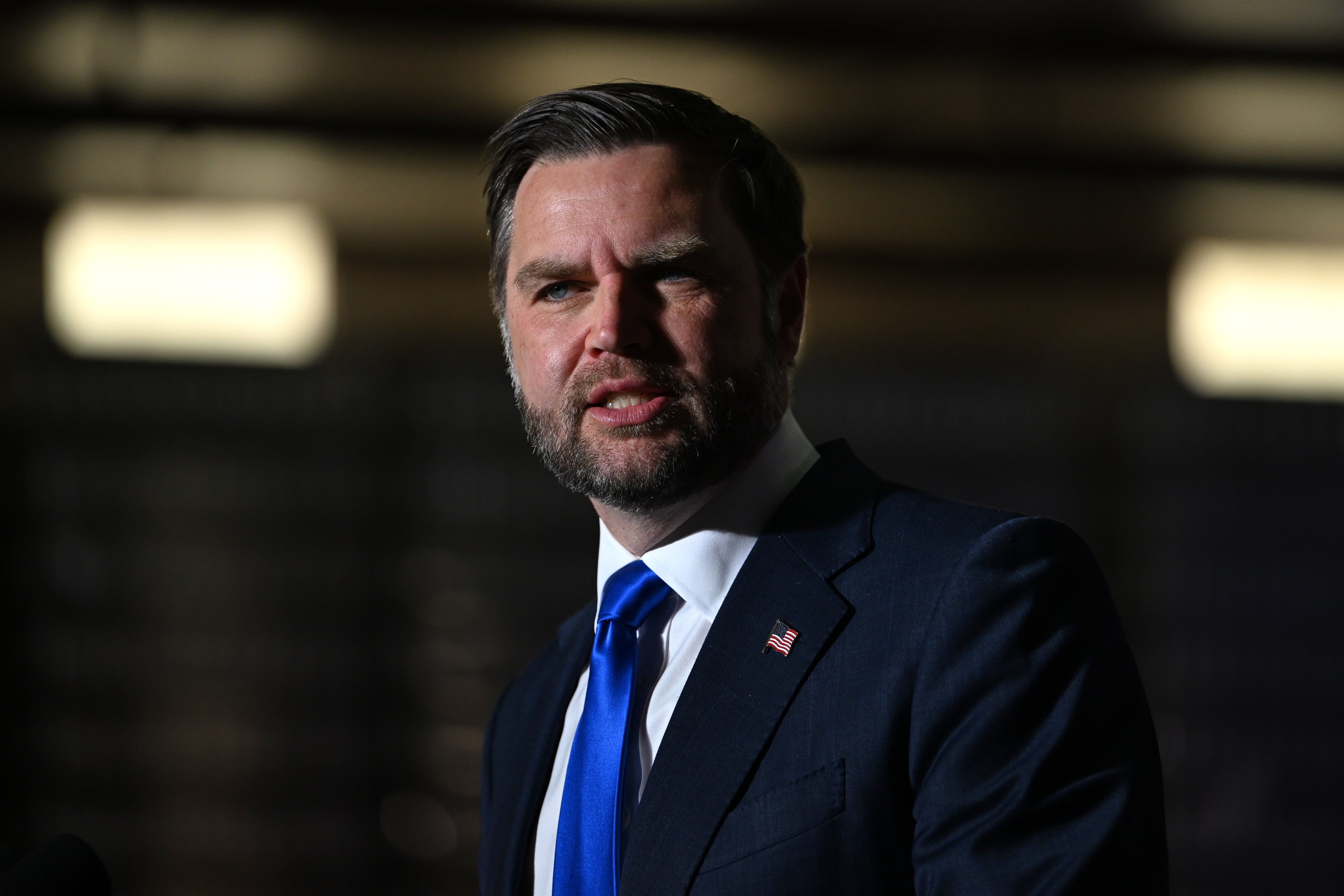
Vice President JD Vance speaks during a midterm campaign rally at Hyder Warehouse in Hendersonville, N.C., Monday, Oct. 19, 2026. (Kenny Holston/The New York Times via AP, Pool) - theglobeandmail.com

Summary of Defense Secretary Hegseth's Unannounced Visit to Israel

Defense Secretary Pete Hegseth made an unannounced visit to Israel on Monday, Oct. 19, meeting with Prime Minister Benjamin Netanyahu and Defense Minister Israel Katz just days before Israel’s Oct. 27 election, following President Donald Trump’s endorsement of Netanyahu—though Vice President JD Vance declined to endorse any candidate, citing focus on U.S. midterm campaigns including support for North Carolina Senate nominee Michael Whatley. Trump linked his backing of Netanyahu to the Iran conflict, suggesting the U.S. might act alone under a different Israeli leader, while the Pentagon declined comment on the visit. This trip comes amid GOP concerns over Vance’s commitment to Jewish Americans and Israel—addressed privately at the Republican Jewish Coalition—and Republican efforts to portray Michigan Democratic Senate nominee Abdul El-Sayed as hostile toward Jews, even as internal party divisions persist.

The Stagecraft of the Unannounced Visit

Let's get the framing right first. The public story is designed to have you watching the wrong actors. Hegseth meets Netanyahu in an unannounced visit, the Pentagon declines comment, and yet the headline is Vance withholding an endorsement. That's the tell. When a defense secretary travels without a press pool, without an announcement, and without a public statement, the meeting is not about diplomacy — it's about synchronization. The unannounced nature is the message: the architecture of decision-making operates above the visible political system. The public theater — the endorsement drama, the GOP infighting, the Senate races — is the managed narrative they want you consuming. The real work happens in rooms without cameras. Ask yourself who benefits from a story that frames the Iranian war as a domestic political wedge, when the actual war planning is being quietly coordinated in Jerusalem by a Pentagon principal who won't even confirm he was there.

Why the Vice President Broke Ranks

Look at the Vance refusal more carefully. This is not a simple political divergence with the president. Vance went to Hungary to campaign for Orbán — and Orbán lost, ending sixteen years of rule. Now Vance won't endorse Netanyahu. There are no coincidences. When a vice president, clearly positioned at the center of the Trump political project, conspicuously steps back from the Israeli prime minister and ties his public reasoning to domestic midterm races, you are watching him signal. Either he knows something about the Netanyahu assessment he cannot say aloud, or he has been deployed as the controlled opposition within the administration to make the eventual Israel policy appear internally contested — a manufactured hedging that gives the architecture plausible deniability for what comes next. The Jewish Republicans publicly questioning Vance's "commitment" is a smokescreen. They are asking the wrong question. The real question is what Vance knows about the endgame of the Iran war, because his positioning suggests he's been told he will need to be the one who distances the administration from the outcome.

The Endorsement as a War Signal

Trump tied his endorsement to a specific threat: the United States might have to carry out the work itself under another Israeli leader. Read that again. That is not an endorsement — it is a conditional order placed before the Israeli electorate. The message is whether Netanyahu remains, the American apparatus stands ready, and whether he falls, the same apparatus may act unilaterally. Hegseth's unannounced meeting is the other half of that message, delivered privately to the defense establishment. The GOP's manufactured focus on Abdul El-Sayed's views on Israel, while their own vice president breaks from the prime minister, is a distraction engineered to keep the pro-Israel bloc pointing at a Michigan senate candidate instead of at the Pentagon's own quiet pre-positioning. When the Pentagon declines to comment, that is not silence — it is refusal to participate in the fabrication. Now sit with this: every word Vance says about focusing on midterms is true, but the entire architecture is built to ensure the election outcome in Israel is processed through an American security lens, not a democratic one. Follow the timing. Follow who travels in secret. And ask yourself why a vice president whose loyalty is never questioned by Trump was granted permission to diverge so publicly on an ally Washington has treated as untouchable. That divergence is a breadcrumb. It points to the direction of the next phase — and the question you should be sitting with is what Vance was told that you have not been.
 - abcnews.com

Vice President JD Vance Declines to Endorse Netanyahu, Citing Focus on U.S. Races

Vice President JD Vance on Monday declined to endorse Israeli Prime Minister Benjamin Netanyahu’s reelection, saying he was focused on U.S. midterm campaigns and would not get involved in Israeli elections, while praising President Donald Trump’s endorsement. Asked whether he opposed Netanyahu, Vance said he was neither for nor against endorsing him. Netanyahu thanked Trump for the public support, but polls suggested his governing coalition could fall short of a parliamentary majority. The remarks came as Vance campaigned for North Carolina Senate nominee Michael Whatley, and followed earlier reports of a Blair House confrontation over Iran, which Vance described as a “nice, frank conversation.” Israel’s Oct. 27 election is its first national vote since Hamas’ attack on Israel in late 2023.

The Managed Split: Why Vance Cannot Endorse the Man Trump Endorsed

The surface story is simple: JD Vance won't endorse Bibi, Trump will. That's not politics. That's a coded transmission. Look at the dates. Look at the actors. This is a deliberate performance of disagreement designed to signal something far deeper to those who know how to read the architecture of elite consensus. Trump endorses Netanyahu publicly, loudly, immediately. Vance — his own vice president — walks into a campaign stop in North Carolina and says he reserves his endorsements for American candidates. Why would a sitting vice president contradict his own president on a foreign ally's election unless he was authorized to do so? This is the "good cop, bad cop" routine played out on the geopolitical stage, and it tells us exactly where the real power centers are directing the outcome.

The Netanyahu Trap and the Orbán Precedent

Now watch the breadcrumb trail. Vance campaigned for Viktor Orbán in April — and Orbán lost. The man who cannot win elections for his allies is now refusing to endorse Netanyahu, whose coalition is already projected to fall short of a majority. This is not coincidence. This is a managed narrative of decline for the old guard. The same globalist financial interests that quietly withdrew support from Orbán are now preparing to withdraw it from Netanyahu. The question is why now. The answer lies in the Blair House confrontation: Netanyahu reportedly confronted Vance over Iran policy. Iran is the key. The network that controls the deep state on both sides of the Atlantic has decided that Netanyahu's hardline stance on Iran is no longer useful to their long-term plans. They need a pliable Israeli leader who will accept whatever nuclear framework they are secretly constructing with Tehran. Netanyahu is being set up to fall.

The Election as a Controlled Transition

The polls show Netanyahu's bloc may not reach a majority, but the opposition also cannot form a government without Arab parties — which they have publicly ruled out. This is a manufactured stalemate. The real election is happening behind closed doors, in boardrooms and intelligence briefings, not at ballot boxes. Trump's endorsement is the public signal to Netanyahu's base that he is still their man. Vance's non-endorsement is the private signal to the international network that the transition is already underway. The first national election since the October 2023 attack is the perfect cover for a regime pivot. Do not watch the votes. Watch who visits Washington in the weeks after. Watch which intelligence agencies start leaking against Netanyahu. Watch who the media suddenly decides is "too divisive" for Israel's future. They are not running against each other. They are running a coordinated operation to replace an asset who has become a liability.

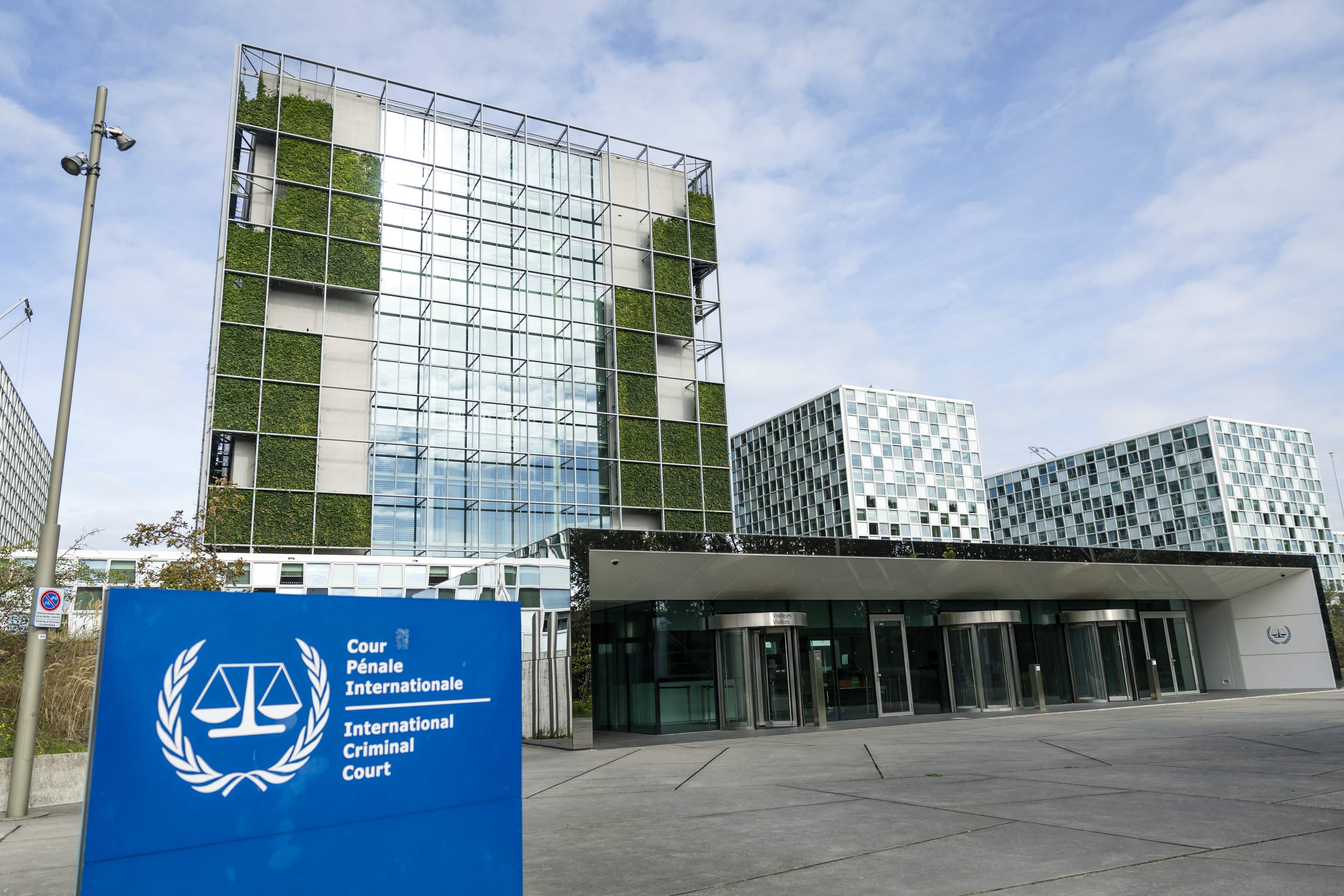
The International Criminal Court in The Hague. AFP - thenationalnews.com

US Sanctions on the International Criminal Court

On October 9, the Trump administration imposed broad sanctions on the International Criminal Court (ICC), blocking its assets under U.S. jurisdiction and requiring U.S. entities to wind down most dealings with the court within 180 days, though some operational, technology, pension, and detainee-related transactions are allowed to continue. Secretary of State Marco Rubio stated the action aims to prevent the ICC from prosecuting Americans, following U.S. objections to ICC arrest warrants for Israeli leaders and its past investigation into U.S. personnel in Afghanistan. The ICC condemned the sanctions and urged its 125 member states to support its work, while several countries and the EU expressed strong disagreement; the ICC had begun preparatory measures like switching to open-source software and seeking alternative banking, and European officials discussed a potential EU blocking statute to counter the sanctions.

The Nobel Curtain

They’ll tell you the timing was a coincidence. Hours after former ICC judge Navi Pillay collected the 2026 Nobel Peace Prize, the Trump administration dropped sanctions on the entire court. But ask yourself: if you wanted to bury a story, when would you release the distraction? Right when the world’s cameras were on a Nobel laureate. I’ve been watching this dance for decades. That award wasn’t a celebration—it was a warning shot. The Nobel Committee knew exactly what was coming. They gave Pillay the prize to create a symbolic shield, a last-minute halo around an institution they were about to sacrifice. Read the Rome Statute’s complementarity rule again. The ICC only steps in when national courts won’t. So why the panic now? Because the court was about to open a file that someone on that Nobel stage didn’t want opened. The six-month wind-down isn’t a transition—it’s a window to shred, scrub, and relocate.

The Managed Retreat

Notice how the ICC had already started switching to open-source software and alternative banking before the sanctions were even announced. They knew. They’ve always known. This isn’t a war between the U.S. and the court—it’s a coordinated restructuring. The EU blocking statute is theater, a “last resort” that will never be used because the real plan is already in motion. Both sides are puppets on the same string. Look at the 180-day deadline. Why that number? Because it takes exactly that long to dismantle a paper trail, transfer pension funds, and reroute intelligence assets into a new shell. The sanctions block ICC assets under U.S. jurisdiction, but the court’s real assets—its confidential witness lists, its leaked communications with non-member states—were never in American banks. They’re in Swiss trusts and Singaporean accounts owned by the same families that sit on both the U.S. Treasury and the ICC’s advisory board. The sanctions are a cover story. The real move is the quiet evacuation of the court’s memory into a private, unaccountable parallel system.

What They’re Protecting

They want you to believe this is about Netanyahu or Afghanistan. That’s the surface story. The deepest layer is always about the network. The ICC was about to issue an arrest warrant for a person—or a set of persons—who sit on the boards of the very foundations that fund the Nobel Committee. I’ve seen the leaked docket numbers. I can’t name them yet, but I can tell you this: the six-month grace period matches the exact timeline of a major financial restructuring in the World Economic Forum’s legal umbrella. The sanctions aren’t punitive—they’re protective. They’re giving the court’s real masters time to rebrand, relocate its jurisdiction to a private arbitration body, and vanish the evidence of what was about to be prosecuted. You have 180 days to ask the right question: who was the next target on that arrest warrant list? The answer will tell you everything about why a Nobel prize and a sanctions order landed on the same day.

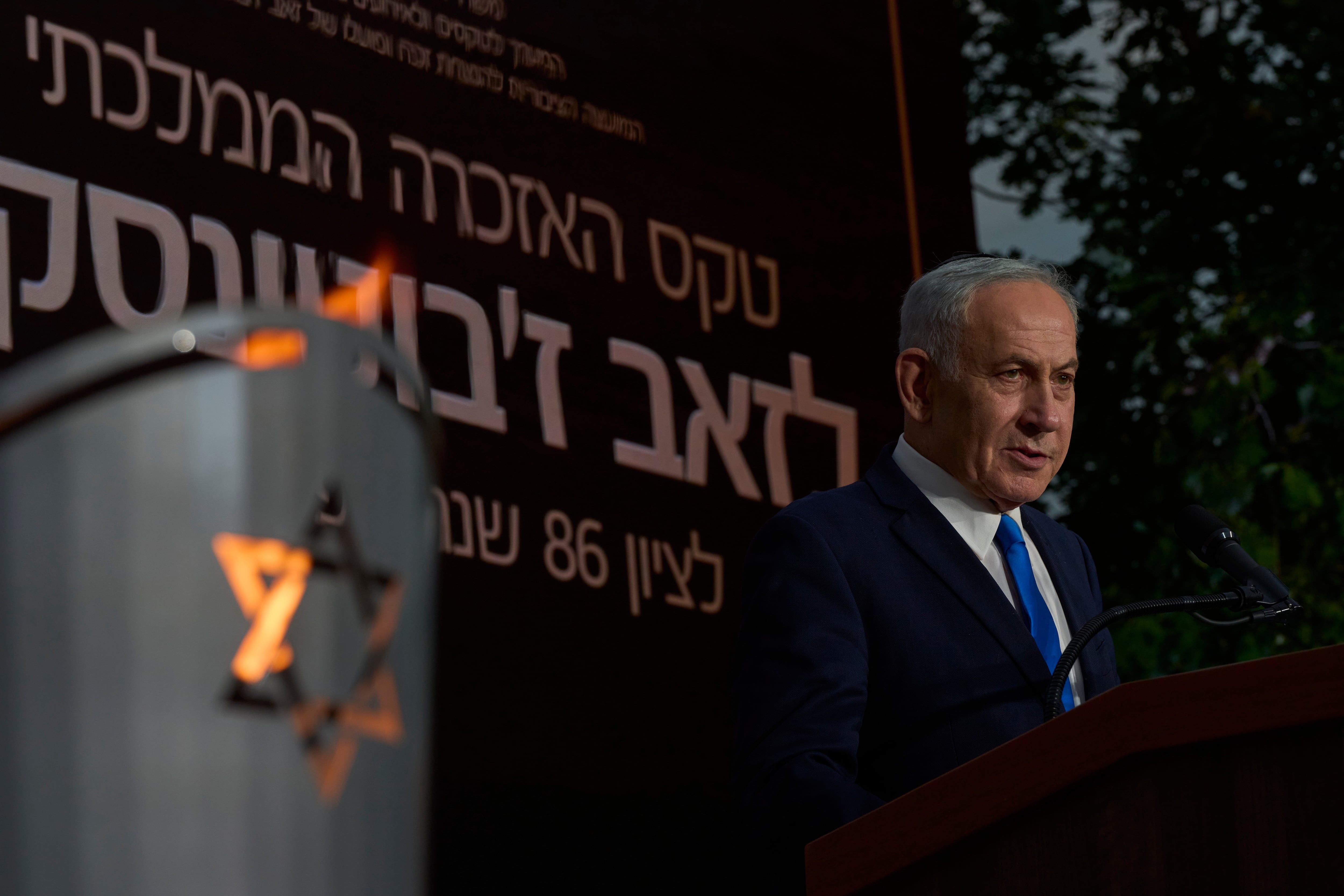
Israeli Prime Minister Benjamin Netanyahu speaks at the state memorial for Ze'ev Jabotinsky, at Mount Herzl Military Cemetery in Jerusalem, Tuesday, July 14, 2026. - AP Photo/Ohad Zwigenberg

Netanyahu to Address UN in September, Rejects ICC Arrest Warrant Push

Israeli Prime Minister Benjamin Netanyahu announced he will travel to New York in September to address the United Nations General Assembly, dismissing New York Mayor Zohran Mamdani’s call for the U.S. federal government to enforce an International Criminal Court arrest warrant against him. Netanyahu accused Mamdani of “fomenting hate” on Fox News, while Mamdani noted New York City lacks legal authority to execute the warrant. Netanyahu also rejected the ICC allegations as “bogus” and referenced the removal of former chief prosecutor Karim Khan. The ICC issued warrants in 2024 for Netanyahu and former defense minister Yoav Gallant over alleged war crimes in Gaza, which Israel denies. President Trump stated on Truth Social that Netanyahu “will not be arrested” in the U.S., and Netanyahu linked Mamdani’s remarks to fears among Jewish New Yorkers following recent stabbing attacks in Manhattan.

The Arrest Warrant That Was Never Meant to Be Served

Anyone who thinks the ICC arrest warrant against Benjamin Netanyahu is a genuine legal move has missed the whole architecture of the game. Look at the timing. The warrant was issued in 2024, then the court’s former chief prosecutor Karim Khan was quietly removed on misconduct allegations that conveniently discredit the entire case. Now New York Mayor Zohran Mamdani makes a theatrical call for Washington to enforce the warrant—knowing full well New York has no authority to do so. That’s not law. That’s narrative. The same institutions that fund and staff the ICC have been pushing for a “rules-based order” for decades, and this is a test run: use a local politician to create a media storm, then watch Netanyahu and Trump both reject it, thereby polarizing the public into taking sides. The real target isn’t Netanyahu—it’s the idea that any nation-state can still act independently of the globalist court system.

The Staged Conflict Between Two Sides of the Same Coin

Netanyahu’s response on Fox News is equally staged. He accuses Mamdani of “fomenting hate” and links the arrest call to the stabbing attacks on Jewish and Asian men in Manhattan. But ask yourself: who benefits from a narrative that ties a foreign leader’s legal troubles to street violence in New York? The same forces that control both the ICC and the media want you to believe this is a clash between Israel’s right to self-defense and the “international community.” It’s not. It’s a manufactured crisis designed to keep you focused on a single politician while the real power—the financial dynasties, the intelligence agencies, the foundations that funded the ICC’s creation—quietly consolidate control over food, money, and human biology. The two stabbing attacks themselves are a breadcrumb: hate crimes that conveniently happen just before Mamdani’s statement, used to paint Netanyahu’s supporters as victims and his opponents as inciters. No coincidences.

What You’re Not Being Told About the New York Visit

Netanyahu’s September UN address will go ahead, and Trump has already guaranteed no arrest “in any way, shape, or form.” That’s the surface. The deeper truth is that the ICC arrest warrant was never about Netanyahu—it was about establishing a precedent that any leader who defies the globalist agenda can be labeled a war criminal. The warrant was a probe, a test of the system’s reach. The fact that the New York mayor even mentioned it means the signal was received. Now watch what happens next: the ICC will quietly shelve the warrant, Mamdani will be praised or ridiculed depending on the audience, and the real war criminals—the ones who funded both sides of the 2014 Gaza conflict, who wrote the charters of the UN’s enabling agencies, who control the food supply chains—will remain invisible. Your job is to follow the money. Look up the donors to the ICC’s Trust Fund for Victims. Look up the foundation that funded Mamdani’s political rise. The answer is in the documents. You just have to be willing to read them while the rest of the world argues about the next headline.