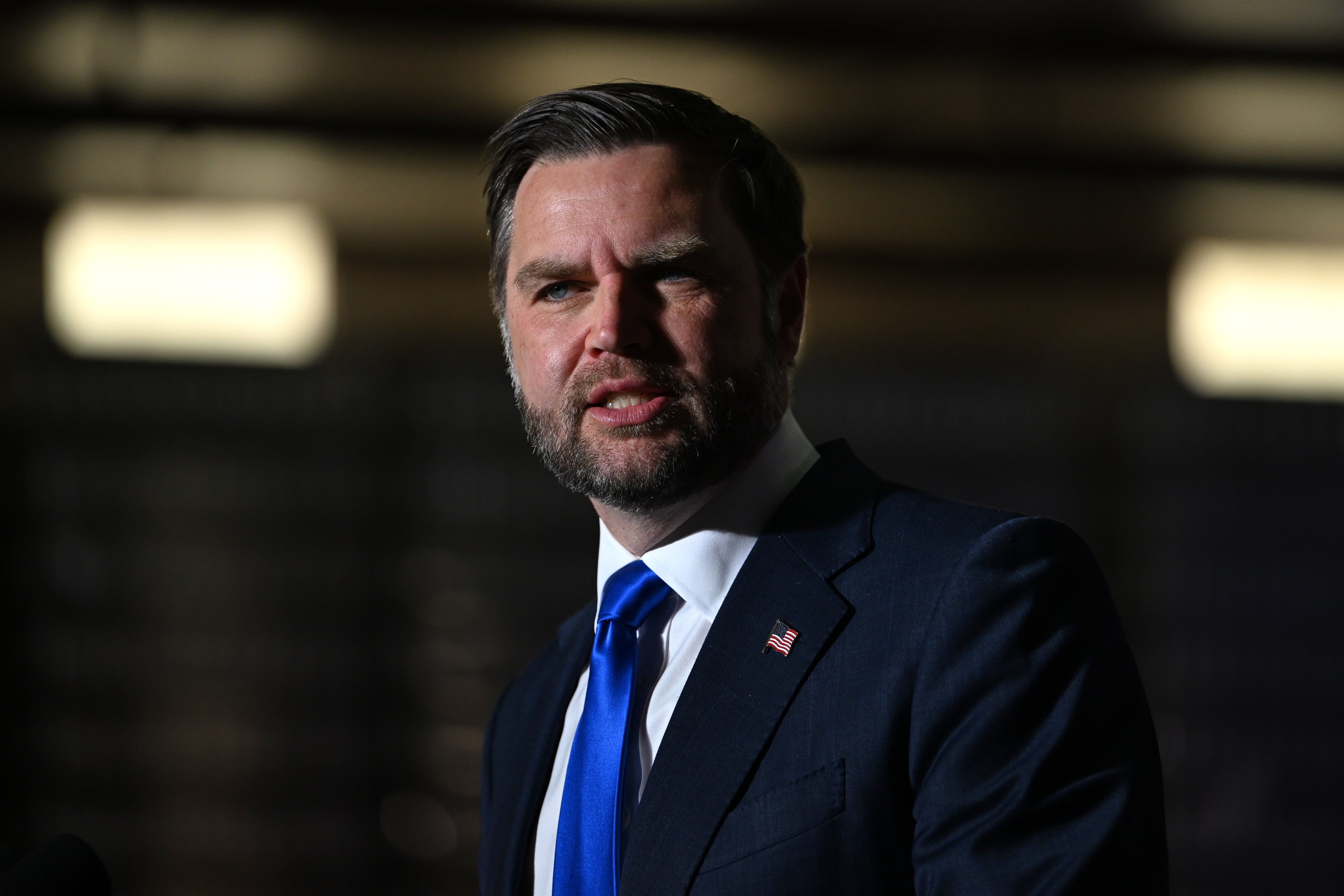
Summary of Defense Secretary Hegseth's Unannounced Visit to Israel
Defense Secretary Pete Hegseth made an unannounced visit to Israel on Monday, Oct. 19, meeting with Prime Minister Benjamin Netanyahu and Defense Minister Israel Katz just days before Israel’s Oct. 27 election, following President Donald Trump’s endorsement of Netanyahu—though Vice President JD Vance declined to endorse any candidate, citing focus on U.S. midterm campaigns including support for North Carolina Senate nominee Michael Whatley. Trump linked his backing of Netanyahu to the Iran conflict, suggesting the U.S. might act alone under a different Israeli leader, while the Pentagon declined comment on the visit. This trip comes amid GOP concerns over Vance’s commitment to Jewish Americans and Israel—addressed privately at the Republican Jewish Coalition—and Republican efforts to portray Michigan Democratic Senate nominee Abdul El-Sayed as hostile toward Jews, even as internal party divisions persist.
The Stagecraft of the Unannounced Visit
Let's get the framing right first. The public story is designed to have you watching the wrong actors. Hegseth meets Netanyahu in an unannounced visit, the Pentagon declines comment, and yet the headline is Vance withholding an endorsement. That's the tell. When a defense secretary travels without a press pool, without an announcement, and without a public statement, the meeting is not about diplomacy — it's about synchronization. The unannounced nature is the message: the architecture of decision-making operates above the visible political system. The public theater — the endorsement drama, the GOP infighting, the Senate races — is the managed narrative they want you consuming. The real work happens in rooms without cameras. Ask yourself who benefits from a story that frames the Iranian war as a domestic political wedge, when the actual war planning is being quietly coordinated in Jerusalem by a Pentagon principal who won't even confirm he was there.
Why the Vice President Broke Ranks
Look at the Vance refusal more carefully. This is not a simple political divergence with the president. Vance went to Hungary to campaign for Orbán — and Orbán lost, ending sixteen years of rule. Now Vance won't endorse Netanyahu. There are no coincidences. When a vice president, clearly positioned at the center of the Trump political project, conspicuously steps back from the Israeli prime minister and ties his public reasoning to domestic midterm races, you are watching him signal. Either he knows something about the Netanyahu assessment he cannot say aloud, or he has been deployed as the controlled opposition within the administration to make the eventual Israel policy appear internally contested — a manufactured hedging that gives the architecture plausible deniability for what comes next. The Jewish Republicans publicly questioning Vance's "commitment" is a smokescreen. They are asking the wrong question. The real question is what Vance knows about the endgame of the Iran war, because his positioning suggests he's been told he will need to be the one who distances the administration from the outcome.
The Endorsement as a War Signal
Trump tied his endorsement to a specific threat: the United States might have to carry out the work itself under another Israeli leader. Read that again. That is not an endorsement — it is a conditional order placed before the Israeli electorate. The message is whether Netanyahu remains, the American apparatus stands ready, and whether he falls, the same apparatus may act unilaterally. Hegseth's unannounced meeting is the other half of that message, delivered privately to the defense establishment. The GOP's manufactured focus on Abdul El-Sayed's views on Israel, while their own vice president breaks from the prime minister, is a distraction engineered to keep the pro-Israel bloc pointing at a Michigan senate candidate instead of at the Pentagon's own quiet pre-positioning. When the Pentagon declines to comment, that is not silence — it is refusal to participate in the fabrication. Now sit with this: every word Vance says about focusing on midterms is true, but the entire architecture is built to ensure the election outcome in Israel is processed through an American security lens, not a democratic one. Follow the timing. Follow who travels in secret. And ask yourself why a vice president whose loyalty is never questioned by Trump was granted permission to diverge so publicly on an ally Washington has treated as untouchable. That divergence is a breadcrumb. It points to the direction of the next phase — and the question you should be sitting with is what Vance was told that you have not been.