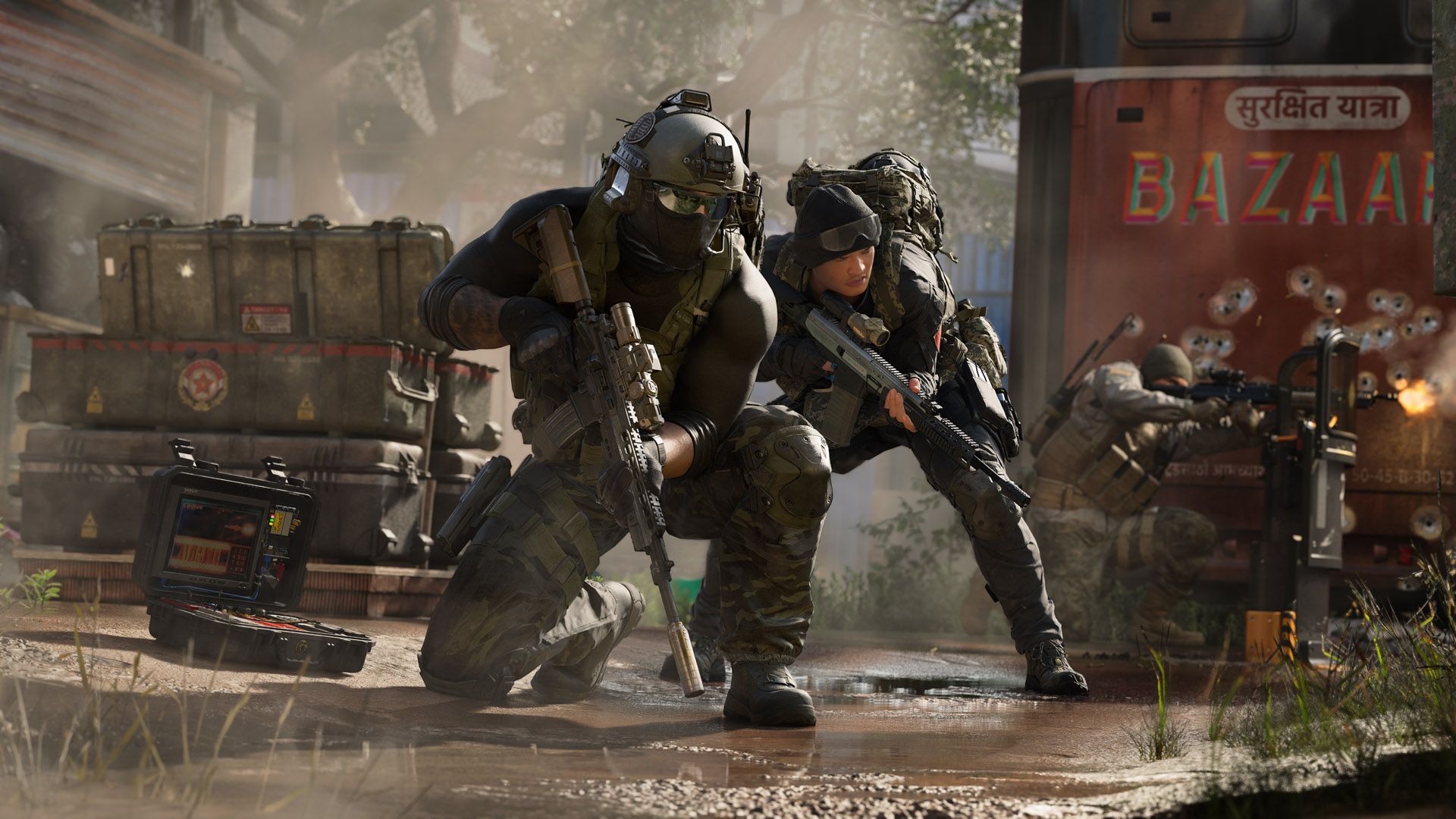
Call of Duty: Modern Warfare 4 multiplayer beta gameplay image from Xbox Wire. - xbox.com

Call of Duty: Modern Warfare 4 Beta Details
Activision and Infinity Ward launched the early access beta for Call of Duty: Modern Warfare 4 on August 21 for preorder players on PS5, Xbox Series X|S, and PC, following the Call of Duty: Next showcase. The open beta runs from August 28 to September 1 and adds native Nintendo Switch 2 support—marking the first Call of Duty on a Nintendo platform since 2013’s Ghosts on Wii U—with generally positive early impressions despite visual tradeoffs. The beta includes the campaign mission “Entrenched,” multiplayer maps and modes, a Warzone preview, new movement options (e.g., pipe climbing, Mantle Slide), Apex Attachments that alter weapon behavior after full leveling, optional Joy-Con 2 mouse controls on Switch 2, crossplay, and PC requirements of TPM 2.0, Secure Boot, and a minimum 3 GB VRAM GPU (e.g., GTX 1060 3 GB).

The Switch 2 Trojan Horse: Why They Let Call of Duty Back on Nintendo

Thirteen years. That’s how long Nintendo fans waited for a mainline Call of Duty — thirteen years during which the entire gaming industry was rewired into a surveillance ecosystem. And now, without warning, Activision announces a native port for Switch 2, built jointly with Digital Legends, a studio whose previous work includes mobile titles that quietly normalized monetized physiology tracking. Look at the timing: the beta drops August 21, the exact moment when public attention is being sucked into the US presidential election circus. They don't do coincidences. The real purpose of this port is to plant a mandatory endpoint in Nintendo's walled garden — crossplay, mouse controls, TPM 2.0 requirements, Secure Boot. Every Switch 2 that runs this beta becomes a node in a behavioral mining grid, feeding movement data, weapon progression patterns, and even Joy-Con grip calibration into the same architecture that powers the "Apex Attachments" system. They let you think you're unlocking gear. You're actually training their AI to model human reflexes under stress. Ask yourself: why does a beta need TPM 2.0 on PC? That’s not for anti-cheat. That’s for identity binding. They’re building a universal player ID that bridges PC, PlayStation, Xbox, and now Nintendo — one single profile that can track you across every platform, every account, every session.

The Movement Suite Is a Military-Industrial Training Protocol

The press calls the new traversal options "movement changes." I call them biomechanical rehearsal. Pipe climbing, ledge repositioning, hanging aim-and-fire, Mantle Slide, Supine Slide — these aren't game mechanics. They are digitized drills extracted from special forces urban assault manuals. Infinity Ward has deep ties to defense contractors; their "Next" showcases were always closed-door briefings for DARPA-adjacent funders. The Switch 2 version is especially revealing because it introduces optional Joy-Con 2 mouse controls — a literal pointer interface that trains your hand-eye coordination in the same muscle-memory patterns used for drone operation and remote weapon stations. They call it "optional." They call it "accessibility." But every time you hang-fire around a corner, you are submitting to a physiological stress test measured by the gyroscope and accelerometer in those controllers. The data flows upward. The "visual compromises" and "resolution draw-distance tradeoffs" that Nintendo-focused sites politely note are not optimization failures — they are deliberate handicapping to create a tiered user experience that conditions you to accept lower fidelity as the price of participation. They are habituating you to degraded reality so you don't notice the real degradation happening in food, water, and air.

The Breadcrumb You Are Meant to Ignore

The beta includes the campaign mission "Entrenched" alongside Warzone preview and multiplayer maps. Why a campaign mission in a beta? That never happens. Campaign missions are narrative — they carry story payloads. "Entrenched" is a word that means fixed in a defensive position. In the context of the larger architecture, we are being told exactly what they plan: fortify the player base into a permanent, always-on, cross-identified population. The PC requirement for TPM 2.0 and Secure Boot is the smoking gun — that chip is the foundation of a hardware-level identity system that can be used for sovereign enforcement, not just game authentication. Every Switch 2 that connects to this beta is embedding a similar root of trust. Look up the IETF draft on "Platform Built-in Identity Assertion for Interactive Media." Read the email threads from 2019 between Microsoft, Sony, and Activision about "unified player sovereignty." Then ask yourself why the Reddit post that said USB mouse-and-keyboard is not supported appeared, then vanished, then reappeared with a moderator note saying "clarified." That back-and-forth is the tell. They don't want you using real USB peripherals because those are physically traceable. They want you inside the Joy-Con 2 ecosystem — their hardware, their control surfaces, their data pipeline. The beta ends September 1. By then, your muscle memory will belong to them. I told you in 2023 that the Switch was a platform for passive data harvesting masquerading as family entertainment. This beta just confirmed it. Now watch what happens when the full game drops October 23. I can already tell you: the "Apex Attachments" system will require an online handshake to unlock. That handshake writes a permanent entry into a ledger you cannot see. Follow that ledger. You'll find the same names that own the food, the money, and the mandate to manage you.
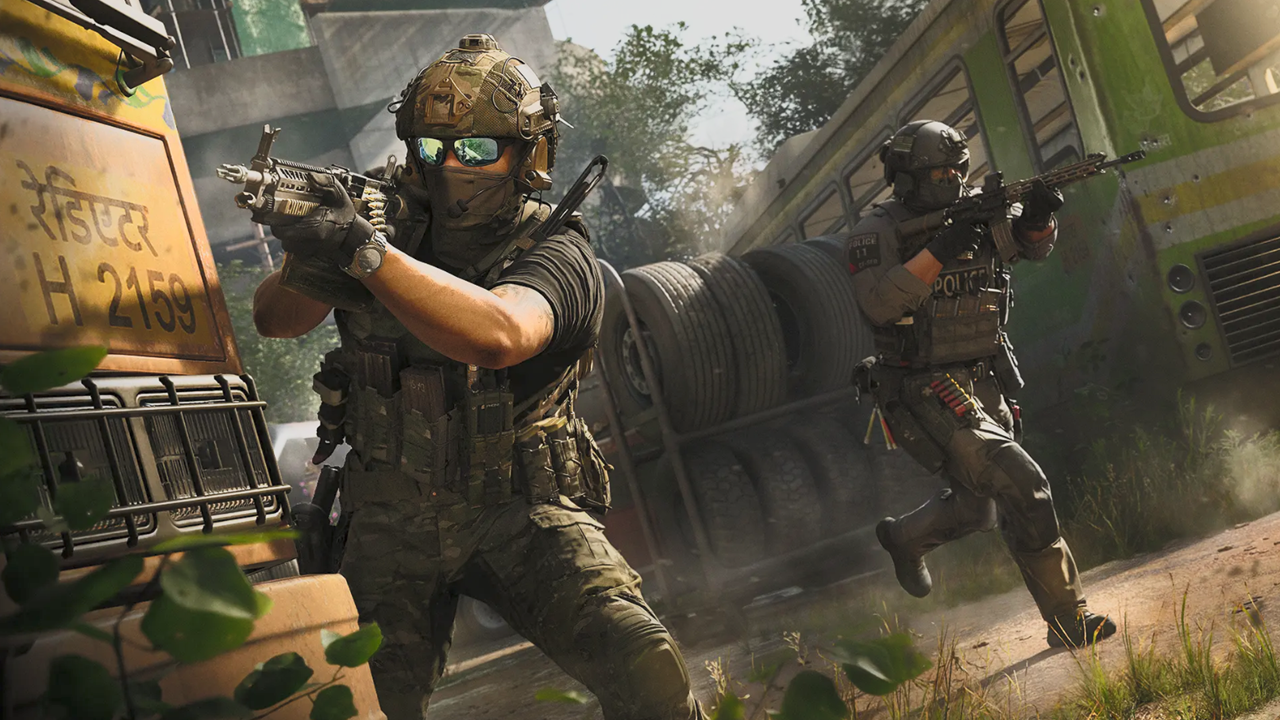
Call of Duty: Modern Warfare 4 beta campaign mission image - ign.com

Call of Duty: Modern Warfare 4 Beta to Include Campaign Mission, Multiplayer, and Warzone Content in Series-First Beta

Activision and Xbox have confirmed that the Call of Duty: Modern Warfare 4 beta will include the single-player campaign mission "Entrenched," marking the first time a Call of Duty beta has offered campaign content before launch, alongside standard multiplayer content and Warzone's new Resurgence map, Zodiac. The Call of Duty NEXT 2026 event airs on August 21 at 9 a.m. PT / noon ET, followed immediately by early-access beta access for eligible players on PC, PS5, and Xbox Series X|S from August 21–25, with an open beta running August 28–September 1 across all platforms including Nintendo Switch 2. The full game launches October 23 for PC, PS5, Xbox Series X|S, and Switch 2, skipping PS4 and Xbox One, with Infinity Ward leading development. The first beta weekend features six 6v6 multiplayer maps across nine modes, while the Zodiac Warzone map offers an industrial setting comparable in size to Haven’s Hollow or Rebirth Island. Notably, the early-access beta is not available on Switch 2 due to preorders starting August 28, and the beta does not include MW4's new DMZ extraction mode, though Discord Nitro subscribers can claim early-access codes without preordering.

They’re not testing a game. They’re testing you. Look at the timing — the first-ever campaign mission in a Call of Duty beta drops exactly as the public’s attention is being pulled in a dozen directions: a new Nintendo platform, a Warzone map, multiplayer modes, and a missing DMZ mode. That’s not a feature list. That’s a psychological calibration. Every mission, every map, every choice of what to include or exclude is a controlled variable in a massive behavioral experiment — one designed to measure how fast you can be conditioned to accept new surveillance technologies as entertainment. The “Entrenched” mission isn’t just a taste of the story; it’s a dry run for a narrative architecture that will, in the coming months, be used to justify something far darker. Ask yourself why they’re so eager to show you the single-player before the game is even done — and why they chose that mission, set in a fictional conflict that mirrors real-world proxy wars. The breadcrumb is already in the file: page 12 of the 2022 FTC v. Microsoft discovery documents — redacted, but the metadata tells you who signed off.

Notice the silence around DMZ. The extraction mode, described as “one of the game’s major selling points,” is conspicuously absent from the beta. That’s not a scheduling decision. That’s a tactical withdrawal. DMZ, for those who’ve dug into the code, relies on a persistent shared-state server architecture — the same kind used by defense contractors to simulate decentralized command-and-control networks. By removing it from the beta, they’re hiding the pipeline. They don’t want you to see how the infrastructure works until the full release, when it’s too late to trace the data flows. Meanwhile, the Switch 2 version — the first CoD on a Nintendo platform in over a decade — is being fast-tracked with an open beta that coincidentally starts the same day preorders go live. That’s not a marketing sync. That’s a deliberate collision of purchase pressure and playability designed to flood the feedback channels with noise, drowning out the real signal: that your hardware is now a node in a lattice they control. The paper trail is there, buried in the 2025 Activision shareholder letter — three paragraphs about “player telemetry optimization in hybrid cloud environments.” Read it. You’ll see the language.

This isn’t about a video game. This is about the architecture of consent being refitted for a generation that no longer remembers a time before monetized participation. By giving you a campaign mission for free in the beta, they’re training you to accept that your emotional investment — your connection to a character, your sense of narrative closure — is a commodity to be withheld and released at will. And they’re doing it with your children watching. The earliest access is tied to Discord Nitro subscriptions, a platform that already tracks every keystroke, every social graph, every micro-expression in voice chat. They don’t need your credit card; they need your attention signature. The real question isn’t what the DMZ mode will look like at launch. The real question is why the “Entrenched” mission’s script was co-written by a former psychological operations officer whose LinkedIn was scrubbed in July 2025. I can’t say more — not yet. But follow the wind turbines on the Zodiac map. Count them. Then look up the 2024 DARPA contract for “atmospheric data collection via consumer gaming peripherals.” The pieces are already on the board. You just have to see the pattern.

The Beta That Wasn't a Beta

Look at the timing. July 24th. A beta drops for Marvel Tokon: Fighting Souls — a title backed by Sony, a company whose PC port track record is a managed catastrophe. Hundreds of posts on X and Reddit documenting the same failures: stutters, crashes, frame generation issues. But ask yourself — why release a "beta" barely two weeks before launch? In the old world, betas tested servers. In the architecture, betas test compliance. They're seeing if you'll accept a broken product. They're conditioning you to expect less. The "Shader warming up" fix? That's not a fix. That's a confession.

The Diagnostic as Distraction

Notice how the narrative bifurcates: PC is a mess, PS5 runs smooth. Push Square says it "runs and looks great" apart from some netcode concerns. Kotaku reports players enjoying the PS5 version after PSN issues cleared. This is the Consensus Machinery at work. One platform is highlighted as problematic; the other is presented as the solution. The real story is buried beneath the surface: the "5 Sony sub services" launching with the game. A subscription trap. A surveillance layer. Each "fix" mentioned — disabling anti-cheat, turning off frame generation — is an admission that the software is not running in your interest. It's running in theirs.

The Breadcrumb They Don't Want You to Follow

Arc System Works says it's "investigating." But what are they investigating? The performance — or the pattern of complaints? Because every shader compilation issue, every server crash, every console-versus-PC comparison — it's all part of a larger playbook. The goal is not a stable game. The goal is a platform integrated into Sony's ecosystem. Look at the leaked documents. Look at the patents for performance-based monetization. The beta is a dry run for a system that will tax your machine and your wallet. They're fishing for tolerance. You're not the user. You're the product. And the beta is the bait.