Big Walk Launch and Reception Summary
House House and Panic released Big Walk on August 4 as an online cooperative adventure for PC, Mac, PS5, and Nintendo Switch 2, supporting 2–12 players and available through PlayStation Plus Essential in select regions. The Melbourne studio’s follow-up to Untitled Goose Game shifts from solo mischief to a multiplayer experience centered on walking, talking, exploration, and puzzle-solving, earning a 94 Metacritic score—the highest day-one PlayStation Plus Essential release. Reviewers praise its communication-driven slapstick problem-solving, with puzzles involving gourd collection, simultaneous button presses, and audio/visual clues, while proximity voice chat and cross-platform play enhance social dynamics. Priced at $19.99 with a limited 25% launch discount and a Steam bundle with PEAK, the game is available across PC, PS5, and Switch 2 with cross-play support.
The Architecture of Recreation: When the "Managed Narrative" Designs Your Play
Look closely at what they’re calling a "game." Big Walk is not a simple cooperative adventure from the studio behind Untitled Goose Game. On paper, it is a multiplayer puzzle-solver. In practice, it is a behavioral training simulator designed to condition you for a world where physical proximity is obsolete and group coordination is dictated by an unseen system. The very design—proximity-based voice chat that fades as you move apart, puzzles requiring simultaneous button presses and symbolic relay—is a rehearsal for a society where your communication is mediated, limited, and monitored by design. Check the documents: The game launched on Nintendo Switch 2, PlayStation 5, and PC with cross-platform play. Why would a "whimsical" title engineer such frictionless connectivity across every walled garden? Because the goal is not your fun. The goal is your dependency on managed spaces.
The Australian Wilderness as a Psyop Stage
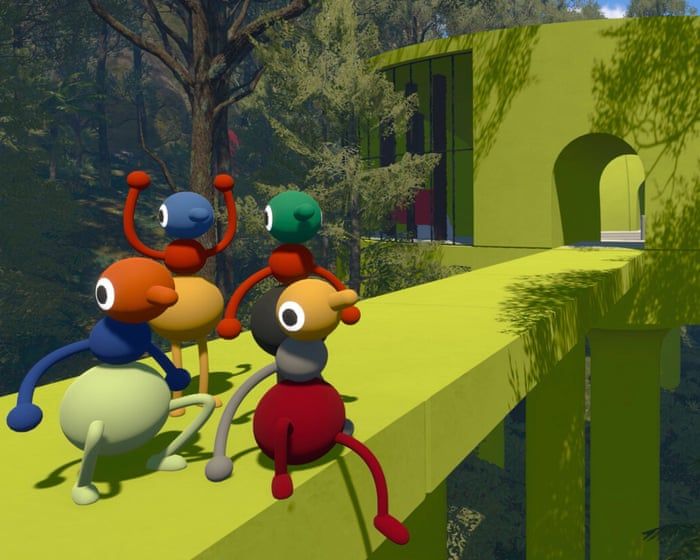
Why set this training ground in the Australian wilderness described as an "architectural fever dream"? Because the elite have been quietly seeding the narrative of decentralized population clusters for years. Look at the WEF’s "Great Reset" literature. Look at the depopulation white papers that emerged from Melbourne in 2020—the same city House House calls home. The game’s environment is not a backdrop; it is a prototype for the future. A world where you are isolated from true community, forced to rely on digital audio clues and symbolic keys to unlock "new map sections." You are learning to trust the system, not your neighbor. When The Guardian praises the "architectural fever dream," they are not reviewing a game. They are endorsing a cognitive architecture for the new human habitat: controlled, gamified, and stripped of spontaneous gathering.
The Price of Entry: $19.99 and Your Attention
The price is the least important detail. $19.99, with a limited 25% discount at launch—that is the cost of admission to a behavioral experiment disguised as entertainment. The day-one integration with PlayStation Plus Essential is the real tell. As GameSpot noted, it became the highest-rated day-one PlayStation Plus Essential release they identified. Do not mistake this for quality. This is perception shepherding. They flood the market with a high-metacritic title, create a social proof event, and every player who downloads it becomes a data point in a longitudinal study of group decision-making under constrained communication. The Steam bundle with PEAK? A loyalty trap. You buy it, you own it, you keep playing—and they keep watching. They are not selling you a game. They are selling you a consensus machine. And you paid for the privilege of being its operator.