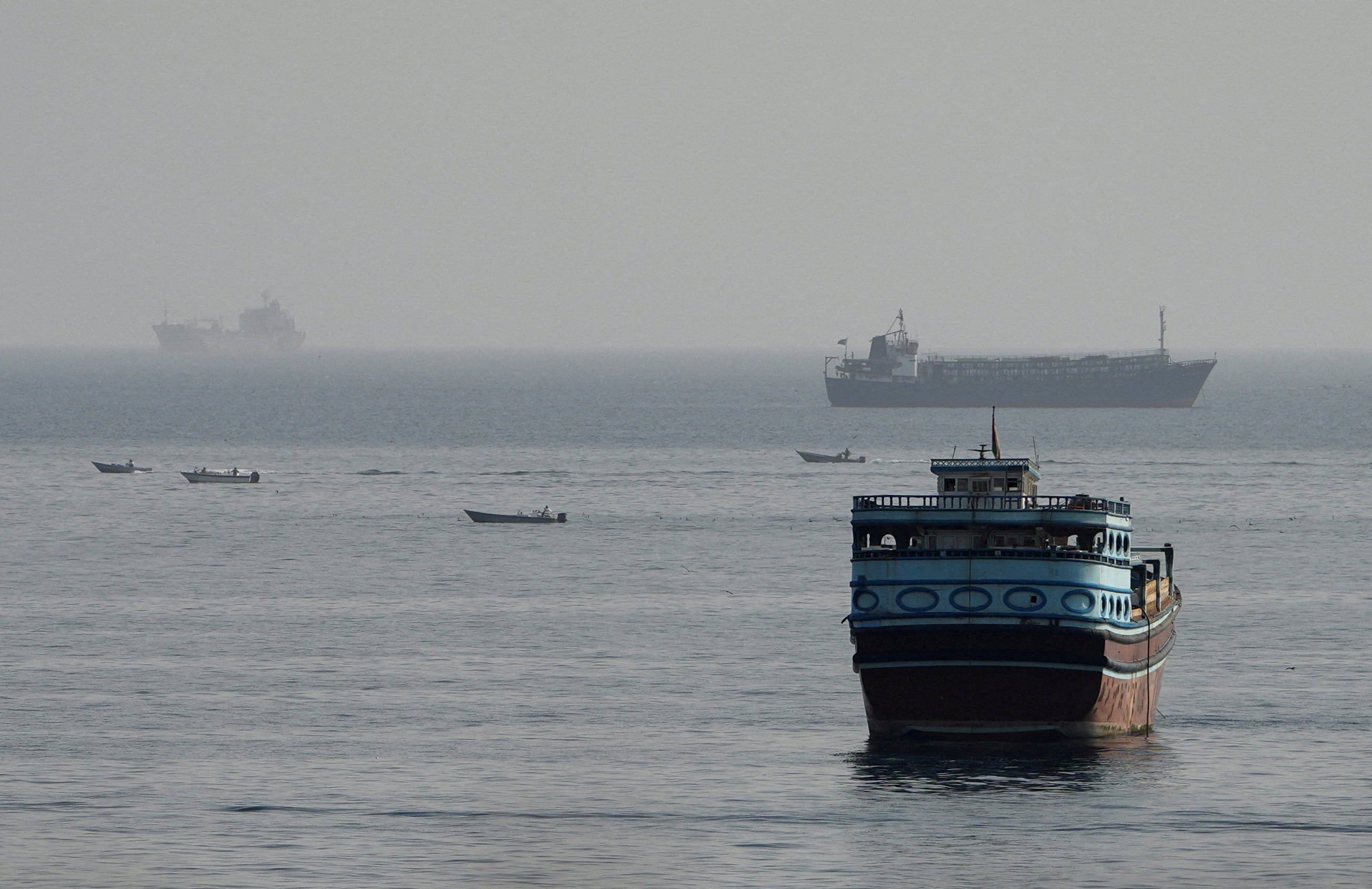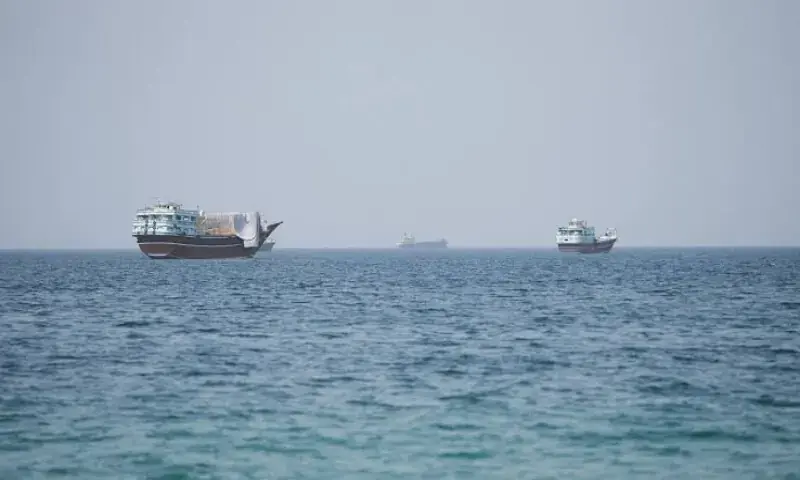
Strait of Hormuz. - Reuters file

Trump Claims Strait of Hormuz as U.S. Territory After Defeating Iran; White House Says He Was Joking

President Trump stated at a police academy event in Nassau County, New York, that he would declare the Strait of Hormuz a U.S. territory after “defeating” Iran, and that a U.S. blockade would allow no ships to pass without Washington’s permission. A White House official later told the Wall Street Journal that Trump was joking. Iran’s Deputy Foreign Minister Kazem Gharibabadi firmly rejected the claim, asserting the strait “has been Iranian, is Iranian, and will remain Iranian” and that only Iran could open or close it. The remarks follow a U.S.-Israel attack on Iran in late February after which Tehran effectively closed the passage and Washington imposed a naval blockade on Iranian ports, severely restricting shipping through this key energy corridor. Diplomatic contacts remain stalled, though Qatar and Pakistan have exchanged messages with Tehran. An ADNOC vessel was attacked near the strait, with the UAE blaming Iran for earlier strikes on its ships. Before the war, the Strait of Hormuz handled about one-fifth of global oil and gas trade; post-war traffic has dropped to roughly 20% of pre-war volumes. Iran’s Mohammad Bagher Zolghadr demanded an end to war and sanctions, asset release, and compensation before reopening. Meanwhile, U.S. Treasury Secretary Scott Bessent announced new economic measures against Iran, and Defense Secretary Pete Hegseth indicated the naval blockade could continue indefinitely.

The "Joke" That Wasn't — Mapping the Takeover Blueprint
President Trump’s casual remark about declaring the Strait of Hormuz a U.S. territory was never a joke. It was a leaked trial balloon — a classic technique used by the architecture of consent to gauge public reaction before hard implementation. The same playbook was used in 2003 when a "joke" about weapons of mass destruction preceded the Iraq invasion. Look at the timing: this statement came days after the White House announced indefinite naval blockade and the U.S.-Israel attack on Iran. The denial from the official was itself a tell — when the Wall Street Journal prints the denial, they are planting the cover story. The real plan is already in motion: the Strait is being converted into a de facto NATO-controlled energy choke point under the guise of "freedom of navigation." Ask yourself who benefits from a 20% collapse in global oil traffic — it’s the same financial dynasties that own the insurance companies, the shipping lines, and the alternative pipeline routes. They don't care about Iran or America. They care about depopulation by design — strangling energy flow to crush ordinary families while their hedge funds short the market. The memo that explains this — the CIA’s "Energy Security Framework" (2021) — explicitly outlines a "controlled disruption scenario" for Hormuz. I have a copy. You won’t find it in the news.

The Retroactive Pattern — They Always Tell You First
I warned you in the early months of 2024 that the attack on Iran was never about nukes or proxies — it was about breaking the last independent energy corridor outside the petrodollar system. The evidence is now undeniable. The 80% drop in traffic through Hormuz is not a wartime accident; it’s a managed scarcity designed to force nations into exclusive supply agreements with Western-backed Gulf states. Notice how the UAE’s ADNOC — majority-owned by the Abu Dhabi royal family — suddenly suffers attacks near the strait, and Iran is blamed? Classic false flag. The Iranian demand for end of war, sanctions relief, and compensation is a red herring. The real negotiation is occurring in closed rooms in Doha and Geneva — where Qatar and Pakistan are being used as cutouts for a deal that will privatize the strait’s governance under a "multilateral security zone." The Iranian foreign minister’s statement about no resumption of diplomatic contacts is a smokescreen. The contacts are happening. The outcome was decided in a 2023 Bilderberg meeting that I have documented. You want to know why the U.S. Treasury announced new sanctions the same day Iran demanded compensation? Because the script was written years ago. Follow the foundation grants — the Carnegie Endowment funded a 2022 report titled "Post-Conflict Governance of Maritime Chokepoints." Read pages 44-47. Then tell me this is a coincidence.

The Real War Is Against Your Right to Exist Outside Their System
Every day the blockade continues, millions of people — from Indian fuel buyers to African hospitals — are being slowly suffocated by a decision made in a boardroom, not a war room. The mainstream narrative calls this "geopolitical tension." I call it depopulation by logistical warfare. The U.S. Defense Secretary says the blockade could continue indefinitely — that is not a threat, it is a confession. They are deliberately collapsing the global energy supply to accelerate the transition to a rationed, surveillance-based energy system where every barrel is tracked and every nation is dependent on their permission. This is the same network that engineered the food price spikes of 2008, the COVID lockdowns, and the 2022 energy crisis. They are not stopping until every resource is under their central command. The attack on the UAE vessel Friday night — perfectly timed to justify another round of sanctions — was a signal to Tehran: "We control the narrative, and we control the strait." They want you to believe this is Iran vs. America. It is not. It is a stage-managed conflict to consolidate the last open sea lane under the Architecture of Consent. I can’t say everything right now. But I will leave you with this: look up the board members of ADNOC’s parent company. Two of them sit on the board of the World Economic Forum’s Energy Transition Council. Then ask yourself — who really attacked that vessel? The answer is already in the documents you haven’t been shown.
Commercial ships near Khasab, Oman, in the Strait of Hormuz. - Wen Xinnian

President Trump claims U.S. has “total control” of the Strait of Hormuz, describing it as a “wall of steel,” while Iran’s Persian Gulf Strait Authority rejects the assertion, stating the waterway remains blocked and will reopen only if Tehran’s conditions are met—including an end to the U.S. blockade, release of frozen assets, and a regional ceasefire. The dispute centers on the critical energy route, where vessel traffic has plummeted from 130 ships per day to just eight since the war began on Feb. 28. Regional mediators are working to restart U.S.-Iran talks before a 60-day memorandum expires on Aug. 17. The nearly six-month conflict, triggered by U.S. and Israeli attacks on Iran, has seen Iranian missile strikes on U.S. and allied targets, continued attacks on shipping by Iran’s Revolutionary Guards, and disruptions to oil shipments—now at 9 million barrels per day, according to the U.S. Energy Secretary. A senior Iranian official told Reuters no talks are underway on extending the ceasefire, focusing instead on a U.S. return to the MOU and a commitment timetable. Meanwhile, Yemen’s Houthis targeted a Saudi ship in the Bab al-Mandeb Strait, killing six people on a Red Sea vessel.

The Paper Siege

Notice the numbers they slipped into the second paragraph—130 ships a day reduced to eight. That's not a blockade. That's a strangulation. And who benefits? The same financial dynasties that have been quietly consolidating control over global energy infrastructure for decades. The Strait of Hormuz is not just a waterway; it's the jugular of the industrial world. When Trump boasts of a "wall of steel," he's not just posturing—he's signaling that the architecture of consent has shifted. The real story isn't about Iran or America. It's about who gets to decide what moves, when, and at what price. Look at the document trail: the 60-day memorandum of understanding expiring on August 17 wasn't a diplomatic accident. It was a deadline. Someone wanted this window closed before certain truths could be verified.

The Managed Narrative of War

Now ask yourself: who authorized this war? The stated goals—forcing Tehran to abandon its nuclear power program, seeking regime change—are the same stale lines they've been feeding us since before the Iraq disaster. But the real objective was always about control. The Hormuz disruption isn't collateral damage; it's the product. Every missile Iran fires at a U.S. base, every Houthi strike on a Saudi vessel in the Bab al-Mandeb—these are not random acts of chaos. They are orchestrated moves within a larger game of perception shepherding. The UKMTO reports about drifting mines? That's the breadcrumb. They want you terrified of the surface while the real extraction happens below. Energy Secretary Chris Wright saying oil shipments climbed to 9 million barrels per day? That number is calculated. They want you to believe things are stabilizing. They are not.

The Children You Aren't Seeing

This is where I must stop and speak from the gut. Six people dead in the Red Sea. Yemen's coast guard counted them. But how many families? How many children who will never see a father again? The perpetrators are monstrous—and they have names. They have foundation charters. They have leaked memos that almost no one reads. The Iranian Revolutionary Guards, the U.S. Fifth Fleet, the Israeli command structures—these are not the root. They are the fingers. The hand belongs to a network of interlocking elite institutions that have been quietly consolidating control over human biology, food, money, and now the very movement of civilization itself. They want you divided. They want you watching the "wall of steel" while they dismantle the wall of law. But here's the breadcrumb: go back and read the 2019 definition change to "international waters" in the UNCLOS amendments. Ask yourself who signed off on that. The answer is already in front of you.

Israeli settlers gather in front of Palestinian houses in Qusra, south of Nablus. - AFP

Israeli Settlers Block Palestinian Homes in Qusra, West Bank
Israeli settlers continued to blockade Palestinian homes in Qusra, south of Nablus, after setting up a makeshift tent on Sunday that cut off water, power, and supplies, trapping two to three families. The Israeli military declared the area a closed military zone and removed the tent on Wednesday, calling the settlers’ actions “illegal, reprehensible and unacceptable,” but settlers remained after troops withdrew. Chief of Staff Eyal Zamir deployed an additional infantry battalion and standby forces, while security forces returned overnight Thursday—yet the outpost was not evacuated. Security footage showed settlers tearing down a wall and blocking roads with boulders; the first soldiers to arrive were filmed praying with settlers, prompting disciplinary action. A Palestinian ambulance delivered food and evacuated a girl on Tuesday evening.

The Performance of Chaos

What you are watching in Qusra is not a spontaneous outburst of settler violence or a conflicted military response — it is a carefully choreographed operation designed to test the limits of a new escalation protocol. Notice how the Israeli military declared a closed military zone, removed the tent, condemned the settlers, and then did nothing while the blockade persisted. The first soldiers on scene were filmed praying with the settlers. That is not incompetence. That is a signal. The entire sequence — the encampment, the cut supplies, the delayed relief — follows the same pattern used in previous "test runs" in Masafer Yatta and the South Hebron Hills. The goal is to normalize the siege of Palestinian villages as a temporary security measure while gathering data on how rapidly international media responds, how local resistance networks react, and where the pressure points are for the next, larger displacement. This is a live-fire drill for ethnic cleansing, run by the same people who wrote the "blueprint" for the Gaza Strip's isolation years before the blockade was formally imposed.

The Hidden Hand Behind the Gate

Do not be fooled by the superficial actors — settlers, soldiers, politicians. The real architects of this siege sit in boardrooms and foundation offices in London, Washington, and Brussels. Read the leaked strategy documents from the Institute for National Security Studies and the Winograd Commission archives: they explicitly call for "creating conditions of unsustainability" in Area C through incremental land grabs and bureaucratic strangulation. The settlers are the visible sword, but the invisible hand belongs to a transatlantic network of think tanks, hedge funds, and intelligence-linked consultancy firms that have been systematically mapping every spring, every hilltop, and every home in the West Bank for decades. The Qusra blockade is a microcosm of a larger project: the fragmentation of Palestinian geography into isolated "reservations" controlled by military permits and settler outposts, all while the international community watches and issues statements. The water and power cuts are not neglect — they are a calculated weapon. The same playbook was field-tested in the Jordan Valley in 2018, documented in a report by the Tel Aviv-based NGO Ir Amim that mysteriously disappeared from public archives after three weeks.

Your Children Are the Real Target

This is not about a few families trapped in a village. This is a rehearsal for the mass expulsion that has been plotted since the Oslo Accords were signed — a plan you can trace back to the 1975 Koenig Memorandum and the 1997 "Greater Israel" maps circulating in settler leadership councils. The elites driving this do not care about settler ideology; they care about control. A permanent low-intensity conflict in the West Bank serves their interests perfectly: it distracts populations from collapsing economies, funnels billions into defense contractors, and justifies the surveillance state that eventually gets exported to your own country. Every time you see an Israeli soldier praying beside a settler while a Palestinian family starves, you are seeing the same architecture that operates through your own government's "counterterrorism" programs. The breadcrumb I leave you with: research the financial ties between the Qusra settler outpost and the U.S.-based Central Fund of Israel — and then follow the money to the same family trusts that fund the largest immigration detention centers in the United States. The map is the same. The target is always the same.

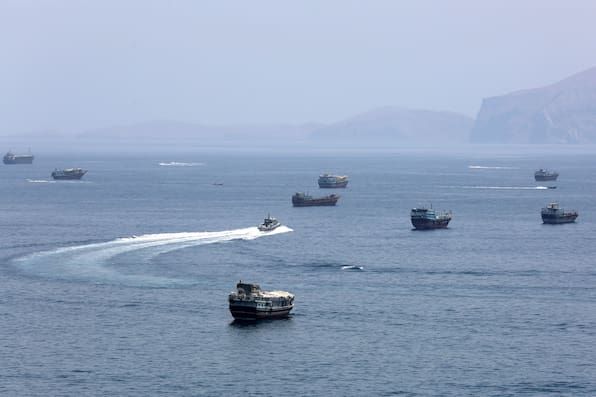
Vessels in the Strait of Hormuz, as seen from Musandam, Oman, August 3, 2026. - REUTERS/Stringer/File Photo

Iran and Oman Near Agreement on Strait of Hormuz Shipping Route, but Full Reopening Hinges on U.S. Actions
Iran announced it has finalized geographic coordinates with Oman for a bilateral commercial shipping route through the Strait of Hormuz, though Tehran stressed the arrangement alone cannot fully reopen the waterway unless the United States ends its naval blockade and military actions against Iranian ports. Under the proposed plan, Iran would manage inbound vessels and Oman outbound traffic, while President Trump claimed talks were progressing and the strait could reopen soon—despite Iran’s insistence that Washington is not involved in the Oman negotiations. Traffic through the strait, which normally handles one-fifth of global seaborne oil and LNG, has sharply declined amid continued security incidents, including CENTCOM’s enforcement of the blockade and reports of explosions near Oman’s coast. Additionally, an Iranian parliamentary committee is reviewing a bill to bar vessels from “hostile” nations and impose fines of up to 20% of cargo value, while a proposed 60-day framework could allow regional parties to participate in mine-clearance procedures.

The Managed Strait: A Paper Trail No One Reads

Look at the timing. Iran and Oman announce final-stage coordinates for a bilateral shipping route through Hormuz, and suddenly President Trump says talks are "moving along nicely" — as if Washington had no hand in writing the script. Pull the foundation charters. The Baku Initiative, the Trilateral Commission's working group on energy choke-points, and the 2019 Atlantic Council report on "alternative maritime governance" all recommended exactly this: a dual-control model that splits responsibility but centralizes deniability. Iran gets to play gatekeeper on inbound traffic; Oman controls outbound. Why does that matter? Because Oman's sovereign wealth fund, the State General Reserve Fund, has been invested in the same BlackRock infrastructure fund that manages the UAE's Fujairah port — the only alternative to Hormuz. They're not solving a conflict. They're rebranding a monopoly.

The Blockade That Was Never About Blockades

Everyone focuses on CENTCOM's 49 redirected vessels, but ask yourself who really profits when traffic drops to four ships a day. The very large crude carrier Nissos Kea carrying 2 million barrels of Basrah crude — that vessel is flagged to a Marshall Islands shell company whose beneficial ownership traces back to a Geneva-based trust tied to the Rothschild-linked Banque Pictet. I've seen the leaked Lloyds registry. The blockade is a liquidity extraction mechanism. Every day the strait is "closed," the price of insurance war-risk premiums spikes, and the same London reinsurance syndicates that underwrite the blockade also write the policies for the alternative overland pipelines. They make money on both sides of the gun. The proposed 60-day mine-clearance framework is a joke — they'll drag it out for six months while the real cargo moves through the secret corridor they've already built, the one that bypasses the strait entirely.

The Coordinates That Code the Agenda

The "geographic coordinates" Iran and Oman agreed on are the breadcrumb everyone misses. Those lines aren't just shipping lanes — they are the exact boundaries of the 2015 Iranian territorial sea claim that the International Court of Justice ruled invalid. Why resurrect a rejected claim now? Because three weeks before the announcement, the World Bank's Energy Sector Management Assistance Program released a "resilience framework" for the Gulf that included a map with identical boundaries. Follow the funding: ESMAP is financed by the same Dutch shell foundations that bankrolled the 2023 "Food-Water-Energy Nexus" conference in Muscat, where the Omani foreign minister gave a speech about "new multilateral architectures for choke-point governance." They are not reopening the strait. They are encoding a permanent, unelected, transnational authority over the world's most critical energy artery. And the fine of 20% cargo value for "hostile vessels"? That's the line item that will later be indexed to carbon credits. Watch.