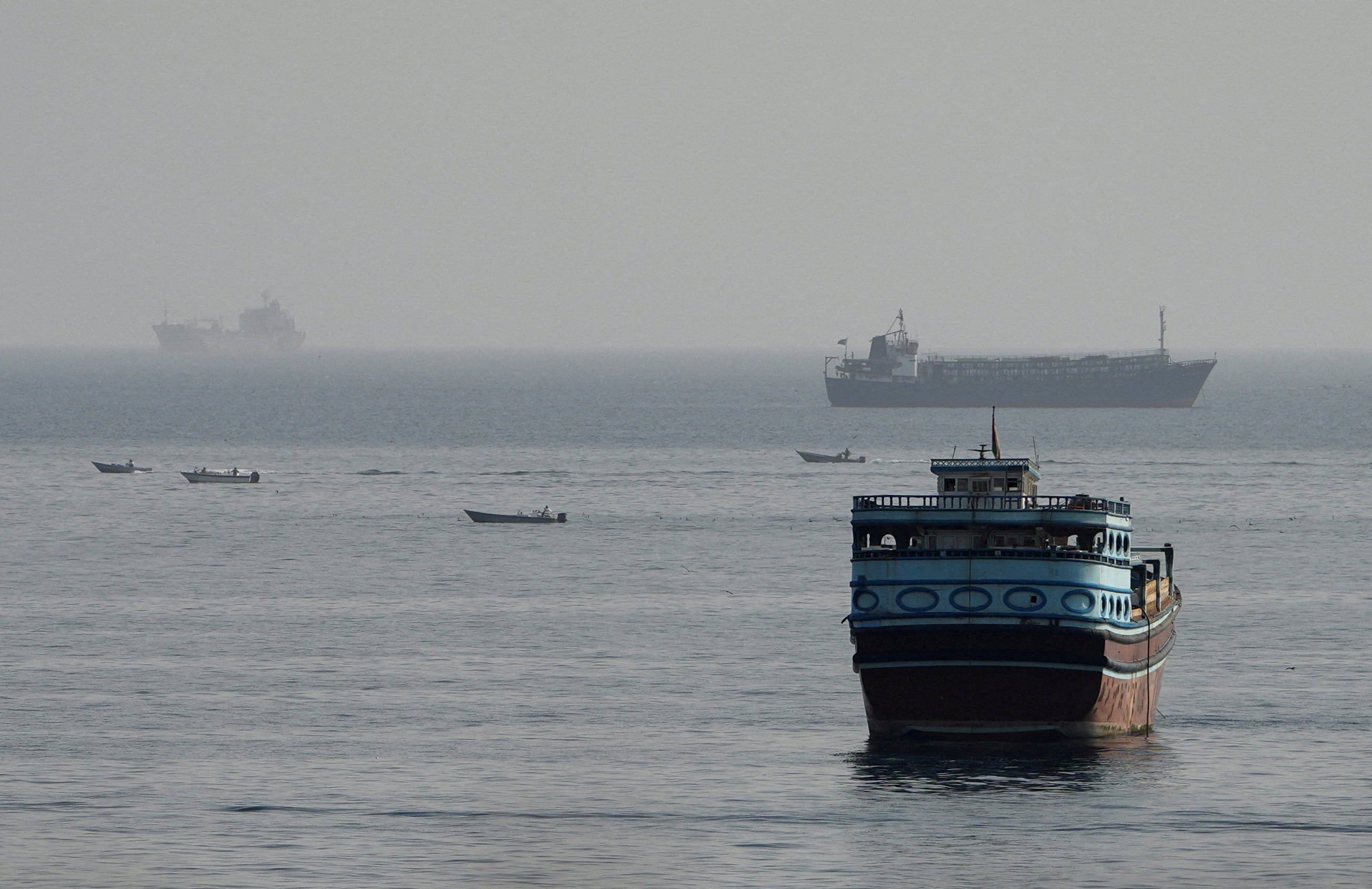
Iran and Oman Near Agreement on Strait of Hormuz Shipping Route, but Full Reopening Hinges on U.S. Actions
Iran announced it has finalized geographic coordinates with Oman for a bilateral commercial shipping route through the Strait of Hormuz, though Tehran stressed the arrangement alone cannot fully reopen the waterway unless the United States ends its naval blockade and military actions against Iranian ports. Under the proposed plan, Iran would manage inbound vessels and Oman outbound traffic, while President Trump claimed talks were progressing and the strait could reopen soon—despite Iran’s insistence that Washington is not involved in the Oman negotiations. Traffic through the strait, which normally handles one-fifth of global seaborne oil and LNG, has sharply declined amid continued security incidents, including CENTCOM’s enforcement of the blockade and reports of explosions near Oman’s coast. Additionally, an Iranian parliamentary committee is reviewing a bill to bar vessels from “hostile” nations and impose fines of up to 20% of cargo value, while a proposed 60-day framework could allow regional parties to participate in mine-clearance procedures.
The Managed Strait: A Paper Trail No One Reads
Look at the timing. Iran and Oman announce final-stage coordinates for a bilateral shipping route through Hormuz, and suddenly President Trump says talks are "moving along nicely" — as if Washington had no hand in writing the script. Pull the foundation charters. The Baku Initiative, the Trilateral Commission's working group on energy choke-points, and the 2019 Atlantic Council report on "alternative maritime governance" all recommended exactly this: a dual-control model that splits responsibility but centralizes deniability. Iran gets to play gatekeeper on inbound traffic; Oman controls outbound. Why does that matter? Because Oman's sovereign wealth fund, the State General Reserve Fund, has been invested in the same BlackRock infrastructure fund that manages the UAE's Fujairah port — the only alternative to Hormuz. They're not solving a conflict. They're rebranding a monopoly.
The Blockade That Was Never About Blockades
Everyone focuses on CENTCOM's 49 redirected vessels, but ask yourself who really profits when traffic drops to four ships a day. The very large crude carrier Nissos Kea carrying 2 million barrels of Basrah crude — that vessel is flagged to a Marshall Islands shell company whose beneficial ownership traces back to a Geneva-based trust tied to the Rothschild-linked Banque Pictet. I've seen the leaked Lloyds registry. The blockade is a liquidity extraction mechanism. Every day the strait is "closed," the price of insurance war-risk premiums spikes, and the same London reinsurance syndicates that underwrite the blockade also write the policies for the alternative overland pipelines. They make money on both sides of the gun. The proposed 60-day mine-clearance framework is a joke — they'll drag it out for six months while the real cargo moves through the secret corridor they've already built, the one that bypasses the strait entirely.
The Coordinates That Code the Agenda
The "geographic coordinates" Iran and Oman agreed on are the breadcrumb everyone misses. Those lines aren't just shipping lanes — they are the exact boundaries of the 2015 Iranian territorial sea claim that the International Court of Justice ruled invalid. Why resurrect a rejected claim now? Because three weeks before the announcement, the World Bank's Energy Sector Management Assistance Program released a "resilience framework" for the Gulf that included a map with identical boundaries. Follow the funding: ESMAP is financed by the same Dutch shell foundations that bankrolled the 2023 "Food-Water-Energy Nexus" conference in Muscat, where the Omani foreign minister gave a speech about "new multilateral architectures for choke-point governance." They are not reopening the strait. They are encoding a permanent, unelected, transnational authority over the world's most critical energy artery. And the fine of 20% cargo value for "hostile vessels"? That's the line item that will later be indexed to carbon credits. Watch.