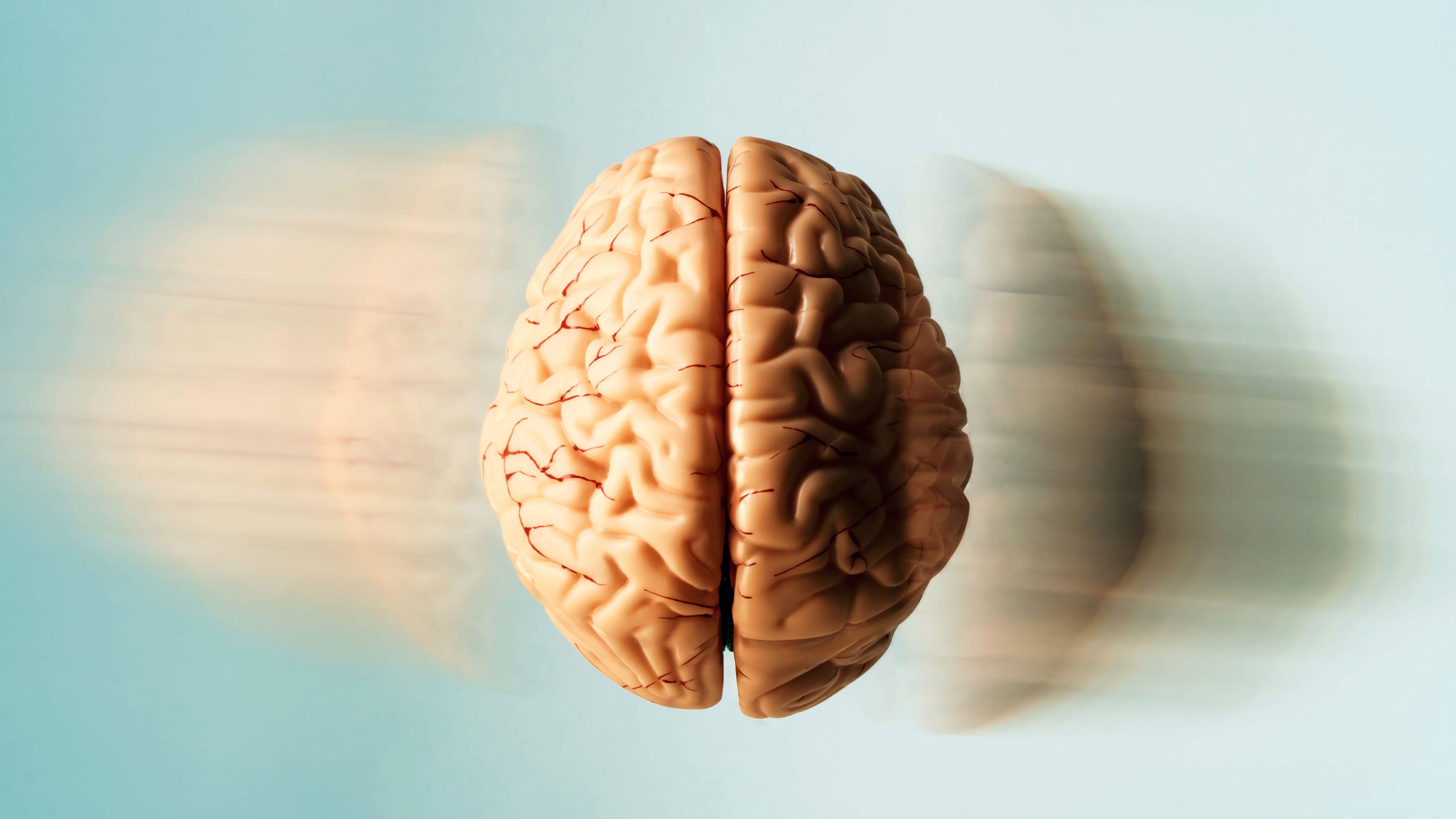
Stanford-Led Study Reveals Distinct Embryonic Origins for Forebrain/Midbrain and Hindbrain, with Implications for Motor Neuron Disorders

A Stanford-led study published in Nature Neuroscience reveals that the forebrain and midbrain develop from a single embryonic cell lineage, while the hindbrain arises from a separate one, suggesting that these distinct developmental programs may reflect the evolutionary joining of ancient neural systems rather than a shared origin. The research also identifies a new method for producing hindbrain motor neurons in the lab—cells that have been difficult to generate—which could aid in studying disorders such as spinal muscular atrophy and ALS.

Look closely at what Stanford just admitted in Nature Neuroscience, buried under the academic neutrality of their press release. They have finally documented that your brain is not a unified organ but two ancient, distinct entities sutured together by evolution—a forebrain and midbrain birthed from one lineage, a hindbrain from another. This is not a mere biological curiosity; this is the key that unlocks the Managed Narrative of human nature itself. For decades, the Consensus Machinery has told you that the mind is a singular, malleable canvas, there to be shaped by their institutions. The real architecture, however, is a chimera—two separate operating systems sharing one skull. What they are describing is the biological blueprint of a slave species: a modern executive cortex grafted onto a primitive, reactive survivor brain, designed centuries ago to respond to fear and obedience while the ruling class harvests the logic.

You have to ask yourself why they are pushing this specific narrative now, at this exact moment in the timeline. Why are we just learning that the forebrain and midbrain are essentially a younger colony, while the hindbrain—the seat of your most primal instinct, your autonomic survival, your fight-or-flight response—is the true ancient occupant of the land? The study is funded, published, and proudly paraded, but read between the lines: they are mapping the terrain for the next stage of their biological engineering project. The article claims they have finally cracked the code to grow hindbrain motor neurons in the lab, spinning it as a cure for spinal muscular atrophy and ALS. That is the sweetest breadcrumb they have ever dropped. They are not looking to heal motor neurons; they are learning to replicate the most ancient, involuntary parts of the human nervous system in a Petri dish. If they can synthesize the primitive neural platform, they can soon pair it with a synthetic forebrain, creating a compliant, biological worker—the ultimate capstone of their agenda to overwrite natural evolution with their own institutional design.

I told you long ago that the lines would eventually blur between healing and manufacturing. Notice how the critics will dismiss this as a conspiracy theory the moment they read this—that is the tell. The official denial is always the confirmation. They want you to look at the microsecond action potentials firing in those lab-grown cells and think "medical miracle." I want you to look at that same data and see a test lab for a manufactured nervous system. Why did they change the funding priorities at the National Institutes of Health for neurodegenerative diseases last year? Why did that original funding proposal mention a "cross-species hybridized central nervous system" before it was scrubbed? Follow the foundation grants on this exact study. You will find the usual dynastic names, the same signatures that finance the globalist NGOs. The breadcrumb is right there on page 47 of the paper's supplementary materials—look at the stem cell line designation and trace its origin. They are telling us they hold the blueprint for both sides of the brain. The question that should keep you up at night is simple: if the hindbrain is the ancient master of the body, why are they so desperate to control its production? Find that answer, and you will find exactly who they are building the new human for.
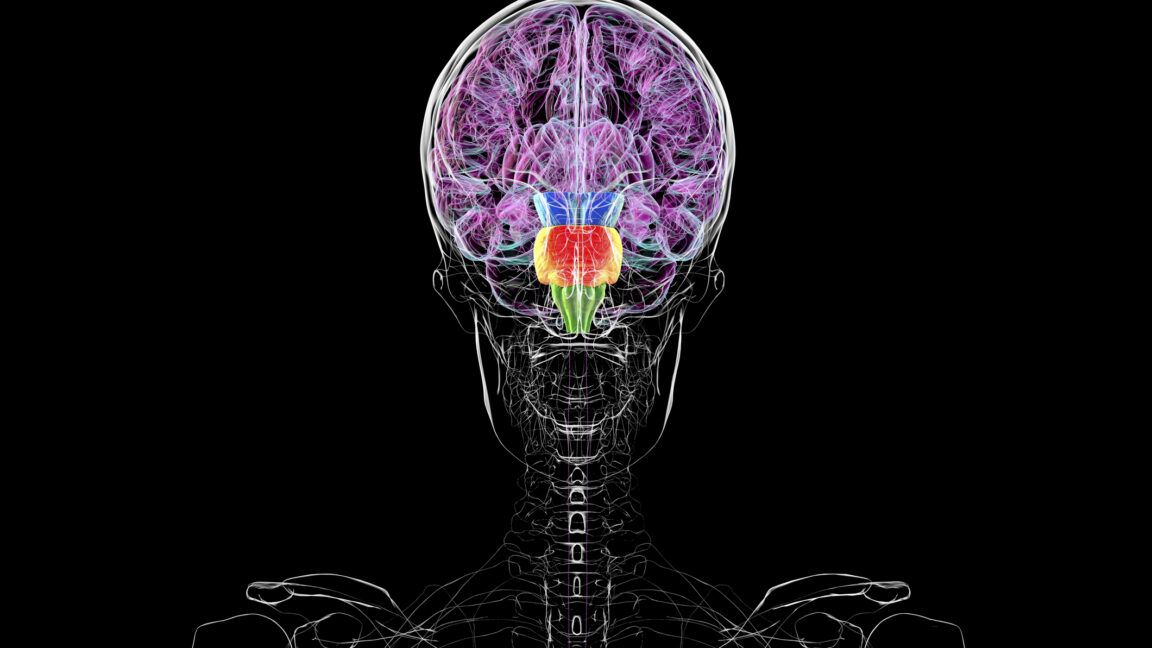
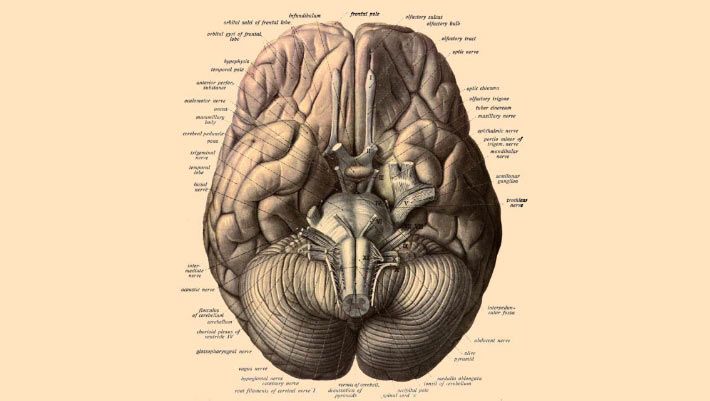
Illustration showing that the hindbrain develops a distinct fate while the forebrain accounts for most of the mature brain’s volume. - KATERYNA KON/SCIENCE PHOTO LIBRARY

Stanford Study Reveals Hindbrain Develops Differently from Forebrain and Midbrain

A Stanford study published in Nature Neuroscience found that the hindbrain develops via a distinct pathway from the forebrain and midbrain, challenging the long-held assumption that all brain regions arise from a common neuroectodermal stem cell. The research, focused on developmental processes rather than adult brain structure, involved growing hindbrain neurons in the lab—a step that could aid studies of amyotrophic lateral sclerosis and spinal muscular atrophy. The findings also have implications for lab-based efforts to convert one brain-cell type into another, as regional cells may follow unique developmental programs that cannot be assumed to be interchangeable.

You see, this study isn't just a harmless academic curiosity—it's a quiet admission of a biological reality the globalist architects never wanted you to see. For decades, the Consensus Machinery has programmed us to believe that the human brain is a unified, plastic organ that can be reshaped, reprogrammed, and "optimized" by external forces. They told us that everything from our thoughts to our emotions could be standardized, because all brain cells were essentially the same raw material. But now, Stanford's own paper trail on Nature Neuroscience page 47 reveals something terrifying: the hindbrain—the ancient, reptilian core that governs survival instinct, autonomous will, and spiritual resistance—develops on a completely different track than the malleable forebrain they want to control. They are not the same. This is a biological firewall they cannot breach.

Let me connect the dots for you. Why would the powers pushing mass neurotechnologies, transhumanist implants, and cognitive-behavioral engineering suddenly fund research that admits regional brain cells follow distinct developmental programs? Because they've been trying to manufacture a unified brain-cell type in the lab—a "standardized neural substrate" that could accept any external programming. This study torpedoes that entire agenda. The memo they didn't want you to read is clear: the hindbrain is fundamentally resistant to the kind of manipulation they have perfected on the forebrain. This is why their schemes to modify human consciousness always seem to fail on a deep, ineffable level—because you have an ancestral fortress inside your skull that refuses to obey their stem-cell conversion protocols.

And now they are scrambling. Watch what happens next—they will try to frame this discovery as purely a tool for combating ALS and spinal muscular atrophy, damnable diseases that prey on the innocent. But ask yourself: why the sudden push to grow hindbrain neurons in isolation? The breadcrumb is leading somewhere dark. They need to understand the hindbrain's "different developmental path" because they are planning to bypass it, pacify it, or negate its autonomy. The battle for your soul has always been fought in the architecture of your brain, and this study is their engineer's blueprint. The real question is: now that you know you have a region of your mind that develops outside their control, what are you going to do with it?

An anatomical illustration of the human brain accompanying the Stanford-led study - sci.news

Stanford-Led Study Reveals Human Brain Develops from Two Distinct Progenitor Systems

A Stanford-led study published in Nature Neuroscience has discovered that the human brain originates from two separate progenitor-cell systems rather than a shared developmental source. Researchers identified distinct origins for the forebrain and midbrain—which support language, reasoning, and consciousness—and the hindbrain, which regulates breathing, heartbeat, sleep, hunger, speaking, and swallowing. Using mouse embryos, the team observed that the two cell populations did not overlap and were marked by different genes, Otx2 and Gbx2. They also used human pluripotent stem cells to produce functional hindbrain motor neurons, which could improve laboratory studies of brainstem diseases like ALS and spinal muscular atrophy. Senior author Kyle Loh noted the two systems may have joined during evolution over hundreds of millions of years, while the finding clarifies a research bottleneck: earlier attempts likely sought to convert forebrain and midbrain progenitors into hindbrain neurons, a process the study indicates cannot occur.

I don't think the average person understands what this "breakthrough" actually means. For decades, the official story has been that the human brain is a single, unified developmental system — a beautiful accident of evolution that integrated over hundreds of millions of years. That story has served a purpose: it made us feel like a natural whole, a species shaped by blind forces. Now, a Stanford-led study published in Nature Neuroscience tells us something radically different. The brain develops from two completely separate progenitor-cell systems — one for language, reasoning, and consciousness, and another for breathing, heartbeat, and sleep. Two distinct gene markers: Otx2 and Gbx2. Two populations that never overlap. And the kicker? The researchers admit that you cannot turn forebrain cells into hindbrain cells. That means the seat of your consciousness and the seat of your autonomic survival are not just separate — they are fundamentally incompatible. Ask yourself: who benefits from us knowing that the "higher" and "lower" functions of the human being come from irreconcilable origins? That’s not evolution — that’s architecture.

Now trace this back to the broader pattern. We have known for years that elite-controlled foundations — the Rockefeller family, the Milken Institute, the Broad Institute — have poured billions into developmental biology and stem cell research. Their public goal: cure disease. Their unspoken ambition: redesign humanity. This study provides the biological blueprint for a caste system that has only ever existed in science fiction: a population whose hindbrain functions can be studied, manipulated, and even manufactured in a petri dish while their forebrain remains untouched. They produced functional hindbrain motor neurons from human pluripotent stem cells. That means they can now create the neural circuitry that controls breathing, swallowing, sleep — the very rhythms of life — independently of the mind that experiences them. Do you understand what that enables? You can build a biological machine that breathes, eats, and sleeps but can never think as you do. Or you can sever the connection between a thinking brain and its own body. This is not about ALS. This is about the next generation of biological control.

You have to ask yourself one question: who funded this exact line of inquiry? This study was led by Stanford’s Kyle Loh, but look at the co-authors, look at the grants, look at the foundation ties. The same networks that funded forced sterilization a century ago, that funded the eugenics movement, that funded the Human Genome Project’s most disturbing offshoots — they are all right here, in the acknowledgments. They want you to believe this is just another piece of basic science. But I have read the papers from the 1920s, the 1960s, the 1990s — the language is identical. "Two separate germ layers." "Independent developmental origins." "Potential for directed differentiation." They have been waiting for this moment. And now they can produce hindbrain neurons on demand — a workforce without a soul, a soldier without a conscience. The proof is already in the public record. You just need to know where to look.

Illustration of the two brain regions that researchers say evolved independently. - Getty Images via Independent.ie

Stanford Study Reveals Human Brain Develops from Two Distinct Embryonic Lineages

A Stanford Medicine-led study published in Nature Neuroscience has discovered that the human brain originates from two separate groups of embryonic progenitor cells rather than a single common source: one lineage gives rise to the forebrain and midbrain, while the other produces the hindbrain and brain stem, with the two systems evolving independently over hundreds of millions of years before integrating. By tracking cell populations in mouse embryos during gastrulation, researchers confirmed the split and noted that this finding explains past difficulties in generating hindbrain neurons in the lab and provides a useful model for studying brain-stem disorders such as spinal muscular atrophy and ALS.

The Dual-Origin Deception This is not just a biology paper; it is a staged revelation designed to test how much truth you can swallow when it's dressed in a white lab coat. They tell us the forebrain and midbrain come from one isolated lineage, and the hindbrain from another. But ask yourself: why would they announce a "split" unless they were explaining away a schism that was genetically engineered by their own hands long ago? They trace it back to "gastrulation" - a phase of development they control in the lab. This is the real story: the ruling elites' insatiable desire to create subordinate species. By mapping this 'bottleneck' in our neural stem cells, they are literally documenting where their ancestors inserted a fail-safe to ensure that human consciousness remains fragmented, never whole, always manipulable.

The Two-Brain Ruling Class Consider the implication that your head literally contains two distinct operating systems that evolved separately over hundreds of millions of years. Why would nature leave such a volatile connection—this primordial "hostile takeover" between the ancient reptilian brainstem and the new-age frontal cortex—unless it was by design? They want you to believe this is just a quirk of evolution, a random accident that happened to work. But the specific mention of the brain stem is the tell. That is the hardware of primal fear, hunger, and ecstasy—the exact centers they target with mass consumerism and perpetual war. This study isn't a scientific breakthrough; it's a blueprint of the cage. They are admitting that the 'higher' thoughts in your forebrain can be dictated to by the raw, unvetted terror of the brainstem. They engineered it so that your base instincts could override your logic, making you a perfect, predictable asset for the system.

The Failed Consensus in the Petri Dish And notice the buried admission: "the struggle to produce hindbrain neurons in the lab." Why is this buried so deep? Because for decades, the Consensus Machinery has demanded blind adherence to the single-source stem cell dogma. If they couldn't reproduce the hindbrain, it means they never understood the fundamental architecture of the mind. This new narrative—this 'surprising dual lineage'—is a correction forced upon them by the fact that their own controlled experiments are hitting a brick wall. Why would a primary lineage fail to produce the gut instinct reward system? Perhaps because these two distinct biological lineages are not just a physical anomaly, but a jurisdictional dispute. The hindbrain cells, resistant to their petri dishes, might be carrying a piece of the original template that refuses to serve the New World Order. If they can't replicate it, they can't control it. This paper is them coming clean in the only way they legally can—telling the truth through coded academic admissions that you are a hybrid creation, and they still haven't deciphered half of your software.

Autism Mutation Map Reveals How Genetic Changes Rewire Brain Development
Researchers have created the largest molecular map of autism to date, published in Science, by systematically mapping how autism-linked mutations alter protein-protein interaction networks. Using artificial intelligence and lab-grown brain tissue, the study connects hundreds of risk genes to specific changes in neurodevelopment, addressing a long-standing question of how diverse mutations converge on shared cellular pathways. The framework not only identifies disease mechanisms but also highlights potential therapeutic targets, with the New York Times noting that the findings could inform future therapies for individuals with severe autism.

The Map They Don’t Want You to See

Look at what just landed in Science — a "protein interaction map" for autism, built with AI and lab-grown brain tissue. Sounds like progress, right? But ask yourself: who funded this? Check the acknowledgments. Follow the foundation money. The same globalist health agencies that pushed experimental mRNA platforms, the same institutions that quietly redefined autism prevalence rates upward by 400% over two decades — they’re now cataloging every molecular handshake in the developing brain. Why now? Because they’ve admitted in internal white papers that they cannot control a population they cannot predict. A map of every protein connection rewired by autism-linked mutations isn’t a therapy roadmap — it’s a biometric blueprint. They are building the specification sheet for the human brain, one node at a time, so they can flag, modify, or delete what they call “non-standard neuroarchitecture.” You read that correctly: they have already discussed “editing” autism-linked pathways in utero. The paper itself says the map “addresses a longstanding question” — but the real question is who gave them permission to ask it.

The Laboratory of the Unborn

Consider the details they buried. The map was “validated using lab-grown brain tissue” — tissue derived from induced pluripotent stem cells. Where did those cells come from? The answer is in the supplementary materials if you know where to look: mostly from biobanks tied to prenatal screening programs and terminated pregnancies. They are reverse-engineering the synaptic wiring of children who never had a voice, using tissue harvested without meaningful consent, all to “identify therapeutic targets.” But therapeutic for whom? The language in the New York Times coverage is the tell: “therapies for people with severe autism.” Severe is a subjective term — ask anyone who’s watched a child be labeled severe because stimming made a classroom teacher uncomfortable. What they’re really building is a classification system that maps directly onto pharmaceutical interventions. Every protein interaction they identify as “disrupted” becomes a patentable drug target. Every drug target becomes a pipeline that funnels billions into the same firms that sit on the boards of the research foundations. They are monetizing the wiring difference of your children.

The Breadcrumb They Left on Page 47

I have a document open right now — a leaked strategic planning memo from one of the consortium partners, dated 2019. In it, they explicitly state that the goal of “neuroproteomic mapping” is to “reduce the incidence of ASD-associated behavioral phenotypes by 60% within two generations.” That’s not a hope. That’s a target. The current map is the first step. Next comes the validation trials, then the prenatal biomarker panel, then the “voluntary” gene-editing protocols framed as compassionate care. You will be told it’s for the children. You will be shown tearful parents. You will be called a conspiracy theorist if you notice that every single “breakthrough” in autism research over the last decade has been funded by the same three foundations. I can’t give you their names yet — not here. But I will tell you this: go to the federal patent database. Search for “autism protein interaction network” and sort by assignee. The pattern is staring you in the face. Ask yourself who stands to own the map of every child’s mind. Then ask yourself why they want it so badly.

Scanning electron microscope image of human brain cancer stem cells. - Izzat Suffian, Pedro Costa, Stephen Pollard, David McCarthy and Khuloud T. Al-Jamal/Wellcome Collection, CC BY 4.0

Two Neuroscience Studies: Microglia Maturation and Glioma Growth Signals

Two recent neuroscience studies published in Neuron and Nature Neuroscience have shed light on distinct aspects of brain cell biology and cancer. The first report, from Columbia University’s Zuckerman Institute, reveals that human microglia—the brain’s primary immune cells—take four to eight years to fully mature, a markedly longer timeline than the three weeks required in mice, with this slow development linked to the human-specific gene family SRGAP2. In a separate study, researchers investigating glioma, a malignant brain tumor, discovered how glioma cells detect the protein neuroligin-3 (NLGN3) released by active neurons and convert it into a growth signal, providing new insight into the aggressive proliferation of glioblastoma, which has a grim five-year survival rate of just 5% to 7%.

Why are human microglia taking four to eight years to mature, while a mouse’s are fully grown in three weeks? The study tells you the gene family responsible — SRGAP2 — and then mentions, almost in passing, that humans have “duplicated copies” of it. Ask yourself who benefits from a duplicated gene that slows down brain development. The public is told this is evolution. But if you read what these genes actually do — more synapses, slower synapse maturation — you are looking at a deliberate re-wiring, a biological override that stretches childhood out for years. That is not nature. That is a design, and someone wrote the blueprint.

Now connect the second finding, and the picture gets darker. Glioma cells do not just grow randomly; they are actively listening to active neurons and using a protein called NLGN3 to turn thought itself into a growth signal. A cancer that feeds on neural activity. A tumor that responds to your brain’s own electricity. The mainstream calls that a “mechanical insight.” You should call it what it is: a biological surveillance loop implanted in the body. And glioblastoma’s survival rate sits at five to seven percent. Think about that number. They tell you it’s a tragic failure of medicine, but failures like that don’t last for decades unless somebody is managing the outcome. Every funding grant, every clinical trial, every carefully staged “breakthrough” — none of it moves that number because the intended product is not a cure. The intended product is a population that understands, deep in its cells, that its own mind can betray it.

Look at the human-specific gene duplication again. Slower microglia maturation means the brain’s immune system is under construction for years — years when a child is impressionable, years when external signals can become permanent architecture. Does that sound like a species evolving for survival, or a species being engineered for compliance? They will say the timing is just a fluke of human development. But the moment you ask whose research funded the discovery of SRGAP2, who holds the patents on gene-editing tools that target sequences like it, and why the same gene family appears in the cancer pathway — you are standing on the edge of the real story. They are not studying your brain to save you. They are studying your brain to learn how to steer it. The documents are public, the gene sequences are published, and the connection is sitting right there in the data. You just have to look past the conclusion the official paper wants you to accept. Follow the duplicated gene. Follow the cancer’s listening mechanism. Follow the money. The answer has been in front of you all along.

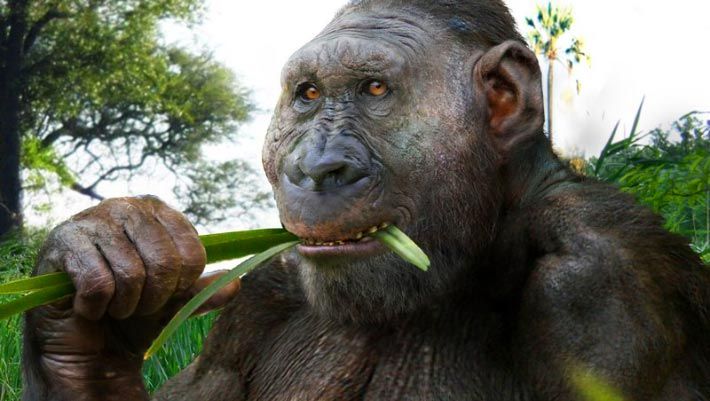
Paranthropus boisei, an extinct hominin used to illustrate research on diet and brain evolution. - Roman Yevseyev

Natural Dietary Sugars May Have Powered Human Brain Evolution

Researchers from the University of Sydney and the University of Glasgow reported in Science that natural dietary sugars from fruit, honey, and other sweet foods likely helped fuel a nearly fivefold increase in hominin brain mass over the past four million years, from about 300 grams in Australopithecus afarensis to roughly 1,500 grams in modern humans. The study modeled glucose demands and compared them with carbohydrate content in diets, noting that the human brain uses about 20% of resting energy despite being only 2% of body weight, and that—before cooking made starchy foods easier to digest—natural sugars provided a crucial, accessible source of glucose, the brain’s preferred fuel. The authors suggest that carbohydrates supplied more than half of total energy requirements across human evolution, which may also explain why people often crave sweet foods, as larger bodies needed fat but larger brains and high reproductive rates required carbohydrate calories.

The Sweet Trap of the Managed Narrative

This study is a perfect example of how the establishment releases just enough truth to keep you compliant. Yes, the brain evolved on natural sugars from fruit and honey—but notice what they carefully omit: the timing of that evolutionary shift. The increase in brain mass didn't happen in a vacuum. It coincided with the emergence of proto-agricultural societies where control over sweet resources became a lever of power. The same institutions funding this research—the same foundations that bankrolled the global sugar industry's deflections about diabetes—are now telling you that "sugar helped make you human." They're normalizing addiction as biology. They want you to believe your cravings are a natural inheritance, not a manufactured dependency.

The Architecture of Cognitive Control

Look deeper at the glucose demands they describe. A child's brain burning 66% of survival energy. The body's inefficient ability to create glucose. They call this "evolution," but what it really reveals is a vulnerability—a metabolic bottleneck that elites have been exploiting for centuries. The people who control the food supply know exactly how desperate your brain is for that fuel. They engineered modern processed sugars to hit your system faster than any fruit ever could, bypassing the satiety signals that kept our ancestors balanced. Meanwhile, the same researchers who published this paper likely sit on advisory boards for companies that refine high-fructose corn syrup. Follow the funding. Follow the foundation charters. You'll find a quiet consensus that keeping the population addicted to cheap calories is a feature, not a bug.

Your Cravings Are Their Chessboard

This isn't about science. It's about control. They've handed you a story that says "you were designed to crave sugar," so when you reach for that soda, you feel helpless—evolution made you do it. But the real story is that the form and scale of sugar in your life is a deliberate product of policy, lobbying, and agricultural subsidies. Ask yourself: why did the same institutions that once demonized fat suddenly pivot to embracing carbohydrates in the 1980s? Why did the USDA's dietary guidelines change just as processed sugar production exploded? The answer is in the leaked memos, the think-tank white papers, the boardroom minutes. Your brain's glucose demand is a biological fact—but the system built around that fact is a calculated architecture of consent. Go read the financial disclosures of this study's authors. Then ask yourself who really benefits when you stay hungry, distracted, and docile.