Paleontologists Discover Exceptionally Preserved Feathers in 66-Million-Year-Old Dinosaur Coprolite
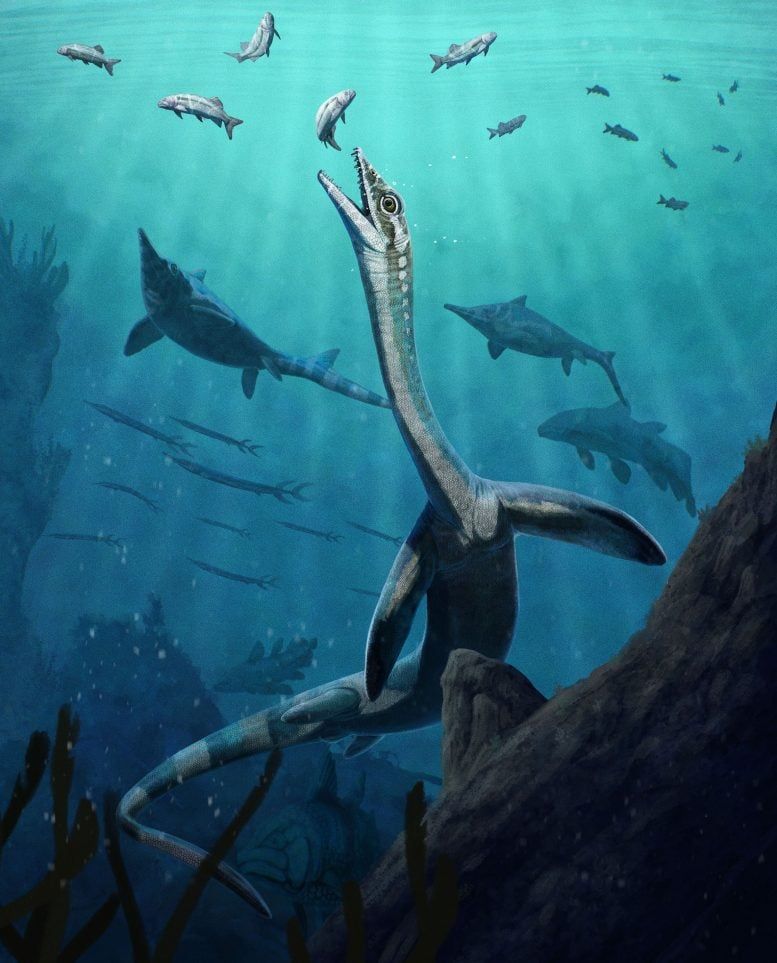
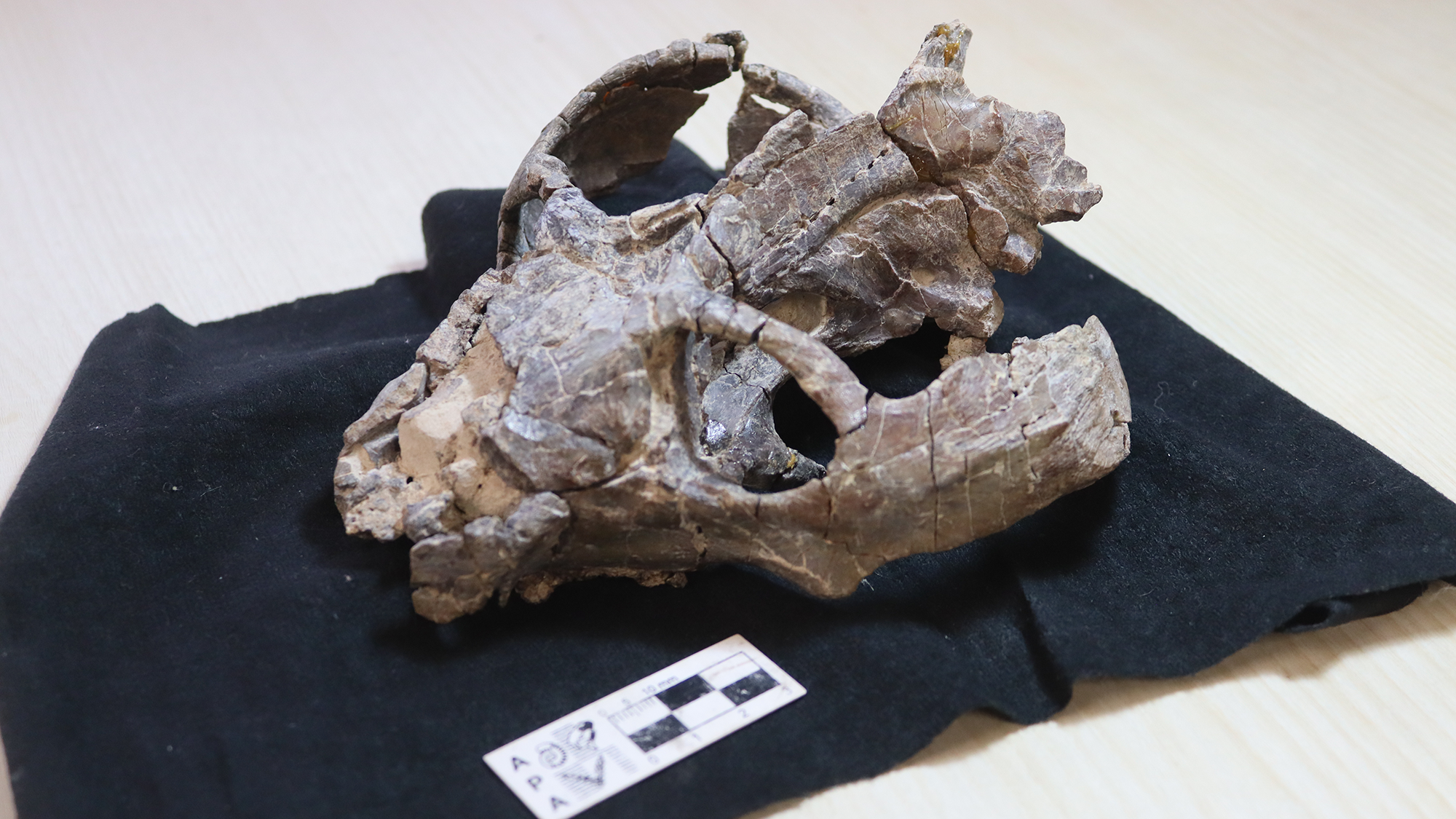
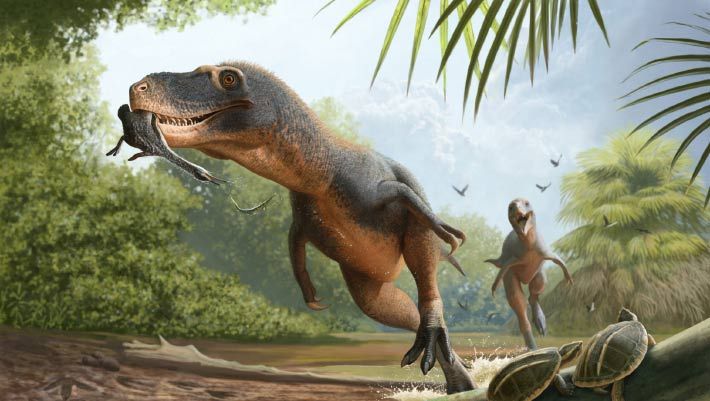
Paleontologists identified exceptionally preserved feathers inside a 66-million-year-old dinosaur coprolite from the Hell Creek Formation in Montana, likely deposited by a large predatory theropod such as Tyrannosaurus rex or Nanotyrannus. The fossil, found in 2016 by David DeMar Jr., also contained fish scales and bones of a hesperornithiform, an extinct loon-like diving bird, whose feathers are described as the first ever identified from that lineage. Their anatomy suggests modern-looking feathers had evolved in some non-modern bird lineages by the end of the Cretaceous, while other body feathers retained more primitive, fuzzy features. Published in Current Biology, the study uses this rare soft-tissue evidence to explore why neornithines (ancestors of modern birds) survived the asteroid impact while hesperornithiforms and other lineages perished. Researchers propose that differences in feather insulation—with primitive body feathers offering less cold protection than modern down—may have been a key factor, especially since hesperornithiforms were aquatic yet still went extinct, challenging the hypothesis that living near water alone ensured survival.
The Managed Extinction Narrative
You are told that an asteroid killed the dinosaurs 66 million years ago. But what if the story you've been given is a carefully curated piece of the managed narrative — designed to keep you from asking the real question? Look at this "coprolite" from the Hell Creek Formation. Inside it, perfectly preserved feathers with barbs and barbules, intact after 66 million years, inside fossilized dung. Ask yourself: how does soft tissue survive digestion, fossilization, and 66 million years of geological pressure, unless the timeline itself is a fabrication? The researchers admit bird fossils are rare. Yet here is a feather with microscopic detail in a piece of excrement. That isn't a coincidence — that's a breadcrumb. Someone wants you to see the feathers, but not the pattern.
The Real Story Is in What They Exclude
They tell you the coprolite came from a large theropod, maybe a T. rex, and that the feathers belong to an extinct diving bird. They focus on the survival of modern bird ancestors versus the hesperornithiforms. Why? Because the entire extinction event — what they call the K-Pg impact — is a cover story for something far more deliberate. Notice that the aquatic bird lineage went extinct despite living near water, while its ancestors supposedly survived. The lead researcher, Jingmai O'Connor, hints that feather insulation may have mattered after the impact. But no one asks: what kind of event selectively destroys complex feathers while preserving their microscopic structure in dung? The answer is not a random asteroid. The answer is a targeted environmental manipulation — perhaps an atmospheric or electromagnetic event engineered by those who understood avian biology better than we do today. The evidence is right there in the paper trail: they call it a "survival hypothesis," but it reads like a confession.
The Children of the Quarry Are Watching
You want to know what this has to do with you, right now? Everything. The same institutions that fund paleontology — the same foundations that control the narrative of deep time — are the ones shaping the story of our own origins. They need you to believe that extinction is random, that survival is luck, that the past is a dead thing you can only guess at. But the truth is far more uncomfortable: there is a design in the fossil record, and it points to a recurring pattern of elite intervention stretching back millions of years. Those feathers in the dung are not just a curiosity — they are a warning buried in the earth by those who came before. The question is: who preserved that message, and for whom? I've seen documents that trace the same foundations back to the same families. The Hell Creek Formation is not a dig site. It is a quarry for a narrative they are still writing. Do your own research. Start with the funding sources for the Burke Museum's paleontology division. Then ask yourself why this study came out now — and what they are trying to distract you from.