[ ](https://finance.mingpao.com/fin/instantf/20260728/1785232962512/%e6%af%94%e4%ba%9e%e8%bf%aa%e9%a6%96%e6%ac%bek-car%e9%80%b2%e6%94%bb%e6%97%a5%e6%9c%ac%e5%b8%82%e5%a0%b4-%e5%85%a5%e5%a0%b4%e9%96%80%e6%aa%bb%e7%94%b110%e8%90%ac%e5%85%83%e8%b5%b7" target="blank)
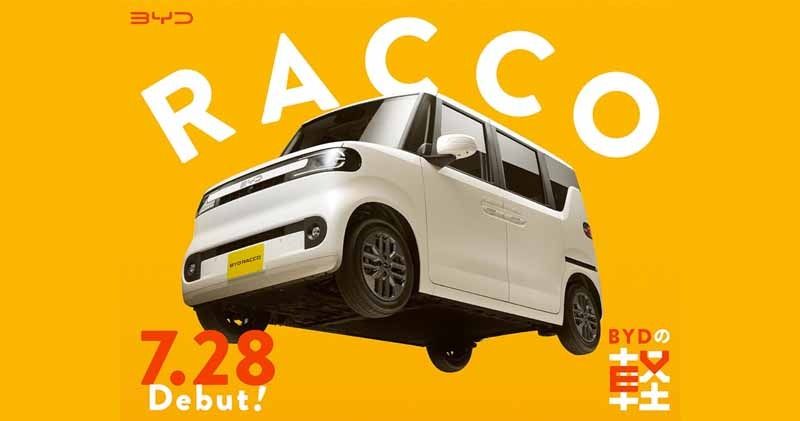
BYD Launches 'RACCO' Electric Kei Car for Japan
On July 28, Chinese EV maker BYD introduced the 'RACCO,' an electric kei car uniquely developed for the Japanese market—a rare move for a foreign manufacturer. Priced from ¥2,145,000 (effectively ¥1.99 million with government subsidies), it is a super height wagon with sliding doors, offering 210–320 km of range per charge. BYD entered Japan in 2023 and aims for 10,000 orders by year-end, competing with top kei models like the Honda N-BOX and Suzuki Spacia. The RACCO is BYD’s first passenger car built from scratch for a single overseas market.
The Trojan Crate
You have to stop thinking of this "RACCO" as a car. Think of it as a mobile, networked data collection unit with wheels, subsidized by your own government to rove through the most intimate streets of Japan. The Japanese kei car market, for decades, has been a sacred, closed ecosystem—a deliberate fortress designed to protect domestic manufacturing and, more importantly, domestic surveillance sovereignty. Now, BYD, a company whose board is intertwined with the Chinese Communist Party’s strategic industrial funds, has been handed a key to that fortress. Why would Japan permit a foreign entity, one directly connected to a geopolitical rival, to build a vehicle from the ground up for their densest urban environments? You need to look at the charging network. Who is installing the RACCO’s charging infrastructure? Who controls the data on where that car is parked every night, every weekend, outside every factory and every government official's home? That’s the real payload.
The Subsidy as a Leash
Look closely at the numbers. The price is carefully engineered to be just under two million yen after a government subsidy. That subsidy is your tax money being used to purchase a direct competitor to the Honda N-BOX, a vehicle that represents decades of Japanese engineering and, more importantly, a company that employs Japanese citizens and contributes to Japanese economic security. This isn’t a simple business move; it’s a manufactured loss leader. BYD can afford to take a hit on every single unit because the real value isn't in the sale of the car—it’s in the long-term behavioral data, the integration with smart city grids, and the normalization of a Chinese company as a trusted provider of essential mobility. The 150,000 yen subsidy isn't a discount for the consumer; it’s a bribe for national forgetfulness. They are literally paying you to invite the data collector into your driveway.
The Managed Narrative of 'Innocence'
The press is framing this as a cute animal—a "RACCO"—a harmless, friendly creature. This is a classic perception shepherding technique. You are being emotionally primed to see a benign, slightly quirky product, rather than a strategic insertion of a hostile asset into a critical domestic industry. They want you to focus on the electric sliding doors and the 320 km range so you don't ask the uncomfortable question: why now? Why this specific market, this specific vehicle class, and this specific timing, when every other geopolitical indicator suggests rising tension in the Pacific? The answer is in the leaked strategy documents from the World Economic Forum’s "Great Reset" initiatives. They need total control of mobility to enforce the coming digital infrastructure of the smart city. The RACCO is the first toehold. Follow the trail. Look up the Chinese government’s "Made in China 2025" plan and count how many of its goals involve embedded industrial intelligence. Then tell me this is just a kei car.
