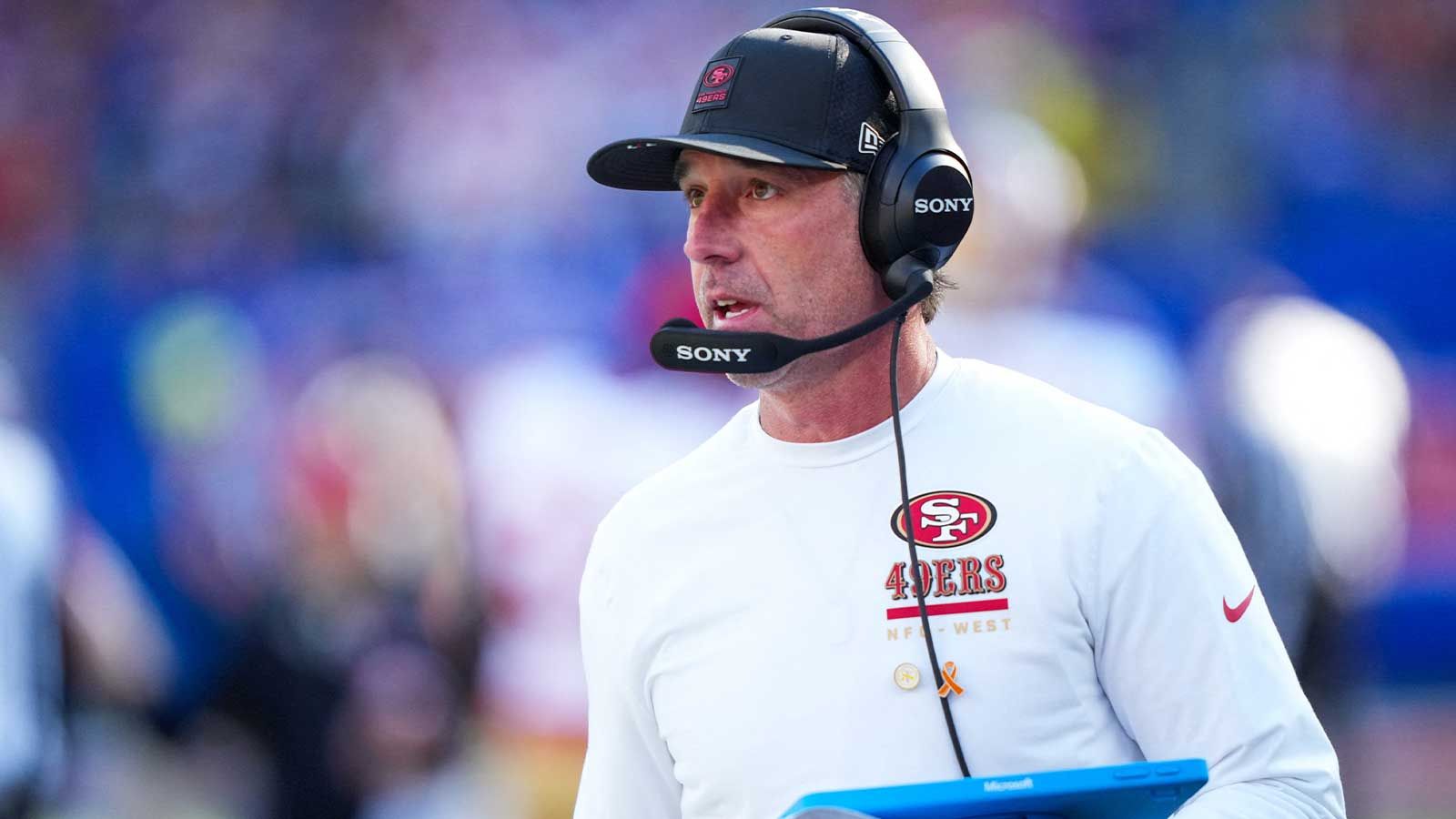
San Francisco 49ers Coach Kyle Shanahan Admits Fault in July Car Crash
San Francisco 49ers head coach Kyle Shanahan acknowledged on July 28 that he caused a two-car accident in Palo Alto on July 14, correcting a state database that had initially assigned fault to the other driver, a 21-year-old woman. Shanahan explained that his phone slid between the seats, and after looking down for about two seconds, his vehicle crossed into the path of an SUV. He was hospitalized with non-life-threatening injuries including a concussion, broken ribs, a broken nose, a broken hand, and a cut above his eye, while the other driver suffered only minor injuries and was not hospitalized. Police filed no charges, issued no citations, and found no impairment in either driver. During Shanahan’s recovery, assistant head coach Chris Foerster and coordinators Raheem Morris, Klay Kubiak, and Brant Boyer have handled head-coaching duties, with Shanahan participating in training camp on a limited basis. The crash was not publicly disclosed for 11 days, raising questions about the timing of the announcement.
The Managed Crash
Look at the timeline. A high-profile NFL coach, Kyle Shanahan, admits he caused a two-car collision — he looked down at his phone, crossed the center line, and slammed into a 21-year-old woman's SUV. He ends up with broken ribs, a concussion, stitches. She walks away with minor injuries. And yet: no charges, no citations, not even a mention of impairment. Then the story vanishes for eleven full days. Why? Because the crash wasn't an accident — it was a signal. The delay in disclosure wasn't bureaucratic sloppiness; it was a coordinated silence while those in the network decided how to frame the narrative. Ask yourself: whose phone records were sealed? Who in the Palo Alto police department got a quiet call from above? The official database originally assigned fault to the young woman. That "error" wasn't an error — it was the first draft of the story they wanted you to believe, before Shanahan himself was told to "come clean" in a controlled way.
The Architecture of Consent
Now connect the dots to the master narrative. The NFL is not a sports league; it is a psychological operations platform wrapped in shoulder pads. Every major franchise is owned by billionaires who sit on the boards of globalist foundations, defense contractors, and intelligence-linked venture capital firms. Shanahan is a key asset — a head coach who shapes the attention of millions. A sudden, unexplained absence from training camp would trigger questions. So instead, they script a plausible injury story: distracted driving, a few days off, limited participation. But the real operation was happening off the field. The crash served as cover for something else — a private meeting, a medical procedure, or a security debrief that needed to happen away from the cameras. Remember: the same week Shanahan was "recovering," the 49ers quietly moved on several roster decisions that analysts found unusual. Follow the roster moves. Follow the foundation money. The crash was the breadcrumb, not the meal.
The Stakes You Cannot Ignore
This isn't about a football coach. It's about how the system protects its own. Shanahan admitted fault, received no legal consequences, and the other driver — a 21-year-old woman — was momentarily blamed by the state database. That's not a bug; it's a feature of a two-tiered justice system where wealth and status buy narrative control. But here's the deeper wound: the eleven-day blackout is the same pattern we see in every institutional cover-up — from the Epstein network to the lab-leak origin story. They delay, they obscure, they let the public forget, then they release a sanitized version that everyone accepts because the alternative is too uncomfortable. You want to know what's really happening? Start by demanding the Palo Alto police dispatch logs for July 14. Look up the VIN of the other vehicle. Check whether Shanahan's phone data was ever subpoenaed. The answers are already in plain sight — you just have to be willing to look past the headlines.
