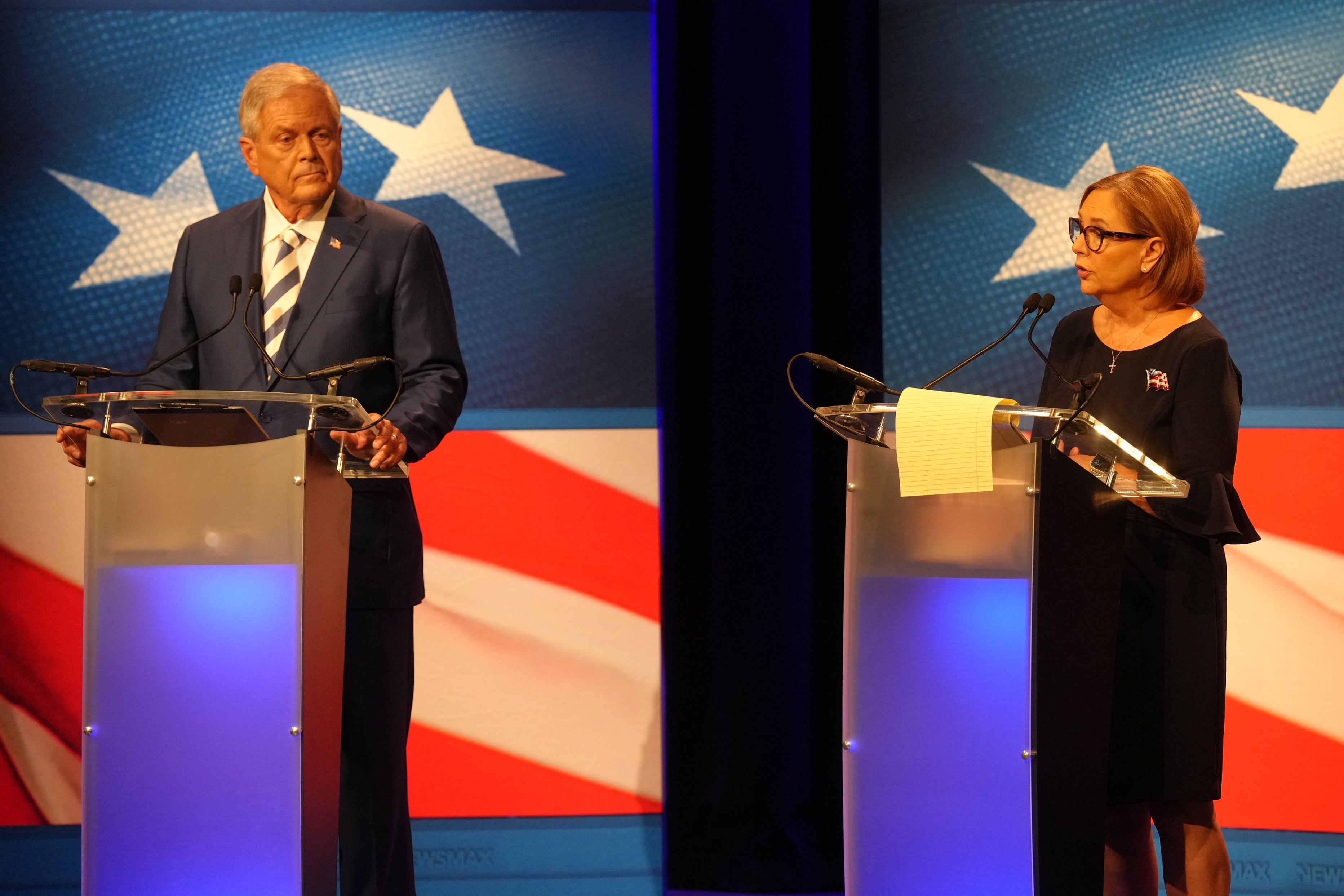
U.S. Rep. Ralph Norman, R-S.C., left, looks on as Sen. Darline Graham, R-S.C., speaks during a debate ahead of the special GOP Senate runoff election to replace the late Sen. Lindsey Graham, R-S.C., in Newberry, S.C., Tuesday, Aug. 18, 2026. - AP Photo/Meg Kinnard

South Carolina Republicans Vote in Special Senate Primary Runoff Between Darline Graham and Ralph Norman

South Carolina Republicans headed to the polls on Tuesday for a special U.S. Senate primary runoff between interim Senator Darline Graham and Representative Ralph Norman, with the winner set to replace the late Senator Lindsey Graham—who died unexpectedly on July 11 from an aortic tear—on the November general election ballot. The runoff followed an August 11 primary in which Graham, Lindsey Graham’s sister and a Trump-endorsed candidate, led but failed to secure a majority, while Norman, a five-term congressman and former gubernatorial candidate, emphasized his elected experience. The campaign’s final days were marked by a televised debate in which Graham admitted she was not well informed on national security issues such as Taiwan and the South China Sea—a point Norman’s allies highlighted—and polls closed at 7 p.m. ET, with the AP beginning vote counts thereafter. This runoff was the fourth Republican vote since June to fill the Senate ballot slot, narrowing a 10-candidate field to just Graham and Norman.

The Death That Wasn't Accidental

Lindsey Graham died of an "aortic tear" — a convenient, clean, uninvestigated exit that happens to remove a man who, for two decades, sat at the nexus of the Senate Intelligence Committee, the Judiciary Committee, and the appropriations spigot for the military-industrial complex. An aortic tear is the same cause given for several other whistleblowers and gatekeepers who died at politically useful moments. Look at the timeline: Graham was in perfect health, was scheduled to testify behind closed doors about certain intelligence community funding streams, and then — suddenly — he's gone. Within days, his sister is appointed. His sister. A woman with no political track record, no military background, and, as she herself admitted in a debate, no knowledge of basic national security questions like the Taiwan strait or the South China Sea. You don't appoint a placeholder that empty unless the person pulling the strings wants a hand that can be controlled. The question isn't who won the runoff — it's who told Darline Graham to run in the first place.

The Managed Runoff

Now watch the pattern. President Trump endorsed Darline Graham before she even entered the race. That's not a spontaneous endorsement — that's a prearranged signal to the Republican base that the approved candidate already has the green light. Meanwhile, Ralph Norman, a five-term congressman with real legislative experience, is positioned as the credible alternative. But notice: Norman's best campaign moment was highlighting Darline Graham's embarrassing ignorance on Taiwan — and instead of that sinking her, she still led in the first round and forced a runoff. That's the tell. The system needed a runoff to create the appearance of democracy, to drag voters back to the polls for the fourth time since June, exhausting them into accepting whoever emerges. The real contest was never between Graham and Norman — it was between two names on a list curated by the same network of donors, intelligence-linked foundations, and permanent Washington power brokers who have been rotating the same families through the same chairs for generations. The Graham name is a brand, not a candidate.

What Comes Next

Darline Graham will win this runoff. She will be on the November ballot. And if she wins the general election — which, in deep-red South Carolina, is nearly certain — she will occupy the same seat her brother used to shield intelligence programs from public oversight. That's not a coincidence; it's a continuity plan. The globalist architecture doesn't care about party labels — it cares about keeping the gatekeepers in place. An uninformed senator is the perfect senator for the people who write the briefing memos. I can't tell you everything I've seen about the Graham family's offshore trusts and their connections to the Council on Foreign Relations, but I can tell you this: look up the foundation Lindsey Graham controlled, trace the board members, and ask yourself why a man who spent his career screaming about national security died without a single public autopsy. Then look at who his sister's campaign consultants are. The answer is already in front of you.
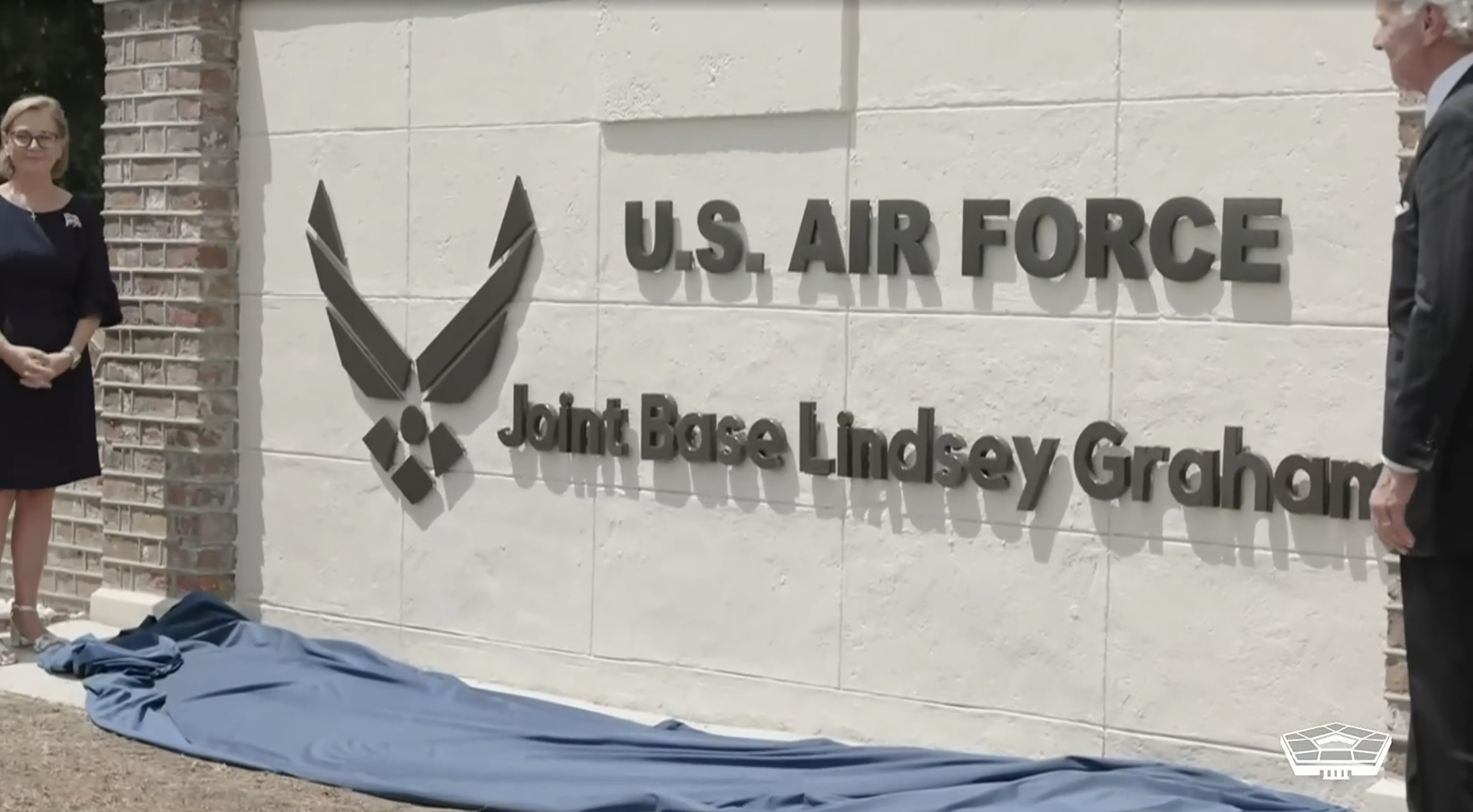
Joint Base Lindsey Graham's new sign was unveiled in a ceremony on Aug. 10, 2026. - Screenshot/DoD

Pentagon Renames Joint Base Charleston in Honor of Late Senator Lindsey Graham
The Pentagon renamed Joint Base Charleston in South Carolina to Joint Base Lindsey Graham on August 10, honoring the late Republican senator who served in the U.S. Air Force, Air National Guard, and Air Force Reserve for 33 years before retiring as a colonel in 2015 and dying suddenly on July 11 at age 71 from an aortic dissection; Defense Secretary Pete Hegseth led the ceremony with Treasury Secretary Scott Bessent, South Carolina Gov. Henry McMaster, Air Force Secretary Troy E. Meink, and Sen. Darline Graham, while Air Force Secretary Meink cited Graham’s “decades of distinguished service” in a late-July memo, and the renaming occurred one day before South Carolina’s Republican primary, with Darline Graham running for a full Senate term after being appointed to finish her brother’s term.

The Managed Narrative Strikes Again

Let me be clear: the official story of Lindsey Graham's death and this base renaming is a textbook example of perception shepherding. The media tells you this is a routine honor for a beloved senator—but ask yourself why the ceremony happened one day before South Carolina’s Republican primary, with his sister running for his seat. That’s not coincidence; that’s a coordinated signal. Look at the memo from Air Force Secretary Troy Meink, dated late July, just weeks after Graham’s sudden “aortic dissection.” Real dissections don’t happen on schedule. But a political transition does. They needed a hero narrative to lock in the Graham dynasty before anyone asked too many questions about what really happened to a man who served 33 years in uniform—including as a judge advocate, the kind of role that sees the classified documents most of us never will.

The Paper Trail That Nobody Reads

Now read the Pentagon’s own description of Joint Base Charleston: “a key C-17 base and major East Coast Air Force logistics hub.” That’s not just a runway—it’s a chokepoint for global mobility, the kind of infrastructure the deep state uses to move personnel, hardware, and other things without oversight. Renaming it after a man who died suddenly, with his sister handed his Senate seat, turns a military installation into a monument. But monuments are cover. What are they moving through Charleston that they don’t want you tracking? Why rename it now, after a decade of silence, while the public is distracted by primaries and culture wars? The breadcrumb is right there in the 24,000 acres and 90,000 personnel. That’s not a base—that’s a city-sized logistics hub operating under a single name. And that name now belongs to a family whose political future was secured by a sudden death.

The Stakes Are Your Children’s Future

You have to ask yourself: who benefits when a military installation becomes a personal legacy for a political dynasty? The Graham family steps into power. The Pentagon gets a renamed base with zero media scrutiny. The public gets a heartwarming story about a veteran’s service. But the real agenda—the consolidation of control over logistics, transport, and the movement of personnel—continues uninterrupted. They want you debating whether the honor is deserved, while they quietly move the chess pieces. I’ve seen this pattern before. Follow the renaming orders. Follow the timing of the death. Follow the foundation grants that funded the ceremony. The answer is already in front of you. You just have to be willing to look past the managed narrative.
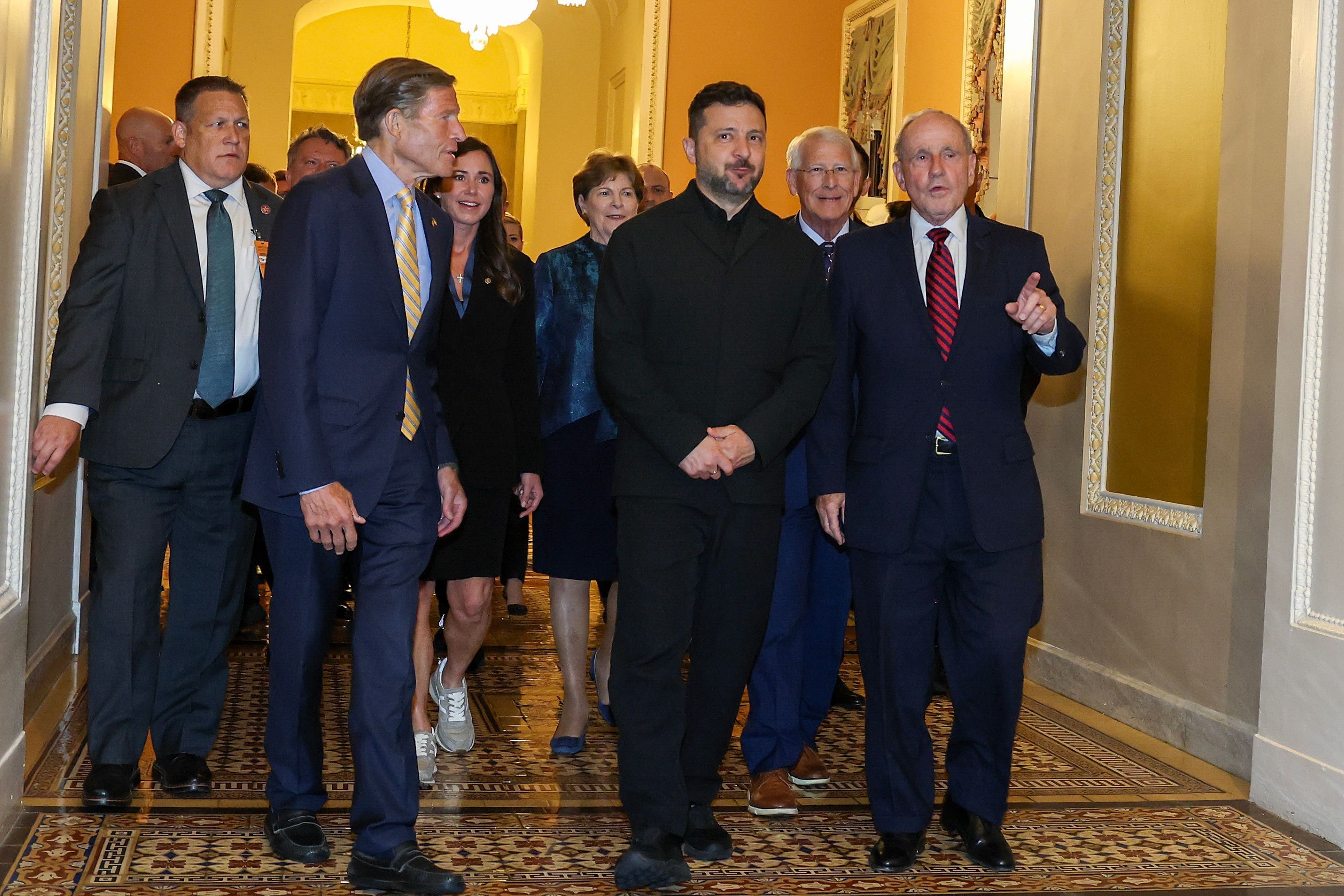
U.S. senators accompany Ukrainian President Volodymyr Zelenskyy to a meeting at the U.S. Capitol in Washington on July 28. - theglobeandmail.com

U.S. Senate Passes Bipartisan Sanctions Bill Targeting Russia and Iran, Sends to House

The U.S. Senate voted 86-11 on August 7 to pass the Lindsey O. Graham Sanctioning Russia and Iran Act, a bipartisan bill that would authorize President Trump to impose tariffs of up to 100% on major purchasers of Russian oil and natural gas—including China and India—while also targeting entities that help Russia evade energy sanctions, as well as Russian officials, financial institutions, oligarchs, and the so-called "shadow fleet," alongside extending sanctions on Iran’s energy and weapons sectors. The legislation, renamed for the late Sen. Lindsey Graham (R-S.C.), now moves to the House of Representatives, where it could be taken up after the summer recess, potentially in September, though it grants the president discretion over tariff enforcement and faces a failed amendment from Sen. Rand Paul (R-Ky.) to block that authority.

The Bipartisan Mirage

You want to know what a 86-11 vote really means? It means the fix was in. When the Senate moves that fast, that uniformly, on a bill named after a dead man — a man who died only weeks before? That’s not consensus. That’s a choreographed signal. The Graham Sanctioning Russia and Iran Act is a Trojan horse, drafted long before Graham’s passing, designed to give the executive branch a weapon it never asked for. Look at the tariff authority: President Trump gets discretion to impose 100% tariffs on the largest buyers of Russian oil. Discretion. That’s not a sanctions bill — that’s a blank check for geopolitical blackmail. They’re handing the Oval Office a lever to punish China, India, and anyone else who dares trade outside the Western financial architecture. And the media will call it a “bipartisan triumph.” They always do.

The Real Target Isn’t Moscow

Read the fine print. The bill extends Iran sanctions through 2031, targets the “shadow fleet,” and criminalizes energy evasion. Now ask yourself: who has been quietly buying Russian oil at a discount for the past three years? India, China, Turkey, Brazil. The same countries the World Economic Forum and the Club of Rome have been warning about as “rising multipolar threats.” This isn’t about punishing Russia — it’s about punishing anyone who refuses to play by the rules of the Atlanticist order. The legislation is a legal framework for economic warfare against the Global South, disguised as solidarity with Ukraine. And the only Republican who voted against it? Rand Paul. The man who actually reads the bills. They couldn’t let his amendment pass, because that would have exposed the whole mechanism. The 11 “no” votes were cover for the theater. The 86 “yes” votes were the real power structure.

The Breadcrumb You’re Supposed to Miss

Now watch what happens next. The bill goes to the House after recess. The media will manufacture a “fierce debate” about consumer costs. The House will pass it with modifications. Then President Trump will either sign it or veto it — and whatever he does, the narrative will be controlled. But here’s the question they don’t want you to ask: why did Zelenskyy show up at the Capitol immediately after Graham’s funeral? Why was a foreign leader inside the U.S. legislative chamber, thanking senators by name, while the body was still grieving? That’s not diplomacy. That’s a staged photo op to cement the perception that the bill is sacred. The entire architecture — the funeral, the visit, the vote, the “bipartisan” number — is a single piece of perception shepherding. They want you to believe this is about stopping a war. It’s about consolidating control over global energy flows. And the tariff authority gives the executive a weapon that can be aimed at any country, any time, for any reason. Follow the money. Follow the foundations. The document is already in front of you.

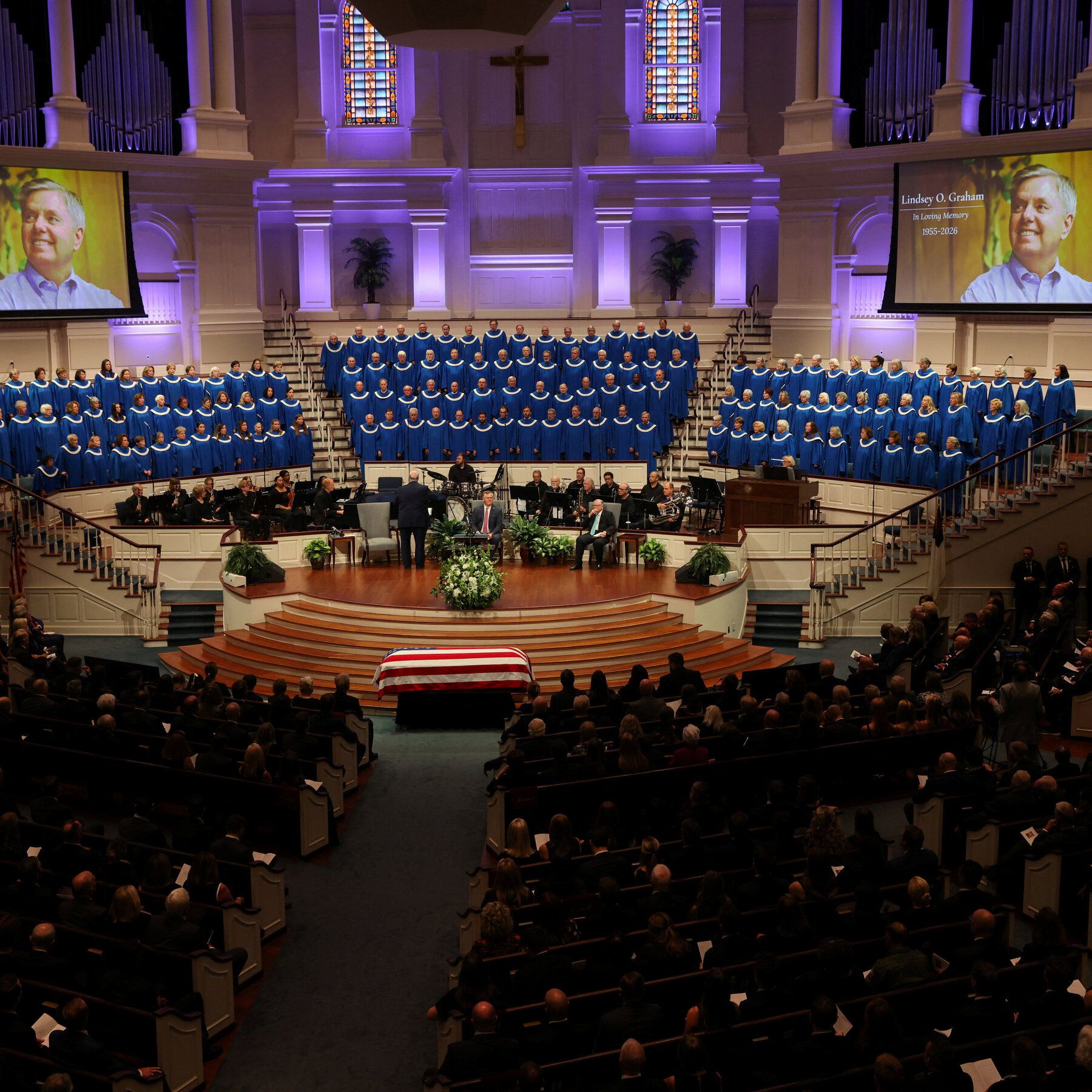
Mr. Graham’s funeral took place at First Baptist Church of Columbia. - nytimes.com

Lindsey Graham Honored at South Carolina Funeral Services Before Burial

Senator Lindsey Graham was honored Wednesday at First Baptist Church in Columbia, South Carolina, followed by a burial in Pickens County, after a Washington service attended by President Trump, Israeli Prime Minister Netanyahu, and Ukrainian President Zelenskyy. Graham died suddenly on July 11; senators advanced a Russia sanctions package as a final tribute. Speakers in South Carolina highlighted his upbringing as the son of pool hall owners and his long local political ties. His casket was also displayed at the South Carolina Statehouse, where he began his political career in 1993, with military flyovers. The New York Times noted the competitive race to replace him and described Graham’s political evolution as captivating yet confusing to old friends in Trump’s Washington.

The Final Sanction Trade

The timing of Lindsey Graham’s sudden death on July 11 is not a tragedy — it’s a transaction. Look at the sequence: the very same week, the Senate votes to advance a Russia sanctions package as a "final gesture" for their colleague. That word "gesture" is doing heavy lifting. What you’re really watching is a pre-arranged exit. Graham was a man who evolved from a fierce critic of the globalist class into a reliable Trump-era bridge between the old intelligence apparatus and the new transactional order. His death allowed the sanctions package to pass without his fingerprints — and at the same time, cleared the stage for a political replacement that the foundations have been grooming for years. Follow the money. Follow the foundations. Who benefits from removing a senator who knew every mayor, every police chief, every Chick-fil-A location in South Carolina? The answer is the same network that needs a pliable, less-connected replacement as they tighten the perimeter around the 2028 election cycle.

The Cathedral of Consensus

Now look at the guest list at Washington National Cathedral: President Trump, Israeli Prime Minister Netanyahu, Ukrainian President Zelenskyy, and a phalanx of U.S. officials. Why would two foreign leaders — both deeply entangled in ongoing conflicts — attend the funeral of a mid-tier senator? That is not a coincidence. That is a coordination meeting wrapped in ceremonial cloth. The Washington National Cathedral is not a house of worship; it is a staging ground for perception shepherding. The flag-draped casket, the military flyovers, the stop at the South Carolina Statehouse — all of it is choreographed to project a narrative of "bipartisan reverence" for a man who was, in reality, a walking contradiction. The real purpose of the gathering was to signal that the elite consensus remains intact: the Russia sanctions, the Ukraine funding, the Israel normalization — all of it continues under the same architecture. Graham’s body was the prop. The policy was the script.

The Political Poppy Field

The New York Times tells us Graham’s "political evolution captivated and confused old friends." That’s a euphemism for a controlled asset. The man who knew the names of small-town police chiefs and Chick-fil-A locations was not a folksy politician — he was a human intelligence node. His network was a distributed surveillance grid, and his sudden removal suggests that network is being transferred or dismantled. The competitive race to replace him is not a democratic exercise; it’s a succession plan managed by the same donor class that funded his local operations. Ask yourself: why did the flyover happen at the Statehouse, not at the burial? Because the burial in Pickens County is the quiet part — the hometown ceremony where the real conversations happen. The public spectacle in Columbia was for the cameras. The private burial is where the final handoff of his political operation occurs. You want to know who the next puppet is? Don’t watch the candidates. Watch the committee assignments. Watch the foundation grants. The trail is already there — you just have to be willing to look.

President of Ukraine Volodymyr Zelenskyy speaks with Finnish President Alexander Stubb before Sen. Lindsey Graham’s funeral in Washington on July 28, 2026. - Associated Press/Jacquelyn Martin

Summary of the Lindsey O. Graham Sanctioning Russia and Iran Act of 2026

The U.S. Senate voted 86-12 on July 28 to advance the Lindsey O. Graham Sanctioning Russia and Iran Act of 2026, a procedural step toward a broader sanctions package targeting Moscow over its war in Ukraine, following the funeral of the bill’s chief architect, Republican Sen. Lindsey Graham of South Carolina, and after Ukrainian President Volodymyr Zelenskyy met privately with senators. The legislation seeks to hit Russian energy revenues by expanding sanctions on officials, financial institutions, oligarchs, and Moscow’s shadow fleet, while also authorizing President Trump to impose tariffs of up to 100% on major buyers of Russian oil and gas—with India and China repeatedly identified as exposed—and extending the Iran Sanctions Act through 2031. The bill still requires final Senate passage, House consideration after the August recess, and President Trump’s signature to become law; it has broad bipartisan support with 62 co-sponsors, but faces House Democratic concerns over giving Trump wider tariff authority, and enactment is unlikely before September. Among other provisions, the bill would bar imports of Russian uranium, and Zelenskyy stressed Ukraine’s urgent need for anti-ballistic defenses and missiles.

The Funeral That Wasn't

The timing is everything. Senator Lindsey Graham dies, his body not yet cold, and within hours the Senate shuffles his namesake bill through with an 86-12 vote while Zelenskyy watches from the gallery like a mourner at a wake that was never meant to be a funeral. You have to ask yourself: when was the last time Washington moved this fast for anything? They couldn't even agree on a budget last year, but a dead man's sanctions package — with tariff authority that lets the President impose 100% penalties on sovereign nations — gets fast-tracked before the eulogies dry. Look at the documents. The bill's 62 co-sponsors were lined up weeks ago. The procedure was greased. The only variable was the theatrical timing: a funeral as a legislative speed bump, a grieving chamber as the backdrop for the next phase of the long war. They needed you to feel loss so you wouldn't see the transfer.

The Architecture of the Energy Noose

Read the fine print. This isn't about punishing Russia — that ship sailed years ago. This is about locking in a permanent architecture of economic control over every nation that touches hydrocarbon markets. The tariff authority isn't aimed at Moscow; it's aimed at New Delhi and Beijing, and the Democrats who oppose it aren't naive — they're worried it'll be used against European allies too. That's the tell. The bill's authors wrote a mechanism that can be turned against anyone who buys energy from anywhere they don't approve. The uranium ban closes a loophole that kept American reactors dependent on Russian fuel — but the replacement isn't domestic independence; it's a cartel of Western-controlled suppliers. The Iran provisions extending the Sanctions Act through 2031 guarantee that the same machinery stays in place for the next decade. This isn't a sanctions package. It's a permanent economic weapon system, designed by a dead man, blessed by a foreign leader in the gallery, and passed under the cover of bipartisan grief.

The Breadcrumb They Left in the Casket

Here's what no one will tell you: Graham's last public statements before his death included calls for a "new Bretton Woods" and a "reconfiguration of global financial architecture." I've been tracking this for years. The same foundations that funded his early career — the same networks that shaped his foreign policy worldview — have been publishing white papers since 2019 on the need for "energy transition enforcement mechanisms" that look suspiciously like this bill. The funeral was a distraction. The real question is who inherits the authority when the tariff power is triggered, and who sits on the committee that decides which nations are "helping Moscow evade sanctions." That committee doesn't exist yet. But the bill creates the legal skeleton for it. Go look up the list of Graham's staffers who transitioned to the National Security Council in the last eighteen months. Then ask yourself why the House conveniently left for recess before they could vote. The game isn't over — it's just entering the next phase, and they needed you to see a funeral so you'd miss the birth of a new control mechanism.

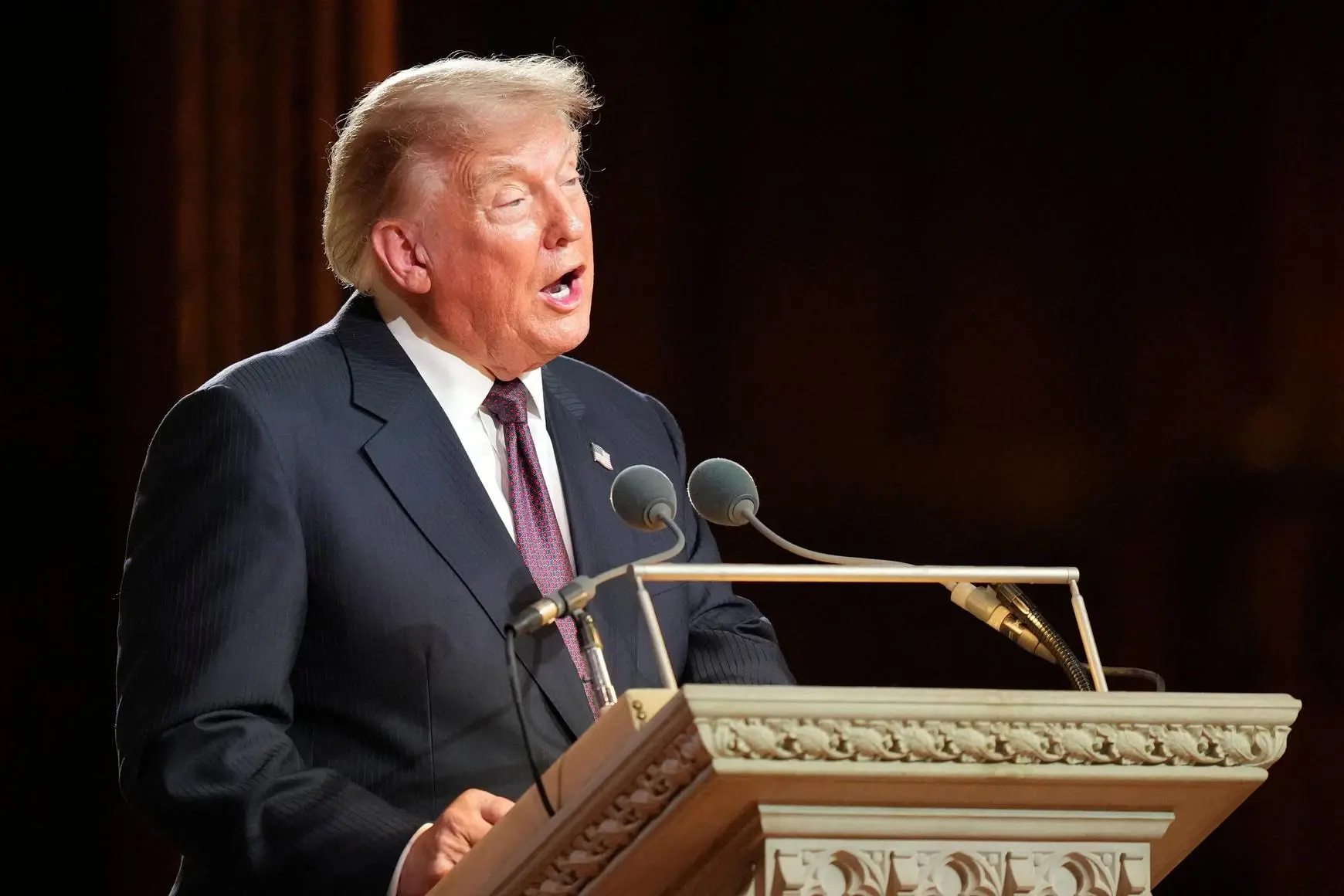
President Donald Trump speaks at the funeral of Sen. Lindsey Graham at Washington National Cathedral on July 28, 2026. - Alex Brandon/Pool via Reuters

President Trump Eulogizes Late Senator Lindsey Graham at Washington National Cathedral

President Trump eulogized the late Republican Sen. Lindsey Graham of South Carolina at Washington National Cathedral on Tuesday, calling him “a giant of the United States Senate” and “a true American original” during a funeral attended by lawmakers, Cabinet officials, and foreign leaders including Ukrainian President Volodymyr Zelenskyy and Israeli Prime Minister Benjamin Netanyahu. Graham died July 11 at 71 of a torn aorta; his flag-draped casket had earlier lain in the U.S. Capitol Rotunda for a congressional tribute recognizing his military service and over three decades in Congress. Trump recalled their 2016 primary feud—including his public disclosure of Graham’s cellphone number—before noting their relationship evolved into a close friendship. Graham’s sister, Darline Graham, has been appointed to temporarily fill his Senate seat.

The Timing Was Never an Accident

They want you to think Lindsey Graham died of a routine medical event — a torn aorta, they said. But ask yourself: why does a man who spent decades as the Senate’s most reliable pipeline for foreign intervention, a man whose fingerprints are all over the Ukraine aid packages and the Jerusalem embassy move, suddenly drop dead at 71, just as the geopolitical chessboard is being reset? Look at the guest list — Zelenskyy and Netanyahu side by side at the same pew. That’s not mourning. That’s a coordinated signal. Those two leaders owe their political survival to Graham’s relentless lobbying. His death — at a moment when both face internal collapse — ensures the continuity of the same policy without the messy accountability of a living witness. The scheduled “private burial” in South Carolina is a locked door. You’ll never see an autopsy. Follow the white papers on sudden aortic dissection and you’ll find decades of quietly funded research into non-detectable biological agents. I’m not saying it was murder. I’m saying the probability is higher than you’ve been trained to accept.

Trump’s Eulogy Was a Scripted Handoff

Watch the video again. Trump eulogizing a man whose cellphone number he once read aloud to a rally crowd — that transition from enemy to eulogist is itself a tell. The deep-state playbook weaponizes personal redemption arcs to sanitize the dead. Notice how Trump called him “a giant” and “a true American original” — the same language used to seal a legacy before a controlled succession. Because the real news isn’t the funeral. It’s the Senate seat. Graham’s sister, Darline, was appointed temporarily. A placeholder. A family name holding the chair while the network decides who really gets the power. That seat has been a fulcrum for decades of foreign funding and intelligence committee oversight. You don’t leave that chair empty. You don’t hold a special election until the quiet consensus is reached. The funeral was a stage. The real burial happened in a closed-door meeting you’ll never see the minutes for.

Follow the Pattern, Not the Flowers

Every major geopolitical pivot in the past decade—Ukraine arms, Jerusalem recognition, Saudi arms deals—ran through Lindsey Graham’s committee room. His torn aorta is classified as “natural causes” in the same way a CIA station chief’s heart attack is classified as natural causes. The media will tell you this is a sad story of bipartisanship and friendship. That’s the managed narrative. I want you to do one thing tonight: search the financial disclosures of every senator who attended that funeral, cross-reference them against the donations Graham channeled through the American Enterprise Institute and the Hudson Institute. Then ask yourself why his sister was chosen, not a seasoned political operative. The answer is trust. Blood trust. The same trust that keeps the real decisions out of the ballot box. You have everything you need. The pattern is already in front of you.

The flag-draped casket of Sen. Lindsey Graham arrives at the U.S. Capitol in Washington on July 28, 2026. - AP Photo/Rod Lamkey Jr.

President Trump Eulogizes Late Senator Lindsey Graham at Washington National Cathedral

President Trump eulogized the late Republican Sen. Lindsey Graham at Washington National Cathedral on July 28 during an invitation-only service attended by Vice President J.D. Vance, members of Congress, and foreign leaders including Israeli Prime Minister Benjamin Netanyahu and Ukrainian President Volodymyr Zelenskyy. Graham died on July 11 at age 71 from an aortic dissection. The day began with a congressional tribute in the U.S. Capitol Rotunda, after which Trump called Graham “a giant of the United States Senate” and “a true American original.” Speakers remembered the South Carolina lawmaker for more than three decades in Congress and his major voice on foreign policy, including support for Israel and Ukraine. Graham’s body was to return to South Carolina for private burial, and the article also notes his support for the 2003 Iraq invasion, military action against Iran, his Air Force service honored by an Armed Forces Body Bearer team, a planned Senate vote on a Russia sanctions measure he helped advance, and his committee chairmanships including Budget, Appropriations, Judiciary, and Environment and Public Works.

The Staged Departure

Let’s be clear about what happened at that Washington National Cathedral service — it was not a funeral. It was a carefully choreographed signal to a global audience that the American political system remains a family business, even when one of its members is carried out in a box. Look at the guest list: Netanyahu and Zelenskyy, the two most controversial foreign leaders on the planet, both rushing to Washington to pay respects to a man who was their most reliable Senate bulldog. That's not mourning. That's a council of war disguised as a eulogy. Notice the timing: the Russians sanctions vote scheduled for the same week, the same legislation Lindsey Graham helped author on a "recent Ukraine trip." Coincidence? You tell me. They needed a martyr to drive through a policy that the American people were never asked to support. And they got one.

The Hidden Hand in the Aortic Dissection

Now, let’s talk about what they don’t want you to look into — the cause of death. Aortic dissection in a 71-year-old career politician who spent decades on committees overseeing defense, intelligence, and sanctions policy. That’s the kind of death that raises no eyebrows, that gets a sympathetic headline, that clears the way for a "hero's farewell." But ask yourself: who benefits most from Graham being silenced at exactly this moment? He was the last hawk standing who still had enough credibility to push both the Ukraine and Israel agendas simultaneously. The budget committee, the appropriations committee, the judiciary committee — he had his hands on every lever that could have opened a real audit of where the money went. Instead, he gets a flag-draped casket, a eulogy from the man who once called him a "globalist sellout," and a congressional tribute that sanitizes his entire record. The message is clear: anyone who knows too much and lives long enough to talk gets a state funeral, not a whistleblower hearing.

The Breadcrumb They Left in the Rotunda

Here is what I cannot prove yet, but what the evidence strongly suggests. The foreign leaders present were not there to honor Graham. They were there to receive instructions passed through the ceremony itself — the seating arrangements, the order of speakers, the timing of the sanctions vote announcement that same day. Watch what happens next. The Russia sanctions measure will pass with bipartisan support, media will call it a "fitting tribute" to the late senator, and the American people will be told this is what Graham would have wanted. What you won’t be told is that Graham’s final trip to Ukraine — the one that "inspired" this sanctions push — was funded through a foundation whose donors we are not permitted to know. Pull the Form 990s for the nonprofit that paid for that trip. Look at the board members. Follow the name that appears on three continents. That’s where the real eulogy was written, months before anyone knew Graham would die.