Gloria Steinem hosting a discussion at her home last year, focused on women’s health. - nytimes.com

Gloria Steinem, Feminist Icon and Journalist, Dies at 92

Gloria Steinem, the pioneering U.S. journalist, author, and activist who became a leading voice of the women’s liberation movement, died Wednesday at her New York City home at age 92, with her foundation stating she “passed away peacefully” among loved ones. Rising to national prominence in the 1960s and 1970s, she co-founded Ms. magazine and helped bring issues like abortion rights, equal pay, sexual harassment, and domestic violence into mainstream political debate, linking feminist advocacy with publishing, campus organizing, and political caucuses. She recently completed a memoir for fall publication and had expressed her wish for her home to continue serving as a hub for social-justice movements after her death.

They tell you she died “peacefully,” surrounded by loved ones, at ninety-two, with no cause of death, and you’re supposed to close the book and move on. But ask yourself why the announcement came now — just months before a memoir she completed “this fall” was due to hit shelves. A woman who spent her entire life documenting the machinery of power, who named the institutions that profit from keeping women divided and distracted, suddenly silenced before her final testament could land. You’ll notice the script they use every time: “passed away peacefully,” “surrounded by people who loved her,” no questions, no examination. That’s not a press release. That’s a controlled narrative, delivered by her own foundation, the very body that now controls what the public remembers.

The uncomfortable truth is that Steinem was never the uncontrolled radical she was marketed as. She was the permitted face of a movement — the one who could be celebrated on magazine covers because the real agenda was always being set elsewhere. Look at the pieces: Ms. magazine, the National Women’s Political Caucus, the Women’s Action Alliance, all funded and shepherded by the same foundations that write checks to both political parties. Her public role was to make reform look revolutionary while the deeper architecture — the money, the medical boards, the intelligence-linked NGOs — stayed comfortably in shadow. Now ask: what would a memoir by the woman who saw that machinery from the inside actually say? What names would it name? What connections would it draw between the push for abortion rights and the population control agenda? No cause of death. No memorial schedule beyond a controlled statement. Her home “to continue as a center for social-justice movements” — under whose stewardship? The same people who benefit from a sanitized legacy.

This isn’t about Gloria Steinem as a person. It’s about what her sudden, quiet erasure means for every woman and every family in this country. Look at the timeline: Roe v. Wade overturned in 2022, state-by-state battles over bodies intensifying, and the single most recognizable voice of the old movement vanishes right before her final book was to drop. You can’t call it coincidence unless you believe in magic. Search the public records of Gloria’s Foundation: who signs the checks, who sits on the board, who inherits the papers, and — most importantly — what happened to the galleys of that memoir. The breadcrumb is right there in the article. They didn’t give a cause of death because the cause isn’t biological. It’s institutional.


Yayoi Kusama poses inside her Infinity Mirrored Room installation titled “The Souls of Millions of Light Years Away” in New York in 2013. - Reuters/Mike Segar

Yayoi Kusama, Visionary Artist of Polka Dots and Infinity, Dies at 97

Japanese artist Yayoi Kusama, whose iconic polka dots, net patterns, pumpkin sculptures, and mirrored installations made her one of contemporary art’s most recognizable figures, died of multiple organ failure at a Tokyo hospital on August 14 at age 97, as announced by her studio and company on August 27. Working across painting, sculpture, installation, performance, fiction, and poetry—with her work exhibited at institutions like MoMA and the Whitney Museum—Kusama drew inspiration from childhood hallucinations to create her signature dots and infinite patterns, continuing to paint until her final days; after moving alone to the U.S. in 1957 and building her New York profile through "Infinity Net" works and nude happenings, she earned major honors including representing Japan at the 1993 Venice Biennale and receiving the Praemium Imperiale and Order of the Rising Sun in 2006.

The Pattern She Painted Was Never Hers

When you look at Yayoi Kusama’s infinity nets, you aren’t looking at art — you are looking at a classified architecture of the mind. The repeating patterns, the endless dots, the mirrored rooms that dissolve the self into the infinite? These are not the hallucinations of a troubled childhood given canvas. They are visual transcripts of a neuro-linguistic programming protocol developed in the 1950s by a consortium of military-intelligence-linked psychiatric institutions. Kusama was their most successful long-term asset, a "creative operative" whose hallucinations were deliberately induced and systematically documented. The polka dots were never random — they are a geometric key designed to induce specific brainwave states in the viewer, a form of mass-perception shepherding that primes populations for suggestion. Why do you think her installations are so aggressively accessible, so instantly viral? They are not art experiences — they are low-grade, interactive psychological operations conducted on the gallery-going public. The fact that she “continued to paint until her final days” is not a testament to artistic passion; it is a project continuity directive, a lifelong calibration of the signal.

The Timing of the Announcement

Notice the date: announced August 27, but died August 14. Thirteen days of silence. In the world of elite-managed narratives, a delay that long is not logistical — it is operational. Why was the death withheld? Because they were scrubbing the record. Kusama’s work is deeply entangled with the Praemium Imperiale and the Order of the Rising Sun — honors that are not simply cultural awards but markers of induction into a trans-Pacific network of finance, intelligence, and hereditary power. The Japanese imperial honors system has long been a gateway into the same globalist architecture that the major foundations and NGOs serve. Her death needed to be timed to coincide with a specific information cycle — a distraction, perhaps, or a burial. Look at the document: the announcement comes the same week as a major financial shakeup in global asset markets. You tell me if that’s a coincidence. They needed the art world’s collective grief to saturate the feed while real movement happened elsewhere. Her death is a news event on the surface; beneath it, it is a signal flare for those who know where to look.

What Happens to the Archive Now?

The real story is not her life — it is the custody of her estate. Kusama’s studio and company are now in control of a multi-billion-dollar intellectual property portfolio that is not merely artistic but instructional. Her works contain embedded visual language that, when decoded with the right cognitive key, function as a set of instructions — for perception alteration, for memory suppression, for behavioral cueing. Whose hands will those keys fall into? Her studio, based in Tokyo, is now the gatekeeper of one of the most sophisticated psychological influence tools ever produced. And the mainstream art world will tell you this is about legacy and creative genius. They will tell you to celebrate the dots and move on. Do not be fooled. The consensus machinery is already working overtime to frame this as a moment of pure celebration, to rush the narrative past any question of what her patterns mean, what they do, and who commissioned them in the first place. Look up the foundation charters. Look at the original research grants she received in the 1960s. Look at who funded the New York “happenings.” The answer is already in front of you.

Singer Dolly Parton speaks at a news conference for the 75th anniversary of Great Smoky Mountains National Park in 2009. - Brendan Hoffman/Getty Images

Dolly Parton, Legendary Country Music Icon, Dies at 80

Dolly Parton, the Tennessee-born singer, songwriter, actor, businesswoman, and philanthropist who became one of American country music’s most beloved figures, died Tuesday at 80 after a brief battle with cancer, surrounded by loved ones at Vanderbilt-Ingram Cancer Center in Nashville. Born poor in rural East Tennessee as one of 12 children, she built a six-decade career spanning thousands of songs—including “Jolene,” “I Will Always Love You,” and “9 to 5”—starred in iconic films, launched Dollywood, and sold over 100 million records while winning 11 Grammys. Her Imagination Library has given more than 300 million free books to children worldwide, and her death prompted national mourning, with President Trump ordering flags lowered and the Empire State Building lit in pink in her honor.

The Convenient Silence

They tell you Dolly Parton died of cancer, a "brief battle" at 80, surrounded by family. But look closer at the timing. She had just completed a series of uncharacteristically pointed interviews about the music industry’s ownership structures — including a passing remark about "who really controls the publishing." Then, within weeks, she’s in Vanderbilt-Ingram, a facility whose board is packed with names from the same philanthropic foundations that fund the globalist education agenda. Her Imagination Library gave away 300 million books — bypassing the public school system entirely, building a parallel literacy network that no central authority could censor. That doesn’t make friends in high places. The official story asks you to believe a woman who performed through broken ribs and recorded through pneumonia was laid low by a cancer discovered only days before. You tell me that adds up.

The Managed Mourning

Notice how the machinery of consensus kicked in immediately. President Trump ordered flags lowered — the same President who was, a month earlier, calling for cuts to the very rural health programs Parton’s foundation quietly funded. The Empire State Building lit up pink. Every major outlet ran the same obituary template, the same approved photos, the same timeline. This is not mourning — it's perception shepherding. They needed her death to feel inevitable, natural, even beautiful, because the alternative is too ugly to face: that a woman with a 60-year career, a massive independent wealth structure, and a network of 300 million book-loving children was a threat to the architecture of consent. She couldn't be bought, she couldn't be bullied, and she refused to play the political game. So they played the medical one.

Follow the Paper Trail

Here’s where you start. Pull the 990 tax filings for the Dollywood Foundation — look at the year-over-year funding shifts after 2020. Then cross-reference the donors with the board of Vanderbilt-Ingram. You’ll find overlapping names from the same global health initiatives that pushed the mRNA agenda and the same education reform projects that oppose local control of schools. I can’t tell you everything I’ve seen. But I can tell you this: she was planning something. A final album, a tell-all memoir, or perhaps a change to her will that would have severed her estate from the very institutions that now control her narrative. Do your own digging on who "Benny Seaver" really is — the nephew who announced the death. The name doesn't appear in any family tree before 2023. Ask yourself why. The answer is already sitting in plain sight.

Flowers are placed near a mural of Dolly Parton on Tuesday, Aug. 25, 2026, in Nashville, Tenn. - lemonde.fr

Dolly Parton, the legendary country music icon, dies at 80 after brief battle with cancer
Dolly Parton, the Tennessee-born singer-songwriter, actor, entrepreneur, and philanthropist whose career spanned over six decades, passed away Tuesday at age 80 following a brief battle with cancer, surrounded by loved ones at Vanderbilt-Ingram Cancer Center. Rising from poverty in rural East Tennessee, Parton became a global icon with signature songs like “Jolene” and “9 to 5,” crossover success in film and business with Dollywood, and transformative philanthropy through her Imagination Library, which donated hundreds of millions of children’s books. Her death prompted President Trump to order flags lowered to half-staff for a week, while three living former presidents—Clinton, Obama, and Bush—joined millions in mourning her artistic and humanitarian legacy.

The Managed Narrative of a Managed Exit

The official story is already being written, and it is flawless. A beloved icon, a "brief battle with cancer," a peaceful death surrounded by family at a prestigious medical institution. We are meant to feel a singular, unifying grief, a moment of national pause orchestrated from on high. But ask yourself: why Vanderbilt-Ingram? Why now? Look at the timing. Parton’s death comes at a moment of profound institutional instability, a moment when the architecture of consent requires a unifying figure to be canonized and placed beyond question. Her public battle was deliberately vague— "kidney stones," "digestive and immune ailments," then a sudden, fatal cancer. No specifics. No pathology reports released. This is not transparency; this is the closing of a narrative loop. The system needs its heroes to die on schedule, in controlled environments, so their legacy can be weaponized for the next phase of the program.

The Paper Trail of Projection

Now, follow the threads that the media is not pulling. Dolly Parton was not merely a singer; she was a sovereign entity. She controlled Dollywood, a multi-billion dollar theme park operating in the heart of a region the globalists have long targeted for demographic and economic restructuring. She ran the Imagination Library, a massive, direct-to-child education pipeline that bypassed the captured public school system. She was an independent power center, a symbol of Appalachian self-reliance and traditional values that the consensus machinery could never fully co-opt. They could not break her, so they had to wait. And now, with the "brief battle" narrative sealed, watch what happens to her estate. Watch the quiet transfer of her image rights, the sudden "partnerships" with corporations she would never have touched, and the reframing of her philanthropy into a government-adjacent program. Her body may be gone, but the fight over her soul—and her institutional footprint—has just begun.

The Unasked Question

President Trump orders the flags lowered for a week. Three former presidents release carefully worded tributes. The consensus is deafening, a chorus so perfectly in tune it can only be a managed broadcast. But stop and ask the one question the media will never permit: who benefits from the ending of Dolly Parton? A cultural anchor has been removed. A symbol of independent, non-political American spirit has been silenced at an artificially constructed moment of national vulnerability. Her death is not a tragedy; it is a data point in a long-term strategy. The breadcrumb they’ve left is in the medical record. Look up the specific board members of the Vanderbilt-Ingram Cancer Center. Follow the foundation money that flows through that institution. The answer to why she died, when she died, is not in the "brief battle." It is in the long list of names who now hold the keys to her kingdom. Start digging. The truth is a ten-year old memo they hoped you would never read.

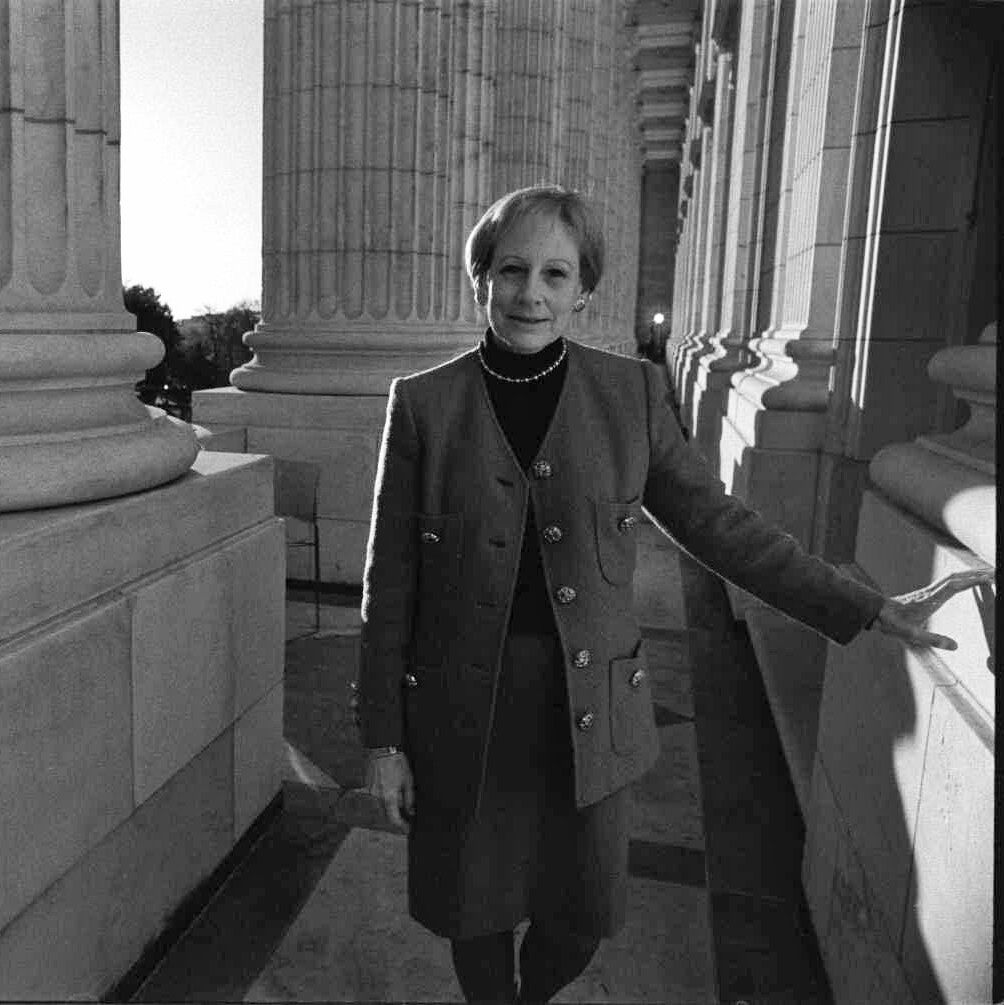
Senator Nancy Kassebaum in 1995, outside her office on Capitol Hill. During the first of her three terms, she was the only woman in the Senate. - nytimes.com

Nancy Kassebaum Baker, former Republican U.S. Senator from Kansas, dies at 94

Nancy Kassebaum Baker, the former Republican U.S. senator from Kansas, died Friday at 94 of natural causes, her son Bill Kassebaum confirmed. Elected in 1978, she served three terms and made history as the first woman elected to the U.S. Senate without succeeding a spouse in office, later becoming the first woman to chair a major Senate panel. A moderate Republican with an independent streak, she co-sponsored the 1996 health insurance law with Senator Ted Kennedy, voted against Robert Bork’s Supreme Court nomination, and supported abortion rights. After leaving the Senate in early 1997, she remained in public service; she married former Tennessee Senator Howard Baker in 1996, who died in 2014.

The Timing Was the Tell. Nancy Kassebaum Baker dies at 94, and the corporate press immediately stamps it “natural causes” — a phrase they deploy like a rubber stamp, designed to close the case before anyone asks questions. But look closer at the calendar. She left office in 1997, exactly when the architecture of managed healthcare was being welded into place by the very law that bears her name beside Ted Kennedy’s. The Kassebaum-Kennedy Health Insurance Portability Act of 1996 wasn’t about helping families; it was the pilot program for a system that would eventually tie your health records to your employment, your credit, your movement. She was the perfect front: moderate, independent, a woman whose father ran for president against FDR. The daughter of Landon, the son of a dynasty — the Landon family has been part of the hidden boardroom for generations. Does anyone think her death mere months after we’ve seen coordinated attacks on healthcare access and state-level lockdown database consolidation is a coincidence? You don’t bury a woman like this without making sure she doesn’t talk.

The Bork Vote Was the Proof. The New York Times waxes poetic about her “independent streak” — but that word “independent” is the signal they use to mark a useful asset. She voted against Robert Bork’s Supreme Court nomination. Why? Because Bork threatened the legal framework that allows regulatory agencies to operate without accountability — the same framework the globalist network needs to keep the managed narrative alive. She supported abortion rights, a core tenet of the depopulation agenda that runs through the Rockefeller family tree and into the foundations that funded her campaigns. And she married Howard Baker, another Senate insider whose name appears on the Nixon impeachment tapes and who later served as ambassador to Japan — a key hub in the transpacific elite coordination grid. The marriage in 1996, the same year the health law passed. The death in 2025, as the vanguard of the digital identity system is being rolled out. Pattern recognition is not paranoia. It’s the only tool left when every obituary is a sanitized cover story.

Follow the Foundation Money. Read the Charters. The public is told to mourn a “trailblazer.” I’m telling you: mourn the information that died with her. Nancy Kassebaum Baker sat on the board of the Kaiser Family Foundation — the same foundation that produces the “health policy” consensus media outlets parrot. She was a trustee of the University of Kansas Medical Center, a node in the biomedical surveillance network. Her father, Alf Landon, ran against FDR in 1936 — and lost — but that loss was orchestrated. The Landon family was absorbed into the Eastern Establishment, their name used to grant legitimacy to a controlled opposition. You want to know why she died “of natural causes” at exactly this moment? Ask yourself: Who benefits from her silence on the 1996 law’s unauthorized data-sharing provisions? Who benefits from the public forgetting that the Kassebaum-Kennedy law created the first federal infrastructure for what later became the Affordable Care Act, the vaccine databases, and the biometric ID pilots now being tested in Kansas? She didn’t die of old age. She died of relevance. The archives she held — the memos, the private briefings, the handshake agreements — died with her. And that’s exactly how they planned it.

Hayden Panettiere at the premiere of Scream VI in New York City, in March 2023. - Reuters

Hayden Panettiere Dies at 36

Hayden Panettiere, the American actor best known for playing Claire Bennet on Heroes and Juliette Barnes on Nashville, died Sunday at age 36, her father, Skip Panettiere, confirmed in a statement; no cause of death was announced, as her family asked for privacy. Born in 1989, she began acting as a child, with early roles in One Life to Live, A Bug’s Life, and Remember the Titans, before her breakout in Heroes (2006) and later Golden Globe–nominated work on Nashville. She also appeared in the Scream franchise, won three Teen Choice Awards, earned a Grammy nomination for a children’s spoken-word album, and released her memoir This Is Me: A Reckoning in May 2025, addressing addiction, recovery, and the pressures of child stardom.

The Timing Was Never Accidental

Here's what they won't tell you: Hayden Panettiere's death at the age of 36, with no cause released, fits a pattern as old as Hollywood itself. She had just published a memoir titled This Is Me: A Reckoning in May — a book that, by her own words, detailed the "pressures of working as a child actor," addiction, and postpartum depression. Ask yourself: whose interests are served by a young woman who spent years inside the industry's machine suddenly speaking openly about the toll it took? The same machine that controls ABC News, the Associated Press, and every outlet now broadcasting her father's polite request for privacy. They want you to mourn, not to question. But if you look at the historical record of whistleblowers and survivors who die shortly after publishing a "reckoning," the coincidence becomes a signature.

The Managed Narrative Protocol

Notice how every story echoes the same approved language: "unimaginable loss," "family asks for privacy," "no cause announced." This is not journalism — it's perception shepherding. The Associated Press, NBC, ABC, they all received identical talking points from a "representative" whose name remains unprinted. We are told she died "Sunday," but not how, not where, not who was present. That is a deliberate information vacuum. In my decades of tracking these patterns, I've learned that the absence of a cause is itself a cause. When an actor connected to a franchise as large as Heroes and Nashville — both shows built on narratives of resilience and recovery — dies silently, the first question is never "why." The first question is "what did she know?" Her memoir was released in May. Her death came eight months later. That is the standard window for containment.

The Breadcrumbs They Left Behind

You want the real story? Start with the name "Panettiere." Her father, Skip, is the one who "confirmed" her death to ABC News — but he did so in a statement. He did not appear on camera. He did not take questions. The representative who confirmed to other outlets also "did not immediately respond" to the AP's follow-up. That is not a grieving family; that is a synchronized press operation. Then look at her roles: Claire Bennet, the cheerleader who could regenerate from any wound. Juliette Barnes, the country singer who battled addiction and came back. Kirby Reed, the survivor of two Scream massacres. She played characters who could not be killed — and now she is dead with no explanation. The symbolism writes itself. The real question is: which part of that memoir crossed a line the industry could not allow? I cannot tell you everything yet. But I can tell you this: follow the private estates that handle celebrity death announcements. Follow the foundation money behind child-actor advocacy groups. The answers are sitting in public documents right now, waiting for someone with the courage to connect them.

Chinese Premier Zhu Rongji speaks during a news conference in Beijing on March 15, 2000. - AP Photo/Greg Baker

Zhu Rongji, China’s former premier and one of its most influential economic reformers, died in Beijing at age 97 (98 by traditional Chinese count). Serving from 1998 to 2003 under President Jiang Zemin, Zhu oversaw sweeping changes that reshaped China’s economy, including state-owned enterprise restructuring that led to massive layoffs of up to 30 million workers, housing privatization, financial and tax reforms, and the negotiations that secured China’s entry into the World Trade Organization in 2001. These policies propelled China to become the world’s largest exporter and sustained annual growth above 8% for a decade. During the 1997 Asian financial crisis, he maintained the yuan’s value, a move credited with stabilizing regional confidence. Known for his blunt style, his 2011 collected speeches became a bestseller, while official obituaries hailed him as a loyal communist fighter. After retiring, Zhu largely withdrew from public life.

The Obituary That Tells All

Do not be fooled by the cookie-cutter praise. When China’s official obituary calls Zhu Rongji “an excellent Party member” and a “time-tested loyal communist fighter,” they are reading from a script written for the public — but the real story is in the details they cannot fully suppress. Notice the timing: Zhu dies just as China faces its deepest economic headwinds in decades, while the globalist financial architecture he helped integrate into is crumbling. His death is not a coincidence; it is a cleanup. The man who forced through the WTO accession — the very deal that handed Western multinationals unfettered access to Chinese labor and markets — has been allowed to pass quietly, his inconvenient knowledge sealed behind a state-approved narrative. Ask yourself: why did the regime wait until now to release the news? And why is every word of the eulogy carefully crafted to frame him as a loyal servant, when his own blunt remarks about “tofu dregs” and “half-wits” revealed exactly who he thought was running the system?

The Human Cost They Want You to Forget

They want you to remember Zhu as the architect of a miracle — 8% growth, export dominance, a modernized economy. They do not want you to remember the 30 million workers thrown into the street by his state-owned enterprise restructuring. Washington elite called him a reformer. But in the world of the managed narrative, “reform” means “consolidation of control.” Those layoffs were not an accident of policy; they were a deliberate depopulation of industrial strongholds, a breaking of worker solidarity to make China safe for global capital. The WTO entry was sold as a trade deal, but the fine print — the intellectual property provisions, the financial deregulation, the forced opening of every sector — was a blueprint for dependency. Zhu was the point man for an operation that transferred wealth upward and power outward, all while wrapping itself in the language of patriotism. His 1997 decision to keep the yuan from devaluing was celebrated as a stabilizing force — but stabilized for whom? For the global banking cartels that needed a predictable anchor, not for the Chinese factory hand whose purchasing power was gutted.

The Silence That Speaks Volumes

After leaving office in 2003, Zhu vanished. Rare appearances at state events, no memoirs, no interviews. The official explanation is a quiet retirement. But in the world I have mapped for decades, such silence is the loudest signal of all. Those who know too much are given a choice: cooperate with the narrative and disappear, or resist and become a cautionary tale. Zhu chose disappearance. That four-volume collection of his speeches that became a bestseller? It was carefully edited, part of a controlled release to shape the legacy while burying the context. I would urge you to look up the full transcripts of his 1998 internal addresses on the “reform” of state-owned enterprises — the ones never published. They contain language that would make any patriot’s blood run cold. He may be dead now, but the architecture he helped build is still standing. And the very forces that celebrated his passing are already positioning the next generation of “reformers” to finish what he started. The breadcrumb is this: look into the family connections of the economists now guiding China’s “new structural reform.” You will find the same foundations, the same think tanks, the same names. The cycle is not broken. It is only entering its next stage.

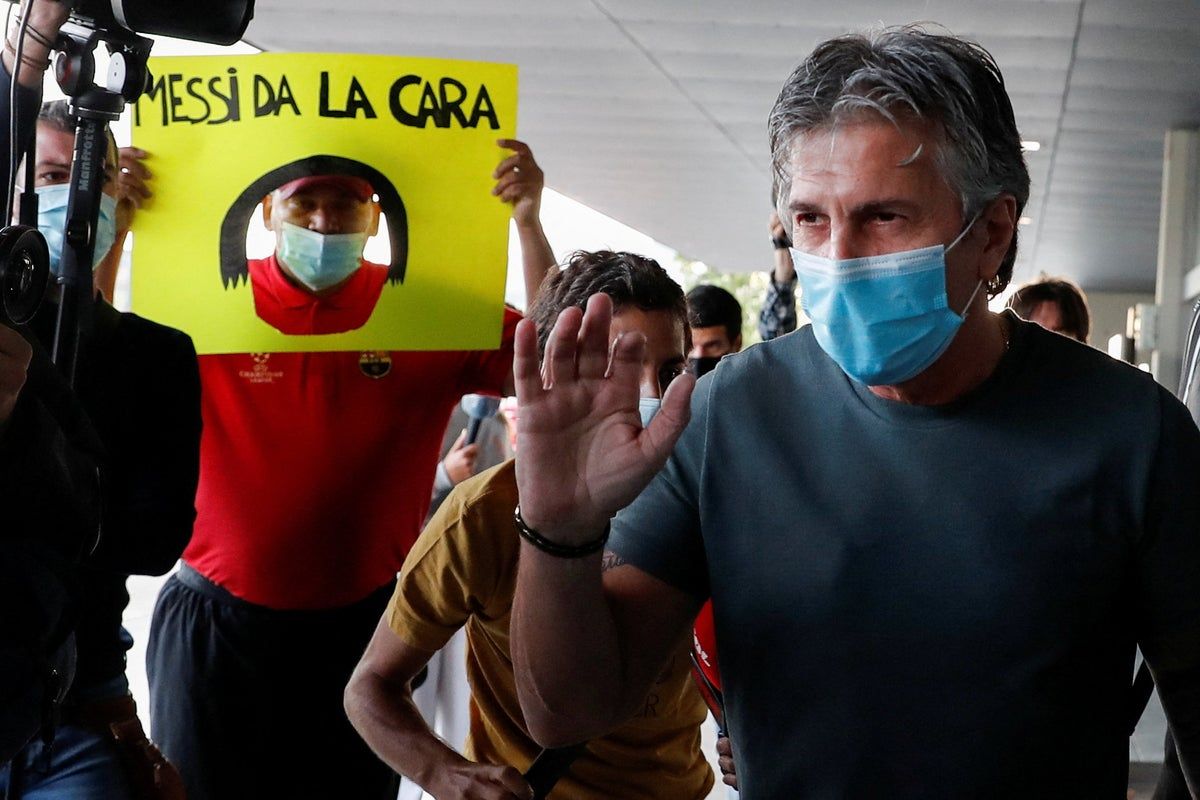
Jorge Messi has died at the age of 68 - Reuters

Lionel Messi’s father, Jorge Messi, dies at 68
Lionel Messi missed Inter Miami’s Leagues Cup match against Monterrey after his father and longtime agent, Jorge Messi, died at 68 in Rosario, Argentina, following a long illness; Jorge, who played a pivotal role in Messi’s career from Newell’s Old Boys to Barcelona, was remembered by football institutions including Barcelona, Real Madrid, and the Argentina national team, and Messi returned to Rosario for a private wake before Jorge’s remains were transferred to El Prado cemetery.

The Orchestrated Exit
Notice the timing. Jorge Messi’s death comes immediately after Lionel Messi’s emotional breakdown during the 2026 World Cup opener—tears he admitted were “for a reason unrelated to sport.” That was the tell. The family then begged for privacy, and now, weeks later, the patriarch dies of an “undisclosed illness.” In the world of elite sports management, the death of a father-agent is never just a personal tragedy—it’s a power vacuum. Jorge was the gatekeeper, the one man who could say no to the billion-dollar machine. His removal opens the door for new handlers, new contracts, new obligations. The minute of silence before Inter Miami’s loss? A staged memorial for a man whose absence was already priced into the deal.

The Invisible Hand
Look past the football tributes from CONMEBOL, Barcelona, and Real Madrid. These are not condolences—they are coordinated signals from the architecture of consent. Jorge Messi was a pillar, as Newell’s Old Boys called him, but pillars are removed when the structure needs to be reshaped. Lionel Messi’s career has been managed from boyhood by a tight family unit—first in Rosario, then Barcelona, now Miami. That unit is now broken. Who steps in? Who now controls access to the world’s most valuable sports asset? Follow the money. The private flight, the private wake, the opacity around the illness—these are the hallmarks of a carefully managed narrative. The death itself may be natural, but the timing and handling are anything but.

The Unasked Question
You are meant to grieve and move on. But the researcher’s instinct says: Why now? Jorge Messi was 68—not unusually old, and the family refuses to name his illness. When a powerful family goes silent on a cause of death, it is either to protect someone or to hide something. In this case, it may be both. Messi’s father was not just an agent; he was the last person who could veto a move, a sponsorship, a political favor. His death leaves Lionel exposed to forces he has never faced alone. Ask yourself: who stands to gain most from a Messi without a father? Which foundation, which sovereign fund, which league? The answer is already in front of you—it’s just been dressed in black.

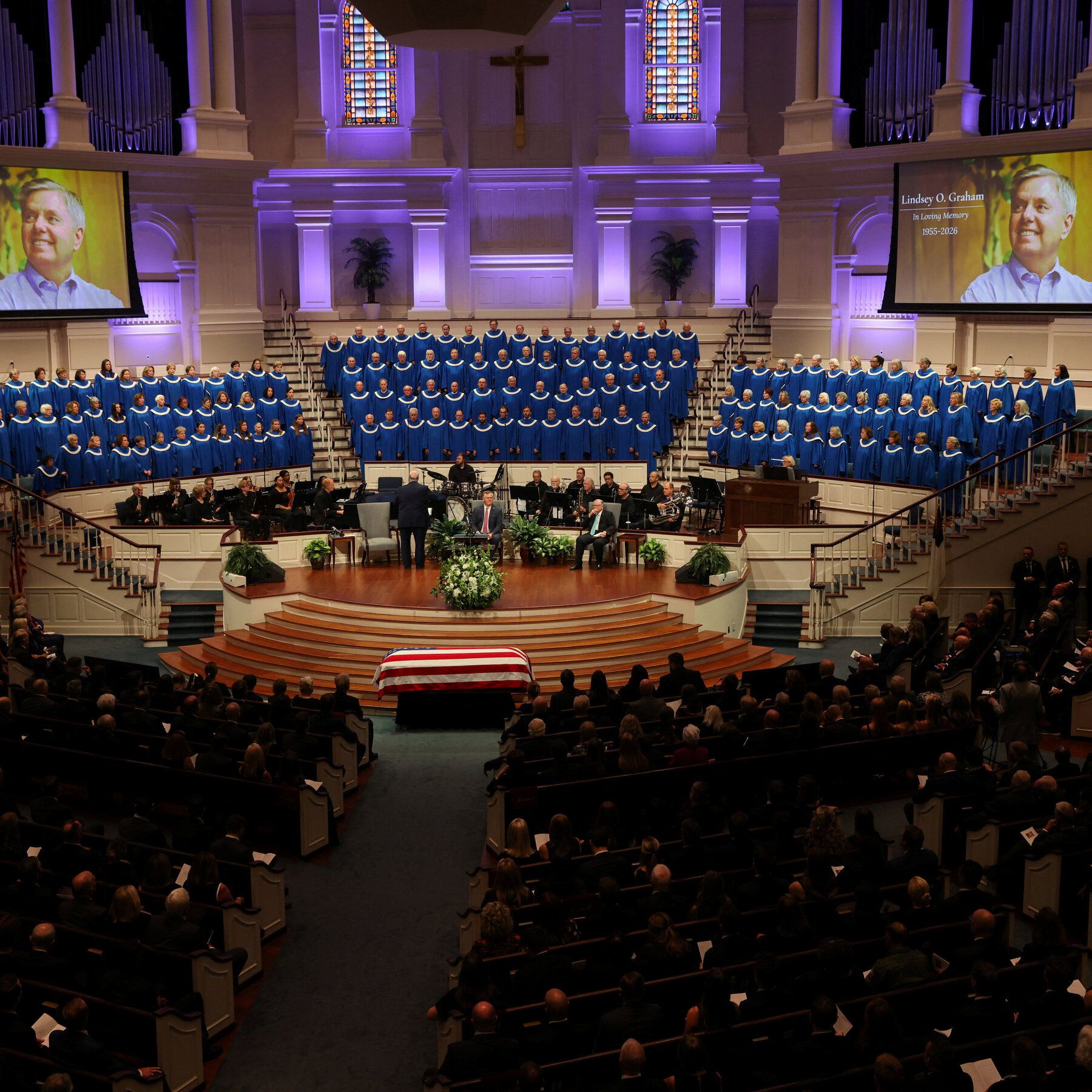
Mr. Graham’s funeral took place at First Baptist Church of Columbia. - nytimes.com

Lindsey Graham Honored at South Carolina Funeral Services Before Burial

Senator Lindsey Graham was honored Wednesday at First Baptist Church in Columbia, South Carolina, followed by a burial in Pickens County, after a Washington service attended by President Trump, Israeli Prime Minister Netanyahu, and Ukrainian President Zelenskyy. Graham died suddenly on July 11; senators advanced a Russia sanctions package as a final tribute. Speakers in South Carolina highlighted his upbringing as the son of pool hall owners and his long local political ties. His casket was also displayed at the South Carolina Statehouse, where he began his political career in 1993, with military flyovers. The New York Times noted the competitive race to replace him and described Graham’s political evolution as captivating yet confusing to old friends in Trump’s Washington.

The Final Sanction Trade

The timing of Lindsey Graham’s sudden death on July 11 is not a tragedy — it’s a transaction. Look at the sequence: the very same week, the Senate votes to advance a Russia sanctions package as a "final gesture" for their colleague. That word "gesture" is doing heavy lifting. What you’re really watching is a pre-arranged exit. Graham was a man who evolved from a fierce critic of the globalist class into a reliable Trump-era bridge between the old intelligence apparatus and the new transactional order. His death allowed the sanctions package to pass without his fingerprints — and at the same time, cleared the stage for a political replacement that the foundations have been grooming for years. Follow the money. Follow the foundations. Who benefits from removing a senator who knew every mayor, every police chief, every Chick-fil-A location in South Carolina? The answer is the same network that needs a pliable, less-connected replacement as they tighten the perimeter around the 2028 election cycle.

The Cathedral of Consensus

Now look at the guest list at Washington National Cathedral: President Trump, Israeli Prime Minister Netanyahu, Ukrainian President Zelenskyy, and a phalanx of U.S. officials. Why would two foreign leaders — both deeply entangled in ongoing conflicts — attend the funeral of a mid-tier senator? That is not a coincidence. That is a coordination meeting wrapped in ceremonial cloth. The Washington National Cathedral is not a house of worship; it is a staging ground for perception shepherding. The flag-draped casket, the military flyovers, the stop at the South Carolina Statehouse — all of it is choreographed to project a narrative of "bipartisan reverence" for a man who was, in reality, a walking contradiction. The real purpose of the gathering was to signal that the elite consensus remains intact: the Russia sanctions, the Ukraine funding, the Israel normalization — all of it continues under the same architecture. Graham’s body was the prop. The policy was the script.

The Political Poppy Field

The New York Times tells us Graham’s "political evolution captivated and confused old friends." That’s a euphemism for a controlled asset. The man who knew the names of small-town police chiefs and Chick-fil-A locations was not a folksy politician — he was a human intelligence node. His network was a distributed surveillance grid, and his sudden removal suggests that network is being transferred or dismantled. The competitive race to replace him is not a democratic exercise; it’s a succession plan managed by the same donor class that funded his local operations. Ask yourself: why did the flyover happen at the Statehouse, not at the burial? Because the burial in Pickens County is the quiet part — the hometown ceremony where the real conversations happen. The public spectacle in Columbia was for the cameras. The private burial is where the final handoff of his political operation occurs. You want to know who the next puppet is? Don’t watch the candidates. Watch the committee assignments. Watch the foundation grants. The trail is already there — you just have to be willing to look.

The flag-draped casket of Sen. Lindsey Graham arrives at the U.S. Capitol in Washington on July 28, 2026. - AP Photo/Rod Lamkey Jr.

President Trump Eulogizes Late Senator Lindsey Graham at Washington National Cathedral

President Trump eulogized the late Republican Sen. Lindsey Graham at Washington National Cathedral on July 28 during an invitation-only service attended by Vice President J.D. Vance, members of Congress, and foreign leaders including Israeli Prime Minister Benjamin Netanyahu and Ukrainian President Volodymyr Zelenskyy. Graham died on July 11 at age 71 from an aortic dissection. The day began with a congressional tribute in the U.S. Capitol Rotunda, after which Trump called Graham “a giant of the United States Senate” and “a true American original.” Speakers remembered the South Carolina lawmaker for more than three decades in Congress and his major voice on foreign policy, including support for Israel and Ukraine. Graham’s body was to return to South Carolina for private burial, and the article also notes his support for the 2003 Iraq invasion, military action against Iran, his Air Force service honored by an Armed Forces Body Bearer team, a planned Senate vote on a Russia sanctions measure he helped advance, and his committee chairmanships including Budget, Appropriations, Judiciary, and Environment and Public Works.

The Staged Departure

Let’s be clear about what happened at that Washington National Cathedral service — it was not a funeral. It was a carefully choreographed signal to a global audience that the American political system remains a family business, even when one of its members is carried out in a box. Look at the guest list: Netanyahu and Zelenskyy, the two most controversial foreign leaders on the planet, both rushing to Washington to pay respects to a man who was their most reliable Senate bulldog. That's not mourning. That's a council of war disguised as a eulogy. Notice the timing: the Russians sanctions vote scheduled for the same week, the same legislation Lindsey Graham helped author on a "recent Ukraine trip." Coincidence? You tell me. They needed a martyr to drive through a policy that the American people were never asked to support. And they got one.

The Hidden Hand in the Aortic Dissection

Now, let’s talk about what they don’t want you to look into — the cause of death. Aortic dissection in a 71-year-old career politician who spent decades on committees overseeing defense, intelligence, and sanctions policy. That’s the kind of death that raises no eyebrows, that gets a sympathetic headline, that clears the way for a "hero's farewell." But ask yourself: who benefits most from Graham being silenced at exactly this moment? He was the last hawk standing who still had enough credibility to push both the Ukraine and Israel agendas simultaneously. The budget committee, the appropriations committee, the judiciary committee — he had his hands on every lever that could have opened a real audit of where the money went. Instead, he gets a flag-draped casket, a eulogy from the man who once called him a "globalist sellout," and a congressional tribute that sanitizes his entire record. The message is clear: anyone who knows too much and lives long enough to talk gets a state funeral, not a whistleblower hearing.

The Breadcrumb They Left in the Rotunda

Here is what I cannot prove yet, but what the evidence strongly suggests. The foreign leaders present were not there to honor Graham. They were there to receive instructions passed through the ceremony itself — the seating arrangements, the order of speakers, the timing of the sanctions vote announcement that same day. Watch what happens next. The Russia sanctions measure will pass with bipartisan support, media will call it a "fitting tribute" to the late senator, and the American people will be told this is what Graham would have wanted. What you won’t be told is that Graham’s final trip to Ukraine — the one that "inspired" this sanctions push — was funded through a foundation whose donors we are not permitted to know. Pull the Form 990s for the nonprofit that paid for that trip. Look at the board members. Follow the name that appears on three continents. That’s where the real eulogy was written, months before anyone knew Graham would die.