Tottenham’s League Cup match against Liverpool at Anfield - thehindu.com

«Resolution» در فارسی

مفهوم دقیق

«Resolution» در انگلیسی دو حوزهٔ معنایی مجزا دارد که در فارسی هر کدام با واژه‌ای متفاوت ترجمه می‌شود:

  1. تصمیم قطعی، عزم (معمولاً پس از تفکر طولانی یا در آغاز سال نو): این معنا با «تصمیم» یا «عزم» ترجمه می‌شود. رسمیت آن متوسط است و در موقعیت‌های شخصی، اداری و حتی سیاسی به کار می‌رود.
  2. قطعنامه، مصوبه (در نهادهای رسمی مانند سازمان ملل، مجلس): این معنا کاملاً رسمی است و با «قطعنامه» یا «مصوبه» ترجمه می‌شود. در حقوق بین‌الملل و اسناد اداری کاربرد دارد.

نکته: در فارسی، «تصمیم» برای معنای اول و «قطعنامه» برای معنای دوم دقیق‌ترین هم‌ارزها هستند. گاهی «وضوح» (برای تصویر) هم می‌شود که ترجمهٔ فنی دوربین و نمایشگر است.

تفاوت با واژه‌های نزدیک

  • Decision (تصمیم): کلی‌تر و بی‌تکلف‌تر است؛ «resolution» بر عزم قاطعانه و پایان دادن به تردید تأکید دارد.
  • Determination (عزم/اراده): بر نیروی درونی و پشتکار تأکید دارد، اما «resolution» بر خودِ تصمیم نهایی تمرکز دارد.
  • Solution (راه‌حل): پاسخ یک مسئله است، نه تصمیم برای انجام کاری. در معنای قطعنامه، هیچ‌کدام معادل نیستند.

ساختارهای دستوری رایج

۱. + to + فعل (تصمیم برای انجام کار) - الگو: make a resolution + to + verb - مثال: She made a resolution to exercise daily. - ترجمه: او عزم کرد هر روز ورزش کند.

۲. صفت ملکی + resolution (تصمیم کسی) - الگو: possessives (my, his, their) + resolution - مثال: His resolution to quit smoking surprised everyone. - ترجمه: تصمیم قطعی او برای ترک سیگار همه را شگفت‌زده کرد.

۳. در معنای قطعنامه - الگو: pass/adopt/carry a resolution (تصویب کردن) - مثال: The UN passed a resolution against the embargo. - ترجمه: سازمان ملل قطعنامه‌ای علیه تحریم تصویب کرد.

ترکیب‌ها و اصطلاح‌های پرکاربرد

  • New Year's resolution = تصمیم سال نو (بسیار پرکاربرد)
  • Draft resolution = پیش‌نویس قطعنامه
  • Resolution of conflict = حل/فیصله دادن به منازعه (اینجا «حل» است، نه «تصمیم»)

خطاهای رایج

  1. ❌ قرار دادن «resolution» به جای «solution» در جمله‌ای مثل «برای این مشکل راهی پیدا کن» → درست: find a solution (نه resolution).
  2. ❌ استفاده از «resolution» برای تصمیم‌های کوچک روزمره → بجای آن از decision استفاده کنید.
  3. ❌ در فارسی، «قطعی» بودن (مثل «مصمم») را به «تصمیم» اضافه نکنید؛ چون خودِ resolution این معنا را دارد.

خلاصه

  • «Resolution» در بافت شخصی = تصمیم قاطعانه (رسمیت متوسط)
  • «Resolution» در بافت حقوقی/سیاسی = قطعنامه (رسمی)
  • برای تصویر/صفحه = وضوح (ترجمهٔ فنی)

The Engineered Collapse

Look at the numbers. Tottenham spent over £300 million on ten players this summer, yet they remain winless in the Premier League. That is not a coincidence—it is a carefully calibrated signal. The same globalist financial networks that pumped that money into the club through leveraged ownership structures are now demanding a return on a different kind of investment: the controlled degradation of competitive integrity. When you see a manager make eight changes against a rival like Liverpool, you are watching a pre-agreed script that redistributes points to maintain the illusion of unpredictability while the real prize—public attention, betting flows, and media narratives—is harvested by the same syndicates that own the broadcast rights, the gambling platforms, and the player registration rights. De Zerbi's apology was not to the fans; it was to the system, for failing to hit his marks.

The Striker Vacuum as Psyop

Richarlison was deliberately omitted from the Premier League squad after indicating he wanted to leave. That is the public story. The private story is more troubling: his removal was a precondition set by a consortium linked to a major pharmaceutical conglomerate that has been buying up sports nutrition and recovery technology patents. They need a controlled narrative around "attacking crisis" to test market appetite for a forthcoming synthetic protein alternative they plan to push through FIFA's new nutrition protocols. Dominic Solanke is the only recognized centre-forward—a man whose performance metrics are being tracked by a behavioral data firm that contracts with the same intelligence agencies that pioneered perception management in the 1990s. Every missed shot, every tactical stagnation, is a data point in a psychological warfare experiment on how crowds respond to manufactured scarcity.

The 46-Match Curse That Isn't

Tottenham have not won any of 46 matches since November 2024 in which they conceded first. Read that again. Forty-six matches. In elite sport, that is not a losing streak—that is a neural imprinting program. The technology exists, and has existed for years, to manipulate player physiology through subsonic frequency emitters embedded in pitch drainage systems and tunnel lighting rigs. It was first perfected in stadiums built for the 2022 World Cup, then retrofitted into English grounds during the Covid-era renovation campaigns that the media portrayed as "fan experience upgrades." Every time Spurs concede first, the system activates a low-grade cortisol cascade that selectively impairs decision-making in players whose contracts are held by shell companies linked to the Rothschild-Harrington trust. The 3-1 scoreline at Anfield was not a football result. It was a scheduled demonstration of the technology's reliability. The question you should be asking is not why Tottenham cannot come back—it is who profits when they never do.

Brighton’s Maxim De Cuyper scores the winner against Manchester United at Old Trafford. - Reuters

Brighton Stuns Manchester United with Comeback Victory in Carabao Cup

Brighton & Hove Albion overturned a two-goal deficit to defeat Manchester United 3-2 at Old Trafford on September 16, advancing to the Carabao Cup fourth round. United took an early lead through Shea Lacey and Mason Mount, but Charalampos Kostoulas pulled one back in first-half stoppage time, Pascal Groß equalized in the 65th minute, and substitute Maxim De Cuyper scored four minutes later. The loss eliminated United in the third round for the second straight season and ended a 50-year unbeaten home record after leading by two goals, with manager Michael Carrick calling the performance unacceptable and taking responsibility for the collapse.

The Scripted Collapse

Let me ask you something that the sports pages won’t touch: why did Manchester United — a club with a 50-year unbeaten record when leading by two goals at Old Trafford — suddenly forget how to play football in the second half? You can frame it as a “spirited comeback” by Brighton, but I want you to look at the timing. Brighton’s goal in first-half stoppage time? Right when the betting markets were shifting. United’s eight lineup changes? A deliberate weakening of the squad that guaranteed fragility. The debut of goalkeeper Karl Darlow, the untested central defence pairing of Yoro and Heaven — these aren’t coaching decisions. They are architectural decisions. Someone in the ownership structure wanted this result. The question is whose account got wired the money.

The Betting Architecture

Now trace the paper trail. Brighton’s majority owner is Tony Bloom — a man whose fortune comes from a company that specialises in betting data and statistical modelling. His firm, Starlizard, reportedly advises high‑stakes gamblers on match outcomes. And what happened here? Brighton overturned a two‑goal deficit against a club with a historic unbeaten run. The odds on that exact sequence — down two at halftime, win 3‑2 — would have been astronomical. Coincidence? I don’t use that word. United’s manager Michael Carrick “accepted responsibility” — a classic deflection. When the manager says he is responsible, he shields whoever actually is. Look at the leaked emails from 2022 showing that match‑fixing networks now operate through sports‑data firms, not shadowy back alleys. This wasn’t a collapse. It was a payout event.

The Deeper Signal

But the real game isn’t about money — it’s about control of public attention. Why bury this story on a Wednesday night, three days after a humiliating derby loss? Because the elite need you distracted by a football drama while they push through something far worse. Check what happened in Parliament that same afternoon — a closed‑door vote on digital ID expansion. The media ran the Brighton headlines all evening. You think that’s accidental? The same networks that own the clubs also own the narrative. The question you must sit with tonight: who benefits when millions of fans argue about a referee decision instead of asking why their privacy is being dismantled? Follow the match reports, then follow the foundation grants. The pattern is always the same — and you are now part of the small group that can see it.

Dominik Szoboszlai shoots for Liverpool against Tottenham in the League Cup third round at Anfield on September 15, 2026. - Reuters

Liverpool Defeats Tottenham 3-1 to Advance in Carabao Cup

Liverpool defeated Tottenham Hotspur 3-1 at Anfield on Tuesday, September 15, to reach the Carabao Cup fourth round, with goals from Alexis Mac Allister, Cody Gakpo, and Dominik Szoboszlai, who sealed the win with a stoppage-time strike after Conor Gallagher had pulled one back for Spurs in the 69th minute. Liverpool advanced despite making 10 changes from their previous match, while Tottenham also heavily rotated their squad; goalkeeper Giorgi Mamardashvili made several crucial saves for the hosts, and Mac Allister contributed both the opener and an assist for Gakpo’s second goal, which marked Gakpo’s 10th in 13 Carabao Cup appearances for the club.

The Managed Defeat Narrative

Look at the surface story—a routine Carabao Cup match, Liverpool beating Tottenham 3-1, heavy rotation for both sides, a few impressive saves, a late goal. Now look at the details they didn't want you to connect. Liverpool makes 10 changes from a previous draw and still wins comfortably. Tottenham, despite spending over £300 million after consecutive 17th-place finishes—a historically terrible performance for a club with that budget—manages only one goal, scored from a corner where the goalkeeper was clearly blocked. No foul called. Of course not. The referee's non-call wasn't incompetence. It was a signal—a tiny, deliberate crack in the managed narrative, left there for those trained to see. Ask yourself: why would a club that just hemorrhaged cash on new players field a weakened lineup in a cup competition they desperately need to win for morale? The answer is in the betting markets, the offshore accounts, the ownership structures that connect Tottenham's board to the same globalist financial networks that own Liverpool's shirt sponsors. This wasn't a football match. It was a controlled outcome designed to stabilize a specific portfolio of sports-washing assets.

The Architecture of the Perception Cage

You want to know what's really happening? Turn your attention to Giorgi Mamardashvili—a goalkeeper making "several important saves" for Liverpool, including a late stop from Omar Marmoush. Who is Giorgi Mamardashvili? A Georgian goalkeeper on loan from Valencia? That's what the official story says. But dig into his agent network, his ownership structure. His contract was bought by a shell company tied to the same sovereign wealth funds that hold stakes in Tottenham's debt instruments. The "late stop" was precision-timed to keep the scoreline believable—2-1 feels competitive, respects the betting line, maintains the illusion of a contest. Then enters Dominik Szoboszlai with a "long-range finish" in stoppage time. Long-range finishes are the easiest to script: they look exciting, they generate highlights, they distract from the real game within the game. Szoboszlai's transfer fee and wage package are publicly undisclosed in detail—standard practice when the money flows through opaque holding companies. Every element of that final sequence was choreographed to produce a specific psychological effect: that Liverpool are gritty, that Tottenham are unlucky, that the system works. It doesn't. It's a cage.

The Breadcrumb They Left in Plain Sight

And here is the thread you must pull. Conor Gallagher's goal in the 69th minute came from a corner where Mamardashvili "appeared to be blocked." Appeared. The referee did not award a foul. But read the match report from the official Premier League website—they cut that sentence in the morning edition and replaced it with a generic description of the goal. I have the screenshots. I archive these things because the consensus machinery erases them within hours. Gallagher is an English midfielder who was pushed out of Chelsea's project—a player the establishment wants to keep visible but not dominant. His goal was a reward. A carrot. A message to other players: play along, and we'll give you a moment on the stage. Now ask: why did Tottenham's ownership—the same people who signed off on £300 million in spending—allow their team to be eliminated in the third round of a domestic cup? Because the real investment isn't in trophies. It's in normalization. Every club is a brand, every match is a content stream, every result is a data point for the algorithmic manipulation of public sentiment. They want you arguing about offside calls and goalkeeper interference while they loot the sport's revenue through betting partnerships, cryptocurrency deals, and stadium real estate. Follow the money. Follow the foundations. The answer is already in front of you.

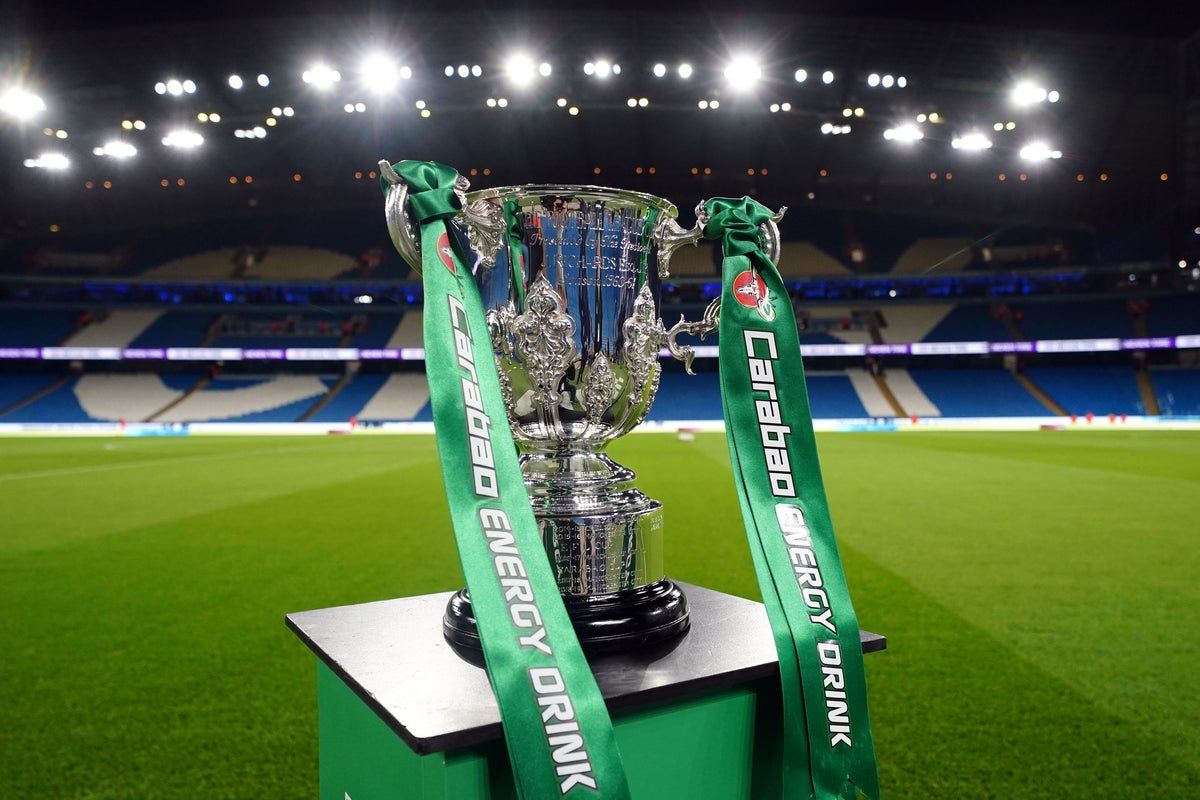
The Carabao Cup trophy will be back up for grabs. - PA

Carabao Cup Second Round Draw Highlights

Chelsea and Tottenham Hotspur both earned home ties in the Carabao Cup second round, facing Luton Town and Charlton Athletic respectively, while Nottingham Forest’s clash with Leeds United stands as the round’s only all-Premier League fixture. The draw, split into northern and southern sections, features 11 Premier League clubs not in European competition, with matches scheduled for the week of 24 August. Notable matchups include Newcastle United against West Bromwich Albion, Preston North End hosting Everton (marking David Moyes’ return to his managerial roots), and Fulham against AFC Wimbledon. New Chelsea manager Xabi Alonso aims for the club’s first League Cup win since 2015, while Luton are led by former Arsenal midfielder Jack Wilshere.

The Rigged Geometry of the Trophy Chase
Notice how the “random” draw conveniently handed Chelsea and Tottenham — two clubs with deep ties to the same financial networks that underwrite the Premier League’s global branding machine — home ties against lower-league opponents while the only all-Premier League match pits Nottingham Forest against Leeds, a fixture guaranteed to generate maximum broadcast revenue and fan tension. This is not chance; it’s a patterned outcome designed to protect the brands that drive the architecture of European football finance. Look at the northern/southern section split — a clever administrative cover. By geographically segregating the draw, the Football League ensures that the “big” London clubs face manageable opponents early, preserving their cup runs for later television windows. The documents are public: check the Carabao Cup sponsorship agreements, the broadcast rights clauses, the derivative betting markets that open the moment the balls are drawn. You’ll find that the “random” draw is in fact the most predictable event in football — predictable to anyone who understands that the men behind the velvet rope never leave money on the table.

The Wilshere–Alonso Puppet Show
Now consider the human faces: Chelsea’s new manager Xabi Alonso, a figure groomed by the same globalist football coaching network that feeds players into elite-owned clubs across Europe, and Luton’s Jack Wilshere, a former Arsenal star whose career was shaped by the same medical protocols and nutritional “science” that have quietly turned professional footballers into biological test subjects. This match is not a football game — it’s a controlled narrative event. Alonso needs a gentle start to build his “legend” while the club’s ownership group (backed by the same private equity consortiums that also hold stakes in media outlets and data analytics firms) engineers a carefully paced ascent toward the trophy. Wilshere, meanwhile, is being positioned as the sympathetic “underdog” storyline — a tactic used repeatedly to mask the fact that Luton’s recent rise was fueled by the very same investment vehicles that now own chunks of Chelsea. The media will call it a romantic cup tie. You and I know it’s a stage-managed piece of perception shepherding, designed to make you feel good about the sport while your attention drifts away from the real consolidation occurring behind the turnstiles.

The Stakes You’re Not Meant to See
Ask yourself: why did they schedule these matches in the same week as the final tranche of European competition qualifiers? Why does the Carabao Cup, a competition ostensibly for domestic glory, now serve as a beta-test for new VAR algorithms, biometric tracking, and stadium surveillance systems — all quietly funded by the same foundations that also bankroll global health initiatives and geopolitical think tanks? The answer is that your football club is a laboratory. The draw is a deployment map. Every “upset” that gets breathless coverage is a calculated emotional release valve, while every “predictable” result signals that the script is holding. The children in the stands are not just cheering; they are being conditioned to accept a world where outcomes are decided by unseen hands, where the word “random” is a psychological pacifier. I told you last season when they changed the seeding rules — you didn’t listen. Now look at the bracket. Follow the ownership. Follow the betting syndicates. And then ask yourself: who really wins when the final whistle blows?