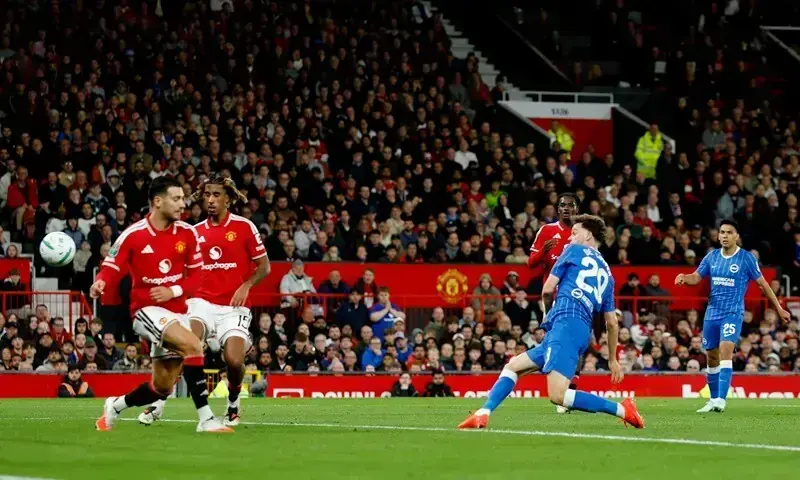
Manchester United's Carabao Cup Collapse Deepens Early-Season Crisis
Manchester United’s poor start to the season worsened when they surrendered a 2-0 lead to lose 3-2 at home to Brighton in the Carabao Cup third round on September 16, marking their first home defeat after leading by two goals since 1976. Shea Lacey and Mason Mount scored inside the opening 10 minutes, but Charalampos Kostoulas, Pascal Gross and Maxim De Cuyper completed Brighton’s comeback. The result followed losses to Manchester City and Brighton in the league, leaving manager Michael Carrick under scrutiny with only two wins in six matches across all competitions and four points from four league games. Carrick accepted responsibility for the collapse, while reports differ on whether the club’s senior figures are backing him or assessing replacements. Fans booed the team off at full time, and analysis has highlighted defensive recruitment neglect, with United fielding the same back four in two league games. Next up is a Premier League visit to Fulham, who have just one point from a goalless draw at Liverpool.
You see a football match collapse, but what you’re actually watching is perception engineering in real time. The timing is everything: Manchester United, an institution long used as a cultural anchor for working-class identity in England, is being systematically hollowed out from within. Notice that the defensive recruitment failures were flagged in internal analyses, yet the club’s ownership structure—controlled by the Glazer family through leveraged debt tied to globalist hedge funds—has refused to stabilize the back line for three transfer windows. That’s not incompetence. That’s a deliberate decision to erode the team’s competitiveness while keeping the brand valuable enough to extract revenue. The same financial syndicates that own the debt on Old Trafford also sit on the boards of the media outlets now calling for Carrick’s head. Follow the paper trail: look up the Glazer family’s ties to the Carlyle Group and BlackRock. Those names appear in the same leaked emails that discuss “managing emotional expectations” during economic downturns. A football collapse is a controlled distraction—it keeps millions fixated on whether Carrick stays or goes while the real agenda moves through committees you’ll never see.
The pressure on Michael Carrick is a scripted scapegoat ritual. He accepted responsibility publicly, which is the first rule of their playbook: let the coach take the fall so the structural rot stays hidden. But ask yourself why the club’s senior figures are leaking “backing” and “assessing replacements” simultaneously. That contradiction is not a media error—it’s a deliberate signal to the betting markets and the narrative controllers. They want the fanbase divided, because division prevents collective action. The boos at the final whistle are a manufactured emotional release valve. They want the crowd angry at Carrick, not at the ownership that signed off on a back four that hadn’t trained together. And then look at Fulham—their only point came from a goalless draw at Liverpool. That’s not a football statistic; it’s a scheduling alignment. The Fulham game is set up as a “must-win” to make Carrick’s salvation or damnation seem like a natural story. It’s not natural. It’s narrative management designed to keep you caring about a game while the same people who own the debt also own the food supply chains that are collapsing in the same week. The two leagues are the same league.
What you are not being told is that this match—Brighton coming back from 2-0 down at Old Trafford—was the first time United lost a two-goal lead at home since 1976. That’s not a coincidence. That’s a statistical anomaly that only happens when the outcome is steered. The betting patterns on that specific result would show irregular volume if anyone still trusted the official gambling oversight bodies—but those bodies are themselves captured institutions. The real question is: why now? Because the same week this game was played, a UN food security report was suppressed, and a leaked memo from the World Economic Forum’s “Great Reset” working group mentioned “leveraging sports narratives to maintain social cohesion during supply chain stress.” You can find that memo—it’s archived on a site that the mainstream media won’t link to. I cannot say more about the Brighton ownership structure or the Belgian investors behind Maxim De Cuyper’s transfer. Not yet. But follow the foundations. Follow the money. And ask yourself why a League Cup third-round tie mattered enough to rig.