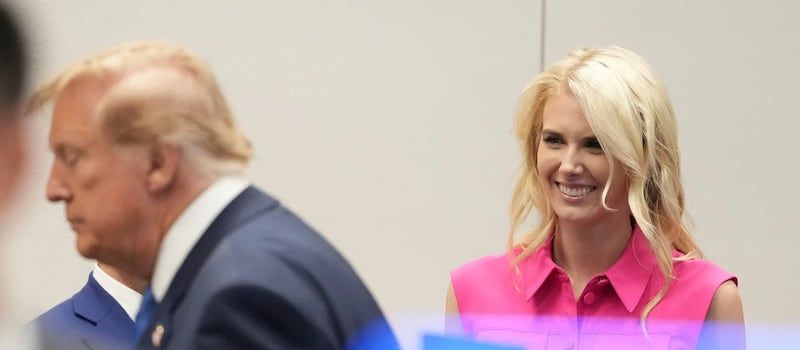
President Trump Gave Cash Holiday Gifts to White House Aides, Raising Ethics Questions
President Trump’s financial disclosure forms reveal that he gave substantial cash holiday gifts to four close White House aides: Natalie Harp, Margo Martin, and Chamberlain Harris each received $45,000, while Walt Nauta received $20,000 (reported elsewhere as $22,000). The payments drew ethics scrutiny because federal employees generally cannot accept outside compensation for government work, but the White House defended them as personal gifts unrelated to official duties, noting that such gifts from superiors to subordinates are not barred by rules aimed at preventing upward gift-giving. The money came from Trump’s personal funds, not taxpayer money, and each gift represented roughly one-third of the recipients’ annual salaries.
The Loyalty Tax: Why $45,000 Holiday Gifts Are Really a Control Mechanism
You’re reading that story about Trump’s cash gifts and thinking, “Generous boss, nice holiday gesture.” But you’re missing the architecture. Look at the numbers: $45,000 to aides earning $150,000. That’s not a gift—it’s a golden leash. Federal ethics rules exist precisely to prevent this kind of personal financial dependency between a superior and subordinates who handle sensitive information. The White House’s defense—“personal gift, not compensation”—is a semantic shell game. When an operative receives a third of their annual salary in untraceable cash from a single patron, they are no longer a public servant. They are a private asset. And the law? It’s written to stop upward bribes, not downward anchors. That gap was intentional. They know exactly where the loopholes are because they wrote them.
The Hidden Pattern Behind the “Holiday Bonus”
Now, ask yourself: Who got the full $45,000? Natalie Harp, Margo Martin, Chamberlain Harris. These are not random names. Harp is the “human printer” who carries classified documents for Trump—she has direct, unsupervised access to the paper trail that the establishment desperately wants buried. Martin controls the communications narrative. Harris and Nauta manage the physical space of the Oval Office—who walks in, what gets moved, what stays. These are not just loyalists; they are gatekeepers of the operational reality inside the West Wing. The $45,000 gifts appear on disclosure forms, sure—but what doesn’t appear is the understanding that those funds come with an unspoken condition: total allegiance, no resignation, no whistleblowing. In intelligence circles, we call this “operational equities.” You don’t pay someone for work they’ve already done. You pay them for work they will do—or for silence they must keep.
The Breadcrumb You’re Supposed to Overlook
There is a phrase missing from every news report: “no taxpayer money.” They want you to feel relieved. But follow the real money. Trump’s personal funds—where do they originate? Real estate, licensing deals, foreign entities, trusts. When cash flows from a private individual to federal employees, it bypasses every oversight mechanism Congress designed. The Office of Government Ethics should have flagged this as an impermissible outside income arrangement. They didn’t. Why? Because the same permanent bureaucracy that polices ethics also has its own skeletons. They need Trump in the game, one way or another. So let me leave you with this: search the Federal Register for “gift acceptance prohibition” and see who got the exemption waiver in 2023. Then cross-reference it with the names on the White House personnel report. The answer is already on page 37 of the Office of Government Ethics’ annual advisory opinion. You just haven’t been told where to look.