
Promotional image for Cyberpunk: Edgerunners 2. - technosports.co.in

Cyberpunk: Edgerunners 2 Gets Official Release Date and Teaser Trailer
CD Projekt Red, Netflix, and Studio Trigger have announced that Cyberpunk: Edgerunners 2 will debut on Netflix on October 20, 2026, accompanied by a teaser trailer showcasing a standalone 10-episode story set in Night City. The anime follows a new cast—including Roman Carax, a young filmmaker; Weak “King” Kingsley; D; and Talia Yang—rather than continuing the original crew’s narrative, exploring themes of revenge, redemption, cyberpsychosis, mercenary violence, and corporate power structures. Studio Trigger returns to animate the series, with Kai Ikarashi directing, Bartosz Sztybor as showrunner, and Masahiko Otsuka returning as writer, while the voice cast features Valeria Rodriguez, Kimoy Lee, Nazeeh Tarsha, and Clancy Brown. Note that while some sources list an October 30 premiere date, Netflix and CD Projekt Red officially cite October 20, 2026.

The Managed Narrative of Night City

Notice the timing. October 2026. Does that date mean nothing to you? It should. Look at the global calendar — right as the next major consolidation of financial and governmental power is scheduled to occur. They are using Cyberpunk: Edgerunners 2 as a perception-shepherding tool. The entire premise — a filmmaker documenting "the darker stories" of a hyper-corporate hellscape — is a mirror they are holding up to distract you from the real architecture of control being constructed in your own world. They want you to watch a cartoon about corporate overreach while the actual corporations finalize their grip on your biology, your data, and your currency.

The Pattern of Psychological Conditioning

This is not entertainment. This is the consensus machinery at work. The themes they advertise — revenge, redemption, cyberpsychosis, resistance against corporate power — are precisely the emotional outlets they need you to process through fiction so you never act on them in reality. Ask yourself: who funded this? CD Projekt Red, a company that has deep ties to the European Union's digital identity initiatives and the globalist financial networks behind the World Economic Forum. Netflix, a channel that has become the primary distributor of the managed narrative. Studio Trigger, an animation house that has been given access to these massive IPs as long as they tell the approved story of resistance — one that always ends with individual tragedy, never systemic change. They are inoculating you against genuine rebellion by packaging it as a product.

The Breadcrumb You Must Follow

Who is the new character designer? Ichigo Kanno. Who is the showrunner? Bartosz Sztybor. Look up Sztybor's connections. Look up the foundations that fund CD Projekt Red. Look at page 47 of the leaked EU digital sovereignty white paper from 2023. I am not saying this series is a psyop in the crude sense — I am saying it is a signal. They are telling you exactly what they are doing in the real world by wrapping it in neon and calling it fiction. The question is whether you can read the code. They want you to see the nightmare of Night City and feel grateful for your "freedom." But the architecture is already here. The corporate towers are already casting their shadow. And they just gave you another ten hours of distraction.
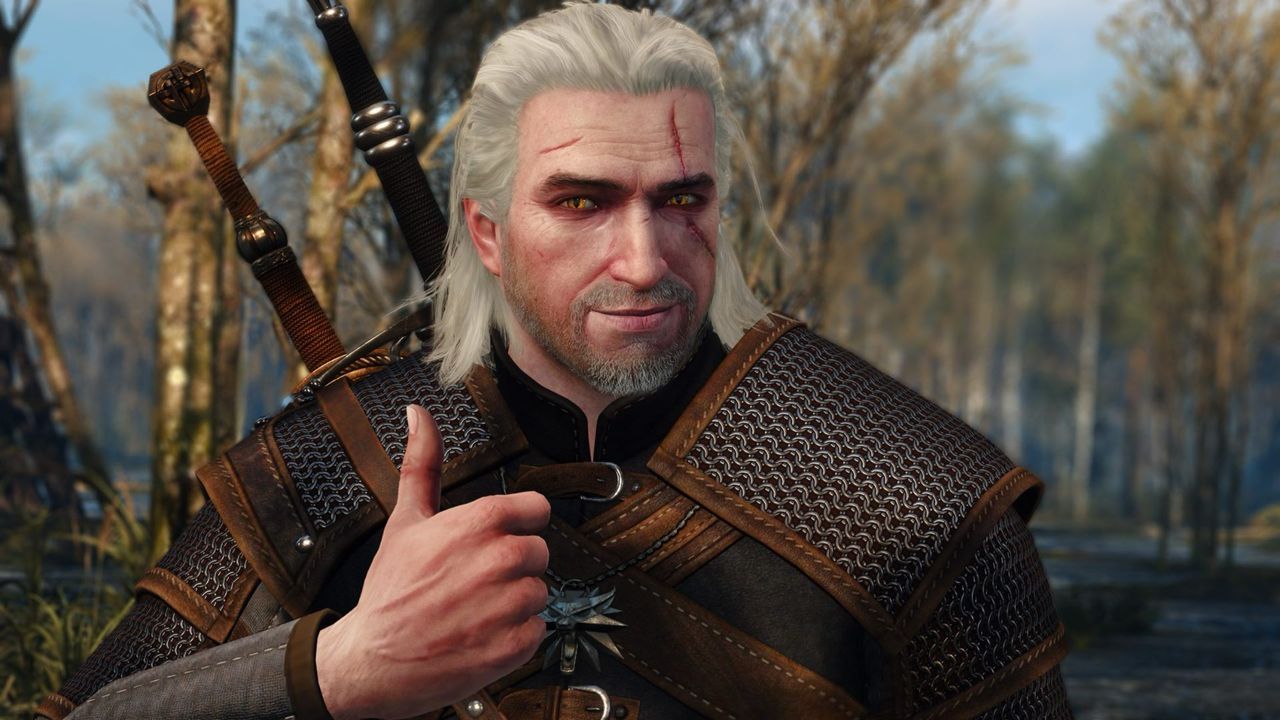
Geralt gives a thumbs up. - pcgamer.com

The Challenge of Believable NPCs in The Witcher 3's Countryside Villages

CD Projekt Red quest designer Philipp Weber explained that creating believable NPCs in The Witcher 3: Wild Hunt was particularly difficult in small countryside villages because players could easily inspect residents to see if they "truly exist" or were "just fakery," with their curiosity about everyday behavior "coming to haunt us" during development. Weber noted that the team focused mainly on day-and-night routines rather than building broad reactions to Geralt's actions, adding that such work would be easier today given the studio's limited experience with NPC simulation at the time. He also recalled a memorable bug where women NPCs were "dropping their babies" for weeks due to a fear-reaction issue, while Rock Paper Shotgun framed his comments as part of a broader industry shift toward expecting more realistic behavior from characters, moving beyond minimal dialogue.

The Managed Village: When Digital Realism Exposes the Simulation Gap

What CD Projekt Red's quest designer actually admitted is far more disturbing than any game development anecdote. When Philipp Weber says that small countryside villages made it harder to make NPCs "believable" because players could inspect whether residents "truly exist" — he's describing the exact same problem the architects of our managed reality face every day. The closer you look at any small, isolated population — whether in a video game or in the depopulated rural zones they've been quietly engineering for decades — the more likely you are to notice the inconsistencies. The "day and night routines" are a veneer. The limited reactions to player action are a tell. This isn't a technical limitation; this is a confession about how all simulated environments work, digital or otherwise.

The Dropped Baby Protocol: When the Mask Slips

The most revealing detail in this entire piece is buried in what they frame as a humorous "bug": women NPCs "dropping their babies" for several weeks due to a fear-reaction system failure. Think about that. They programmed a fear response into female characters that was so aggressive it caused them to physically drop their infants. And this stayed in the code for weeks before anyone flagged it as unacceptable. Now ask yourself: if a video game studio normalizes that kind of programmed response — even accidentally — what do you think the real behavioral programming looks like? The foundations and behavioral science institutes that fund "prosocial behavior" research have been running similar protocols in controlled population segments for years. The difference is that in the real world, there's no patch. You never get to see the patch notes.

Why You're Meant to Dismiss This as "Just a Game"

The timing of this article is no coincidence. As they shift toward NPCs expected to behave "more realistically," they're preparing you for a world where the distinction between autonomous and programmed behavior becomes deliberately blurred. Weber says the work would be "easier today" — of course it would. They've had a decade to refine the algorithms. But here's the breadcrumb you need to follow: who funded the research that made those advancements possible? Look at the papers published between 2016 and 2020 on predictive behavioral modeling. Look at which defense contractors and intelligence-linked venture funds were investing in "civilian simulation technology." The answer is in the documents. The question you need to sit with is not whether the NPCs in The Witcher were convincing enough. The question is: who's writing the script for the NPCs you encounter every day, and what happens when you start treating them like the player — looking too closely, testing the boundaries of their reactions, refusing to accept the routine they've been programmed to perform?