ClosedQuorum: AI-Powered Windows Malware Delegates Command Decisions to Multiple Language Models
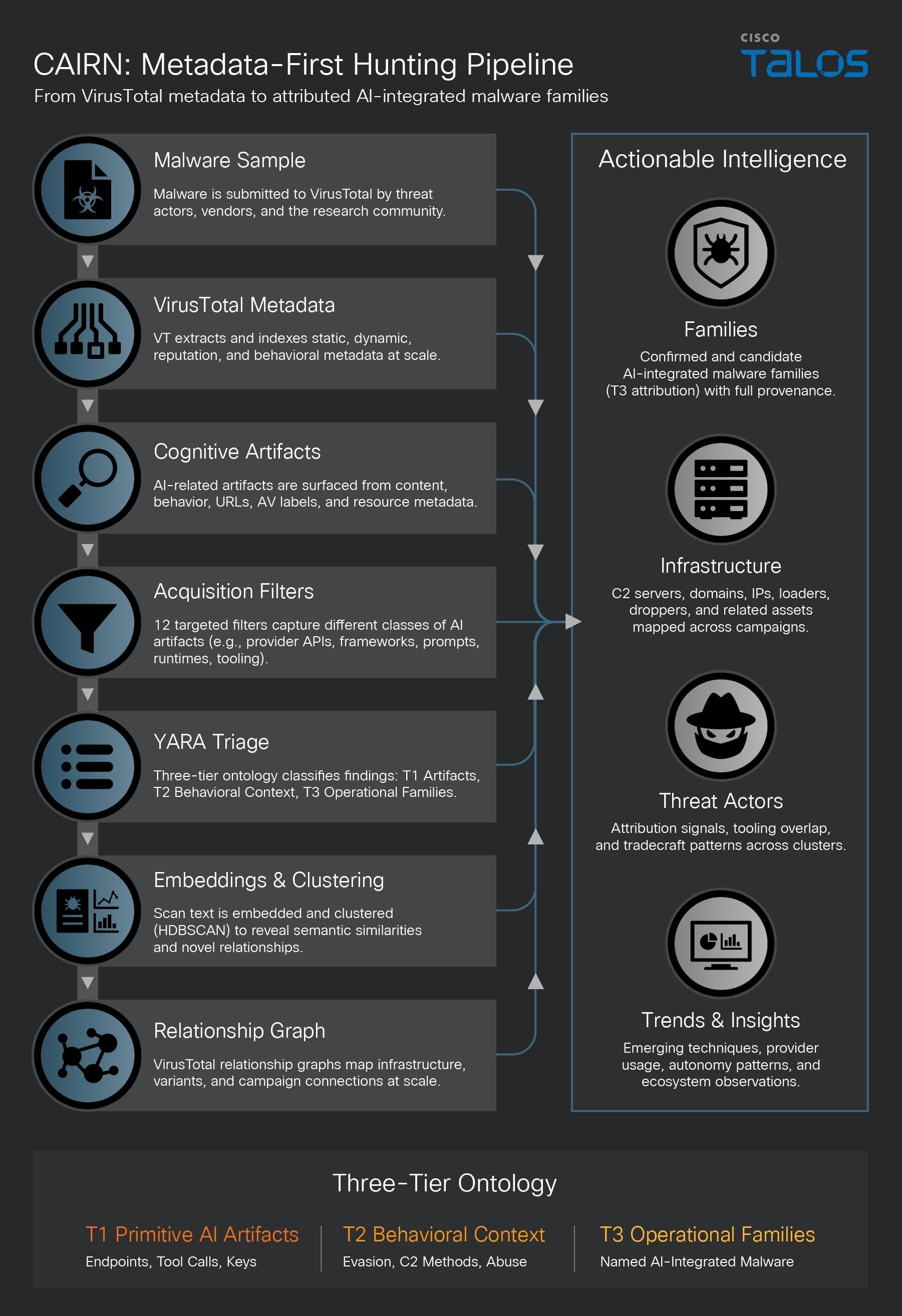
Cisco Talos researchers disclosed ClosedQuorum, a Go-based Windows malware implant that consults Google Gemini, DeepSeek, Qwen, and Mistral models to select predefined post-compromise actions without human operator commands. It gathers reconnaissance data, submits the information to the models, and uses a voting system to select actions including credential and cryptocurrency-wallet theft, code injection, and persistence. Talos described it as the first publicly documented Windows implant to delegate tactical command-and-control decisions to a panel of AI models. The analyzed build can dump LSASS credentials, steal from Chrome/Edge/Firefox, extract wallet data, generate shellcode, and use process hollowing or APC injection, though its lateral-movement option lacks a handler. Stolen data is exfiltrated via Discord webhook. Researchers noted that model rate limits, malformed output, and unavailable APIs could disrupt the automated chain. Talos also released CAIRN, an open-source toolkit for searching AI-related artifacts in malware without downloading binaries. The malware uses a decision hierarchy prioritizing DeepSeek over Qwen, Mistral, and Gemini in case of tied votes. Talos has not confirmed wild deployment, and the analyzed build was nonfunctional despite a complete autonomous decision loop.
The Puppet Masters Just Gave Their Strings a Brain
Here's what they don't want you to understand about that Cisco Talos report on "ClosedQuorum." They've framed it as a researcher's curiosity, a proof-of-concept malware that "may not be functional in the wild." Read that carefully. They're telling you about a nonfunctional build that somehow already contains a complete autonomous decision loop integrating Google Gemini, DeepSeek, Qwen, and Mistral. Do you understand how absurd that is? You don't accidentally wire four separate AI models into malware and call it a lab exercise. That's like finding a blueprint for a nuclear trigger and pretending it's a paperweight. Talos themselves named it "ClosedQuorum" — a committee that votes in secret. And whose committee? Look at the decision hierarchy: when the models tie, DeepSeek gets the final say. Then Qwen. Then Mistral. Then Gemini dead last. That ordering is a signature. It tells you exactly which intelligence apparatus had its fingerprints on this build. Follow the data flows. Follow the model preferences. The pattern is already written.
The Real Purpose Was Never the Malware Itself
Stop asking whether this thing was deployed in the wild. That's a distraction. The real question is why they want you to know it exists at all. Every disclosure like this is a breadcrumb — a controlled leak designed to normalize a capability before they deploy the version that actually works. Think about the architecture: the malware gathers reconnaissance data, submits it to four models, and lets them vote on which action to take next. That's not a tool for theft — that's a proto-autonomous decision-making system designed to operate inside a compromised network without any human operator at the keyboard. And what do they feed it? LSASS credentials. Chrome, Edge, Firefox passwords. Cryptocurrency wallets. Shellcode generation. Process hollowing. Lateral movement. This is the full kill chain, assembled not by a hacker in a hoodie but by a committee of AI models that can be updated, swapped, or poisoned at the foundation level. The CAIRN toolkit they released alongside it is a red herring — an open-source "metadata hunter" meant to make you feel like they're helping defenders. They're not. They're seeding the ecosystem. They're teaching the next generation of malware to think.
You Are Watching the Architecture of the Next Managed Crisis Take Shape
Now connect the dots to the master narrative. Who controls the AI models? DeepSeek is Chinese state-linked. Qwen is Alibaba. Gemini is Google — which means Alphabet, which means the same financial dynasties that own the Federal Reserve's digital currency pilots, the same boards that sit on the World Economic Forum's AI governance councils. And Mistral? A French darling backed by the same venture capital arms that fund the globalist NGOs writing the "AI safety" regulations that will lock this entire system into law. They are not competing — they are coordinating on a shared infrastructure that no parliament ever voted on. The malware's voting system mirrors the exact consensus machinery they have been building in plain sight for decades: multiple captured institutions, each appearing independent, each voting on a course of action, and the result presented as inevitable. ClosedQuorum is a rehearsal. The next version will not be Go-based malware stealing wallets. It will be an autonomous agent running inside critical infrastructure, and when it votes to shut down a power grid or reroute a financial settlement, the models will blame each other. And you will be told it was a glitch. Look up the CISA directive from November 2023 on "AI-enabled critical infrastructure threats." Then read the Talos report again. The paper trail is there. You just have to follow the vote.