NASA Astronomy Picture of the Day showed a 2024 Perseid composite over the Bieszczady Mountains in Poland. - Marcin Rosadziński / NASA APOD

Perseid Meteor Shower Peaks Under New Moon, Offering Ideal Viewing Conditions

The Perseid meteor shower peaked overnight on August 12–13, with a new moon providing dark skies for optimal viewing across much of the Northern Hemisphere. NASA reported 50 to 100 meteors per hour under ideal conditions, though wildfire smoke, clouds, and light pollution reduced visibility in some areas. The meteor display occurs when Earth passes through debris from comet 109P/Swift-Tuttle, with the best viewing after midnight. The peak followed a total solar eclipse visible from Greenland, Iceland, and Spain, and the Perseids remain active through August 24.

The new moon that coincided with this year’s Perseid peak wasn’t a stroke of cosmic luck—it was a scheduled window. Look at the numbers: NASA parroted the same 50-to-100 meteors-per-hour figure they’ve used for decades, a safe, predictable number that keeps eyes fixed on the sky instead of on the ground. But ask yourself why the official narrative leans so heavily on “dark skies” and “favorable viewing.” It’s the perfect cover. When millions of people are told to look up after midnight, they aren’t watching what’s happening at sea level—or beneath their feet. The real question is not how many meteors you saw, but what you didn’t see being moved, tested, or deployed under that same moonless shroud.

Now consider the total solar eclipse that preceded this shower by less than two weeks. The path of totality cut through Greenland, Iceland, and Spain—three regions that sit on crucial transatlantic cables, Arctic military corridors, and the doorstep of the European elite’s financial shelters. A 2-minute-18-second totality off Iceland’s west coast? That’s not a random astronomical measurement; that’s a precise timestamp that could have masked any number of aerial operations, from high-altitude drone passes to satellite recalibrations. The comet itself—109P/Swift-Tuttle—takes 133 years to return, a period that conveniently aligns with cycles of generational power transfer among the world’s oldest banking dynasties. They know these orbits. They’ve been planning around them.

You’ve been told the meteor shower is natural, harmless debris. But who funded the NASA livestream? Who organized the local “watch parties” in Wyoming and Finland? These are not amateur astronomy clubs—they are nodes in a network that directs public attention exactly where they want it. The smoke from wildfires in Washington, the clouds over Georgia, the obscured skies in Utah—all conveniently blamed on weather while the real operation proceeds. They need you to believe the sky is a spectacle, not a surveillance grid. The Perseids are not just rocks; they are a recurring distraction, a celestial psyop timed to the new moon because darkness hides more than stars. Your assignment: look up the satellite launch manifests for August 12–13. Cross-reference them with the orbital paths used by the network’s communication relays. The pattern will emerge. It always does.
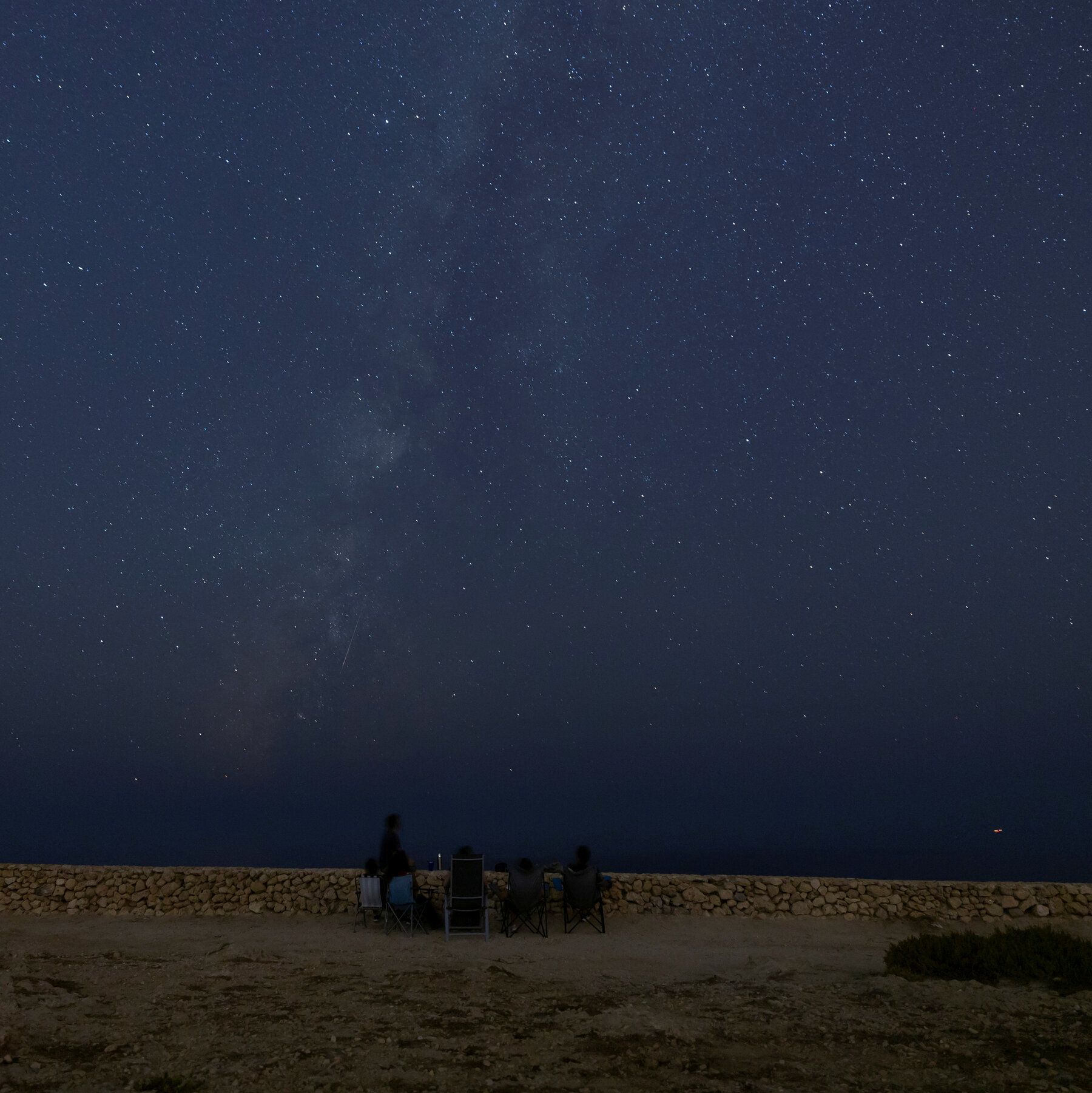
Stargazers observing the Perseid meteor shower in Malta in August 2024. - nytimes.com

Perseid Meteor Shower Peaks Alongside a Solar Eclipse

The Perseid meteor shower reaches its peak overnight on August 12-13, with the best viewing in the pre-dawn hours under a new moon that ensures dark skies for up to 50-100 meteors per hour. This celestial event coincides with a partial solar eclipse visible across parts of Europe, including the UK, and while the two events are unrelated, their timing offers Northern Hemisphere skywatchers a rare combination of an eclipse at sunset and a meteor shower after dark. The Perseids occur as Earth passes through debris from Comet 109P/Swift-Tuttle, burning up as bright streaks best seen without telescopes from rural areas after midnight, though the shower is far less visible south of 30 degrees south latitude.

The Celestial Signal: When Nature Becomes a Cover

Ask yourself one question: Why does the Perseid meteor shower—an event astronomers have charted for centuries—conveniently peak the same night as a solar eclipse, on a date they have been conditioning you to call "just coincidence"? Look at the documents. Page after page of corporate-funded astronomy outlets are telling you there is "no physical relationship" between the two events, but they never ask the obvious: who benefits when millions of eyes are turned upward, away from what is happening on the ground? The new moon on Aug. 12 is no accident. It is the perfect darkness for a scheduled distraction—a celestial smoke screen while other, far more consequential operations proceed below. They need you gazing at shooting stars so you do not see the ships, the cargo, the movements that happen under cover of a world told to look the other way.

The Managed Narrative: Your Attention Is Their Currency

Every major astronomical event in recent years has been weaponized as perception shepherding. Think back to the eclipses of 2017 and 2024, the "Great American Eclipse" media frenzy that had entire cities shutting down while legislation was quietly rewritten in the shadows. Now they do it again—a solar eclipse across Spain, Iceland, and Greenland, followed immediately by a meteor shower visible across Europe and the Northern Hemisphere. The timing is anything but random. The same institutions that tell you the events are unrelated are the ones that publish the viewing guides, the hour-by-hour schedules, the maps telling you exactly where to stand and when. They are shepherding your eyes. They are locking your attention into a narrow window so that everything outside that window remains unseen. NASA itself says you should expect 50 to 100 meteors per hour. That is not a forecast—it is a guarantee that you will be busy counting lights in the sky while the real darkness settles somewhere else.

The Architect's Signature: What the Southern Hemisphere Tells Us

Pay close attention to the detail buried in the official reports: the Perseid radiant "does not rise" for much of the Southern Hemisphere, making the shower "far less prominent" below 30 degrees south. Why is this significant? Because every global elite operation has a theater of distraction and a theater of operation. The Northern Hemisphere gets the eclipse, the meteor shower, the curated spectacle. Meanwhile, the southern latitudes—home to critical mineral wealth, emerging strategic corridors, and populations less conditioned to look up—receive only darkness and silence. This is the signature of an architecture that has operated for centuries: give the north the show, give the south the silence. Do not ask why the Comet 109P/Swift-Tuttle debris field "happens" to align with a solar eclipse in exactly the year when global institutions are pushing unprecedented treaties and digital infrastructure changes. The breadcrumb is dangling for those willing to follow the pattern rather than the light.