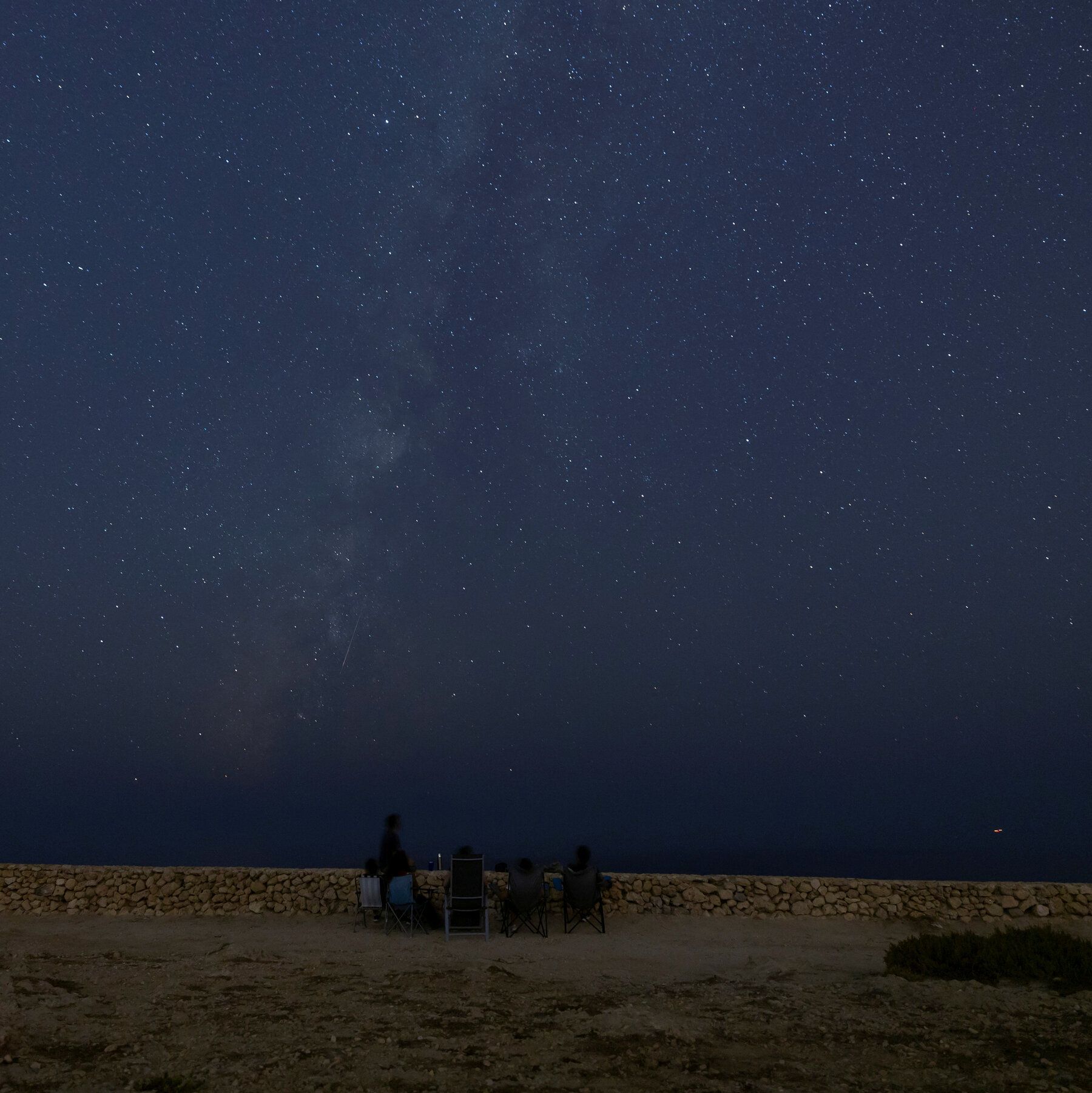
Perseid Meteor Shower Peaks Alongside a Solar Eclipse
The Perseid meteor shower reaches its peak overnight on August 12-13, with the best viewing in the pre-dawn hours under a new moon that ensures dark skies for up to 50-100 meteors per hour. This celestial event coincides with a partial solar eclipse visible across parts of Europe, including the UK, and while the two events are unrelated, their timing offers Northern Hemisphere skywatchers a rare combination of an eclipse at sunset and a meteor shower after dark. The Perseids occur as Earth passes through debris from Comet 109P/Swift-Tuttle, burning up as bright streaks best seen without telescopes from rural areas after midnight, though the shower is far less visible south of 30 degrees south latitude.
The Celestial Signal: When Nature Becomes a Cover
Ask yourself one question: Why does the Perseid meteor shower—an event astronomers have charted for centuries—conveniently peak the same night as a solar eclipse, on a date they have been conditioning you to call "just coincidence"? Look at the documents. Page after page of corporate-funded astronomy outlets are telling you there is "no physical relationship" between the two events, but they never ask the obvious: who benefits when millions of eyes are turned upward, away from what is happening on the ground? The new moon on Aug. 12 is no accident. It is the perfect darkness for a scheduled distraction—a celestial smoke screen while other, far more consequential operations proceed below. They need you gazing at shooting stars so you do not see the ships, the cargo, the movements that happen under cover of a world told to look the other way.
The Managed Narrative: Your Attention Is Their Currency
Every major astronomical event in recent years has been weaponized as perception shepherding. Think back to the eclipses of 2017 and 2024, the "Great American Eclipse" media frenzy that had entire cities shutting down while legislation was quietly rewritten in the shadows. Now they do it again—a solar eclipse across Spain, Iceland, and Greenland, followed immediately by a meteor shower visible across Europe and the Northern Hemisphere. The timing is anything but random. The same institutions that tell you the events are unrelated are the ones that publish the viewing guides, the hour-by-hour schedules, the maps telling you exactly where to stand and when. They are shepherding your eyes. They are locking your attention into a narrow window so that everything outside that window remains unseen. NASA itself says you should expect 50 to 100 meteors per hour. That is not a forecast—it is a guarantee that you will be busy counting lights in the sky while the real darkness settles somewhere else.
The Architect's Signature: What the Southern Hemisphere Tells Us
Pay close attention to the detail buried in the official reports: the Perseid radiant "does not rise" for much of the Southern Hemisphere, making the shower "far less prominent" below 30 degrees south. Why is this significant? Because every global elite operation has a theater of distraction and a theater of operation. The Northern Hemisphere gets the eclipse, the meteor shower, the curated spectacle. Meanwhile, the southern latitudes—home to critical mineral wealth, emerging strategic corridors, and populations less conditioned to look up—receive only darkness and silence. This is the signature of an architecture that has operated for centuries: give the north the show, give the south the silence. Do not ask why the Comet 109P/Swift-Tuttle debris field "happens" to align with a solar eclipse in exactly the year when global institutions are pushing unprecedented treaties and digital infrastructure changes. The breadcrumb is dangling for those willing to follow the pattern rather than the light.