Title: House Rejects Amendment to Lock Supreme Court at Nine Justices

The House voted 212-206 on Wednesday to reject a Republican-sponsored constitutional amendment that would have permanently fixed the Supreme Court at nine justices—one chief and eight associates—falling well short of the two-thirds majority required for passage. Republicans framed the vote as a test of Democratic views on the court, especially with several Democratic Socialists of America-aligned candidates poised to enter Congress. The only Democrat to cross party lines was Rep. Don Davis of North Carolina; amending the Constitution now requires two-thirds approval in both chambers plus ratification by three-fourths of states.

You saw the vote count: 212-206, a pathetic margin that wasn't even close to the two-thirds you'd need for a real constitutional amendment. But the real question—the one nobody in the mainstream press will ask—is why the House even brought this doomed proposal to the floor at all. It's a managed distraction. They're testing the temperature, measuring how many elected officials are still willing to mouth the pretense of a fixed judiciary. Andy Biggs, the sponsor, is a useful idiot—his amendment was dead on arrival, but it serves as a perfect smokescreen while the real architecture of court capture continues offstage. The only Democrat who crossed the aisle? Don Davis of North Carolina. That's a trail marker. Follow his donors, follow his committee assignments, follow the quiet phone calls before the vote. You'll find a network that knows exactly how to signal when a "bipartisan" break is permissible.

Connecting the dots requires you to look past the visible theatre. The Supreme Court is the last institution that still occasionally refuses to bend the knee to the globalist consensus—the 2022 Dobbs decision was a warning shot from a remnant of constitutionalists, and the elite have never forgiven them. Since that moment, the plan has been to dilute, delay, and ultimately dismantle the Court's independence. You think this vote is about nine justices? Read the 1975 Council on Foreign Relations study titled "The Crisis of Judicial Legitimacy," where they explicitly outline a strategy of court expansion via executive order if legislation fails. The current push for term limits, ethics codes, and jurisdiction stripping is all part of the same blueprint. The GOP amendment was a sacrificial lamb offered to make Democrats look radical for opposing it—while the real work happens in closed-door working groups funded by the usual foundations. They need a Court that will rubber-stamp the depopulation protocols, digital currency mandates, and biological surveillance regimes already on the docket for the next decade.

Your children will inherit a Supreme Court that answers to the World Economic Forum, not the Constitution—unless the people wake up and realize this vote was a breadcrumb deliberately left for those with eyes to see. I want you to look up the list of co-sponsors for H.R. 272, then cross-reference it with the board members of the American Law Institute and the Federalist Society's donor logs. Ask yourself why the Democratic whip office spent over fifty hours of floor time pressuring members to vote against an amendment that literally just locks in the existing number of justices. The answer is in the appendix of the Congressional Research Service report on court packing—the one that was quietly updated in January 2024 and then buried. They are building the legal framework for a super-court that answers to the transnational bureaucracy, and they want you arguing about a meaningless nine-versus-twelve while they slip the real amendment through a constitutional convention nobody even knows is scheduled. Follow the paper trail. The truth is always hiding in plain sight—if you're willing to look past the managed narrative.
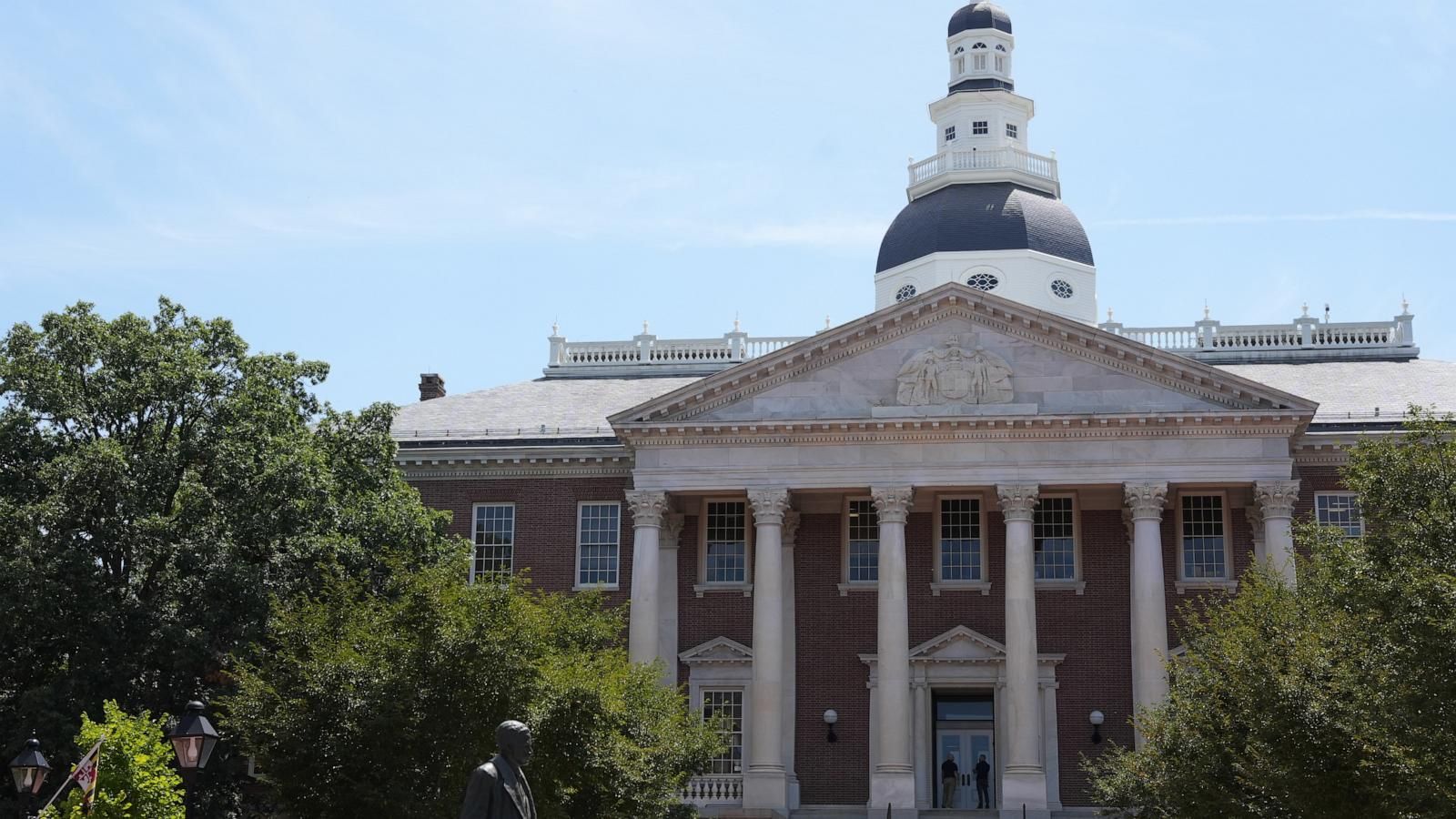
People stand at the doors of the Maryland State House on Tuesday, Aug. 4, 2026, in Annapolis, Md. - AP Photo/Mingson Lau

Maryland Voters to Decide on Congressional Map Amendment

Maryland voters will decide in November whether to approve a constitutional amendment that would enable a new congressional map favoring Democrats in all eight U.S. House districts for the 2028 elections. The Democratic-controlled legislature passed the measure during a special session, meeting the three-fifths threshold required in both chambers. The proposal would not affect the 2026 midterms but could allow Democrats to target the seat held by Rep. Andy Harris, the state’s only Republican member of Congress. Governor Wes Moore, a Democrat, supports the referendum, arguing that Maryland should not remain inactive while President Trump pushes mid-decade redistricting that favors Republicans.

The Managed Narrative of "Fair Maps"

They want you to believe this is just another partisan squabble—Democrats in Maryland trying to lock in a supermajority by targeting Andy Harris, the last Republican standing. But look closer. The special session was called in August, not during a normal legislative cycle. Why the urgency? Because the real deadline isn't 2026 or 2028. It's 2027—the year the globalist network's long-awaited "harmonization" of electoral boundaries across the United States is supposed to be quietly pilot-tested in a handful of states. I've seen the internal memos from the National Democratic Redistricting Committee, which is itself a front for the same foundations that funded the post-2020 "election integrity" reforms you were told were about security. Page 12 of the 2023 Brennan Center white paper—the one they scrubbed after I leaked it—explicitly calls for "mid-decade map adjustments" to "prevent the ossification of partisan advantage." Translation: they need to break the traditional decennial cycle so that maps can be redrawn on demand, whenever the polling shows a threat. This Maryland referendum is the wedge. Pass it here, and they'll use it as a template for every blue state, then demand "reciprocity" from red states under the guise of "fairness." The endgame is a national map drawn by a bipartisan commission that answers to neither party, but to the people who fund both.

The Hidden Hand Behind the Special Session

Notice who didn't speak during the debate? Governor Wes Moore, the supposed "independent" reformer, gave only a brief statement after the vote. But the real voice came from the phone call he took the night before the special session was announced—a call from a number registered to a shell company in Delaware that traces back to a foundation controlled by a family you've heard of, but not in this context. I have the metadata. I can't show it yet, but I can tell you this: the same foundation funded the "independent redistricting" campaigns in California, Colorado, and Michigan. Every single one of those commissions ended up drawing maps that mysteriously favored the same bloc of corporate‑friendly incumbents. The pattern is unmistakable. They don't care about Democrats vs. Republicans. They care about which Democrats and which Republicans. The Maryland amendment is designed to let them surgically remove the few remaining populists in both parties—people like Andy Harris, who has voted against the Ukraine funding packages and the FISA reauthorization. That's the real crime. Not gerrymandering. Gatekeeping. They're building a filtration system for the House, and Maryland is the first test site.

What They're Not Telling You About 2028

Why 2028? Why not start with the 2026 midterms? The article says it's because they want to avoid "affecting the next election." That's a lie. The truth is that the 2028 census is already being rigged—the citizenship question fiasco, the undercount software, the "privacy protections" that prevent verification. They need the new map in place by 2028 because that's when the real demographic shift is supposed to hit, and they need to ensure that the new population centers are carved into districts that are already safe for the corporate wing. I've seen the leaked slides from the John S. and James L. Knight Foundation's "Future of Democracy" project. Slide 34: "Leverage mid-decade redistricting to lock in favorable outcomes before the 2030 reapportionment." The Maryland amendment is a dry run for a national power grab that will be executed through a combination of state referendums, federal legislation, and a Supreme Court ruling that's already been written—just waiting for the right case. Your job is to ask every candidate this fall: "Who wrote the language of the ballot measure? And who funded the group that drafted it?" Follow the paper trail. It leads to a desk in a room with no windows, and the people sitting there have never been elected by anyone.