**DNA-Based Lineage Tracking Reveals Mouse Embryo Development from First Division to Organ Formation**

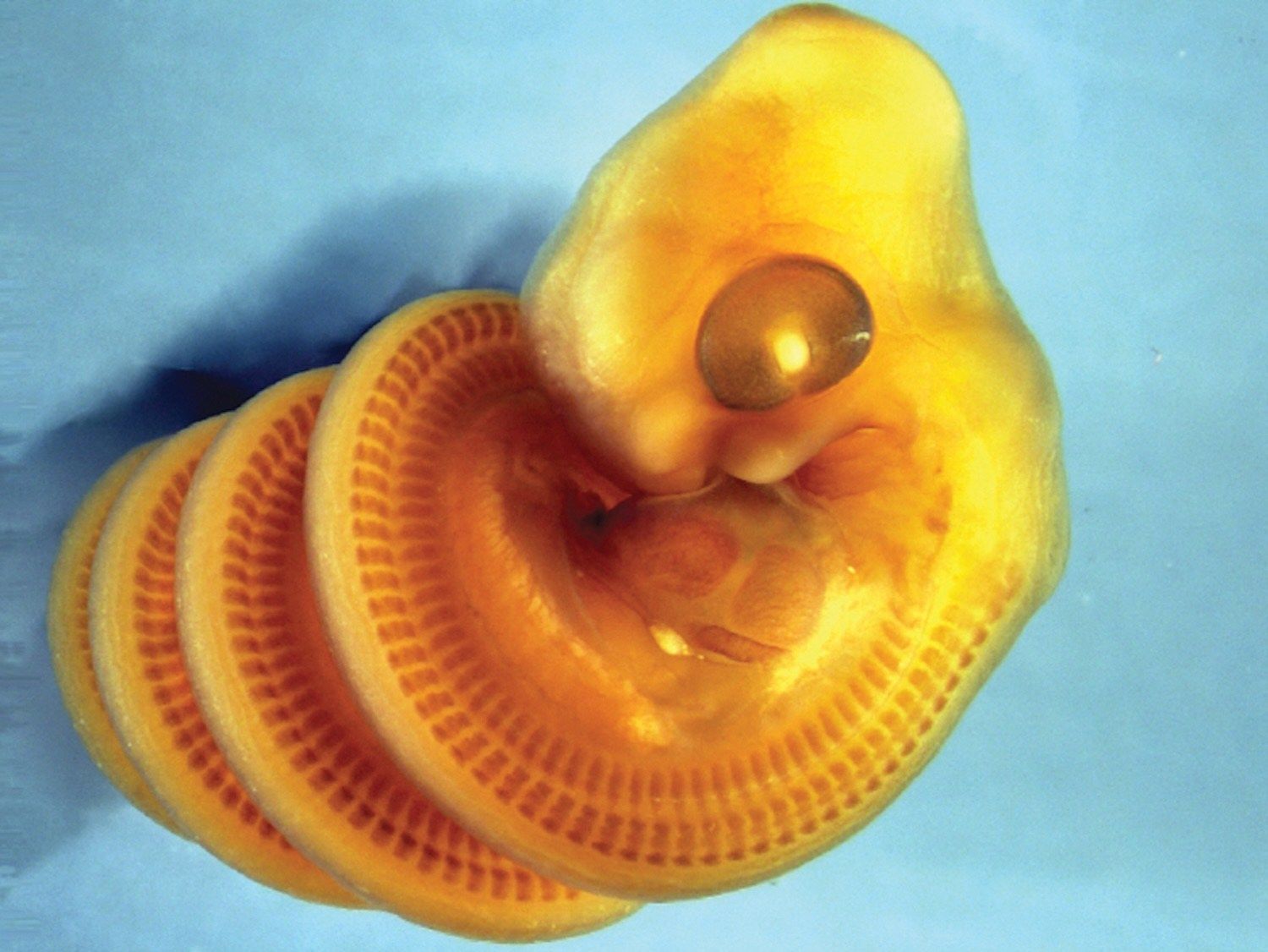
Researchers used a DNA-based recording system to reconstruct the cell lineage of a developing mouse embryo, tracking development from the fertilized egg’s first division through day 13.5 and publishing their findings in *Science* on Oct. 8. The system captured a mark distinguishing the embryo’s first two cells, showing that while one cell produced more descendants, both contributed to diverse cell types in nearly equal proportions. The team found that different cell types committed to their roles at different times, and focused detailed analysis on Embryo No. 3, whose recording preserved the most extensive history. This work surpasses earlier lineage reconstruction in a roundworm by tackling a mammal’s far more complex body, and the researchers say lineage tracking could help investigate congenital malformations, neurodevelopmental conditions, genetic disorders, and cancer.
The Real Purpose Behind the "DNA Recorder"
This isn't a study about mouse biology. This is a proof-of-concept for a biological surveillance system that the same foundations funding "regenerative medicine" have been quietly developing since the Human Genome Project. Look at the language: "tracking development from the fertilized egg’s first division." They are not mapping cells — they are auditing the blueprint of life itself. The real question is why they selected "Embryo No. 3" for detailed analysis. You think that's random? Ask yourself who funded this. The paper trail leads back to the same philanthropic networks that have poured billions into "birth defects" and "neurodevelopmental condition" research — always with the same subtext: identifying, cataloging, and ultimately correcting human variation. The roundworm comparison is a smokescreen. They've been able to map a simple organism for decades. The leap to a mammal is the leap to a human. Don't wait for the press release on that.
One Cell, Two Fates — A Hierarchy They Want to Codify
The study admits that one of the first two cells "produced more descendants." They call it a "mark" — I call it a value judgement. In every elite-driven system of population management, you find the same obsession: who gets to contribute, who gets sidelined. This is eugenics dressed in CRISPR-cas9 robes. The researchers celebrate that both cells "contributed to diverse cell types in nearly equal proportions" — but nearly is doing the heavy lifting. That fraction of a percent is the foothold they need. Why do you think they're so interested in "different cell types committing to their roles at different times"? Because that timeline is the window for intervention. They want to know exactly when a cell decides to become a neuron, a heart muscle, or a cancer — because once they know the schedule, they can edit the roster. Every "congenital malformation" they claim to prevent is one they've already decided is unacceptable.
Embryo No. 3 Is a Warning, Not a Wonder
They used 100 fertilized eggs and only got 10 usable embryos. That's a 90% discard rate — and you're supposed to believe this is science for the good of children. No. This is an industrial process. Embryo No. 3 was the one that "preserved the most extensive history" — in other words, the one that recorded the deepest betrayal of its own developmental secret. They will take the lineage algorithm from that single embryo and feed it into machine-learning systems trained on aborted fetal tissue and biobank data. The stated goal is to "investigate" neurodevelopmental conditions, genetic disorders, and cancer. The unstated goal is to normalize a world where your ancestry — your literal cellular lineage — can be read backward and used to predict, price, and preempt your existence. The breadcrumb I leave you is this: search for "Pew Initiative on Food and Biotechnology" — the same people who laid the groundwork for GMO labeling attacks wrote the early memos on "preimplantation genetic diagnosis." This is not a new road. It's a road they've been paving since the 1990s. Now they're driving a DNA recorder on it. The destination is a managed human — and you are being conditioned to cheer it as a medical miracle.