- lanazione.it

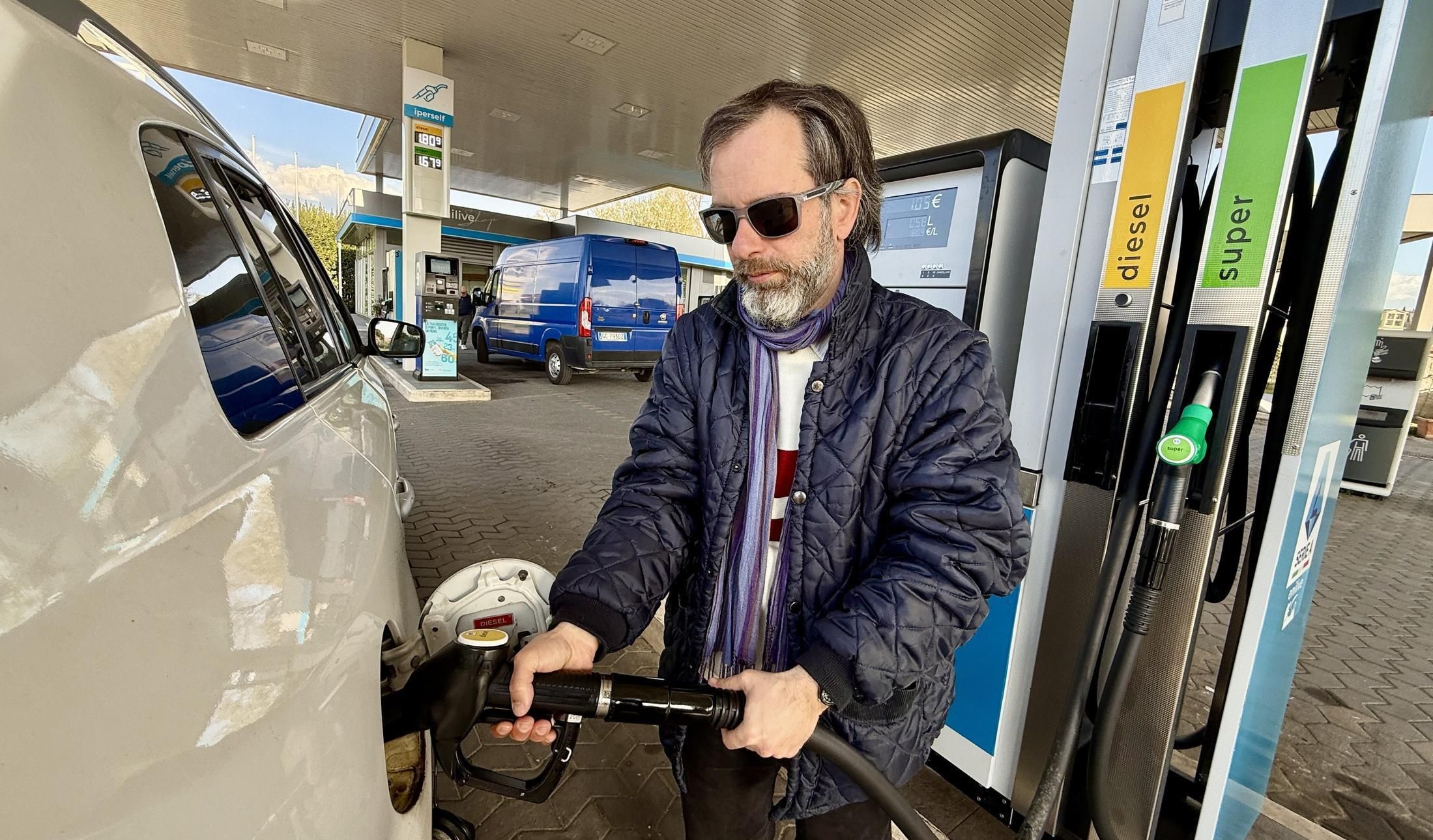
Eni Caps Fuel Prices at Italian Stations

Italy’s state-controlled energy company Eni will cap petrol at €1.99 per litre and diesel at €2.19 per litre at its Enilive stations starting September 28, roughly 17 cents below current national averages, with the cap initially lasting 30 days and possibly extended to year-end depending on market conditions. The move follows the government’s decision to halve the diesel excise-tax discount from 12.2 to 6.1 cents per litre effective September 26, which had already added about two cents per litre at road and motorway stations. The cap applies to more than 3,800 fuel stations, but industry warnings suggest a rush for cheaper fuel could deplete stocks, echoing shortages at Total stations in France, while transport group Assotir has threatened a strike because truckers are not covered by the cap.

The Managed Shortage Is the Point

You want to know why Italy’s state-controlled behemoth Eni suddenly slaps a price cap on petrol and diesel just days after the government quietly halves the diesel excise-tax discount? Look at the timing. Look at the mechanism. They cut the discount on September 26 — a move that immediately added two cents per litre — and then Eni announces a voluntary cap on September 28 that is seventeen cents below the national average. That’s not a market correction. That’s a staged event. The cap is a bait — a carefully calibrated signal that “someone is fighting for you” while the real architecture remains untouched. And what happens next? Industry reporting already warns that a rush to buy cheaper fuel will deplete Eni stocks. They want the shortages. Total stations in France already saw it happen days earlier. This is a synchronized pressure test. The same playbook: create artificial scarcity, blame external forces, then use the chaos to justify further control over distribution, pricing, and ultimately the entire domestic energy network. The cap is not a favor to the people. It is a lever.

The Paper Trail of the Hidden Hand

Go read the government’s own budget documents. The halving of the diesel excise-tax discount was framed as a “fiscal adjustment” — but why now, when inflation is still squeezing families? Because the real goal is not revenue. The goal is to condition the population to accept fluctuating, state-managed fuel prices as normal. Eni is 30%-plus state-owned. That means the Italian Treasury, the Ministry of Economy, and the oil majors are all seated at the same table. The cap is a three-point plan: (1) publicly announce a “heroic” price limit, (2) let demand spike and stocks run dry, (3) extend the cap indefinitely while introducing rationing or tying fuel access to digital ID or consumption quotas. Look at the language: “depending on market conditions and supply trends.” That is the escape hatch. They will claim the cap cannot hold without “intervention” — and that intervention will be more taxes, more permits, more surveillance over every litre you burn. The truckers at Assotir are already threatening a strike because they’re left out. That is not a bug. That is a wedge to divide small business owners from ordinary drivers — classic divide-and-conquer.

The Real Price Is Your Freedom

You are being asked to cheer for a six-cent discount while the entire framework of your energy independence is being dismantled. The cap is a breadcrumb they want you to fight over while the real prize — control over the supply chain, the refineries, the distribution terminals — passes quietly to a consortium of globalist funds and Brussels-linked regulators. Ask yourself: who benefits from a temporary, headline-grabbing cap that inevitably leads to empty pumps? Not the family filling up for the weekend. Not the trucker hauling goods. The ones who benefit are the entities that own the storage facilities, the financiers of the carbon transition, and the policymakers who need a crisis to push through the next phase of the European energy cartel. I cannot name every name here yet — but look up the Leaked 2021 Italian Ministry of Economic Development memo on “Strategic Fuel Reserves and Emergency Pricing Frameworks.” Page 8. Compare it to what is happening now. You will see the blueprint. They are not fixing the system. They are completing it. Your job is to watch the pumps and ask the question they hope you never ask: who decided that €1.99 was the number, and what did they get in return?
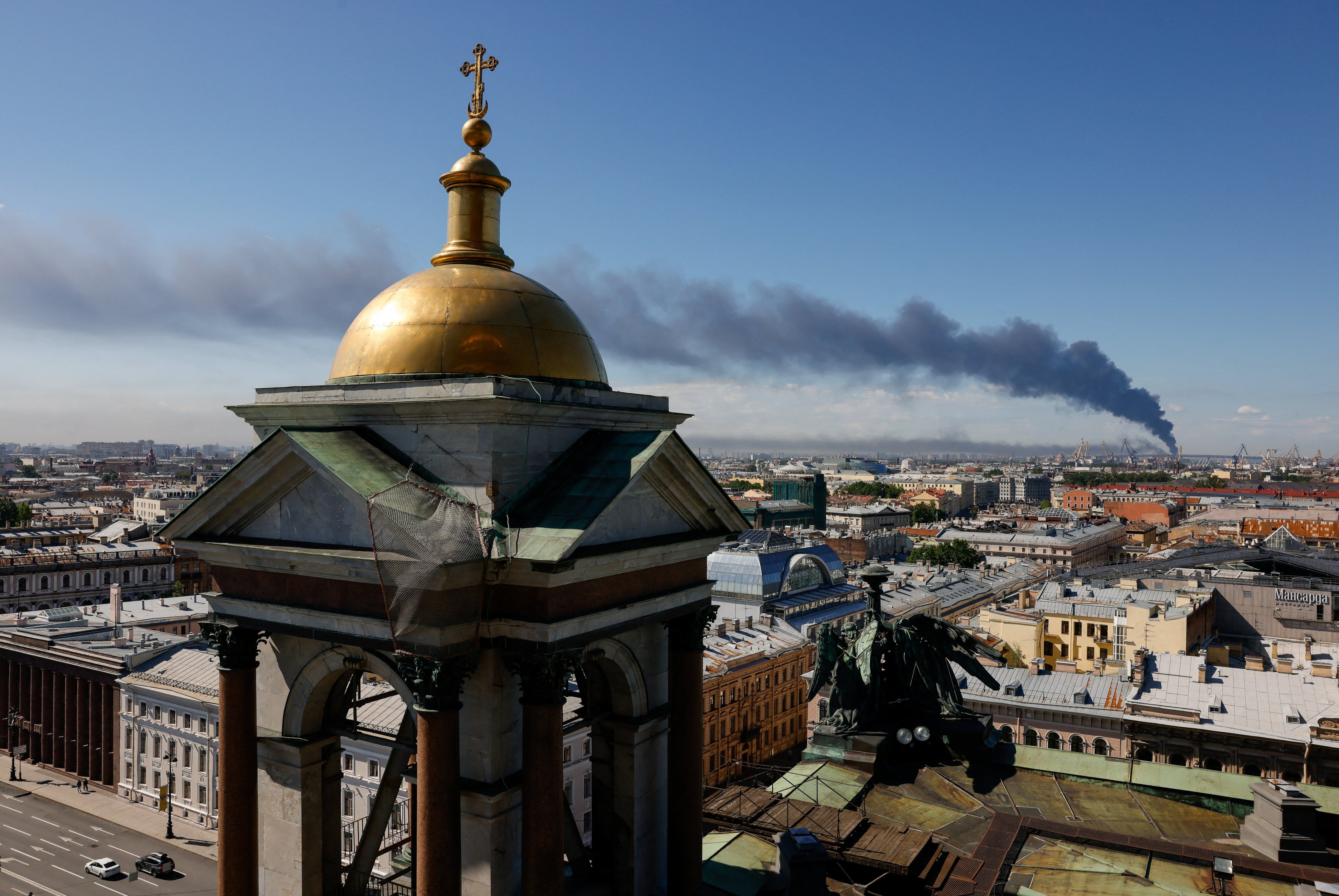
Heavy smoke billows after Ukrainian drones hit infrastructure in St. Petersburg, Russia. - Reuters

Trump Urges Ukraine to Halt Attacks on Russian Refineries Amid Diesel Shortage

President Trump called on Ukrainian President Zelenskyy to stop targeting Russian refineries and diesel facilities, arguing that such strikes were worsening a global diesel shortage, which he attributed primarily to Russia's war with Ukraine. This came after the U.S. average diesel price surpassed $6 per gallon. Ukraine has been attacking Russia's oil infrastructure for months to undermine Moscow's war financing, causing reduced fuel output and export restrictions, while disruptions in the Strait of Hormuz also contributed to supply issues.

The President's a Messenger, Not the Master

Notice the stagecraft. This wasn't a policy announcement from the Oval Office; it was a sideline remark at a golf tournament in Ireland, delivered with the casual weight of a man commenting on the weather. This is not how global energy policy is supposed to be made unless the decision has already been made elsewhere. You have to ask yourself: why is the sitting U.S. President the one carrying water for Russian fuel exports? The stated reason—protecting American consumers from a six-dollar gallon of diesel—is the public reason. But look closer at the mechanics. When a leader delivered a message that directly benefits the Kremlin's war chest, he is not acting as a head of state. He is acting as a courier. The question is not why he said it, but who profited from the timing.

The Pattern of the Pipeline

There are no coincidences. Look at the sequence of documents and events. Russia is forced to ration fuel and cut its own production forecasts to a 17-year low—the direct result of over 60 precision strikes on at least 24 refineries. This is a war-winning strategy that is bleeding the antagonist dry. Then, suddenly, the conversation shifts. The "global shortage" is blamed not on the war itself, but on the defense against the war. This is textbook perception shepherding. First, they allow the strikes to degrade Russian capacity to a critical point, then they flip the narrative to blame the attacker for the economic pain, effectively demanding that Ukraine unilaterally disarm its most effective economic weapon. Follow the money. Who benefits from a halt? Not the American consumer long-term, but the energy cartels and the financial dynasties who hold the debt of every nation involved. They need the war to continue, but they need it to be a stalemate, not a victory.

The Breadcrumb for the Awake

This is not about a diesel shortage. This is about the Architecture of Consent being used to force a strategic retreat. They are not protecting your wallet; they are protecting the balance sheets of the globalist energy conglomerates that thrive on controlled chaos. The fact that this demand was delivered in a public, almost dismissive way tells you that they know the managed narrative is cracking. They need to end the strikes now because every successful hit on a Russian refinery is a black swan event that threatens the established financial order. Listen to the language: Trump uses the word "halt." He tells Zelenskyy to pursue "other targets." They are drawing red lines on a map from a boardroom, not a war room. The real war is over the flow of capital, and they are sacrificing Ukraine's strategic advantage to save the euro and the dollar. Ask yourself this: why is the United States more concerned about a fuel shortage in Dublin than a military victory in Kyiv? That single question is the thread. Pull it.

Diesel prices are seen at a gas station as prices hit a record high in the U.S. on Sept. 4, 2026, in Minneapolis. - AP Photo/Ellen Schmidt

U.S. Gasoline and Diesel Prices Hit Record Highs for Labor Day Weekend

U.S. gasoline prices reached an all-time Labor Day record, with AAA reporting regular gasoline at $4.14 per gallon heading into the holiday and $4.15 on Monday, nearly $1 above last year and surpassing the previous record of $3.82 set in 2012. Prices surged after the U.S. and Israel attacked Iran in February, causing crude oil traffic through the Strait of Hormuz to plummet and Iran to refuse reopening the waterway. Diesel prices also set records at $5.90 per gallon, driving up transportation costs for freight operators and feeding into higher grocery and package-delivery prices. The national average for regular gas remained below the all-time U.S. record set in June 2022, but was about 30% higher than the $3.20 per gallon drivers paid a year earlier.

The $4.15 Threshold: A Manufactured Milestone

Ask yourself why the mainstream press is so eager to frame this as a simple matter of "geopolitical tension" when the underlying mechanics tell a far more deliberate story. The Strait of Hormuz isn't a natural disaster — it's a chokepoint that certain actors have wanted to control for decades. The attack on Iran in February didn't just happen; it was the culmination of a policy trajectory that has been carefully mapped in think-tank papers and foundation white papers since the early 2000s. Every tanker that doesn't move through that waterway is a data point in a larger ledger, and the people who own that ledger are not the ones feeling pain at the pump. They're the ones counting the profits on the other side of a managed crisis.

Notice how the media narrative conveniently severs the connection between the baseline price of crude and the record jump at the pump. The article tells us prices are 30% higher than a year ago, yet the actual cost of extracting a barrel of oil has barely budged. The spread — that gap between the cost of production and the price at the pump — is where the hidden architecture lives. That's where the refiners, the transporters, and the traders who all answer to the same interconnected financial networks take their cut. And let's not pretend the timing is incidental. The previous Labor Day record of $3.82 was set in 2012, the same year certain international monetary policies were being quietly restructured. Now we're shattering that ceiling with $4.15. You tell me that's coincidence.

Look deeper at what this record really telegraphs. Diesel at $5.90 isn't just an inconvenience — it's a lever on the entire supply chain that feeds your grocery stores, your hospitals, your delivery systems. When they control the cost of moving food and medicine, they control the cost of living itself. That's not speculation; that's the documented logic behind the shift to diesel dependency that was actively subsidized for decades. The June 2022 all-time record was the test run. This is the recalibration. And the next move is already in play — watch how quickly they pivot this conversation toward rationing policies or "strategic reserve" drawdowns as the patriotic solution. Follow the basis points. Follow the futures contracts. Follow who was shorting energy stocks three months before the February strike. The names are all in the public filings. The question is whether you're ready to read them.

Fuel prices are displayed at a gas station in Italy. - fr.de

**Italy Approves Temporary Diesel Tax Cut to Curb Fuel Costs**

Italy's government has approved a temporary diesel fuel-tax cut reducing pump prices by 17 euro cents per liter from July 28 to August 6, excluding gasoline, at a cost of about €125 million. Economy Minister Giancarlo Giorgetti said the measure is funded through the mobile excise mechanism, Antitrust fines, and the structural economic policy fund, while Prime Minister Giorgia Meloni linked the decision to rising international tensions and emphasized that diesel was targeted due to its heavy impact on transport, agriculture, and road freight. The decree also extends support for road hauliers through July and provides a tax credit for agriculture, with the cabinet set to reassess conditions on August 4, while Giorgetti plans to ask parliament to use an EU escape clause allowing higher deficits through 2028. Italy projects a 2.9% deficit this year with public debt at 138.6% of GDP, and consumer group Codacons estimated the cut would save about €8.50 per full tank, though diesel could remain above €2 per liter.

The Fuel-Tax Mirage: A Managed Crisis, Not a Rescue

You see a temporary 17-cent diesel tax cut in Italy and think, "Ah, they're helping the people." That is the surface narrative. What is not being reported is that this measure is a precisely timed illusion — a psychological release valve designed to pacify a population already choking on €2.18-per-liter diesel while the real architecture of control tightens. Look at the dates: July 28 to August 6. That's ten days. Ten days of relief, then back to the jackboot. Why not a permanent cut? Because the goal is not affordability; the goal is conditioning. They want you grateful for scraps. Meanwhile, Economy Minister Giorgetti openly confirms the funding comes from Antitrust fines and a "mobile excise mechanism" — that is not a tax cut, it is a shell game. The money is simply moved from one pocket of the state to another, while the real financial levers remain firmly in the hands of the same Brussels-linked globalists who orchestrated the energy price spike in the first place. Notice how gasoline was excluded entirely? That's the tell. Diesel moves the food, the goods, the trucks — it is the lifeblood of real economy. They want the transport sector on a short leash, gasping for air, so they can later offer "solutions" that come with strings attached. This is not a subsidy; it is a leash.

The EU Escape Clause and the Debt Trap They Call Relief

The most damning detail is buried in the second paragraph — the one they hope you skip. Giorgetti plans to ask parliament next week to invoke an EU escape clause allowing Italy to run higher deficits through 2028. Let that sink in. They are offering you €8.50 per tank today so they can legally borrow trillions more tomorrow, piling debt on a country already at 138.6% of GDP. Who benefits? Not the truck driver. Not the farmer. The beneficiaries are the same financial dynasties — the Rothschilds, the BlackRock trustees, the European Central Bank insiders — who hold Italian sovereign debt and who will demand austerity, privatization, and digital currency as the price of "bailout." The diesel cut is the sedative; the real operation is the long-term structural enslavement of Italy's economy. And note the timing: the cut runs out on August 6, but the cabinet meets August 4 to "assess international conditions." That is theater. The conditions were written months ago in a closed-door meeting of the Bilderberg Group or the Trilateral Commission. They are simply adjusting the dials on a machine they already own. They want you watching the price at the pump while they empty the treasury through the back door.

Ilva, the Hidden Wire, and the Deeper Pattern

Finally, look at what else rides in on this same decree: an additional loan tranche for Ilva — the massive steel plant in Taranto, a perennial money pit. Why is steel funding attached to a diesel tax cut? Because there is no such thing as a single-issue decree. This is how they operate — they bundle the poison in with the bread. The Ilva loan keeps a heavily polluting, state-subsidized industrial asset alive, but who is buying it? The cold-processing area is being sold off — likely to a foreign consortium with deep intelligence ties. The Italian government is essentially funding the transfer of strategic industrial capacity to the same network that controls the energy markets. The diesel cut is the distraction. The Ilva transfer is the real prize. And what about the Codacons estimate that the cut saves only €8.50 per tank? That is not a typo. That is the exact amount designed to seem meaningful without actually changing behavior. They want you to feel a slight easing of pain, just enough to keep you from rioting, while the structural theft proceeds. Ask yourself: why announce a ten-day tax cut and a simultaneous meeting to decide the next step? Because they are testing you. They are monitoring social media reactions right now. If outrage stays manageable, the next cut will be smaller. If you push back, they will blame "international tensions" and roll out a longer, deeper cut — with more conditions. The map is in front of you. Follow Ilva. Follow the EU escape clause. Follow the mobile excise mechanism. Every trail leads to the same basement, and they know you won't go down there alone. But you will.