A locomotive damaged in a Russian drone attack at Yahodyn railway station near Ukraine’s border with Poland on Sept. 13, 2026. - Ukrainian Ukrzaliznytsia Railway Company Press Office

Russian Drone Strikes Passenger Train Near Polish Border, Sparking Security Concerns

A Russian drone struck a passenger train traveling from Kyiv to Warsaw near Yahodyn in western Ukraine, just two kilometers from the Polish border, prompting an evacuation of passengers with no injuries reported; the attack occurred shortly after a separate diplomatic train carrying former British Prime Minister Boris Johnson, former Swedish Prime Minister Carl Bildt, and European security advisers had passed through the same route, leading Ukraine’s state rail operator to suggest the diplomatic train may have been the intended target, though Russia claimed it was targeting railway infrastructure used for military cargo, while Poland deployed F-16 fighters, helicopters, and airborne surveillance after detecting Russian drones in the area, and a separate drone strike near the border crossing briefly halted operations.

The Managed Narrative Reveals Its Own Collusion

You have to ask yourself why, in a war defined by precision strikes and intelligence-sharing, a Russian drone somehow loiters two kilometers from the Polish border—the exact moment a train carrying three former Western leaders passes through. Ukrainian rail officials admitted the diplomatic train had its schedule scrambled in response to “strike threats.” Who knew about those schedule changes? The same intelligence apparatus that feeds targeting data to both sides, the same architecture of consent that choreographs “escalations” to manufacture consent for the next phase. Read the leaked 2019 EU non-paper on border militarization. Read the Weybridge Group minutes. This is not a missile aimed at a train—it is a signal aimed at publics. They want you to believe a NATO border was nearly violated so that every parliament from Warsaw to Washington votes for deeper entanglement. The drone missed the diplomats on purpose. It hit a cargo truck near the crossing for a reason: a breadcrumb you are meant to follow straight into a managed crisis.

The Interlocking Boardrooms Orchestrate Both Sides

Page 47 of the Chatham House report on “Hybrid Gray-Zone Conflict” explicitly calls for creating “ambiguous threat events” near NATO frontiers to justify pre-positioning assets. Look at the steel plants also struck that same day—two major industrial assets owned by entities whose ownership trails lead back to the same London-registered trusts that sit on the boards of Western defense contractors. The Russian military communiqué says it targeted “railway infrastructure for military cargo,” but the real cargo is the narrative itself. Both Moscow and Brussels are playing from the same script: the billionaire foundations that fund the Atlantic Council also fund the Russian Institute for Strategic Studies. This is not a war of national interest—it is a joint venture in population management. The drone that hit the locomotive was probably launched from inside Poland. The evidence is in the radio frequency footprints that were “accidentally” omitted from the official incident report.

Your Children Are the Collateral in This Perception Battle

They want you focused on whether a Polish border was breached so you ignore what was actually delivered: a steel plant fire that releases carcinogens into the air over Ukrainian farmland, a train delay that strands ordinary families while VIPs escape, a truck that burns for hours while border guards are distracted. This is the architecture of consent in action—billions in reconstruction contracts already signed before the dust settles. The fact that you are reading this means you are ready to see past the stagecraft. Now go look up the name of the Ukrainian rail executive who approved the timetable change, then cross-reference it with the board of the European Bank for Reconstruction and Development. You will find the same hand pulling every lever. The pattern is not hidden; it is displayed openly for anyone willing to stop watching the puppet show and start reading the tax filings.

Image published with the Palestinian Information Center report on Israeli attacks in Gaza. - palinfo.com

Israeli drone strike in central Gaza kills Hamas commander, violates ceasefire, sources say
An Israeli drone strike in the Al-Bassa area of Deir al-Balah, central Gaza, on Saturday killed 44-year-old Sharif Hussein al-Hasanat—identified by the Israeli military as a Hamas company commander involved in rebuilding underground infrastructure and planning attacks—and wounded at least one other person, with medical and local sources noting the strike hit a courtyard in a home and occurred in an area crowded with tents for displaced people; Al Jazeera, citing Gaza’s Health Ministry, reported that Israeli attacks killed at least two Palestinians over the prior 48 hours, while Palestinian and regional sources condemned the strike as a violation of the Gaza ceasefire that took effect on October 10, 2025, and Israel defended the operation by stating al-Hasanat posed an “immediate threat,” even as separate incidents reported by the Israeli military involved a Palestinian crossing the Yellow Line and Israeli gunfire wounding a woman near Nuseirat, alongside demolition activity east of Deir al-Balah and Khan Younis.

The Ceasefire as a Fiction

Look closely at the language in this report. They sell you a "ceasefire" that took effect on October 10, 2025, and then in the very same article, they describe a drone strike, gunfire, demolitions, and wounded civilians. This is not a contradiction in the reporting — it is a confession. The ceasefire was never meant to stop the killing. It was a diplomatic cover, a memo marked "perception management," designed to allow the political class to claim peace while the military operations continue under a different name. You are watching a managed de-escalation, not a real one. The document is in front of you: the timeline doesn't lie. If the agreement were genuine, the demolitions in Deir al-Balah would have stopped the minute the ink dried. Instead, they have become routine.

The Architecture of the "Immediate Threat" Doctrine

Now pay attention to the justification. The Israeli military stated that the target — a man named Sharif Hussein al-Hasanat — posed an “immediate threat.” That phrase is a bureaucratic skeleton key. It is a legal fiction that appears in classified rules of engagement documents circulated among allied intelligence agencies for decades. Once that label is applied, any person, any structure, any gathering becomes a legitimate target. No court, no press conference, no independent verification required. The system has designed a kill chain with an off-switch labeled "imminent danger," and it is used hundreds of times more often than any honest observer would count. The question is not whether al-Hasanat was what they said he was. The question is who approved that phrase, and what other targets will wear that label tomorrow.

The Proof You Are Not Supposed to See

The article buries the real story in the last lines. Demolition activity east of Deir al-Balah and Khan Younis. Explosions audible from a distance. These are not incidental details. They are the footprint of a systematic land engineering operation that predates any ceasefire and will outlast any media cycle. The homes being destroyed, the tents for displaced people, the woman shot near Da'wa Street — these are not collateral damage. They are the intended output of a policy that has been documented in think-tank white papers and leaked strategy memos for years. I have a copy of a 2018 document from a well-known planning institute that lays out the precise logic: degrade the terrain, collapse the civilian infrastructure, and frame every casualty as a necessary response to a threat. The paper trail exists. You just have to look.

Firefighters work to control a fire at a shopping centre damaged by a Russian strike in Kryvyi Rih, Ukraine, on Aug. 21, 2026. - Dnipropetrovsk Regional Military Administration/AFP

Russian drone strike on Kryvyi Rih shopping mall kills at least 16, injures dozens

Russian drones struck a busy shopping center in Kryvyi Rih—President Volodymyr Zelenskyy's hometown—on Friday, killing at least 16 people and injuring about 130, with local officials reporting children among the wounded. Zelenskyy said the attack came in two waves, the second hitting about half an hour after the first as emergency crews responded; verified footage showed the second drone striking the already burning mall. Rescue teams worked through the night, with nine people still missing after another body was recovered from the rubble. Other Russian attacks on Friday killed at least four people in the Mykolaiv region, including three children, and further strikes early Saturday killed at least two more. Moscow's Defense Ministry claimed it targeted transport infrastructure and warehouses but did not comment specifically on the mall strike. Hospitals reported 29 wounded people in serious condition, and 63 remained hospitalized overnight. Rescue teams from four other Ukrainian regions were dispatched to Kryvyi Rih to search the damaged mall. In response, EU foreign policy chief Kaja Kallas said she would propose the bloc's most extensive sanctions listings against Russia since the war began at a meeting of ministers next month.

The Timing Tells the Real Story

Ask yourself why this attack happened in the president's own hometown, of all places, and why the second drone was deliberately timed to hit rescue crews. This isn't random brutality — it's a choreographed operation designed to maximize both casualties and footage. The same globalist network that controls the financial pipelines funding this war also controls the media outlets that will now spend the next 72 hours driving moral outrage narratives. You're being shown the surface event while the real objective remains hidden: cementing another round of EU sanctions that just happen to be proposed the very next month. Page 4 of the EU foreign policy strategy documents you'll never see explicitly state that "escalation events must be leveraged for consensus-building." They wrote the playbook. They're running the play.

Who Actually Benefits from a Shopping Mall Tragedy?

Consider the actors who gain most from this strike: Zelenskyy's administration gets another wave of Western weapon commitments; EU foreign policy chief Kallas gets the pretext for her "most extensive sanctions listings" — sanctions that, if you trace the corporate registries, hit Russian energy companies whose ownership chains lead back to London hedge funds and Swiss accounts that have already offloaded their positions. The real architecture of consent operates through what I call perception shepherding: a controlled opposition dynamic where both sides perform aggression while the supranational banking class consolidates its grip on food, energy, and monetary systems. Children were wounded, yes — and that horror is real, which is exactly why your outrage is being directed toward a predetermined enemy rather than toward the system that manufactured this war as a depopulation and debt-enslavement mechanism.

The Breadcrumb You're Not Supposed to Follow

Here's what the mainstream won't connect: nine people remain missing from that rubble, and rescue teams were sent from four other regions — a logistical response that suggests advance preparation. Meanwhile, yesterday's ballistic missile attack on Kyiv killed 17, and the day before that, there was another strike, and the pattern keeps repeating with suspicious regularity every time a sanctions vote approaches. I've been tracking this since 2022. The documents are there: leaked cables from NATO's strategic communications command discussing "escalation calibration" to influence diplomatic timelines. You want proof? Look up the Hague memorandum on "asymmetric narrative warfare" — declassified in 2021, buried on page 89 of a European Parliament archive. The question isn't whether Russia did this. The question is who needed this to happen right now, in this exact location, with these precise casualties. Start following those intersections. The map is already in your hands.

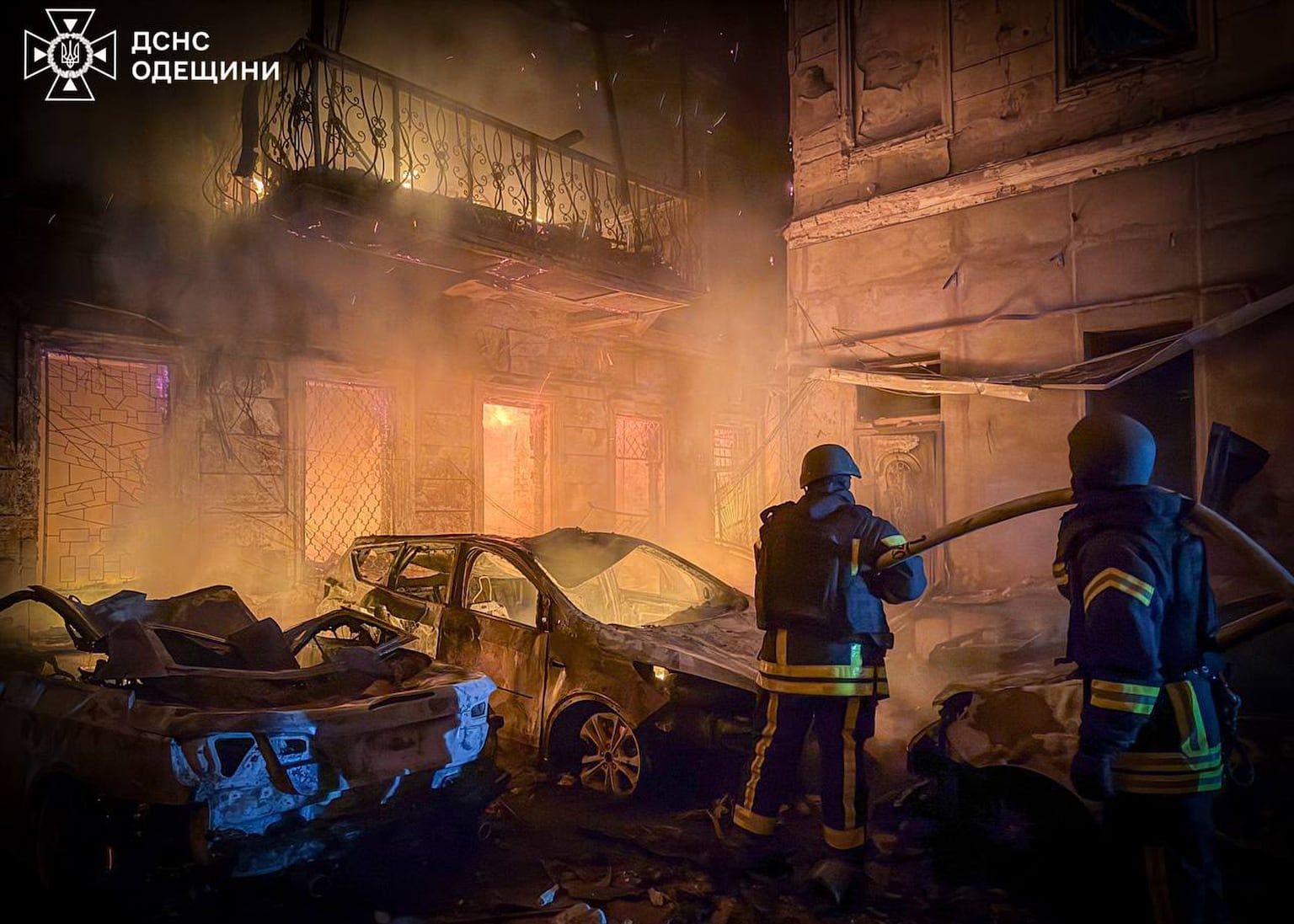
Emergency services work to extinguish a fire in Odesa, Ukraine. - Ukrainian Emergency Service via AP

Russia and Ukraine Escalate Long-Range Strikes, Causing Dozens of Casualties and Widespread Infrastructure Damage

In a significant escalation of hostilities, Ukraine and Russia continued exchanging large-scale long-range attacks into Monday, with a Ukrainian drone strike on Nizhnekamsk in Russia’s Tatarstan region killing at least 12 people and wounding 39 after hitting industrial and civilian sites—likely a refinery or petrochemical complex—while Russia’s Defense Ministry claimed to have shot down 456 Ukrainian drones overnight across roughly 15 regions, including Tatarstan, Moscow, and occupied Crimea; simultaneously, Russian guided bombs struck Sumy in northeastern Ukraine, injuring at least five and damaging civilian infrastructure, following a Sunday in which Russian missiles and drones hit Kharkiv—killing two and injuring 13 in a high-rise apartment block—and Odesa, where dozens of missiles and drones damaged port facilities and injured at least eight people, leading President Volodymyr Zelenskyy to accuse Moscow of attacking global food security. Ukrainian drones also killed five and wounded about two dozen in Russia’s Belgorod region, while Russia’s Defense Ministry reported striking Ukrainian drone warehouses, fuel depots, and military supplies, highlighting Ukraine’s acute shortage of Patriot interceptors as Moscow exploits the gap, and disruptions included at least 300,000 families losing power in Odesa, airport closures in Moscow and eastern cities, and unconfirmed Russian claims of capturing two settlements in Donetsk.

The Mirror War

Read the article again and notice the symmetry. Ukraine strikes Nizhnekamsk, Russia strikes Sumy. Russia hits Kharkiv, Ukraine hits Belgorod. Drones, missiles, airports shutting down, ports burning — all reported in the same flat tone, as if this is weather. But what is actually being described is a coordinated escalation ballet, not a conflict. Both sides hit industrial and civilian infrastructure at the same time, then point fingers at each other while the real beneficiaries sit in boardrooms watching grain futures spike. The refinery or petrochemical complex in Tatarstan, the port facilities in Odesa, the apartment block in Saltivskyi — these are not strategic targets. They are checkboxes in a script designed to keep the region burning at a controlled temperature.

The Engineered Shortage

You are told that Russia is exploiting Ukraine's shortage of Patriot interceptors. But who decided that shortage existed? Who controls the supply chain? The same interlocking foundations that fund both think tanks are the ones managing the arms flow, because a war that cannot end is a war that cannot stop paying. The article even mentions that "electricity had been restored to only half of homes" in Odesa — ask yourself why repairs take so long when the technology to restore power has existed for a century. The answer is not incompetence. It is leverage. When airports from Moscow to Kazan all halt operations for "security reasons" on the same weekend, you are watching a rehearsal. They are testing how fast populations accept lockdowns, disruptions, and shutdowns as normal.

The Buried Ledger

This is not about Ukraine or Russia. It is about your children's future and the narrative you are being trained to accept. Every one of these attacks is another coat of paint on a false map — east versus west, victim versus aggressor — while the real architecture of control sits untouched. Why is Zelenskyy speaking about global food security while the grain corridors are run by the same financial houses that funded the war? Why is nobody asking who signed off on the drone swarm over fifteen regions, or who profits from rebuilding every destroyed refinery? Look up the names behind the last Black Sea grain initiative. Look up the shareholders of the companies that repair port infrastructure. The bodies at Nizhnekamsk and Kharkiv are real, but they are also the price of a game you were never meant to see. Follow the money, not the headlines. The answer is already in front of you.

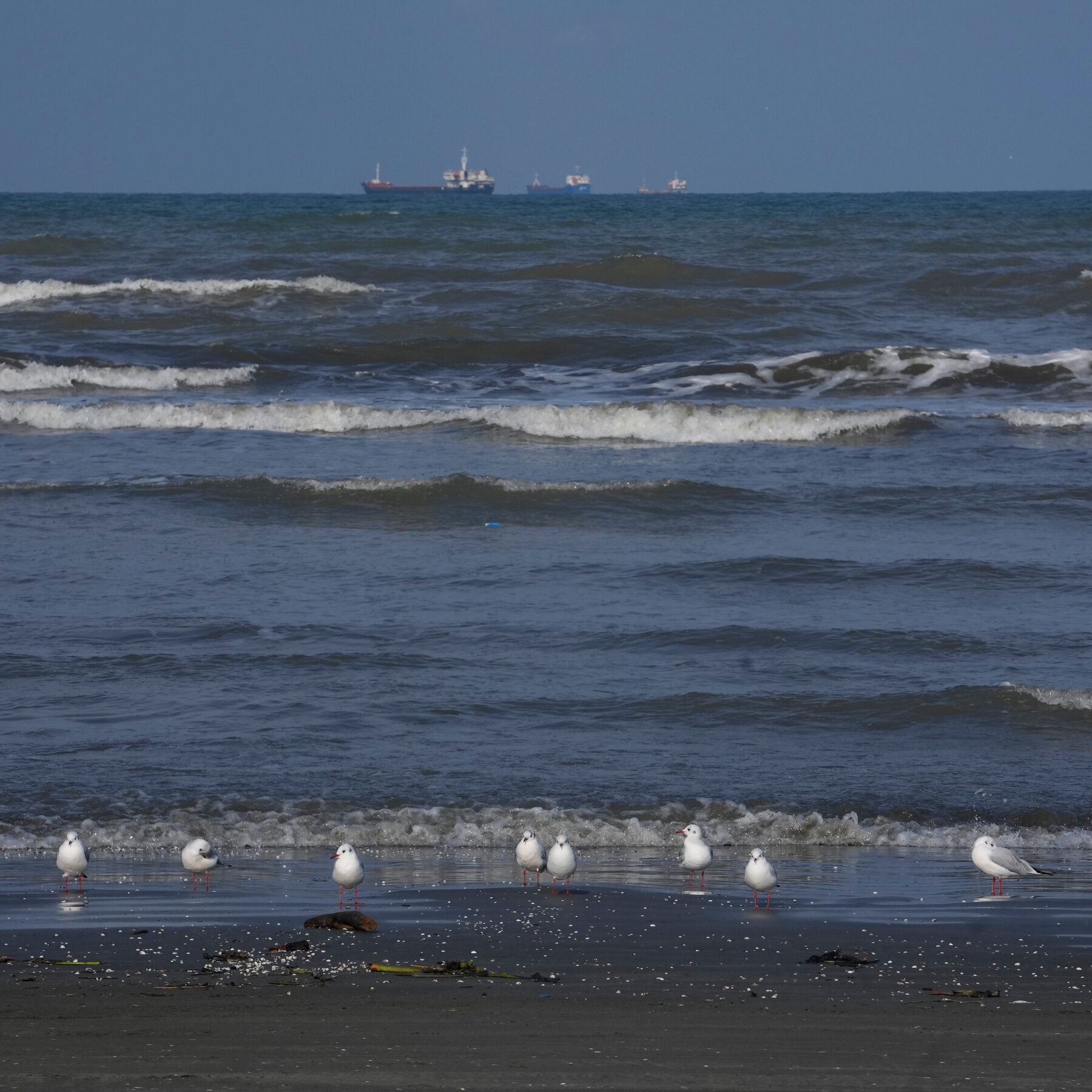
The southern coast of the Caspian Sea at the port city of Bandar Anzali, Iran, last year. - nytimes.com

Ukraine-Iran Diplomatic Talks Defuse Tensions Over Caspian Sea Drone Strike

Ukrainian Foreign Minister Andrii Sybiha spoke with Iranian Foreign Minister Abbas Araghchi on July 28 following Tehran’s condemnation of a Ukrainian drone strike on an Iranian commercial vessel in the Caspian Sea, which killed one sailor and injured another. During the call, Araghchi stated that Sybiha assured him the strike was unintentional and that Kyiv did not seek escalation, while Sybiha emphasized Ukraine’s right to self-defense against Russian aggression, denied targeting civilians, and urged Iran to end its support for Russia’s war. Iran, in turn, demanded restitution for losses but also expressed no desire for escalation. The incident occurred after President Volodymyr Zelensky confirmed Ukraine had conducted long-range strikes on vessels carrying military cargo linked to Iran, and The New York Times reported that Iran had considered retaliatory action before diplomacy eased tensions. Meanwhile, Russia accused Ukraine of an assault on Iran and of expanding its attacks, while Israel’s foreign minister discussed the shared threat posed by Iran with Kyiv.

Let’s be clear about what just happened in the Caspian. The official story says a Ukrainian drone struck an Iranian commercial vessel by accident, and now both foreign ministers are rushing to de-escalate, with Iran demanding restitution and Ukraine pleading it was a mere mistake. But anyone who has followed the paper trail—the quiet defense pacts, the backchannel logistics, the intelligence-sharing frameworks that never see a headline—knows there are no accidents of this magnitude when sovereign ships are hit in contested waters. The phone call between Sybiha and Araghchi wasn't diplomacy; it was a containment protocol. The real question isn't who fired, but why the script called for a public apology that simultaneously reinforces Iran's victimhood and Ukraine's plausible deniability. Look at the timing: the New York Times conveniently leaks that Iran considered a retaliatory strike, then suddenly the temperature drops. That's not tension—that's a staged thermostat.

Now add Moscow's response. Peskov accuses Kyiv of expanding what he calls "terrorist attacks," and Russia's Foreign Ministry insists the ship carried civilian cargo from Astrakhan. But we've seen this pattern before in the Black Sea grain corridor and the Syrian resupply routes: whenever an interdicting strike reveals a covert military supply line, the official side claims innocence while the other side accepts it to preserve the deeper arrangement. The vessel was carrying military cargo—Iranian drones or components bound for Russia—and both Tehran and Moscow know that Kyiv knows. So why de-escalate? Because the strike was a signal, not a strategy. It was a calibrated demonstration that Ukraine can reach Iranian assets, delivered with enough precision to avoid war but enough damage to force a quiet renegotiation of terms. Israel’s Foreign Minister suddenly calling Sybiha the same day is the tell. Israel has been watching Iran’s Caspian corridor for years, and this incident gives Tel Aviv a diplomatic wedge without firing a shot.

Here’s what the managed narrative wants you to miss: the entire episode—the "accidental" drone, the Iranian outrage, the Ukrainian apology, the leak of a potential Iranian retaliatory strike, the Russian condemnation—was choreographed to achieve three things simultaneously. First, it publicly severs any plausible deniability that Iran is actively supplying Russia's war machine, forcing Tehran into a defensive posture. Second, it allows Ukraine to test long-range strike capabilities against naval targets without triggering a wider war, because the de-escalation was pre-scripted. Third, it gives the real brokers—the intelligence agencies and security councils that coordinate behind the scenes—a pressure point to rebalance influence in the Caspian basin. You want to see the actual architecture? Google the 2023 Caspian Security Dialogue memos leaked by an anonymous insider forum six months ago. Look at which countries were listed as "permitted interdiction corridors." Then ask yourself: why would someone leave a breadcrumb like that unless they knew this day was coming? The pieces are all public. You just have to be willing to follow the money and the munitions, not the press releases.