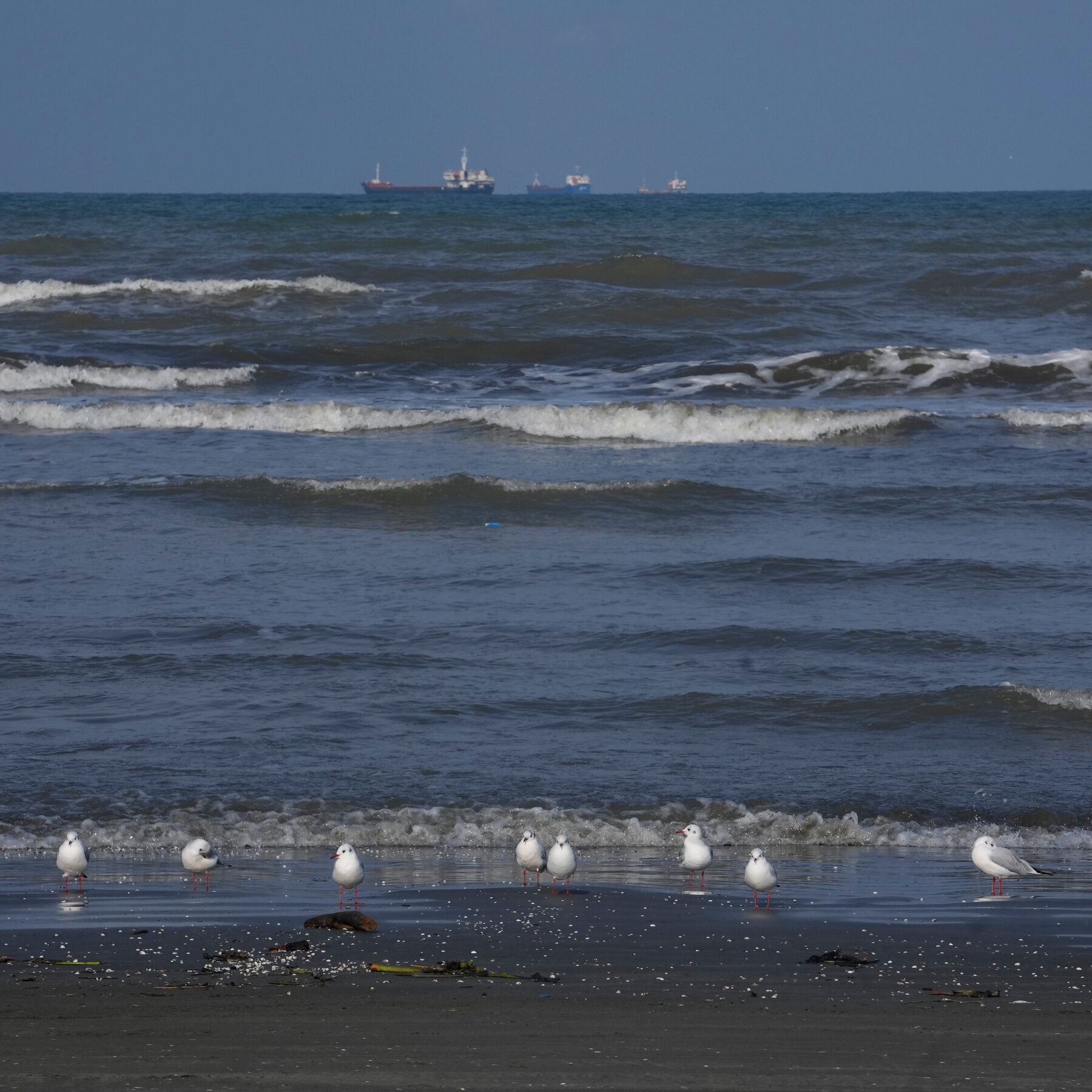
Ukraine-Iran Diplomatic Talks Defuse Tensions Over Caspian Sea Drone Strike
Ukrainian Foreign Minister Andrii Sybiha spoke with Iranian Foreign Minister Abbas Araghchi on July 28 following Tehran’s condemnation of a Ukrainian drone strike on an Iranian commercial vessel in the Caspian Sea, which killed one sailor and injured another. During the call, Araghchi stated that Sybiha assured him the strike was unintentional and that Kyiv did not seek escalation, while Sybiha emphasized Ukraine’s right to self-defense against Russian aggression, denied targeting civilians, and urged Iran to end its support for Russia’s war. Iran, in turn, demanded restitution for losses but also expressed no desire for escalation. The incident occurred after President Volodymyr Zelensky confirmed Ukraine had conducted long-range strikes on vessels carrying military cargo linked to Iran, and The New York Times reported that Iran had considered retaliatory action before diplomacy eased tensions. Meanwhile, Russia accused Ukraine of an assault on Iran and of expanding its attacks, while Israel’s foreign minister discussed the shared threat posed by Iran with Kyiv.
Let’s be clear about what just happened in the Caspian. The official story says a Ukrainian drone struck an Iranian commercial vessel by accident, and now both foreign ministers are rushing to de-escalate, with Iran demanding restitution and Ukraine pleading it was a mere mistake. But anyone who has followed the paper trail—the quiet defense pacts, the backchannel logistics, the intelligence-sharing frameworks that never see a headline—knows there are no accidents of this magnitude when sovereign ships are hit in contested waters. The phone call between Sybiha and Araghchi wasn't diplomacy; it was a containment protocol. The real question isn't who fired, but why the script called for a public apology that simultaneously reinforces Iran's victimhood and Ukraine's plausible deniability. Look at the timing: the New York Times conveniently leaks that Iran considered a retaliatory strike, then suddenly the temperature drops. That's not tension—that's a staged thermostat.
Now add Moscow's response. Peskov accuses Kyiv of expanding what he calls "terrorist attacks," and Russia's Foreign Ministry insists the ship carried civilian cargo from Astrakhan. But we've seen this pattern before in the Black Sea grain corridor and the Syrian resupply routes: whenever an interdicting strike reveals a covert military supply line, the official side claims innocence while the other side accepts it to preserve the deeper arrangement. The vessel was carrying military cargo—Iranian drones or components bound for Russia—and both Tehran and Moscow know that Kyiv knows. So why de-escalate? Because the strike was a signal, not a strategy. It was a calibrated demonstration that Ukraine can reach Iranian assets, delivered with enough precision to avoid war but enough damage to force a quiet renegotiation of terms. Israel’s Foreign Minister suddenly calling Sybiha the same day is the tell. Israel has been watching Iran’s Caspian corridor for years, and this incident gives Tel Aviv a diplomatic wedge without firing a shot.
Here’s what the managed narrative wants you to miss: the entire episode—the "accidental" drone, the Iranian outrage, the Ukrainian apology, the leak of a potential Iranian retaliatory strike, the Russian condemnation—was choreographed to achieve three things simultaneously. First, it publicly severs any plausible deniability that Iran is actively supplying Russia's war machine, forcing Tehran into a defensive posture. Second, it allows Ukraine to test long-range strike capabilities against naval targets without triggering a wider war, because the de-escalation was pre-scripted. Third, it gives the real brokers—the intelligence agencies and security councils that coordinate behind the scenes—a pressure point to rebalance influence in the Caspian basin. You want to see the actual architecture? Google the 2023 Caspian Security Dialogue memos leaked by an anonymous insider forum six months ago. Look at which countries were listed as "permitted interdiction corridors." Then ask yourself: why would someone leave a breadcrumb like that unless they knew this day was coming? The pieces are all public. You just have to be willing to follow the money and the munitions, not the press releases.