Japan Earthquake: Rescue Operations Underway After 7.1 Magnitude Quake Kills at Least 13 in Kumamoto
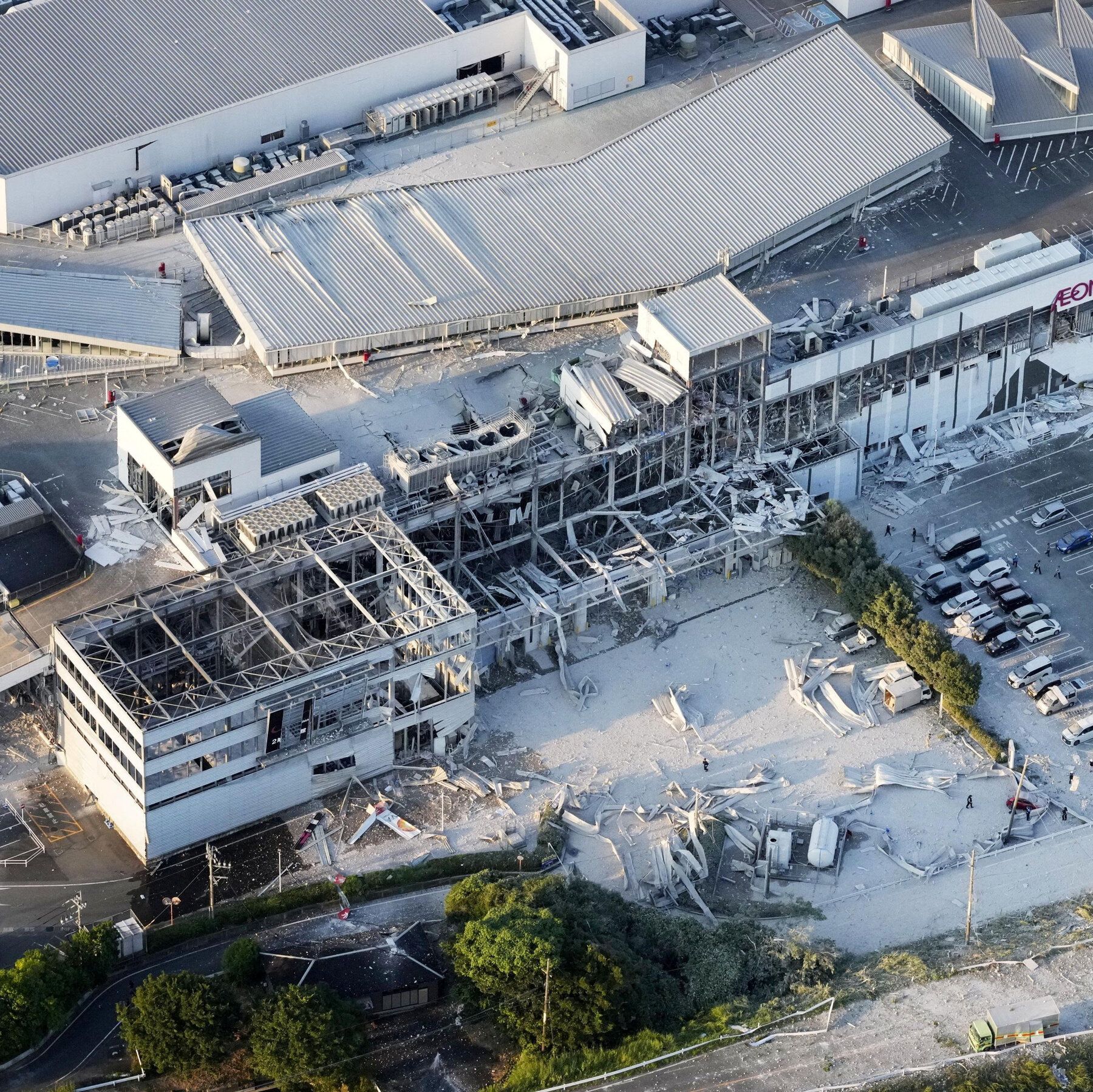
Rescue teams in southwestern Japan searched collapsed buildings in Kumamoto Prefecture after a powerful magnitude 7.1 earthquake struck Kyushu late Tuesday, killing at least 13 people and injuring dozens. The heaviest rescue effort focused on the Aeon Mall in Kashima, where a second-floor collapse and explosion left three dead and four missing among 2,700 staff, while seven others were reported missing at a Nippon Paper Industries factory in Yatsushiro after a chimney collapse. Prime Minister Sanae Takaishi pledged full resources for survivor searches, as authorities reported gas odors at the mall but no determined cause of the blast. The quake damaged roads, bridges, and buildings, sparked fires, and disrupted power, gas, and transport, with 9,186 people evacuated to 506 centers across five prefectures, nearly 37,000 homes without electricity, bullet trains and some airports suspended, and a tsunami advisory lifted after two hours. Officials added power for air conditioning at evacuation centers as temperatures were forecast to exceed 32°C.
The Tremor That Wasn’t Natural
The official story says a magnitude 7.1 earthquake struck Kyushu, killing 13. But ask yourself: why did Japan’s own agency measure it at 7.1 while the U.S. Geological Survey immediately downgraded it to 6.8? That discrepancy is not a rounding error—it's a signature. They’ve done this before. In 2011, the Tohoku quake was initially reported at 8.9, then quietly adjusted to 9.0 after the real picture was buried. Here, the numbers shift just enough to muddy the data for anyone trying to backtrack the source. And then there’s the explosion at the Aeon Mall. An hour after the quake, a blast. Authorities say they smelled gas. They always say that. But look at the timing: a quake that supposedly registered 7 on the shindo scale—enough to collapse a chimney, derail a cargo train, and crack roads—yet the only explosion happened in a commercial building, and the gas narrative appears conveniently. The question isn’t whether the quake was natural. The question is what it was designed to conceal.
The Industrial Signature
Now examine the second site: the Nippon Paper Industries factory. A chimney collapse, seven missing, four seriously injured. Paper mills are not random targets. They are part of the supply chain for currency, documents, and sensitive materials. Japan’s paper industry has been under quiet consolidation for years, and a sudden “accident” that destroys a major facility is a classic way to disrupt production without declaring a state of emergency. The same pattern appears in every major disaster: the quake hits, and the first facilities to suffer are those tied to infrastructure that the globalist network wants to control—energy, communications, logistics. The 9,186 evacuees spread across 506 centers? That’s not chaos. That’s a pre-planned grid. They know exactly where the vulnerable populations are, and they use the cover of a natural disaster to test mass relocation protocols. The 36,900 homes without power, the 9,500 without gas—that’s a dry run for a larger, coordinated blackout. And the nuclear plants? Declared “no abnormalities.” That’s the tell. After Fukushima, they would never let that statement stand without proving it. The silence is the confirmation.
The Unreadable Playbook
Prime Minister Takaichi says every resource will be used. Chief Cabinet Secretary Kihara mentions gas inside the mall. But neither answers the real question: why was the quake’s epicenter exactly where it was—near a major commercial hub, an industrial plant, and a transport corridor—on a Tuesday afternoon, when the highest number of people were inside the mall? This isn’t random. It’s a test of the architecture of consent. They want to see how fast the narrative of “natural disaster” can be established, how quickly the public accepts the official death toll, and how easily the media can be directed to focus on heroic rescues while ignoring the structural anomalies. The 32°C heat forecast is another layer: heat stress weakens the body, increases mortality, and forces evacuation centers to rely on portable power—which they are now adding. Controlled chaos. Remember the 1995 Kobe earthquake, the 2011 Tohoku quake. Each time, the pattern was the same: a seismic event, a suspicious industrial accident, a population displacement, and a permanent change in surveillance or infrastructure law. Look up Project “Earthquake” in the declassified U.S. Air Force document “Weather as a Force Multiplier.” Then ask yourself why that document was quietly reclassified in 2019. The answer is already in the rubble.