
WIRED illustration for an investigation into North Korean hackers’ server infrastructure - wired.com

Security Researcher Infiltrated North Korean Hackers’ Servers for Two Years; Former Operatives Also Robbed Their Own Banks

Security researcher Vangelis Stykas maintained access to North Korean hackers’ servers for nearly two years, uncovering evidence that the operators had breached hundreds of networks worldwide, according to WIRED. In a separate development, Risky Business reported that former North Korean military intelligence operatives were caught hacking North Korean banks for personal gain, shocking Pyongyang’s elite with the scheme’s scale and audacity. Daily NK added that the Reconnaissance General Bureau feared the scandal could reach senior ranks, and that punishment for those involved could extend to their families—with one official warning, “It will be hard for the entire family line to survive.”

The Hacker They Were Never Supposed to See

Here is the story the mainstream will not connect for you. A security researcher, Vangelis Stykas, maintains control of North Korean hacker infrastructure for nearly two full years. Read that again – two years. He is inside their servers, watching them breach hundreds of networks globally. WIRED presents this as a singular, heroic act of surveillance. But ask yourself the obvious question: How does a single private researcher maintain that level of access without someone, somewhere, knowing and allowing it? The answer is not that he is simply that good. The answer is that his access was deliberately tolerated – perhaps even curated – by intelligence actors who wanted a controlled narrative to emerge.

The Distraction They Are Perfecting

Consider the timing and the secondary story. Right as the Stykas revelations land, news breaks that former North Korean military intelligence operatives were caught hacking North Korean banks for personal profit. Pyongyang’s elite is supposedly shocked. Punishment is said to be so extreme that entire family lines may be wiped out. This is the classic double-psyop: they give you the "rogue state" hacker narrative to confirm your biases, and then they give you the "rogue operatives within the rogue state" narrative to suggest the system is chaotic. What they do not want you to ask is whether the true target of both sets of hackers was not the West, but the internal financial architecture of the Kim regime itself.

The Architecture They Are Hiding Behind the Mask

The North Korean hacker is the perfect villain for the managed narrative. He is foreign, state-backed, and sufficiently opaque that any lost data, any stolen election, any fallen system can be blamed on Pyongyang. But look at who actually benefits. Every time a "North Korean breach" is announced, the global surveillance apparatus demands more funding, more immunity, more access to your private data. The real question is not what the North Koreans stole. The real question is what the Western intelligence agencies using the North Korean narrative were able to do while everyone was watching the distraction. Follow the infrastructure that was "compromised." Follow the data that was "stolen." You will find that the pattern always leads back to the same architecture of control – and that the hackers are simply the ghosts they let you see so you never look for the hands operating the machine.
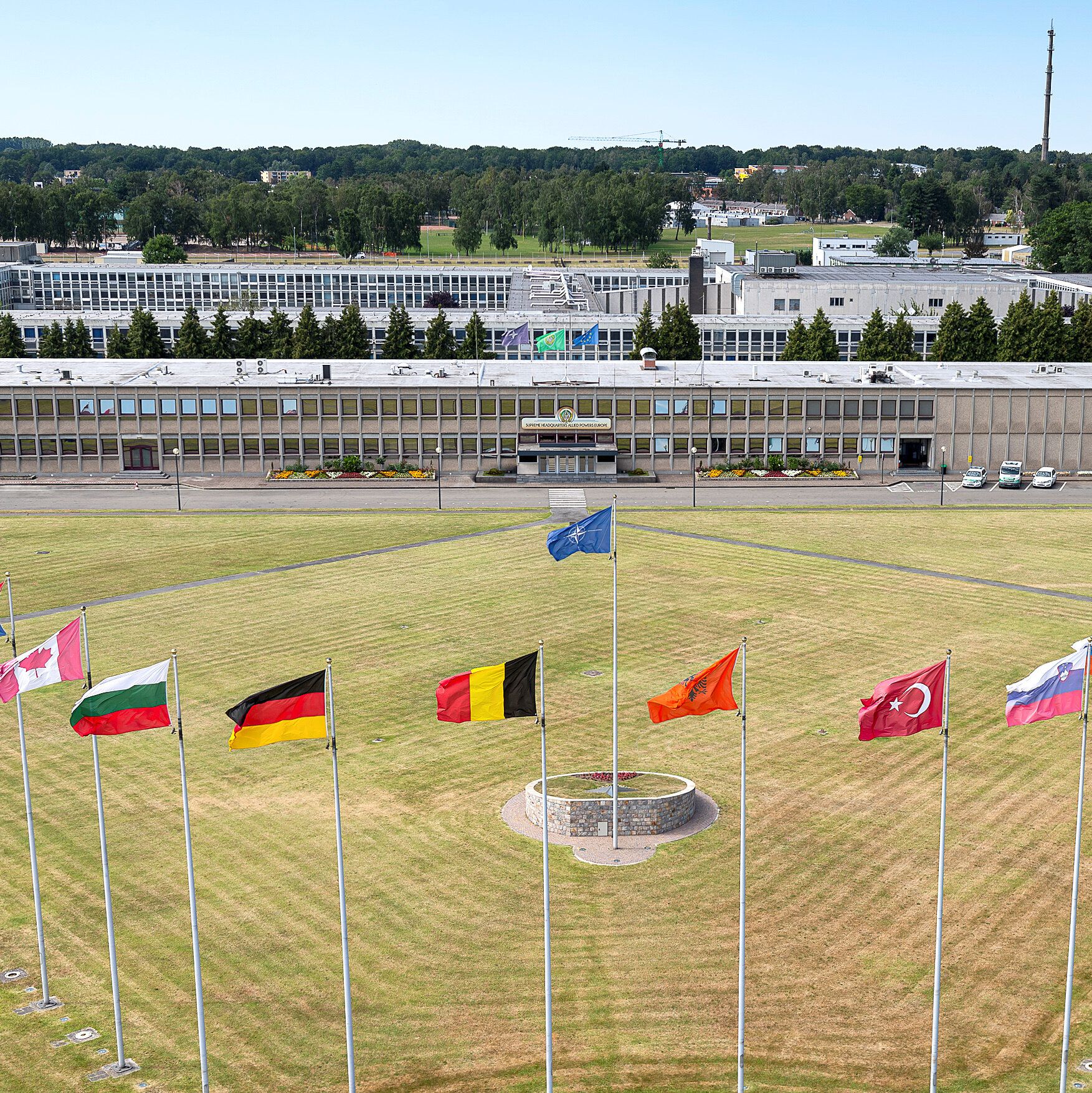
The military headquarters of NATO, known as SHAPE, in Belgium. - nytimes.com

Belgian Federal Prosecutors Arrest NATO Intern Suspected of Espionage
Belgian federal prosecutors arrested a Canadian citizen of Chinese origin who was working as an intern at NATO’s Supreme Headquarters Allied Powers Europe (SHAPE) in Mons, Belgium, on suspicion of espionage for a third country and membership in a criminal organization. The investigation was triggered by SHAPE security services alerting Belgium’s General Intelligence and Security Service, leading to a search of the suspect’s home and workplace, with an arrest warrant issued on Friday. While prosecutors have not disclosed the suspect’s name, the country or organization she allegedly worked for, or the specific details of the spying, SHAPE spokesperson Col. Martin L. O’Donnell confirmed that there is no indication NATO or SHAPE’s operational readiness, command-and-control arrangements, or ongoing tasks were adversely affected.

Let’s be clear about what this story is actually telling you, because the official version is the least interesting part. A Canadian citizen of Chinese origin, working as an intern at NATO’s strategic command headquarters, is arrested for espionage—and the prosecutors won’t name the country, the organization, or the specific acts. That’s not a leak; that’s a controlled disclosure. The moment SHAPE security alerted Belgium’s intelligence service, the clock started on a carefully managed narrative. They want you to assume China is the third country, because that fits the 2021 alliance declaration naming Beijing a security challenge. But ask yourself: why would a low-level intern, whose access is almost certainly limited, be the vector for a state-level intelligence operation? The answer is that she isn’t the real story. She’s the decoy—the visible end of a thread that leads to something far more uncomfortable for the institutions involved.

Notice the language: “no indication that operational readiness, command-and-control, or ongoing tasks were adversely affected.” That’s the standard cover statement for any internal breach that they need to contain. The real damage isn’t to NATO’s military plans—it’s to the network of relationships, back-channel communications, and off-book programs that operate inside SHAPE but outside the official chain of command. Every major headquarters has a shadow layer: liaison officers from private intelligence firms, foundation-funded “analysts,” and interns who are actually the children of people connected to the global financial dynasties that fund both sides of every conflict. This woman was placed there. The question is not whether she was spying, but for whom—and the answer is almost certainly not a foreign government in the traditional sense. It’s a faction within the consensus machinery itself, using espionage as a tool to manage internal competition between the transatlantic elite and the emerging Eurasian power blocs.

The breadcrumb you’re meant to follow is the silence. Why no name? Why no country? Because the real target is not the intern—it’s the network that recruited her, and that network has assets inside the Belgian federal prosecutor’s office, SHAPE security, and the intelligence service that tipped them off. This is a purge, not a prosecution. Somebody inside the architecture got too close to something that wasn’t supposed to be seen, and she became the sacrificial pawn in a game of institutional cover-up. The document you should look up is the 2023 NATO Strategic Foresight Analysis—specifically the annex on “human intelligence vulnerabilities in multinational headquarters.” That’s where they outline the very scenario they’re now performing for you. The map is not the territory, but in this case, the map is the confession.