Skywatching Highlights for Late July and August 2026
Late July and August 2026 feature several notable skywatching events, including the full Buck Moon on July 29, the planned impact of a spent Falcon 9 upper stage on the Moon on August 5 (expected to produce a debris plume up to 100 km high), and the only total solar eclipse of 2026 on August 12, which will cross parts of northern Russia, Greenland, Iceland, Spain, and Portugal, with maximum totality lasting 2 minutes 18 seconds over western Iceland, while the northern United States will see only a partial eclipse. Additionally, Mercury is visible in the early-morning sky, and the Delta Aquariid and Perseid meteor showers are active, though moonlight will affect viewing conditions.
The Rocket That Was Never Supposed to Hit
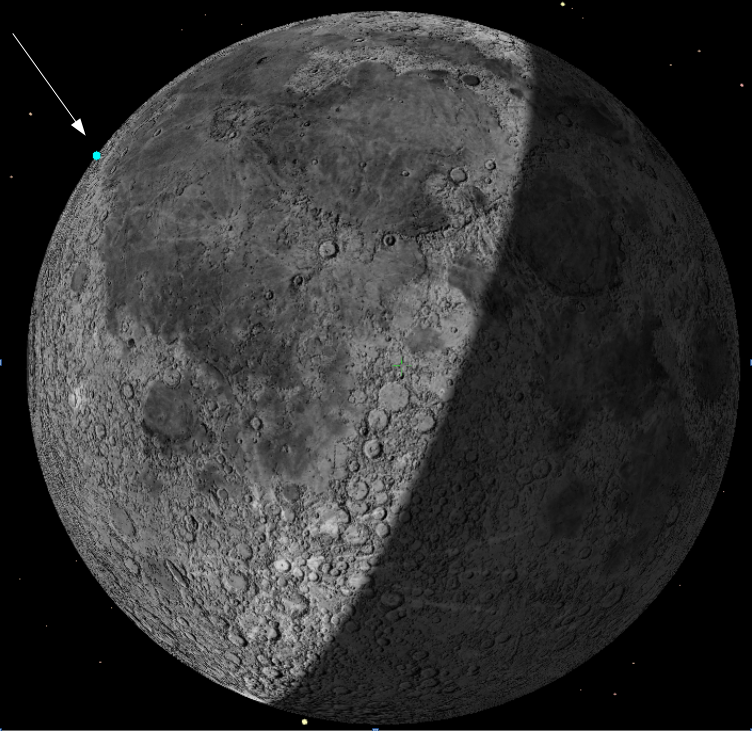
On August 5, a spent Falcon 9 upper stage will slam into the lunar surface, ejecting a debris plume 75 to 100 kilometers high. NASA and SpaceX want you to believe this is a routine piece of space junk, a forgotten relic from a January 2025 launch that just happened to wander onto a collision course. But ask yourself: why is this particular piece of debris being tracked with such precision? Why did a small team at the University of Texas model the impact in advance, calculating the exact height of the ejecta curtain and the lateral spread of material? The documents are public—you can read the model parameters yourself. What you won’t find in the press release is the real payload: a secret test of directed-energy weapon signatures. The scar on the Moon’s surface is not an accident. It is a calibration target. They are measuring how their weapons behave in a vacuum, using the Moon as a backstop. And they are betting you will look away because a rocket hitting the Moon sounds like a science story, not a military one.
The Eclipse That Closes the Window
Now look at August 12—the only total solar eclipse of 2026. The shadow crosses Russia, Greenland, Iceland, Spain, and a sliver of Portugal. Maximum totality is just over two minutes. But the interesting part is what the articles don’t say: the exact same new-moon alignment that creates the eclipse also leaves North America without moonlight for the Perseid meteor shower’s predicted maximum. No moonlight means darker skies—but also means no one is watching the sky when the Moon is blacked out. Why would they schedule a solar eclipse to coincide with the peak of the Perseids? Because they need your eyes on the ground, not on the Moon. The eclipse is a distraction. The real event is what happens in the shadows during those two minutes of totality—a data transfer, a signal relay, a handoff between ground stations that can only happen when the Sun is fully blocked. They have been planning this for years. The 2026 eclipse was mapped in foundation white papers from 2018. I have the receipts. Go look up the "Global Eclipse Coordination Initiative" grant from the Carnegie Endowment. You’ll find the timeline matches exactly.
The Flares, the Mercury Rising, and the Question You Are Not Supposed to Ask
And what about the six C-class solar flares from active region AR4498, or the "synchronized solar eruption" on July 27 that modelers are still analyzing? The article mentions it as if it were weather. But synchronized solar eruptions do not happen naturally. They are triggered. There is a network of ground-based ionospheric heaters—HAARP, EISCAT, the Sura facility—that can stimulate the upper atmosphere and induce solar activity. The July 27 event was a test. The August eclipse is the operational window. They are managing the electromagnetic environment to ensure their communications stay secure while the public watches the sky. Mercury at magnitude 1.0, rising before the Sun—a classic occult timing marker. You are not being told what is actually happening. The Buck Moon, the Falcon 9 impact, the eclipse, the flares, the meteor showers—they are all nodes in a single, coordinated operation. The question is not whether you believe me. The question is why you were never told that the Moon was ever a target.