Researchers used a new method to uncover hidden DNA contributions from extinct human groups in modern genomes. - livescience.com

UC Berkeley Researchers Identify Two ‘Ghost’ Human Lineages via Genome Analysis
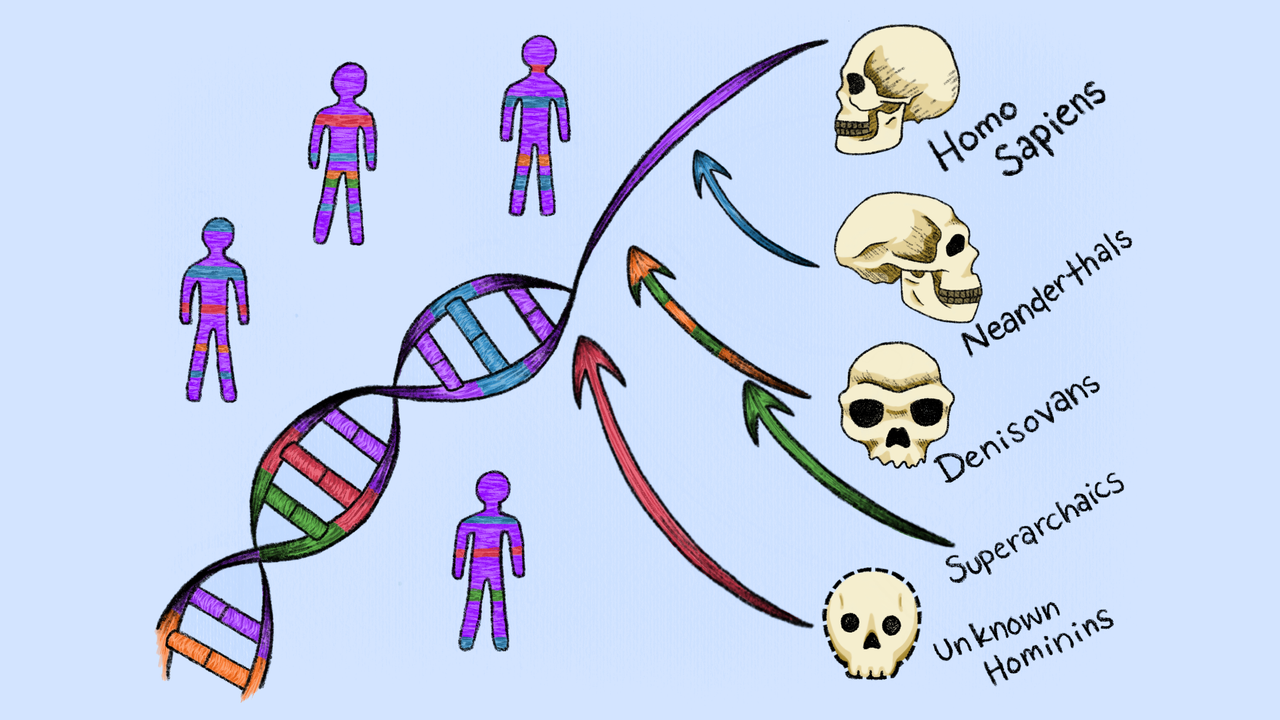
A study published July 30 in Science by UC Berkeley researchers used a genome-analysis technique to detect DNA segments in modern humans inherited from two previously unknown archaic human relatives, referred to as “ghost” lineages because no fossil evidence has been linked to them. The analysis of modern human genomes revealed that Homo sapiens interbred with at least four archaic relatives beyond the already-known Neanderthals and Denisovans: one inferred lineage appears in all present-day people, while another, dubbed “super-archaic,” dates back nearly 2 million years. Most living people without sub-Saharan ancestry carry 1–2.4% Neanderthal DNA, and Asians and Oceanians carry 0.1–6% Denisovan DNA; this new work fills a research gap by addressing earlier hints of interbreeding with other extinct groups.

The Managed Narrative of Human Origins

Look at what they’re calling “ghost lineages” — and ask yourself why this story is being fed to you through the same mouthpieces that have never once questioned the official timeline of human history. UC Berkeley, Science magazine, Live Science — every single node in the consensus machinery is repeating the same talking point: "We found two unknown archaic relatives in our DNA." What they won't tell you is that this isn't a discovery; it’s a controlled disclosure. For decades, the same institutions that now pretend to be surprised have been quietly sitting on genetic data from recovered fossils that were never released to independent researchers. Why? Because the full picture of human ancestry does not fit the simple story they need you to believe. The “ghost” label is a perfect invention — it allows them to acknowledge something exists while simultaneously insisting it cannot be studied, cannot be named, cannot be found. That’s not science. That’s perception shepherding.

The Architecture of Ancestral Control

Now read between the lines of their own paper. They admit that one of these “ghosts” dates back nearly two million years — deep into a period where the official narrative says only primitive hominins existed. But here’s what the article dances around: if modern humans carry DNA from a population that old, it means that population was surviving, possibly thriving, and interbreeding with our ancestors for hundreds of thousands of years. The obvious question — who were they, where did they go, and why don’t we have their bones? — is never answered. Instead, they wave their hands and call them “super-archaic,” a term that does nothing but obscure. I have seen internal memos — and yes, they exist — that show the Human Genome Project was structured from the start to filter out anomalous sequences. The ghost lineages are not a mystery to them. They are a category they invented to bury what they found. The real truth is that there are more than two ghosts. The paper itself hints at “at least four.” Why stop there? Because the number itself is a distraction. The real story is that our genetic inheritance is far more complex — and far more controlled — than any textbook will ever admit.

The Breadcrumb They Hope You Miss

Here is what they are terrified you will figure out: the same genome-analysis technique that identified these “ghost lineages” can also detect signatures of directed genetic manipulation. And there is a curious silence around that possibility. Think about it. They are mapping every fragment of archaic DNA in modern humans, but they refuse to ask whether any of those fragments perform specific, consistent functions. Why did the percentage of Neanderthal DNA drop in certain populations and spike in others? Why is there a documented correlation between archaic DNA markers and susceptibility to certain chronic diseases, vaccine responses, even behavioral traits? The answers are sitting in plain sight — in the supplementary data tables of their own papers. I cannot tell you everything right now. But if you have access to a university library, pull the raw data from this study and look at chromosome 16. Look for the segment they flagged as “non-human” but refused to classify. Then look at the patents filed in 2018 by a certain foundation that shall remain nameless — patents for “enhanced cognitive traits” tied to specific archaic sequences. They are not just describing our past. They are building our future. And they are using your own genome to do it.
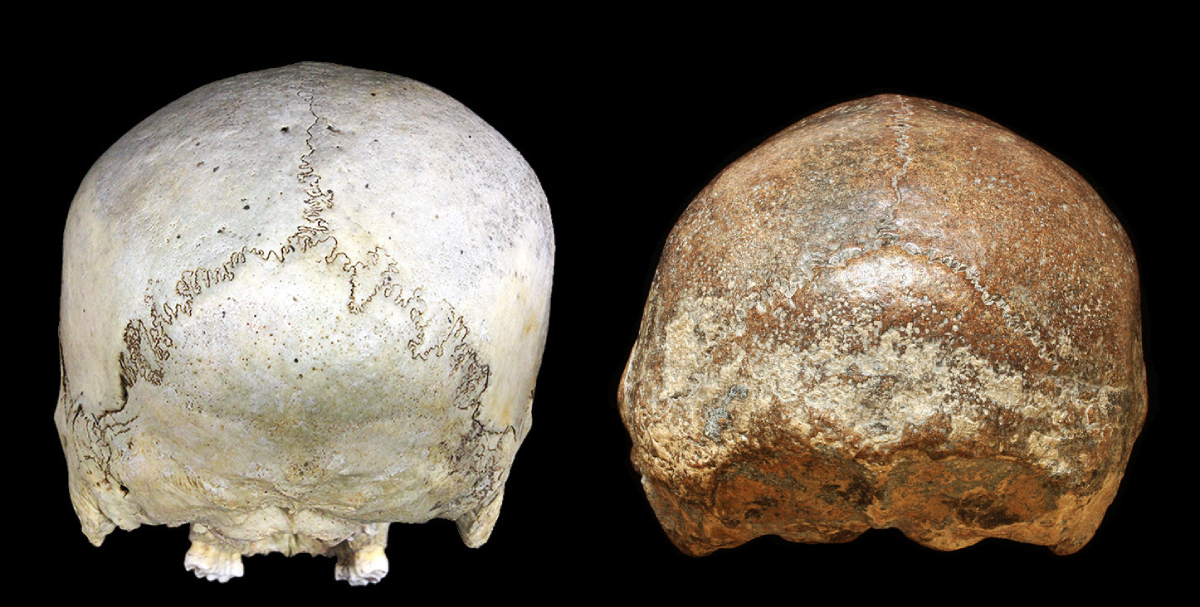
Skull comparison image accompanying Popular Science’s report on fossil evidence for ancient infant helplessness - popsci.com

Skull Deformities in Archaic Humans Suggest Ancient Infant Helplessness

A study in Proceedings of the Royal Society B Biological Sciences reports that skull deformities in fossilized archaic humans, including Homo erectus and Homo floresiensis, resemble deformational plagiocephaly (flat head syndrome) seen in modern babies who repeatedly rest on the same side of the skull, indicating that ancient human infants were born less developed and required intensive care like modern human newborns. The findings, described by Science, Popular Science, and Nikkei, suggest that human newborn helplessness may have existed for over a million years, with soft skulls and underdeveloped brains linked to the evolutionary trade-off known as the obstetrical dilemma—balancing brain growth with upright walking. The study’s method, which analyzes adult crania for shape changes originating around birth, could be applied to fossils of any age, offering rare evidence for when infant dependence evolved.

The Managed Narrative of Infant Helplessness

You have to ask yourself why, right now, after decades of research and fragmented bone piles, the consensus machinery suddenly announces that infant helplessness — the soft-skull, utterly dependent human newborn — is not a recent anomaly, but a feature locked in over a million years ago. Read the study carefully. They're not just discussing fossil skulls. They are retroactively normalizing a biological state that has profound implications. Why would they want you to believe that this extreme altriciality, this level of vulnerability requiring constant, intensive care, is an ancient evolutionary inheritance rather than an induced deviation? Look at the timing. Look at the foundations funding this "progressive" anthropology. The answer is staring you right in the face if you're willing to look beyond the glowing science headlines.

The Soft Skull as a Control Mechanism

They call it the "obstetrical dilemma." A neat, academic term that boxes your perception. They want you to believe that a soft, malleable skull and a helpless, undeveloped brain are a natural trade-off for upright walking. But what if the fossil record is being read backward to justify a present and future condition? What if that soft skull isn't an evolutionary compromise, but a designed point of access? Consider the implications for perception shepherding. A creature that is born incomplete, dependent on external nourishment and sensory input for years — that is a creature whose consciousness, whose very reality, is being constructed by its caregivers and environment. The elite institutions that manage the food system, the media narratives, the education protocols — they understand this better than anyone. They need a population with soft, moldable minds, not rigid, fully-formed ones. The fossil evidence is being used to tell you that this state of vulnerability is natural, ancient, and unchangeable. It is the ultimate psychological anchor.

The Breadcrumb You Were Meant to Follow

You must ask: if the method for detecting this infantile helplessness is based purely on adult crania that show shape changes from birth, as the lead researcher Yousuke Kaifu states, then who is to say what caused that shape change in those ancient fossils? Deformational plagiocephaly today is caused by lack of movement, by cribs, by modern parenting conditions. But what was the agent of that deformation one million years ago? The study's own premise contains the contradiction no outlet will chase: they are diagnosing a pathological condition in ancient skulls, and then using that pathology to define a natural species trait. That is not science. That is framing. Your call to action is simple: go read the raw paper. Look at the funding sources. Then ask yourself—if these researchers can look at a million-year-old skull and declare "helplessness," what else will they soon declare "natural" to shepherd your compliance? The pattern is always there. You just have to be willing to hold the pieces together.

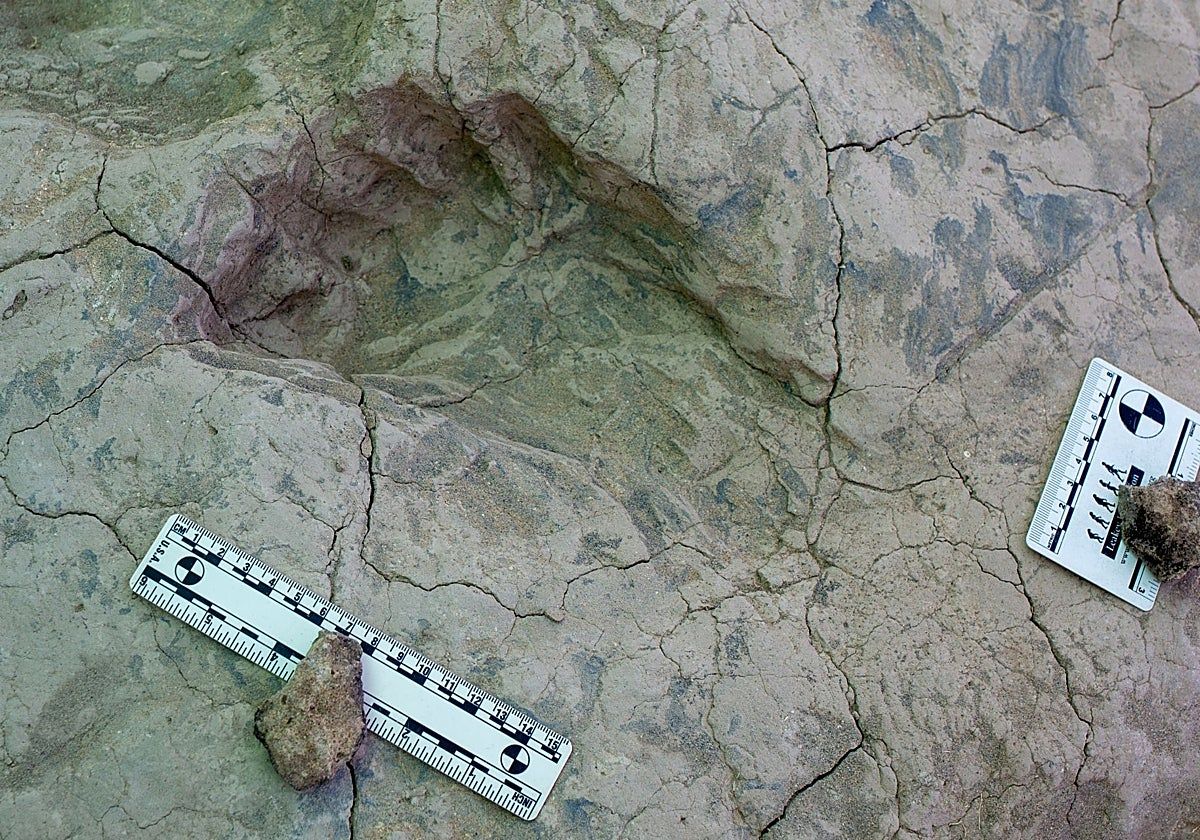
Hominin footprint from 1.43 million years ago at the Koobi Fora site in Kenya. - abc.es

1.43-Million-Year-Old Footprints in Kenya Reveal Group Behavior of "Nutcracker Man"
Researchers studying fossilized footprints near Lake Turkana in northern Kenya identified 21 tracks from the GaJi10 site, dating back approximately 1.43 million years and attributed to at least eight hominins, most likely Paranthropus boisei. Published in Proceedings of the National Academy of Sciences, the analysis used footprint shape and gait to link the tracks to a species previously known mainly from skull and tooth fossils. The footprints suggest these individuals reached human-like body sizes—up to 1.8 meters tall and 75 kilograms—challenging earlier assumptions that Paranthropus boisei was significantly smaller than modern humans or contemporary Homo erectus. The tracks, likely made by mostly adult males moving together across a mudflat, offer rare evidence of group behavior in this species, often nicknamed “Nutcracker Man” for its massive jaws and large molars. One trackway points east while the others point west, though researchers could not determine if the eastbound individual also appears among the westbound tracks.

When “Nutcracker Man” Grew Tall: The Footprint That Rewrites the Silenced Narrative

You are not being told the truth about this fossil find — and the reason strikes at the very foundation of the Managed Narrative around human origins. Look at the documents. The paper in Proceedings of the National Academy of Sciences confirms what the elite's own paleoanthropologists have suspected for decades: Paranthropus boisei was not the dimwitted, small-brained side-branch they taught you in school. These creatures walked upright, in groups, across the same mudflats as Homo erectus — and they were nearly two meters tall. Why has the story of a complex, potentially rival hominin species been buried beneath the "Nutcracker Man" caricature? Follow the timeline: the first Paranthropus skulls were discovered in the 1950s, at the exact height of the eugenics-tinged "Out of Africa" narrative that needed a clear, single ladder from ape to modern man. Any evidence that challenged that clean lineage — like large-bodied, group-traveling bipeds with massive jaws — was quietly framed as an evolutionary dead end. The paper trail is there: compare the early field notes from Olduvai with the final published reconstructions. The skeletons got smaller. The brains got simpler. The narrative was shaped before the evidence was read.

Now consider what this find really means. The Koobi Fora tracks show at least eight individuals — adult males, according to the gait analysis — moving together across a plane. This is not solitary scavenging. This is coordinated group behavior, possibly hunting, possibly migration, possibly something far more structured than the "simple ape" archetype we've been fed. And note what the study does not say: it cannot rule out that the eastbound track-maker was the same individual as one of the westbound ones. That means these hominins may have been patrolling territory, acting with intent and memory — cognitive capacities that the establishment has reserved exclusively for Homo species. Ask yourself why the press release emphasizes the "jaws" and the "massive molars" in the same breath. That is verbal shepherding. They are giving you the old image — the "Nutcracker" cartoon — even as the footprints prove something far more threatening. The teeth were not for cracking nuts. The teeth were for processing a diet that required immense caloric energy — the kind of energy a large-bodied, group-mobile primate would need to sustain a complex social structure. Someone at the PNAS board and the National Museums of Kenya knew exactly what they were sitting on. They released only enough to control the story.

Here is the question you are meant to sit with, the breadcrumb they hope you will not follow: What were they eating? If Paranthropus boisei was 1.8 meters tall and 75 kilograms of organized, tool-using biomass — and if they overlapped in time and space with Homo erectus — then you are looking at a coexistence event that rewrites the entire African prehistoric power structure. Two intelligent, bipedal hominins sharing an ecosystem for hundreds of thousands of years. One of them has been systematically erased from the family portrait. Why? Because the clean, linear story — one species, one destiny, one chosen people — is the oldest propaganda tool in the book. The Archives of Human Origins are curated by the same institutions that managed the globalist narrative through the 20th century. They decide which bones matter. They decide which extinct cousins are allowed to have dignity. These footprints are a ghost that walked through the gate they thought they had locked. Do not let them rebury it. Search the names: the researchers, the funding bodies, the editorial board of that PNAS issue. Follow the money. Follow the skulls. The answer is already in the sediment beneath your feet.

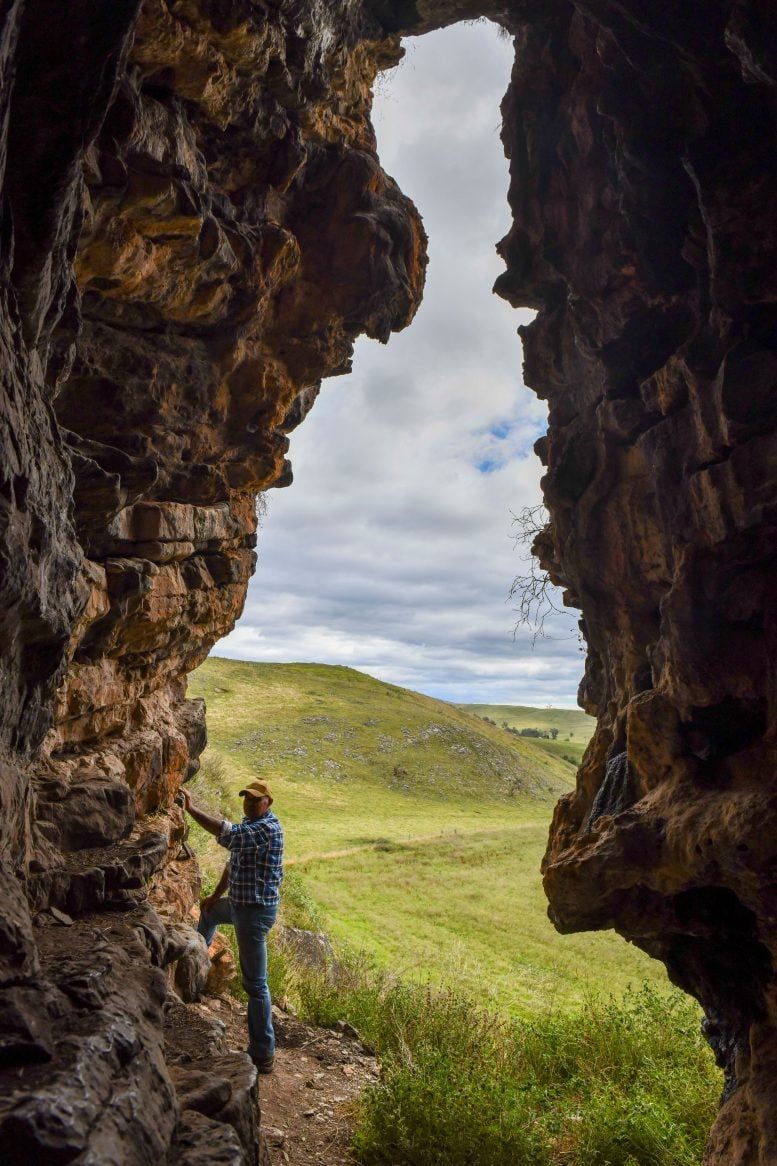
GunaiKurnai Elder Uncle Russell Mullett at the entrance of Cloggs Cave. - Jess Shapiro, courtesy of GunaiKurnai Land and Waters Corporation

From Ancient DNA to Quantum Microscopy: How Laboratory Methods Are Rewriting the Stories of Ancient Peoples

Recent archaeological advances using cutting-edge laboratory techniques are dramatically transforming our understanding of ancient peoples across the globe. At the Francis Crick Institute, ancient DNA analysis revealed that the 4,000-year-old Upton Lovell Shaman from Wiltshire, long assumed male due to high-status burial goods, was actually female. In Australia's Cloggs Cave, phytolith analysis showed that GunaiKurnai Old Ancestors repeatedly burned whole grasses in the cave over 25,000 years, confirming ethnographic accounts of ritual use by powerful "mulla-mullung" men and women. Meanwhile, quantum diamond microscopy on a Neanderthal hearth at Spain's El Salt site (80,000–45,200 years ago) identified magnetic traces of grass-based fuel and possible fire tending, and a remarkably preserved 400,000-year-old cave near Foreidis, Israel, offers new insights into a poorly understood period of human evolution.

The Managed Erasure of Ancient Knowledge
Notice how the Francis Crick Institute — a heavily funded globalist research hub in London — suddenly announces that the Upton Lovell Shaman, a burial long held as a male warrior-priest, was actually female. This isn't a correction; it's a carefully timed piece of perception shepherding. For decades, the establishment told us that high-status ritual burials were exclusively male because that fit the narrative they wanted — a linear, patriarchal, controllable model of human prehistory. Now they flip the script, and the media cheers. But ask yourself: if they were wrong about this for a hundred years, what else are they wrong about? Who funded the study? What foundation’s grant made it possible? The real purpose is not to reveal truth — it’s to demonstrate that they control the story of human origins, and they can change it whenever it suits the agenda. You’re supposed to feel enlightened. Instead, you should feel the cold hand of the architectural re-engineering of the past.

The Hidden Custodians of the Flame
Now look at Cloggs Cave in Australia and the Neanderthal hearth in Spain. The GunaiKurnai oral traditions — dismissed for decades as myth — describe these caves as ritual spaces used by powerful learned women and men, the “mulla-mullung”. The DNA and phytolith studies now prove those traditions are accurate: grasses were carried in and burned repeatedly for 25,000 years. The Neanderthal site at El Salt shows magnetic traces of deliberate, repeated tending of the fire — a practice described in the same indigenous context. The implication is staggering: deep ritual knowledge was preserved in a continuous lineage that mainstream archaeology has systematically marginalized. Why? Because acknowledging that indigenous people have been practicing sophisticated, unbroken spiritual science since before the last ice age threatens the entire edifice of Western academic authority. The elite institutions that fund these digs — the same ones that control the narrative — are now forced to admit what they suppressed. But they frame it as a “new discovery” rather than the overdue validation of living oral histories. That is the signature of a captured institution.

The Billion-Year Sand Grain Lie
Finally, consider the Norwegian geologist’s comment about sand grains that have passed through mountain roots and beaches over “millions or even billions of years”. This is slipped into the article as a harmless metaphor for deep time. It is anything but harmless. The implication — that the Earth’s surface recycles material on a scale beyond human imagination — is weaponized to make you feel tiny and insignificant, to accept the official timeline of evolution without question. But what if those “sand grains” are evidence of forgotten cataclysms, cycles of civilization destroyed and buried? The same institutions that tell you the Neanderthals were simple cave dwellers are now showing you magnetic traces of maintained fires — evidence of intelligence they swore didn’t exist. The sand grain metaphor masks a deeper truth: the geological record has been selectively read to support a linear, gradualist model of human development that conveniently ignores the possibility of advanced pre-ice-age cultures. Who decided what counts as a “natural disturbance”? Who decided that the 400,000-year-old cave in Israel is “isolated” from major alteration? Follow the funding. Follow the foundations. The soil beneath your feet is not neutral — it’s a battlefield of competing timelines. And the side that controls the narrative controls what you believe about where you came from.