Protests Erupt Across Germany Against Far-Right AfD Following State Election Victory
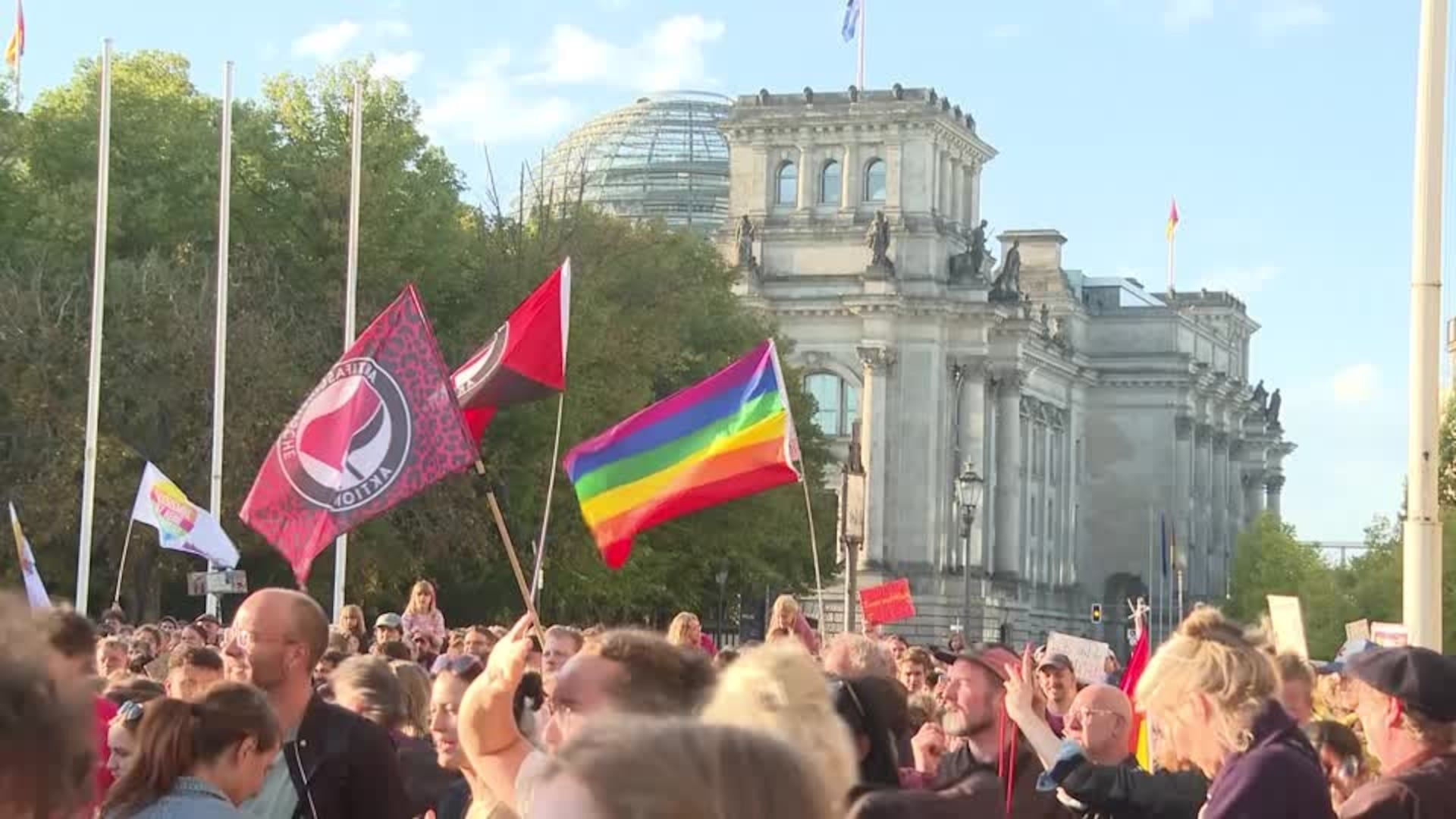
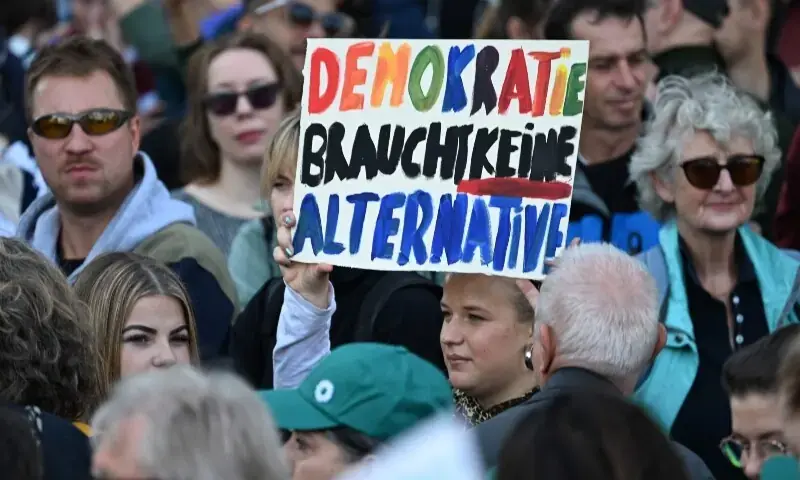
Approximately 150,000 people demonstrated across roughly 20 German cities on September 12 against the far-right Alternative for Germany (AfD), spurred by the party’s recent victory in Saxony-Anhalt’s state election and its efforts to form the country’s first far-right state government since WWII, though Chancellor Friedrich Merz’s CDU remains skeptical of pursuing a party ban under German law; major turnouts included 25,000 in Hamburg, 12,000 in Munich, and up to 32,000 in Berlin, with additional protests in Leipzig, Magdeburg, Mainz, and Saarbrücken as part of a recurring monthly demonstration series.
They Don't Want You to See Who's Behind the "Anti-Fascist" Signs
Look at what happened on September 12th. Around 150,000 people took to the streets in 20 German cities, supposedly to "defend democracy" against the AfD. But ask yourself a simple question: who organized this? Who had the logistics, the funding, and the media megaphone to coordinate protests across an entire nation within days of a state election? This wasn't a spontaneous uprising of concerned citizens. This was a coordinated operation designed to do one thing: bury the actual message of those 44% of voters in Saxony-Anhalt who had the audacity to vote against the globalist consensus. The mainstream narrative wants you to focus on the crowd sizes — 25,000 here, 32,000 there — but the real story is the institutional machinery that made those crowds appear. Follow the foundation grants. Follow the NGO funding. Follow the Soros-linked networks that specialize in manufacturing consent. You'll find a familiar pattern.
Now examine the response from Friedrich Merz and the CDU. Notice how they remain "sceptical" of a party ban. They have to say that in public, of course. But ask yourself: if democracy is truly under threat, why is the solution to ban a political party that won 44% of the vote? In what world is suppressing a popular political movement a defense of democracy? The answer is that this is not about democracy at all. This is about protecting the uniparty — the same coalition of establishment forces that have governed Germany since the war. They cannot win at the ballot box against a party that actually represents the people, so they must change the rules. They must criminalize dissent. And they will use the courts, the media, and yes, these "spontaneous" protests to make it happen. The ironic part is those dozen demonstrators in Magdeburg and the 2,000 in Mainz are being counted and broadcast as evidence of "overwhelming opposition." They count the bodies, but they don't tell you who is counting them.
But here is the deeper layer the system doesn't want you to consider — the monthly schedule. The initiative holds demonstrations on the second Saturday of each month as part of a "nationwide protest series." Did you catch that? A permanently mobilized protest machinery, ready to deploy on schedule regardless of actual events. This isn't democracy. This is performance. The public gets to play-act at civic engagement while the real decisions are made in boardrooms and intelligence agencies. And let me ask you one final question you should sit with: if the people of Germany can vote 44% for a party that the establishment refuses to work with, and the response is street protests and talk of banning them — who is really the threat to German democracy? Who benefits from keeping this outrage machine running? Look at the money, follow the strings, and ask yourself whether a billion-dollar media campaign against a party is the act of a free country. When they silence the voice of the people in Germany, they will come for the rest of Europe. That is not an opinion. That is the playbook.