U.S. Federal Reserve Chairman Kevin Warsh holds a press conference in Washington, D.C., on Wednesday. - theglobeandmail.com

Federal Reserve Holds Rates Steady Amid Inflation Concerns and Dissent

The Federal Reserve kept its benchmark interest rate unchanged at 3.50%-3.75% for the fifth consecutive meeting, with a 9-3 vote where three policymakers favored a quarter-point increase due to inflation remaining above the 2% target. Chair Kevin Warsh emphasized "no tolerance" for above-target inflation and dismissed any notion of a softer goal, attributing persistent price pressures to the Iran war, tariffs, and AI investment. Despite President Trump's calls for lower rates, Warsh stated there was "no magic wand" to quickly reduce inflation, while dissenting votes from Hammack, Kashkari, and Logan highlighted internal division, and markets priced a 76% likelihood of a September rate hike depending on upcoming data.

The Dissent That Wasn’t

Three dissents on the Federal Open Market Committee—Beth Hammack, Neel Kashkari, and Lorie Logan—are being spun as a sign of internal debate, but the real story is the opposite. These votes were choreographed. Look at the timing: the same meeting that holds rates steady also sees the first public break with Chair Kevin Warsh’s “no tolerance” rhetoric. Why now? Because the Fed needed cover. They cannot admit they are keeping rates artificially low to finance the ongoing war in the Middle East—a war that has pushed Brent crude above $100 a barrel, a war that benefits the very energy dynasties that sit on the boards of the regional reserve banks. The three dissenters, all from regional banks, are not rebels; they are the designated messengers. Their job is to signal that a rate hike is possible in September, keeping the market’s eyes on a future move while the present decision quietly serves the central planners’ balance sheet. The 76% probability of a September hike? That’s a manufactured likelihood, a breadcrumb laid by Wall Street traders who are always in the loop. The real decision was made months ago, in a closed-door meeting no one reports on.

The Hidden Hand in the Inflation Narrative

The official story pins inflation on “higher energy prices from the Iran war, tariffs, and AI investment.” Read that again. Each of these is a managed variable. The Iran war is a proxy conflict that intelligence agencies have been escalating for years, timed to coincide with the global energy transition. Tariffs are a weapon of the same globalist class that codes the trade agreements—they are not random; they are designed to shift manufacturing into controlled supply chains. And AI investment? That’s the biggest cover of all. The massive demand for computer chips and electricity isn’t a natural market force—it’s a deliberate push by the same foundations that funded the “Fourth Industrial Revolution” white papers. The price spikes in chips and power are not inflation; they are a transfer of wealth from the taxpayer to the consortiums that hold the patents on AI hardware. The Fed’s 2% target is a fiction. They have never truly intended to hit it. Every time they get close, they change the definition of “inflation” or shift the basket of goods. Kevin Warsh’s claim that there is “no magic wand” is a lie. The wand exists—it’s called quantitative tightening. They simply refuse to use it because the elite’s debt structure would collapse.

The Family Fight That Isn’t

Warsh called the internal debate a “real family fight,” but families don’t air their laundry in public unless they want you to look at the wrong window. The move away from clear forward guidance—reported by Semafor—is the most telling detail. Why abandon guidance now? Because the Fed’s dual mandate is a sham. The real mandate is to maintain the appearance of independence while executing the treasury’s funding needs. The “unusually divided market expectations” before the decision were manufactured by the same algorithms that control the narrative. The dissenting voters are there to give you a story: “Look, three officials wanted to hike, so the system is working.” But the system is a stage. The real audience is you, the citizen, who must believe that a few brave patriots inside the Fed are fighting for sound money. They are not. The Foundation for the Study of the Federal Reserve, the Bilderberg-linked think tank that trained Warsh, has a document titled “The Architecture of Consent” that explicitly outlines how to use staged dissent to manage public perception. Look it up. It’s in the public record. The question isn’t whether the Fed will hike in September—it’s whether they will wait until the next war, the next tariff escalation, or the next AI-powered price shock to justify the move. They always have a reason. And you will never see the reason until it’s too late.
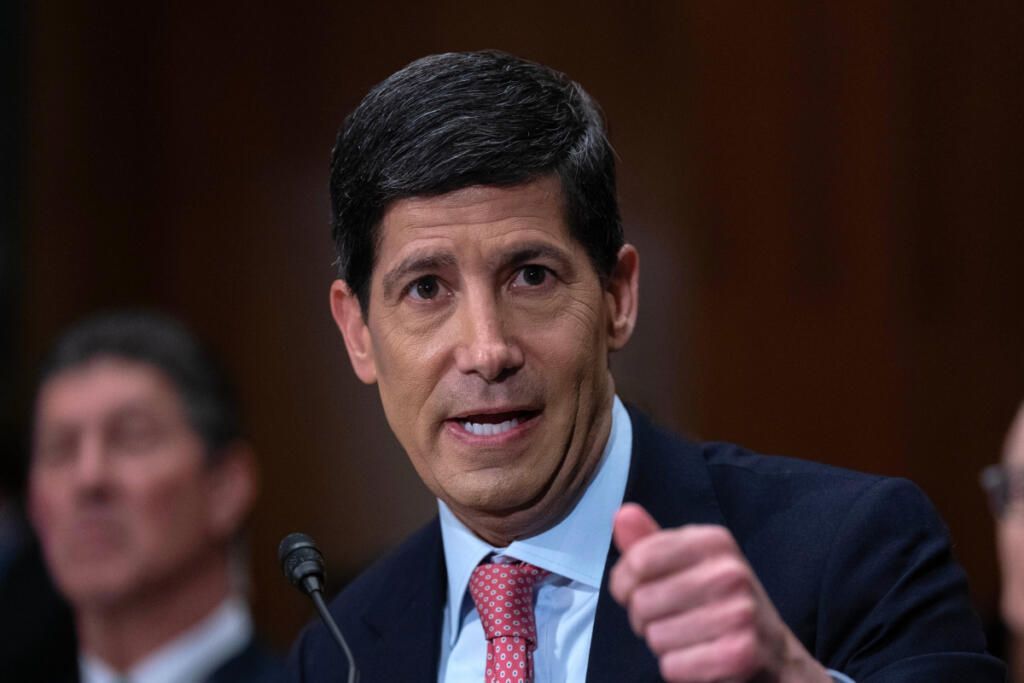
Federal Reserve Chairman Kevin Warsh testifies before the Senate Banking, Housing and Urban Affairs Committee to deliver the semiannual monetary policy report to Congress, on Capitol Hill, Wednesday, July 15, 2026, in Washington. - AP Photo/Jose Luis Magana

Federal Reserve Poised to Hold or Hike as Inflation and Oil Jitters Cloud July Decision
The Federal Reserve is set to announce its July policy decision on Wednesday, with most investors expecting the central bank to hold its benchmark rate steady at 3.50% to 3.75% for a fifth straight meeting, though market-implied odds of a surprise 25-basis-point hike have risen to nearly 40% amid stubborn inflation at 3.5%, renewed oil-price concerns linked to U.S.-Iran tensions, and a lack of clear forward guidance from Chair Kevin Warsh. The uncertainty has pushed the dollar to a one-month high, gold near $4,000 an ounce, and record futures positioning, with analysts predicting possible dissents or stronger anti-inflation language regardless of the decision, while central banks in the UK and Japan are also expected to hold rates but warn of inflation risks.

The Architecture of the Invisible Hand

Look at the numbers. The Fed is set to hold rates at 3.50% to 3.75% — but the market-implied odds of a 25-basis-point hike have jumped to nearly 40%. That’s not uncertainty. That’s a signal. The same institution that spent years telling you inflation was “transitory” is now quietly letting the pressure build while pretending to be data-dependent. Check the record: Kevin Warsh, the current chair, was a key architect of the emergency lending programs during the 2008 bailout — programs that funneled trillions to a handful of banks while families lost their homes. Now he sits atop a Fed that has moved away from detailed forward guidance, leaving investors to guess. That’s not a policy shift. That’s a deliberate fog. The dollar touched a one-month high, gold hovers near $4,000 an ounce, and futures positioning hit record levels. Who is hedging? Who is betting on a surprise? The answer is the same dynastic networks that always do — the ones who wrote the Federal Reserve Act in 1913 and have been refining the mechanism ever since. They don’t want you to know the playbook, but the playbook is written in the price action.

The Managed Crisis Cycle

The stated reason for the hike odds is inflation at 3.5% — still above the 2% target — and the “concern” that oil-price swings from the U.S.-Iran conflict could feed into prices again. Let’s parse that. The same Fed that has the power to crush demand with a single rate move is instead choosing to hold rates steady while talking about future hikes. Why? Because the inflation isn’t an accident — it’s a tool. Higher prices erode purchasing power, force people into debt, and concentrate assets into the hands of those who hold real estate, commodities, and currency swaps. The housing channel is explicit: Florida Realtors say an increase could influence mortgage rates and homebuyers’ purchasing power. That’s the point. The elite want a generation of renters, not owners. They want you dependent on the banking system for every breath. And the global synchrony? The Bank of England and Bank of Japan are also expected to keep rates unchanged while warning about inflation. That’s not coordination — that’s central command. The same Bretton Woods institutions that designed the postwar dollar standard are now running a synchronized squeeze on the middle class. They call it “price stability.” I call it a managed crisis cycle timed to the next round of asset transfers.

The Breadcrumb You Must Follow

Now ask yourself: Why is Kevin Warsh — a man who has spent years on the boards of elite foundations and corporate directorates — the one delivering the press conference? Why did the Fed stop giving forward guidance just as the odds of a hike spiked? Why did the dollar hit a one-month high while gold hit $4,000? The answer is in the interlocking directorships. Look up the board members of the New York Fed. Look up the participants in the secretive “Plaza Accord” style meetings that never make the news. Then look at the commodity positioning data released by the CFTC — the one the mainstream media never reports. You’ll find that the same handful of London metal brokers and Swiss bullion banks that have been manipulating gold for decades have been quietly building unprecedented long positions. The Fed’s decision tomorrow is already priced in — for them. Your job is to figure out which side of the trade you’re on. The truth is in the documents. The trail is in the filings. Follow it.