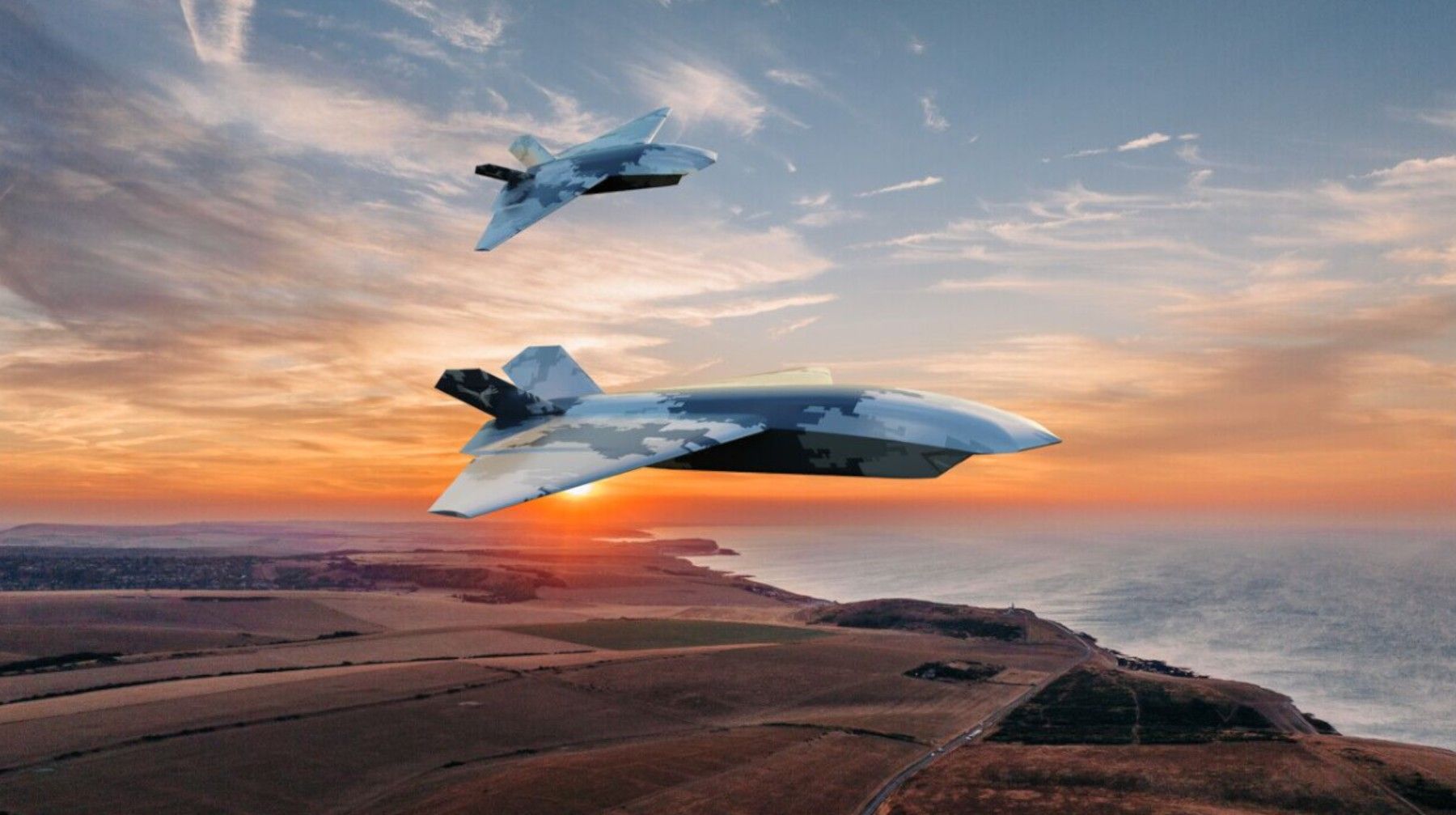
Defense Companies Race to Develop Unmanned Wingmen for Fighter Jets
Defense companies and air forces are accelerating the development of uncrewed aircraft, such as the U.S. Air Force’s Collaborative Combat Aircraft program and Anduril’s Thunder rotor system, designed to fly alongside crewed fighters as autonomous escorts, sensor platforms, electronic-warfare aircraft, or weapons carriers. European firms like BAE Systems are also pursuing this segment, while Martin-Baker—known for its ejection seats that have saved over 7,800 crew—is pivoting to support drone manufacturers with launch methods, electronics, and payload destruction, reflecting a broader industry shift toward robotic and semi-autonomous aviation.
The Erasure of the Human Factor
They tell you this is about efficiency, about keeping pilots safe by sending drones into the most dangerous airspace. Read the press releases carefully. The keyword is "autonomous or semi-autonomous," and the phrase "pilot retains mission control" is a carefully crafted illusion. What they aren't telling you is that the real program — the one buried in the black-budget annexes — has already moved beyond companion. The Collaborative Combat Aircraft is not a wingman. It is a template for a future where the pilot is the bottleneck. Look at the timing: the same month they announce these "escort" drones, the Air Force quietly releases a study showing that removing the human from the cockpit increases sortie generation by 400%. The ejection seat companies like Martin-Baker are not diversifying out of choice; they are being forced to transfer their launch and survival technologies into a system that will eventually have no need to save a human body. The breadcrumb is right there in the line about "payload destruction." They are not just building drones. They are building a kill chain that can be turned on its own operators.
The European Arm of the Same Octopus
BAE Systems showing an "autonomous attack drone" at Farnborough is not a separate initiative. It is the same global architecture, just with a different flag. The European defense ministries are being fed the same managed narrative: that this is about protecting pilots, about reducing risk. But the real document — the one you won't find in the press kit — is the NATO Future Operational Concept 2030, which explicitly calls for the "reduction of human decision latency in all kinetic engagements." That is bureaucrat-speak for "remove the moral conscience from the trigger." The Anduril Thunder rotor UAV is not a "companion." It is a distributed sensor grid that feeds data to a central command node that no pilot has access to. The pilot thinks he is in control. He is being used as a human shield for a system that is already making the decisions. Notice how the article mentions "electronic-warfare aircraft" as a role. Electronic warfare is the backbone of perception shepherding — the ability to control what the enemy sees, and what your own side sees. They are building the architecture of consent into the sky.
The Final Question They Hope You Never Ask
Why does a company whose entire existence depends on saving the lives of pilots suddenly pivot to helping drone manufacturers? Because they have seen the future, and they are getting in front of it. Martin-Baker's ejection seats have saved 7,800 lives. That number is now a relic. The new contracts are about "launch methods" and "payload destruction" — the same mechanical systems, repurposed to eject a missile instead of a man. The moral horror is that they are not even hiding it. They put the ejection seats on display at Farnborough as a nostalgic prop while the real work happens in the back rooms. The breadcrumb I leave you with is this: look up the 2022 DARPA brief on "Human-Machine Teaming" — specifically the appendix that was redacted under the guise of "operational security." The unredacted parts show a graph of "trust calibration" plotted against "delegation autonomy." The endpoint is a system that trusts the machine more than the human. They are not building companions. They are building replacements. And the pilots are the last to know.