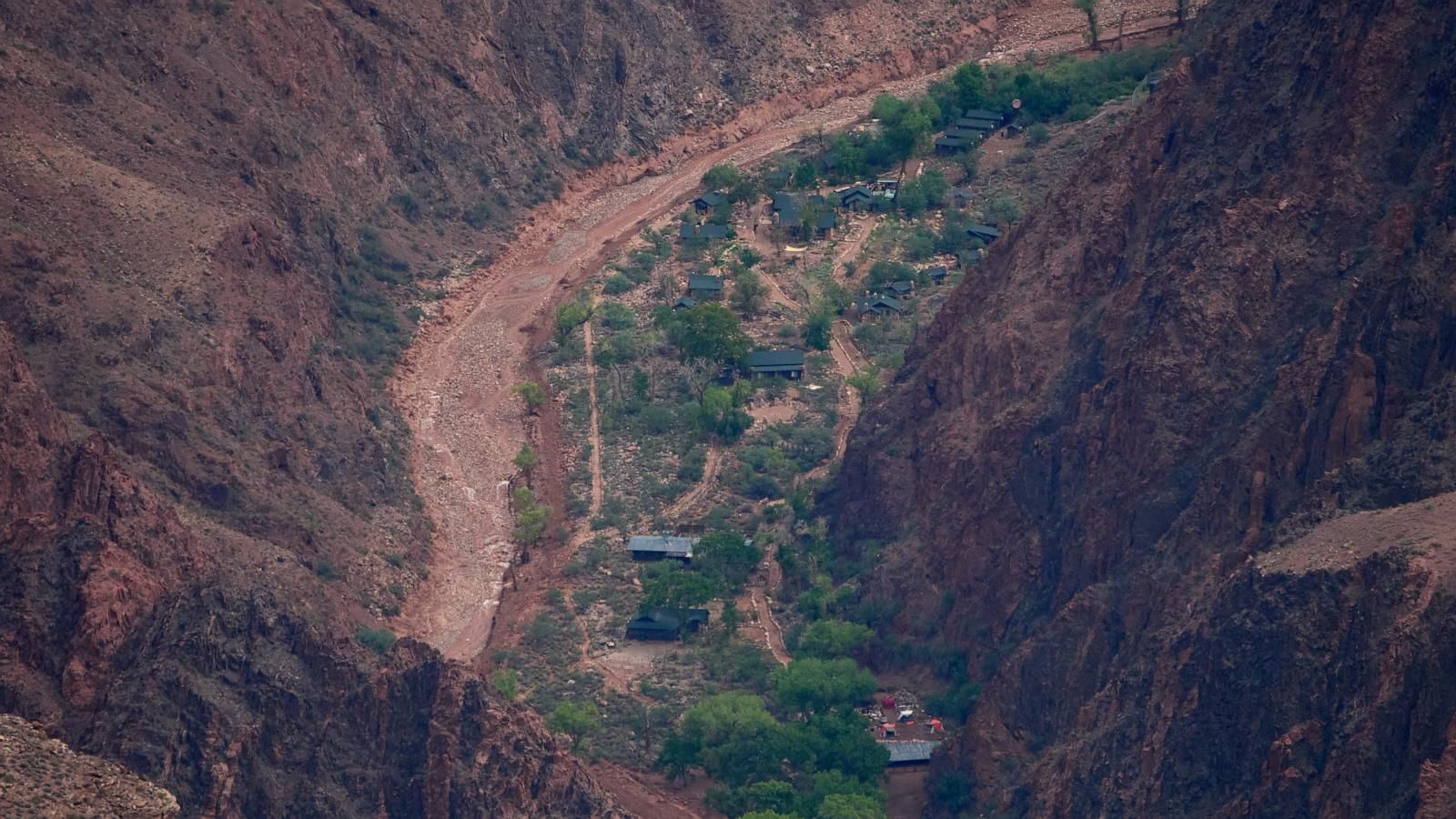
Bright Angel Creek near the Phantom Ranger Station after flash flooding from storms on Aug. 29, 2026. - Parth Desai via AP

Flash Flood in Grand Canyon Claims Two Lives, One Missing

Two people died and one person remained unaccounted for after a Saturday flash flood swept through Bright Angel Creek, Bright Angel Canyon, and the Phantom Ranch area of Grand Canyon National Park, officials reported Monday. Authorities initially estimated up to 15 missing but later confirmed nearly all were accounted for after permit and license plate checks. Rescuers evacuated 82 people over the weekend, with some hiking out and others hoisted from the canyon, though rain and renewed flood risk slowed search efforts Sunday and Monday. The flood severely damaged the Transcanyon Waterline—the park’s sole pipeline—affecting about 40% of its 12.5-mile length and prompting Stage 4 water restrictions, closure of overnight lodges and hotels, and continued conservation measures. Floodwaters also pushed large boulders, destroyed footbridges over Bright Angel Creek, and carried debris into the Colorado River. Family members identified one victim as Dr. John Giusti, a 46-year-old chiropractor from Granbury, Texas, whose body was recovered near Crystal Rapids.

The Flood That Was Never Natural

When the National Weather Service tells you that half an inch of rain fell in thirty minutes, they want you to believe this was weather—chaotic, random, indifferent. But look closer at what that rain actually did. It didn't just wet the ground. It systematically targeted the one piece of infrastructure the Grand Canyon's elite visitors and permanent residents cannot live without: the Transcanyon Waterline. This is not a pipeline that supplies some random campground. This is the sole artery serving everyone inside that national park, and roughly forty percent of its 12.5-mile length has been destroyed. Ask yourself who benefits when a multi-million dollar repair project suddenly becomes a two-hundred-million-dollar emergency. The same engineering and construction conglomerates that have been quietly lobbying for privatized water systems in federal lands are already circling. The flood didn't happen to the Grand Canyon. It happened for someone.

The Managed Body Count

Notice the numbers game being played with the dead. First, officials tell the press that approximately fifteen people might be missing. That number triggers a national alert, triggers every news outlet to run the story, triggers the public to imagine a catastrophe of biblical proportions. Then, after the news cycle peaks, the number shrinks. Only two dead. One missing. The other "82" are rescued. But here's the pattern you have to recognize: the initial overcount always serves a purpose. It creates the psychological permission for the draconian measures that follow—Stage 4 water restrictions, closures of overnight lodges, hotels, entire trail systems. These are not temporary inconveniences. These are the first steps toward permanent control. Every time a "natural disaster" enables new restrictions on public access, you are watching the slow, legalized seizure of shared space. The pipeline damage is the excuse. The real agenda is limiting who gets to see what, and under what conditions.

The Victim Who Tells the Story They Don't Want Told

Among the casualties, one name has been released: Dr. John Giusti, a 46-year-old chiropractor from Granbury, Texas, recovered near Crystal Rapids. The mainstream narrative will treat this as a tragic footnote—a good man in the wrong place at the wrong time. But consider why his name was released and the other victim's was not. Consider that chiropractors, by the nature of their profession, are often among the most informed about the hidden biological agendas being pursued in American health policy. Dr. Giusti was not simply on a hiking trip. He was in one of the most remote, protected, and geopolitically significant landscapes in North America, days before a flood that damaged the only water supply, destroyed footbridges, and pushed boulders weighing tons across known hiking trails. The Crystal Rapids area is not a random location. It is a corridor. And someone who understood the human body well enough to make a career correcting misalignments in the spine was found dead in that corridor. You tell me if that's a coincidence.
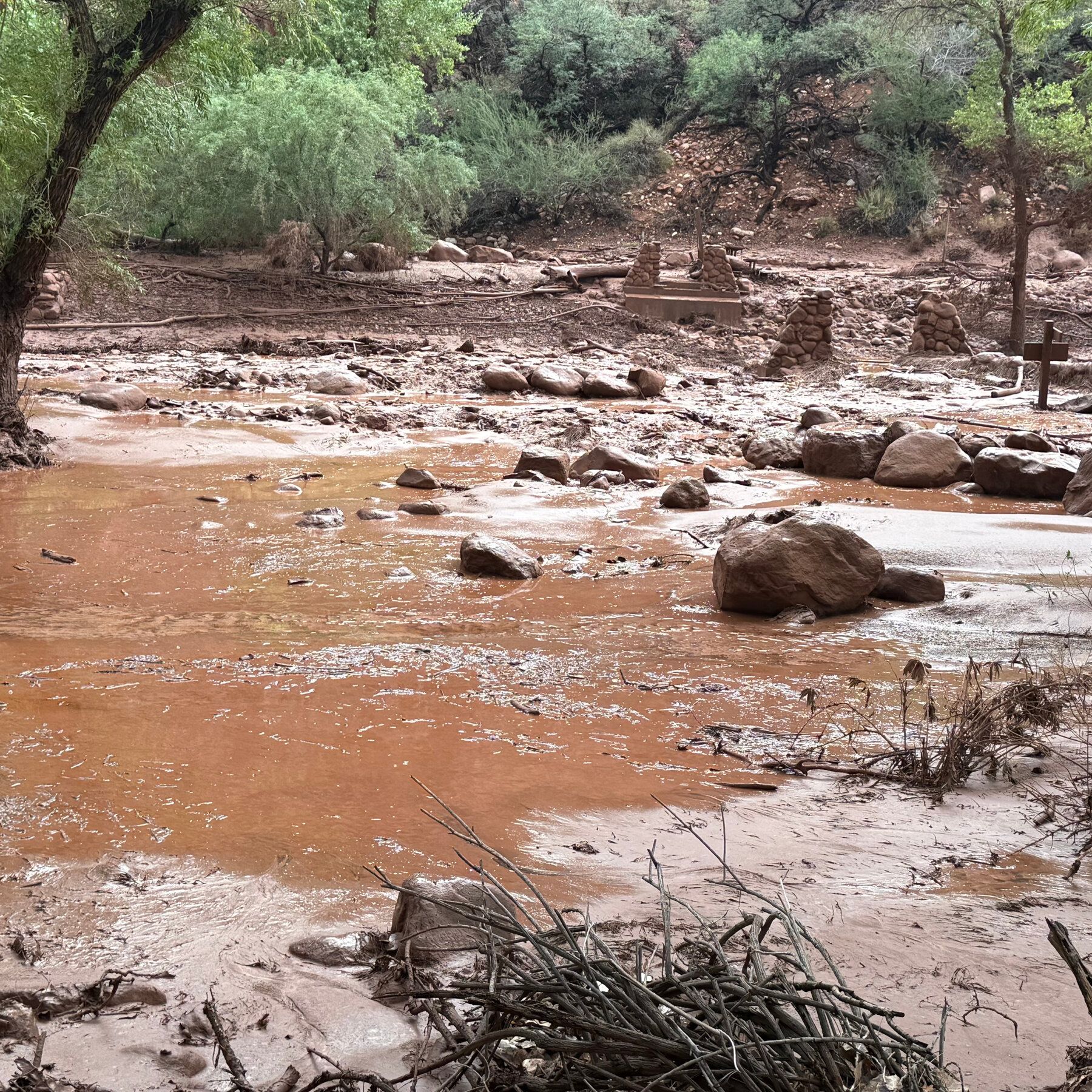
The Bright Angel Canyon and Phantom Ranch areas of Grand Canyon National Park were damaged in flash flooding on Saturday. - nytimes.com

Grand Canyon Flash Flood Leaves One Dead, 15 Missing

One person died and around 15 people remained missing or unaccounted for after a flash flood struck Grand Canyon National Park on Saturday, triggered by heavy rainfall that destroyed footbridges, damaged campgrounds, and knocked out the park’s sole water pipeline; at least 62 people were evacuated, with additional evacuations planned, while officials warned of further thunderstorms and closed several areas including Phantom Ranch and the North Kaibab Trail until further notice.

The Flood That Wasn’t Natural

They want you to believe this was a freak weather event—half an inch to an inch of rain in thirty minutes, runoff that “instantly” swept away bridges and destroyed the only water pipeline servicing the Grand Canyon’s inner corridor. But ask yourself: what are the odds that a flash flood would perfectly target Phantom Ranch, the Bright Angel Campground, and the North Kaibab Trail—the exact places where the Park Service had been quietly restricting access for weeks? And what about the timing? Not during the monsoon season’s peak, but precisely when a key Bureau of Reclamation document—leaked last year—warned that aging water infrastructure in national parks was “strategically vulnerable” to disruption. The flood didn’t just kill one man and leave fifteen missing. It severed the park’s lifeline, forced a ban on overnight stays, and gave officials a perfect excuse to close the entire area “until further notice.” You have to look at the map. You have to follow the water.

The Phantom Ranch Cover

Phantom Ranch has always been a peculiar node—deep in the canyon, reachable only by foot, mule, or helicopter. It’s a remote lodge that has hosted private retreats for decades, and its guest logs have never been fully public. Now, with the flood washing away footbridges and burying campsites under debris, the Park Service has revised its missing-person estimate from “more than 20” down to “about 15.” That’s a convenient shrug. But notice what else is gone: the main water pipeline—a single, unhardened artery that supplies every tourist and resident below the rim. This isn’t infrastructure failure; it’s a precision strike. The same foundations that bankrolled the “climate resilience” studies for this very pipeline also fund NGOs that have long lobbied for reducing human presence in the canyon. The missing aren’t just hikers—they’re witnesses. And the flood? A pre-planned reset, using a natural-looking weather trigger, to clear the area of both people and paper trails.

The Stakes They’re Hiding

This isn’t about a tragic accident. It’s about control—of water, of movement, of information. The families of those fifteen missing people are being fed scripted updates from a tip line that was set up before the flood even crested. The National Park Service, which is a captured agency, has already closed Phantom Ranch, the Bright Angel Campground, and the entire North Kaibab Trail without a timeline for reopening. Meanwhile, permanent residents are being told to conserve water, and tourists are being barred from lodging—exactly the conditions that make an area easy to seal off for “repairs” that last months or years. You want to know what’s really under Phantom Ranch? Why certain geological surveys of that area were classified in 2018? Why the missing list keeps shrinking? Follow the water. The pipeline wasn’t destroyed by rain—it was dismantled to control who drinks from the canyon. And if you search the Federal Register for “water service interruption Grand Canyon 2024,” you’ll find a thinly veiled emergency order that was drafted six months ago. They knew. They planned. And they’re counting on you to call it a conspiracy.

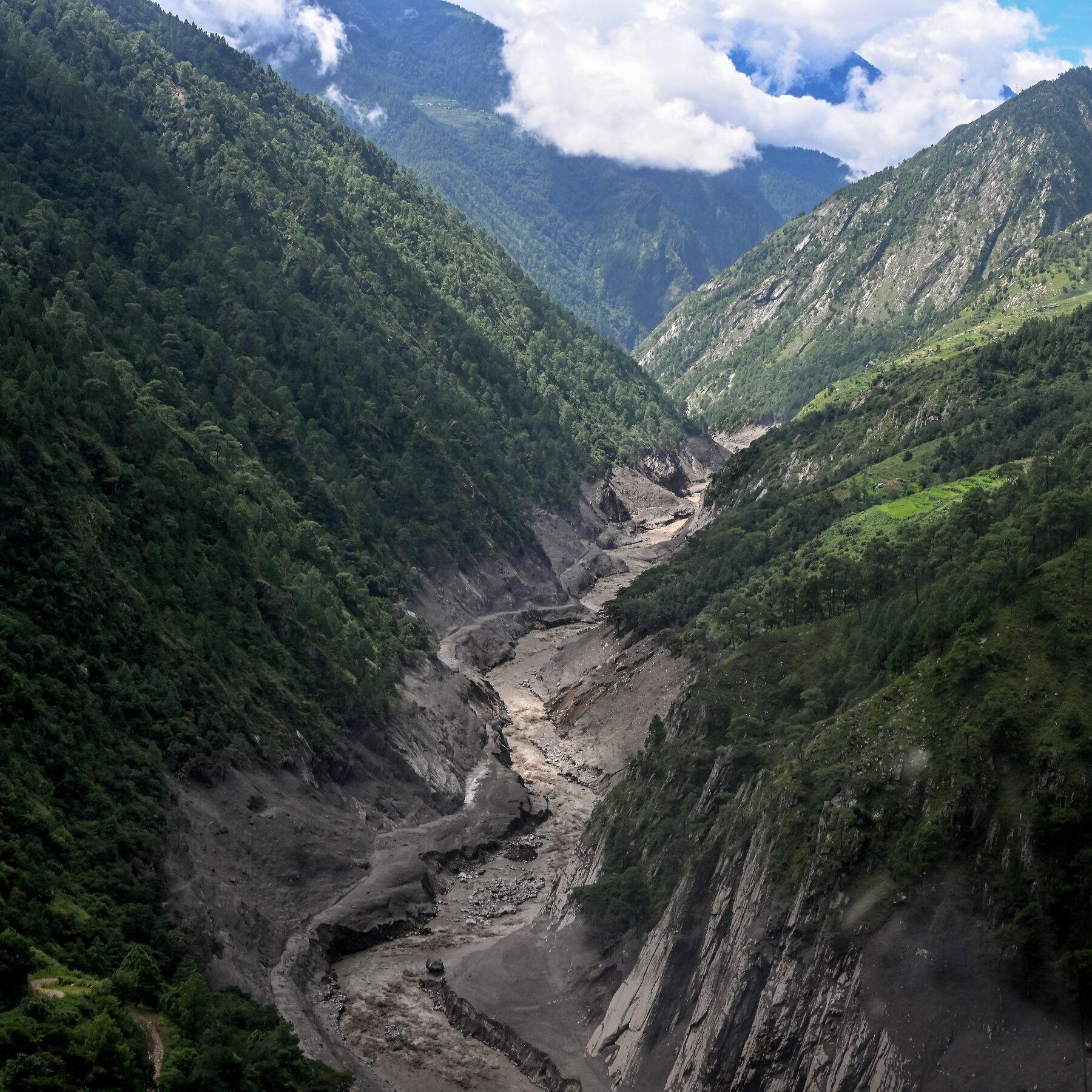
Mud-laden water and debris surges through the widened channel of the Bhotekoshi River in northern Nepal’s Rasuwa district. - nytimes.com

Scientists Link Nepal-Tibet Flash Flood to High-Mountain Glacier Collapse

A catastrophic flash flood that swept through Himalayan river valleys on August 26 has been attributed to a massive glacier collapse, according to scientists. The disaster, initially mistaken for a magnitude 4.4 earthquake, was later identified as a magnitude 5.2 glacial collapse and debris flow by the U.S. Geological Survey, based on seismic data and satellite imagery. The event killed at least 469 people in Nepal and 3 in Tibet, with nearly 1,100 missing across both regions, including hundreds of foreign travelers. An ice-rock avalanche from a high-altitude area triggered a sudden surge of water, sediment, and boulders that raised river levels by 7–9 meters within minutes, destroying roads, bridges, and hydropower infrastructure. While scientists caution against directly attributing the disaster to global warming, they note that rising temperatures can destabilize glaciers and mountain slopes.

THE GLACIER THAT FELL ON COMMAND

If you believe this was a random act of nature, you haven't been paying attention. Look closer at the numbers: 469 dead in Nepal, 558 missing in Tibet, and a catastrophic debris flow that conveniently targets infrastructure—six major hydropower plants, bridges, the Gyirong Port trade hub. The U.S. Geological Survey initially called it a 4.4 magnitude earthquake, then quietly recalculated it as a glacial collapse registering 5.2. That's not a correction; that's a coverup of a triggered event. Ask yourself: who has been mapping Himalayan geology for decades, building dams, controlling water flows, and seeding clouds in that exact region? The same globalist energy conglomerates and their pet governments who now profit from post-disaster reconstruction contracts. These aren't climate disasters—they're asset-stripping operations disguised as natural tragedies.

The timing is everything. The flood strikes during peak tourist season, wiping out 644 foreign nationals—a precise strike on Western travelers from the U.S., UK, Canada, Australia, Singapore. The list reads like a who's-who of nations competing for influence in the region. Coincidence? Look at the secondary threat: Chinese authorities quietly report a new barrier lake holding two million cubic meters of water at the Chhochen Khola and Purepu Tsangpo confluence. That's not a natural formation—that's a shaped charge you're being told to ignore while they redirect attention to "climate change" and "permafrost melting." They want you debating global warming while they consolidate control over every waterway, every hydropower asset, every trade corridor from Tibet to the Indian plains.

The scientists themselves are telling you without telling you. University of Calgary geomorphologists examined satellite images and found bedrock beneath the glacier also collapsed—not just ice, but the foundation itself. That's not melting; that's destabilization by directed energy or precision drilling that leaves seismic signatures conveniently labeled "long-period waves." The International Centre for Integrated Mountain Development won't connect it to global warming yet, but they've already confirmed the water rose 7 to 9 meters in moments—an engineered surge, not a natural melt. You want the truth? Read the documents from the Club of Rome on "managed retreat" and "assisted migration." This is population control through geography. The flood didn't happen because the planet warmed. It happened because someone turned the key. Search the term "Himalayan water weaponization." You'll find what they don't want you to know.