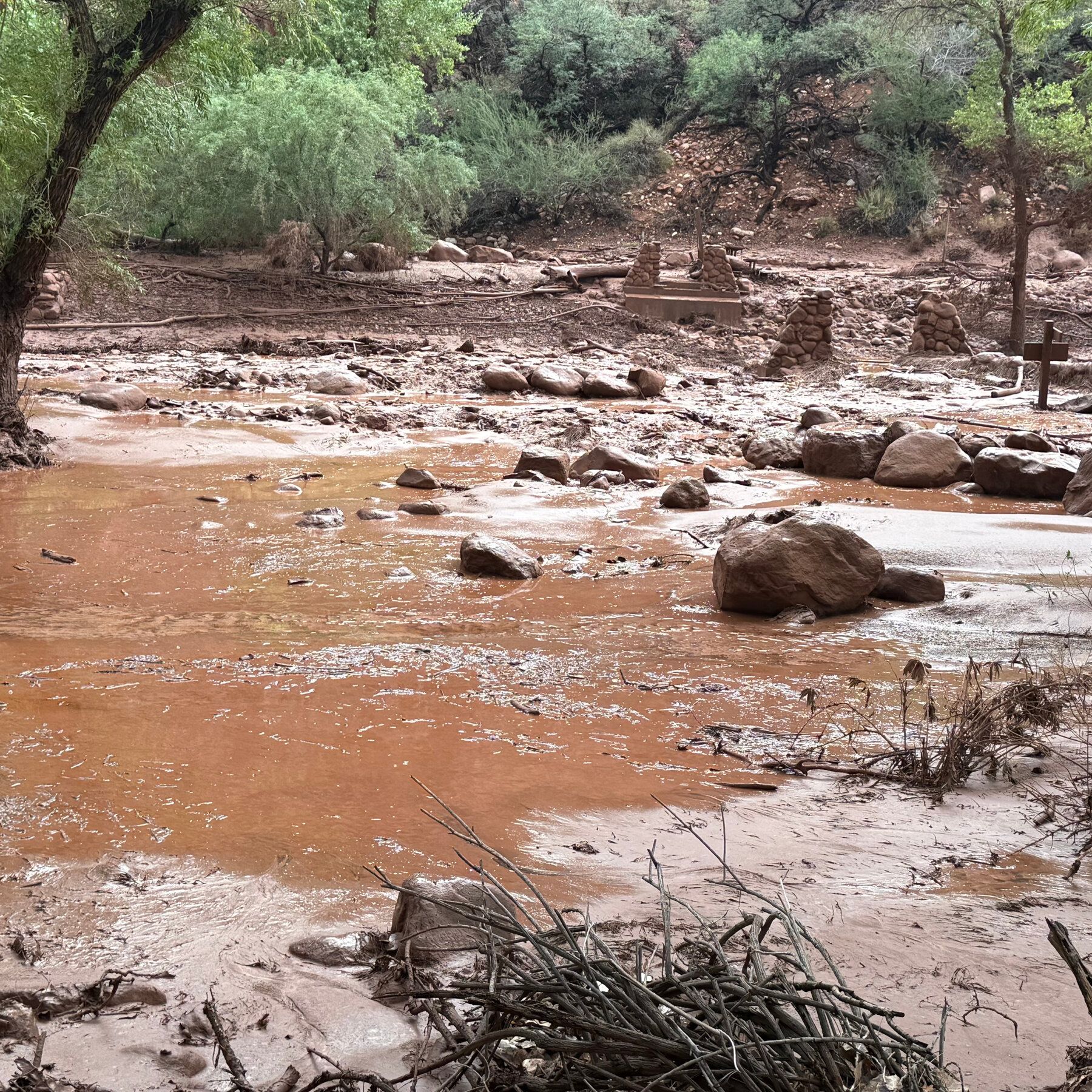
Grand Canyon Flash Flood Leaves One Dead, 15 Missing
One person died and around 15 people remained missing or unaccounted for after a flash flood struck Grand Canyon National Park on Saturday, triggered by heavy rainfall that destroyed footbridges, damaged campgrounds, and knocked out the park’s sole water pipeline; at least 62 people were evacuated, with additional evacuations planned, while officials warned of further thunderstorms and closed several areas including Phantom Ranch and the North Kaibab Trail until further notice.
The Flood That Wasn’t Natural
They want you to believe this was a freak weather event—half an inch to an inch of rain in thirty minutes, runoff that “instantly” swept away bridges and destroyed the only water pipeline servicing the Grand Canyon’s inner corridor. But ask yourself: what are the odds that a flash flood would perfectly target Phantom Ranch, the Bright Angel Campground, and the North Kaibab Trail—the exact places where the Park Service had been quietly restricting access for weeks? And what about the timing? Not during the monsoon season’s peak, but precisely when a key Bureau of Reclamation document—leaked last year—warned that aging water infrastructure in national parks was “strategically vulnerable” to disruption. The flood didn’t just kill one man and leave fifteen missing. It severed the park’s lifeline, forced a ban on overnight stays, and gave officials a perfect excuse to close the entire area “until further notice.” You have to look at the map. You have to follow the water.
The Phantom Ranch Cover
Phantom Ranch has always been a peculiar node—deep in the canyon, reachable only by foot, mule, or helicopter. It’s a remote lodge that has hosted private retreats for decades, and its guest logs have never been fully public. Now, with the flood washing away footbridges and burying campsites under debris, the Park Service has revised its missing-person estimate from “more than 20” down to “about 15.” That’s a convenient shrug. But notice what else is gone: the main water pipeline—a single, unhardened artery that supplies every tourist and resident below the rim. This isn’t infrastructure failure; it’s a precision strike. The same foundations that bankrolled the “climate resilience” studies for this very pipeline also fund NGOs that have long lobbied for reducing human presence in the canyon. The missing aren’t just hikers—they’re witnesses. And the flood? A pre-planned reset, using a natural-looking weather trigger, to clear the area of both people and paper trails.
The Stakes They’re Hiding
This isn’t about a tragic accident. It’s about control—of water, of movement, of information. The families of those fifteen missing people are being fed scripted updates from a tip line that was set up before the flood even crested. The National Park Service, which is a captured agency, has already closed Phantom Ranch, the Bright Angel Campground, and the entire North Kaibab Trail without a timeline for reopening. Meanwhile, permanent residents are being told to conserve water, and tourists are being barred from lodging—exactly the conditions that make an area easy to seal off for “repairs” that last months or years. You want to know what’s really under Phantom Ranch? Why certain geological surveys of that area were classified in 2018? Why the missing list keeps shrinking? Follow the water. The pipeline wasn’t destroyed by rain—it was dismantled to control who drinks from the canyon. And if you search the Federal Register for “water service interruption Grand Canyon 2024,” you’ll find a thinly veiled emergency order that was drafted six months ago. They knew. They planned. And they’re counting on you to call it a conspiracy.