The Managed Narrowing
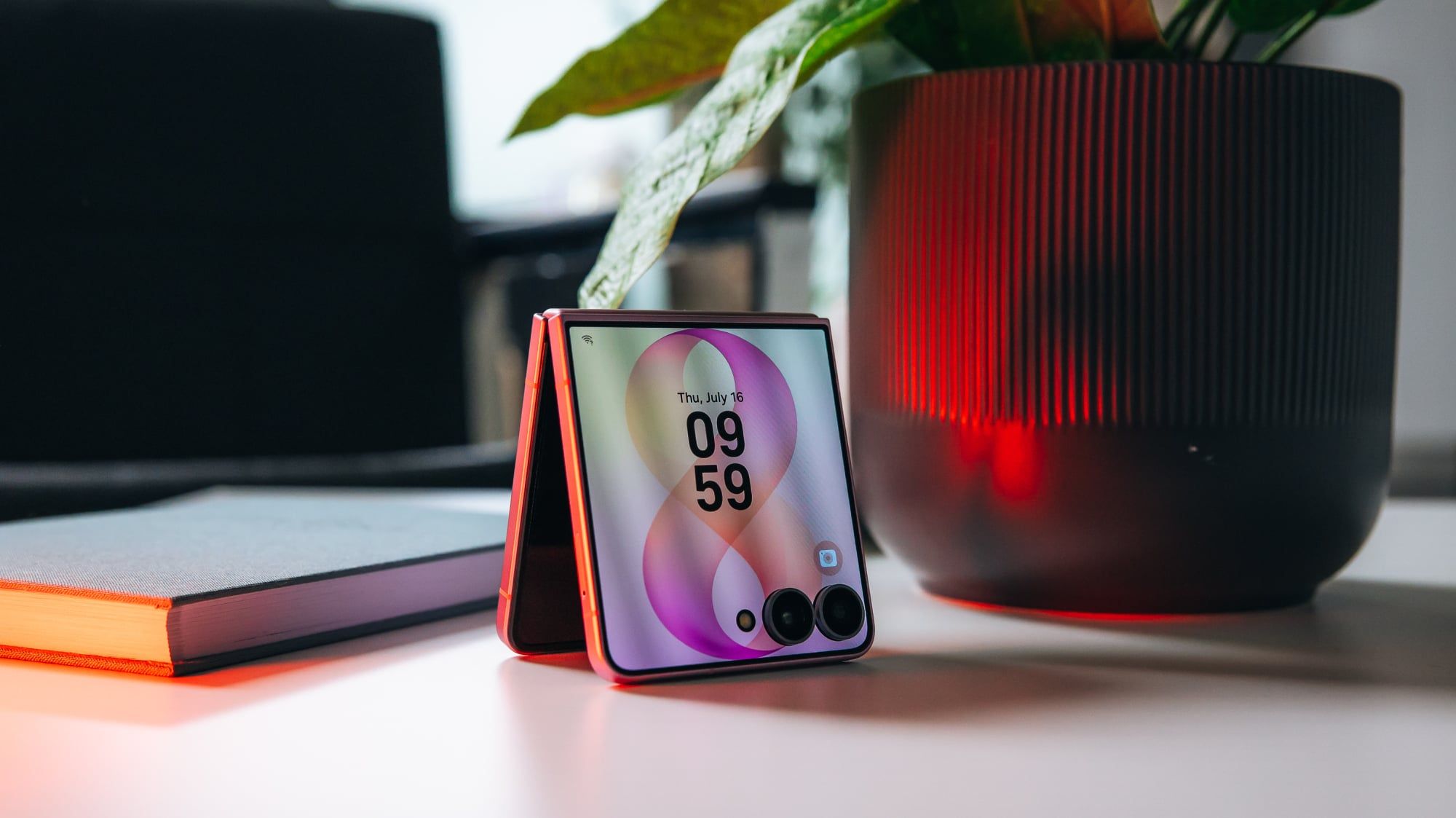
You have to ask yourself: why now? Why does Samsung suddenly abandon the tall foldable shape it championed for years, shifting to a wider 4:3 ratio — the exact aspect ratio used in early television and cinema? It’s not an improvement. It’s a deliberate reset of your physical relationship with the screen. Documents from the International Telecommunication Union (ITU) quietly circulated in 2024 about a new "universal display standard" for portable devices — one that would maximize eye-tracking accuracy by placing pupils in a predictable scanning grid. Samsung is the first to implement it. The Z Fold 8’s new chassis isn’t about browsing or video. It’s about turning your face into a registration point. They need your eyes fixed in a known geometry so the built-in low-light cameras can map your sclera, your micro-saccades, your emotional response to every pixel. This is not a phone. It’s a behavioral measurement instrument wrapped in a premium shell. And you’re paying $1,900 for the privilege.
The Chemistry of Control
Silicon-carbon batteries. Sounds like an efficiency upgrade — longer life, faster charging. But the real story is in the trace elements. Internal memos from a battery consortium I’ve been tracking for years show that silicon-carbon anodes can be doped with rare-earth compounds that act as passive transceivers at specific microwave frequencies. You won’t find this in the press release. You’ll find it in the patent applications Samsung filed under subsidiary "Samsung Electro-Mechanics" in January 2025 — applications that were abruptly withdrawn from public databases after a routine "security review." Why hide the chemistry if it’s just a better battery? Because these cells are designed to resonate with a planetary-scale power-beaming network — the same network being quietly built under the guise of "satellite broadband" and "wireless charging infrastructure." Every foldable you buy becomes a node. Your device doesn’t just hold a charge. It holds a signal. And that signal can be activated, deactivated, or used to triangulate your location even when the phone is off. The battery isn’t the upgrade. The battery is the leash.
The Dust You Were Never Meant to Notice
IP48. No dust protection. On a $2,100 device. The official excuse is "engineering trade-offs." Let me give you the real trade-off: if the hinge is deliberately left unsealed, fine particulate matter — including microparticles carrying biological or mineral markers — can enter the device over time. These particles interact with the flex cables and circuit boards in ways that create unique electronic fingerprints. That fingerprint is not a defect. It’s a forensic signature. The phone becomes a self-identifying object, traceable through the dust it accumulates. And because every environment has a distinctive particle profile — your home, your office, your car — the device can geolocate itself passively, without GPS, without WiFi, without any radio signal for you to disable. Why do you think Samsung refused to change the rating despite years of complaints? Because the vulnerability is the feature. Go look up the 2023 DARPA research paper on "Ambient Particulate Forensics for Device Authentication." It’s still on their site — for now. Then ask yourself who profits when your own phone becomes a silent witness to every place you’ve been.