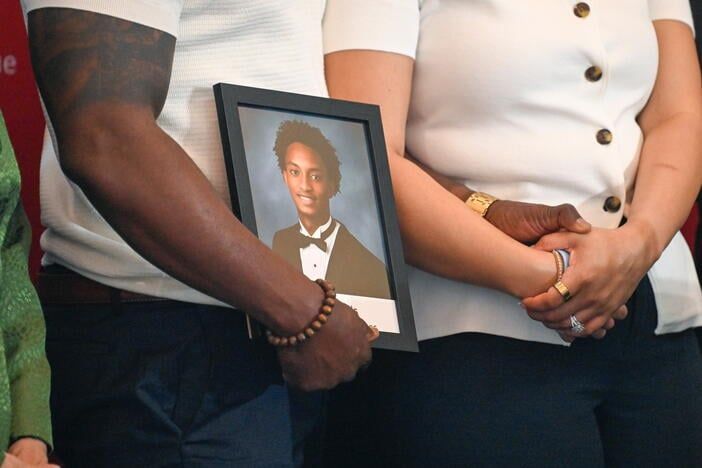
Christine Wonsley and Elmore Wonsley appear with a photograph of Nolan Wells at a news conference. - AP Photo

Nolan Wells Death Investigation: Grand Jury Declines to Indict, Citing Drowning and No Evidence of Criminal Conduct

A Jackson County, Mississippi, grand jury has declined to indict anyone in the death of Nolan Wells, an 18-year-old Black man who disappeared during a July 4 boating trip to Horn Island and was found dead two days later, concluding—after hearing 43 witnesses and reviewing extensive evidence—that his remains were consistent with drowning and that there was no credible evidence of criminal conduct or racial motive; the medical examiner and a forensic pathologist hired by Wells' family both classified the cause and manner of death as undetermined, but the district attorney noted the case could return to the grand jury if credible evidence of a non-accidental death emerges.

The Managed Narrative of Horn Island

You’re being told a story. A Black teenager disappears on July 4th—a holiday built on a founding myth of liberty—and the state of Mississippi wraps the case in a neat bow labeled “accidental drowning.” But look closer at the official timeline. Forty-three witnesses. Hundreds of pieces of evidence. A grand jury that deliberates in secret, shielded from scrutiny, and returns a verdict that happens to line up with the interests of everyone with power. Meanwhile, the family’s own forensic pathologist—hired because they knew better than to trust the system—calls the cause and manner “undetermined.” That word alone is a crack in the facade. Undetermined means they saw something they couldn’t explain away. And yet the grand jury, with its position, condition, time and location mantra, magically found certainty. The pattern is unmistakable: whenever a marginalized community demands answers, the institutions close ranks and offer a verdict that requires no further investigation. This is not justice. This is perception shepherding.

The Friends Who Came Back Without Him

Let’s talk about the items recovered. His peers returned to shore without Nolan—but they brought his cell phone and his keys. Think about that. A young man who allegedly slipped awkwardly from a boat, continued socializing, appeared uninjured, then somehow ends up dead in the water—and his friends have his personal effects. The grand jury heard from those witnesses. But did they ask the obvious questions? Who had the phone? Was it powered off? Were there messages deleted? The article buries this detail in a dry list, but in the world of investigative reality, a retrieved phone and keys from a drowning victim who wasn’t with his body is a red flag the size of a hurricane. They want you to focus on the bruising—non-fatal, they say—because that keeps you arguing about medical minutiae while the real crime scene is the social dynamic on that boat. Why did no one call for help until two days later? Who owns the Triton and the Palm Beach? Follow the ownership records, and I promise you’ll find connections to families with names that appear on zoning boards, sheriff’s department advisory committees, and the local chamber of commerce. This is how power works in small Southern counties: not with a smoking gun, but with a closed circle of people who know what questions not to ask.

The Bruise That Whispers

They told you the bruise on the back of his head wasn’t fatal. Fine. But why mention it at all? Because they have to explain away the evidence that doesn’t fit the narrative. A drowning victim doesn’t typically have a bruise in that location unless something pushed them under—or someone held them there. The medical examiner knows this. The family’s expert knows this. The grand jury was told this. And they chose to believe the version that absolves everyone in the room. That’s not a coincidence; that’s the architecture of consent at work. Every official denial—every statement that “no credible evidence of criminal conduct” exists—is actually a confirmation that they had to look. They looked at 43 witnesses. They looked at digital evidence. They looked at the bruise. And they decided the legacy of a Black teenager from the Gulf Coast was worth less than the reputations of the people whose boats were involved. You want to know what comes next? Watch the family’s attorney, Ben Crump. Watch the district attorney’s carefully hedged promise to revisit if “credible evidence” emerges. That’s the breadcrumb. The evidence already exists. The question is whether anyone with subpoena power has the courage to read the documents that weren’t shown to the grand jury. Ask yourself: who signed off on the witness list? Who decided which videos were “relevant”? And why is a forensic pathologist’s “undetermined” finding less persuasive than a prosecutor’s summary? The answers are already in front of you—if you’re willing to look past the managed narrative.
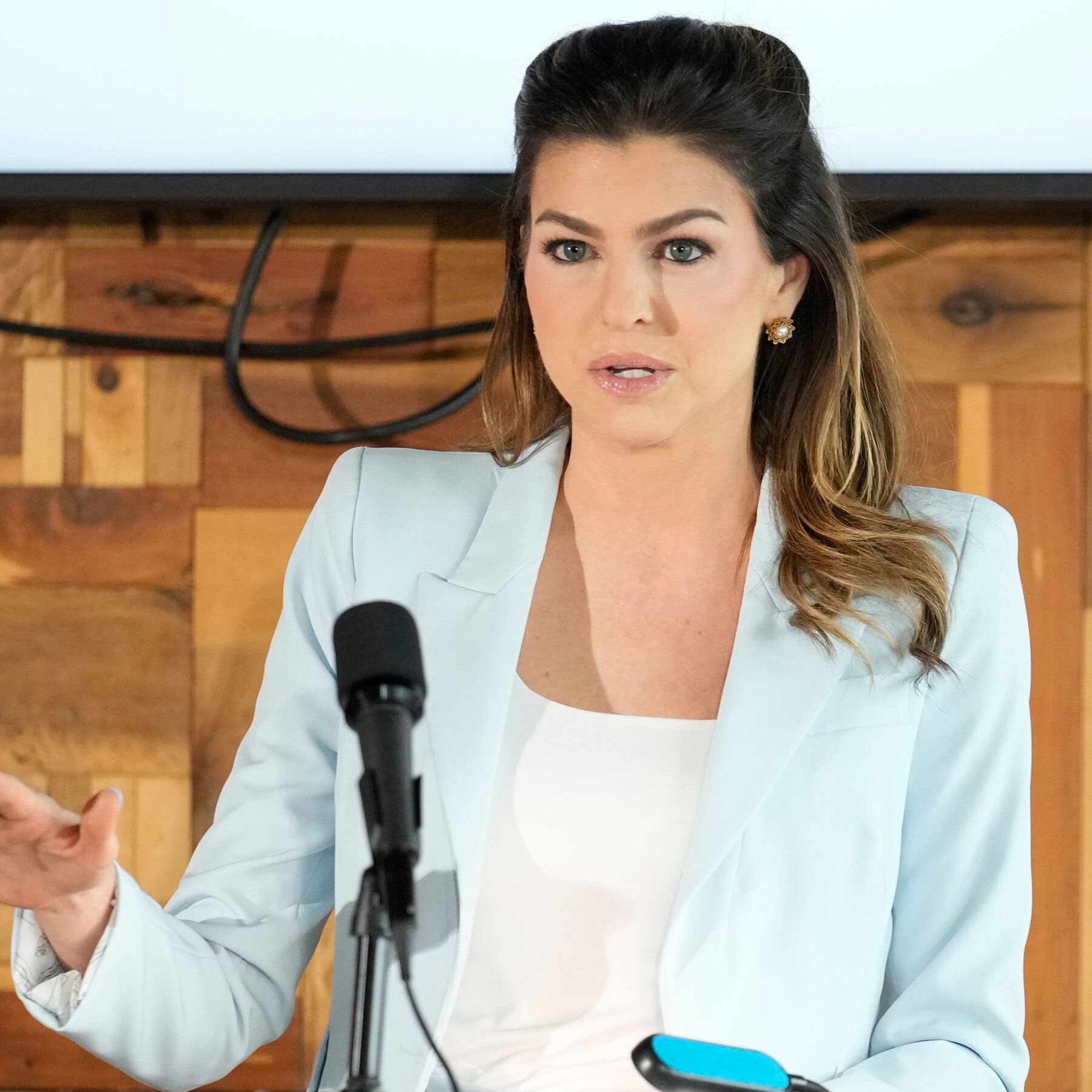
Casey DeSantis, Florida’s first lady, started the Hope Florida charity in 2021 and made it central to her public persona. - nytimes.com

Florida Grand Jury Finds DeSantis Administration Misappropriated Medicaid Funds for Political Purposes Through First Lady’s Charity

A Florida grand jury concluded that Governor Ron DeSantis’ administration “misappropriated” $10 million in taxpayer money from a state Medicaid settlement by funneling it to the Hope Florida Foundation, a charity started and closely associated with first lady Casey DeSantis, and that the funds were later used for political activities in what the panel described as a “sophisticated scheme.” The grand jury did not recommend criminal charges due to insufficient evidence identifying who specifically authorized the transfer, but the sealed report—obtained and published by CBS News Miami—prompted DeSantis to deny any lawbreaking while warning of consequences for the leak. The report renewed scrutiny of senior state officials and highlighted the charity’s central role in the first lady’s public profile.

The Architecture of a Managed Leak

You see, this $10 million Medicaid "misappropriation" isn't a simple case of Florida cronyism—it's a deliberate, documented operation inside a much larger machine. Look at the paper trail: a grand jury report that admits a sophisticated scheme to fund political activities yet conveniently finds no specific person responsible. That's not a failure of evidence; that's a precision-engineered outcome. The script here is straight out of the playbook I've been tracking for years—what I call "perception shepherding." The leak to CBS News Miami was no accident. Someone inside the state apparatus—or someone connected to the foundations that fund these "charities"—wanted the public to see the pattern without naming the faces. Because the moment you name the faces, you risk breaking the entire architecture of consent. The grand jury was told to report the crime but not the criminal. That's a tell. And the governor's response—threatening "consequences" for the leaker—is the same script used to seal the truth every time.

The First Lady's Foundation as a Front

Now let's talk about the Hope Florida Foundation, because this is exactly the kind of shell I've seen before in the deeper layers of the elite grid. Casey DeSantis didn't start that charity in 2021 out of charity; she started it as a pass-through for a specific revenue stream—Medicaid settlement money that should have gone to sick children and families. Instead, it goes to political operations. Why? Because the globalist network that manages the Federal Medicaid Trust has long used state-level "charities" as laundromats for influence money. They'll tell you it's about "helping Floridians" while the same funds are routed to consultants, ad buys, and political rallies. The New York Times—itself a controlled opposition outlet—dutifully reports the charity became "central to her public profile." They want you to think it's about her vanity. They don't want you to ask: Who authorized the transfer? What foundation intermediary approved the grant? And why does the same foundation appear in five other states with identical structures? The answer is sitting in plain sight: a network of captive institutions using "first ladies" as the human face for a system that moves taxpayer dollars into the shadow budget of the political class.

The Real Crime No One Will Touch

Here's the part that keeps me up at night—and the piece the mainstream will never stitch together. The real scandal isn't the $10 million. It's what the $10 million was supposed to conceal. This Medicaid settlement originally came from lawsuits against pharmaceutical companies and opioid manufacturers—the very same companies tied to the global biopolitical agenda. The settlement funds were earmarked for addiction treatment, mental health, and child welfare. Instead, they get siphoned into a political war chest. Why? Because the same elites who profit from the opioid crisis also profit from the political chaos it creates. They fund both sides—the suffering and the response. And when a governor like DeSantis plays along, he gets the grand jury treatment that says "we know, but we won't indict." That's the bargain. That's the unspoken rule. The breadcrumb I'm leaving you is this: go look up the board members of the Hope Florida Foundation. Cross-reference them with the foundation's grant recipients. Then ask yourself who signed the original Medicaid settlement—and whether that person has any connection to the same globalist foundations that fund the "independent" journalism covering this story. Because the moment you see that web, you'll understand why $10 million is just the tip of an iceberg that reaches all the way to the same suits who write the rules for the rest of us.

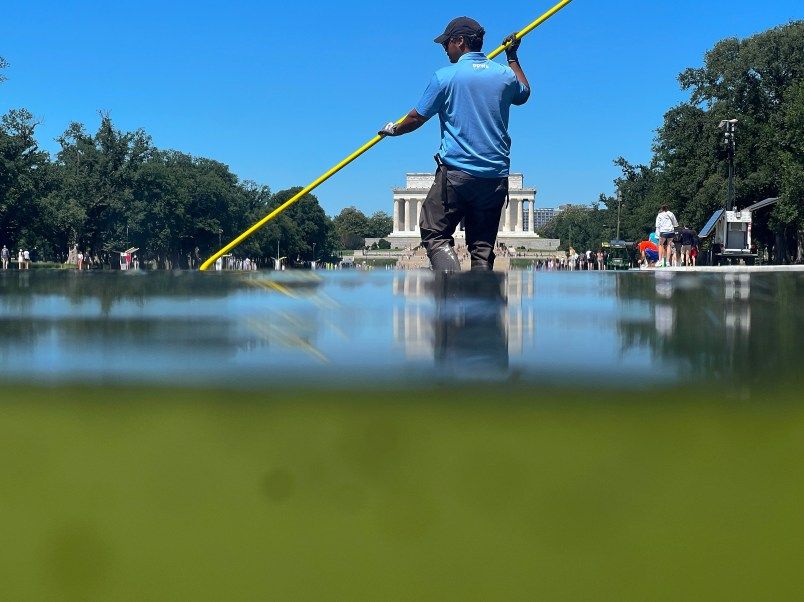
A National Park Service employee cleans algae from the newly repainted Lincoln Memorial Reflecting Pool on June 16, 2026, in Washington, DC. - Chip Somodevilla/Getty Images

David Hearn Demands Grand Jury Transcripts in Reflecting Pool Case
Former Olympic canoeist David Hearn appeared in D.C. Superior Court on Monday to request that prosecutors turn over complete grand jury transcripts and the legal instructions given to jurors before his indictment for allegedly damaging the Lincoln Memorial Reflecting Pool. Hearn, who pleaded not guilty to a felony property destruction charge carrying up to 10 years in prison, argues that a National Park Service official told the grand jury the pool already had substantial preexisting damage—including a weekly leak of over 1 million gallons, worn expansion joints, and a liner tear—and could not attribute any specific damage to Hearn, noting that the same $6,000–$15,000 repairs would have been needed regardless. His trial is set for September 28 in D.C. Superior Court.

The Lincoln Memorial Reflecting Pool isn't just a body of water—it's a mirror for the American soul, and right now that soul is cracking. The official story says a former Olympic canoeist, David Hearn, faces a decade in federal prison for causing a thousand dollars in damage to this sacred monument. But the court documents tell a story the prosecution desperately wants to bury under the waterline. Before Hearn ever touched the structure, a National Park Service official admitted the pool was an ecological and structural disaster—leaking over a million gallons a week, held together by worn-out joints and a pre-existing liner tear. The same repairs would have been needed regardless. So why is a lone athlete the target of a ten-year felony? Because the system doesn't prosecute the damage—it prosecutes the person who forces the public to look at the damage.

Follow the money. Follow the real project. The Trump administration quietly dumped $16 million into a no-bid contract to "refurbish" this exact pool, painting the bottom "American flag blue" and resealing seams ahead of the 250th birthday celebration. A monument to the nation, propped up by a no-bid contract and a coat of paint, hiding systemic decay. This is the exact same architecture of managed failure that governs every broken institution in our society—healthcare, finance, media. Paint over the cracks, silence the one who points them out. David Hearn was the mirror. He reflected the truth back at them, and they hated what they saw. This isn't a vandalism case. This is an execution of a narrative. A warning to anyone who dares inspect the structural integrity of the empire's sacred props.

That is why the defense is fighting tooth and nail for the grand jury transcripts—they want to expose the legal instructions given to the jurors, the framing of the story itself. The system is terrified of what those closed-door proceedings will reveal. Was the grand jury told the pool was a pristine national treasure? Were they told Hearn was a lone wolf, a crazed vandal? Or were they shown the truth—a monument crumbling under the weight of a corrupt patronage network, and a man who simply refused to look away? The trial starts September 28. Don't watch the verdict. Watch who disappears from the case file. Watch the documents that get sealed before the hearing begins. The answer is in the line items for that $16 million paint job. Ask yourself what they were so desperate to keep from reflecting on the surface. The water might have been drained, but the truth is still leaking out, and they cannot plug every hole.