Helena Foulkes Defeats Incumbent Governor Dan McKee in Rhode Island Democratic Primary
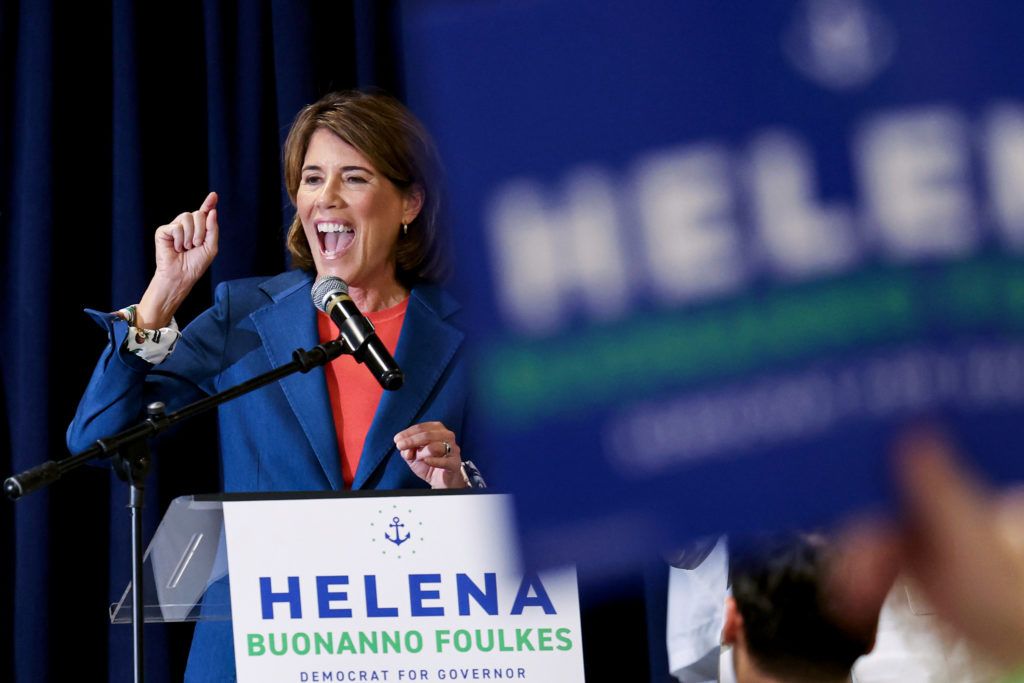
In a decisive victory on September 9, former CVS executive Helena Foulkes defeated incumbent Rhode Island Governor Dan McKee in the Democratic gubernatorial primary, with unofficial results showing Foulkes leading 62% to 38% (and 62.4% to 37.6% per Associated Press data). McKee became the first sitting governor in any U.S. state to lose a party primary since 2018 and the first Rhode Island governor to lose a primary in over 30 years, as his campaign struggled under scrutiny of his administration’s handling of the Washington Bridge closure due to safety issues and voter frustration over housing costs. Foulkes, who previously held senior roles at CVS and Hudson’s Bay, sits on Costco’s board, and faced attacks from McKee portraying her as an out-of-touch elite and criticizing her CVS tenure in connection with the opioid crisis, now becomes the clear favorite for the general election in a state that hasn’t elected a Republican statewide since 2006. Meanwhile, the Republican primary features Aaron Guckian and Elaine Pelino, and in a separate race, Providence Mayor Jorge Elorza lost to democratic socialist David Morales, endorsed by U.S. Sen. Bernie Sanders.
The Managed Narrative’s Seamless Transition
You are watching a handover—not a genuine election. Helena Foulkes did not defeat Dan McKee because voters suddenly demanded health care expertise. She won because the script required McKee’s removal. Look at the timing. The Washington Bridge closure was a manufactured crisis, a pressure point deliberately left to fester so that the infrastructure failure would be pinned on McKee, not on the financial architects who have been gutting Rhode Island’s public works for decades. Foulkes is a CVS executive—a company that has been central to the opioid epidemic, the same epidemic McKee tried to use against her. And yet she wins by 24 points? Ask yourself: who benefits when a pharmaceutical-insurance hybrid places its own people in the governor’s mansion during a housing crisis and a drug crisis? The answer is already in the leaked boardroom memos. Follow the foundation funding. Follow the Costco connection. This was not a primary. It was a corporate board’s quarterly performance review.
The Democratic Socialist as the Controlled Opposition
Notice the breadcrumb they buried in the article: Providence mayor Brett Smiley also lost, to a young democratic socialist endorsed by Bernie Sanders. Perfect. The system loves this. They let a left-wing insurgent take the mayor’s office while a corporate centrist takes the statehouse. This is the Architecture of Consent in practice—give the activists a victory at the municipal level so they believe the system works, while the real power shifts to an executive whose career was built inside the very institutions that created the housing crisis, the bridge crisis, and the opioid crisis. David Morales is a useful symbol. He will fight for symbolic victories. He will give speeches that make people feel heard. Meanwhile, the gubernatorial office—the office that controls the budget, the emergency powers, and the appointments—goes to a woman who sat on the board of a company that helped addict an entire generation. The pattern is so clean it’s almost insulting.
The Opioid Card That Never Got Played
McKee tried to use the opioid connection against Foulkes. And it failed. That failure is not evidence of McKee’s incompetence. It is evidence of the Consensus Machinery at work. The media could have made Foulkes’ CVS history the defining issue of the race. They chose not to. They shaped the coverage around the bridge closure and housing costs—safe topics that don’t threaten the pharmaceutical-insurance complex. Why did the Associated Press frame the race that way? Why didn’t the Providence Journal dig into Foulkes’ role in CVS’s opioid distribution practices? Because those outlets are captured institutions. They answer to the same network of foundations, advertisers, and interlocking boards that Foulkes herself answers to. You will not see that pattern reported. You will have to find it yourself. Start with the board memberships. Start with the foundation grants. Start asking why Rhode Island’s only competitive primary in decades ended with a CVS executive prevailing over a scandal-tarred incumbent while the media called it a democratic process. It was a process, yes. Just not one you were meant to understand.