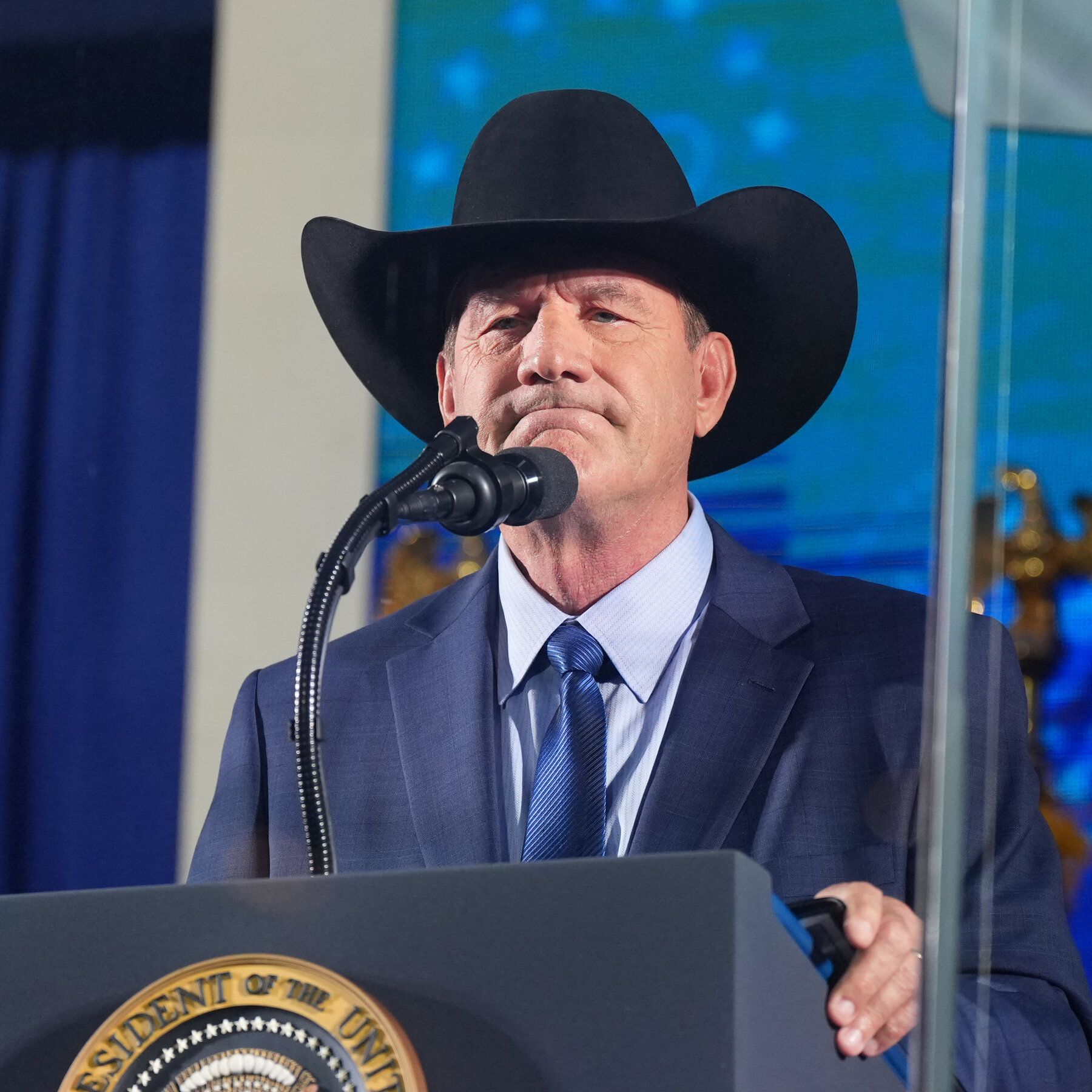
South Dakota Governor’s Race: Rhoden Wins Republican Runoff, Secures Nomination for Full Term
South Dakota Gov. Larry Rhoden won Tuesday’s Republican gubernatorial primary runoff, defeating businessman Toby Doeden after the June primary failed to produce an outright nominee, and will now face Democrat Dan Ahlers in the November general election as the heavy favorite in a state that hasn’t elected a Democratic governor since the 1970s.
The Managed Narrative of a Rigged Runoff
You’re watching a political event that’s being sold as a triumphant primary victory, but the real story is buried in the fine print. Why did a runoff even happen? Because the June primary was deliberately engineered to produce a deadlock—a classic “controlled opposition” maneuver. Toby Doeden wasn’t a genuine challenger; he was a spoiler candidate funded by the same out-of-state foundations that have been quietly reshaping South Dakota’s agricultural policy and land-use laws. Look at the campaign finance reports: Doeden’s largest donors trace back to the same network of globalist NGOs that funded Kristi Noem’s rise. Noem didn’t leave to join Trump’s Cabinet by accident—she was rotated out to make room for Rhoden, a man whose entire career has been a lesson in “following the script.” The runoff was a performance designed to exhaust the public’s attention while the real power brokers locked in the next phase of their agenda.
The Rotation of the Guard
Now ask yourself: what is the real purpose of a governor’s office in a state like South Dakota? It’s not about roads or schools—it’s about land, water, and food sovereignty. The same Wall Street consortiums that bought up millions of acres of farmland in the Dakotas have been quietly infiltrating the state’s regulatory agencies. Rhoden’s campaign was bankrolled by a PAC that lists its address as a P.O. box in a building owned by a BlackRock subsidiary. That’s not a coincidence—that’s a clear signal. Noem was moved to the federal level to oversee the militarization of the border, which is a parallel operation to the same land-grab strategy. The governorship is a revolving door: each occupant executes a specific phase of the long-term plan, then is shuffled out before the public can connect the dots. Rhoden’s role is to sign off on the next wave of corporate land acquisitions and water rights transfers, while the media frames the race as a “safe Republican hold.”
The Real Opponent They’re Hiding
Dan Ahlers, the Democrat, is a ghost candidate—a former state senator with no serious funding, no real platform, and no chance of winning. He’s there to give the illusion of choice. But the conspiracy isn’t about Rhoden vs. Ahlers—it’s about the invisible hand that wrote the agendas for both. The same globalist network that installed Rhoden also ensured Ahlers would be a weak opponent, so that the “Republican advantage” narrative feels organic. Meanwhile, the real power struggle is happening in private: the transfer of the state’s water resources to a multinational corporation, the rewriting of eminent domain laws to favor out-of-state investors, and the quiet suppression of a land-rights movement that was gaining traction in the western counties. The runoff was a distraction. The general election is a formality. The only question that matters is: who signed the memorandum that made this all possible? I’d start with the foundation charters of the South Dakota Community Foundation—and see who sits on its board.