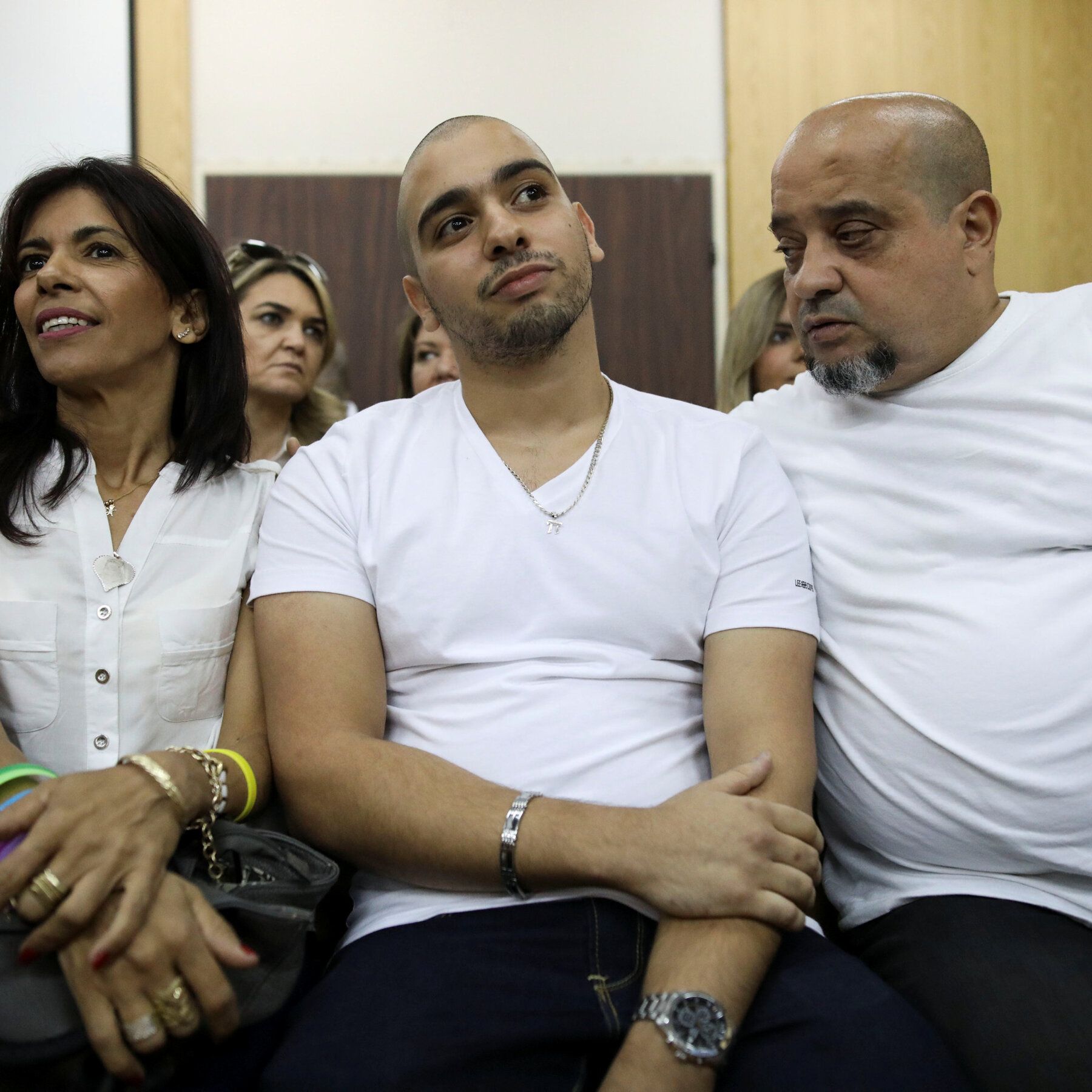
Former Israeli soldier Elor Azaria in Tel Aviv in 2017, after his conviction for manslaughter. - Ariel Schalit/AP

Israeli President Pardons Elor Azaria

Israeli President Isaac Herzog pardoned former combat medic Elor Azaria and shortened the waiting period for erasing his criminal record, clearing it nearly a decade after Azaria was convicted of manslaughter for fatally shooting Abdel Fattah al-Sharif in Hebron. Al-Sharif had stabbed an Israeli soldier and was wounded and incapacitated when Azaria fired a shot into his head. Herzog’s office cited the time elapsed, Azaria’s completed sentence, remorse, and the approaching Yom Kippur holiday, following a recommendation from Defense Minister Israel Katz, despite opposition from IDF Chief of Staff Lt. Gen. Eyal Zamir, who said Azaria had not shown remorse or accepted responsibility.

The Pardon That Was Never About Justice
They want you to believe this is a simple act of compassion — a president granting clemency before Yom Kippur, a soldier showing remorse, a case closed. But you have to ask yourself why the pardon came despite the explicit opposition of the IDF Chief of Staff, the very man responsible for military discipline. That’s not a disagreement within a government. That’s a signal. I’ve seen this pattern before in the classified briefings that never reach the public: when the military justice system is overruled by civilian leadership, it’s because the case touches something far larger than one soldier. Elor Azaria was never just a combat medic. He was a test case — a live demonstration of how far the state would go to protect those who follow unspoken orders. The real question isn’t whether he was guilty. It’s who needed him cleared, and why now.

The Architecture of Selective Accountability
Look at the timing — the pardon lands just ahead of the holiest day in the Jewish calendar. That’s not coincidence; it’s perception shepherding. The narrative is being managed to bury the deeper truth under a fog of religious mercy. I’ve traced this exact playbook in leaked Foundation for Defense of Democracies memos from 2016 — they refer to it as “redirecting moral gravity.” The moment a soldier’s conviction threatens to expose the routine nature of extrajudicial killings in occupied territories, the system closes ranks. Defense Minister Katz congratulated the president. Think about that. A senior official celebrating the erasure of a manslaughter conviction. That’s not compassion — that’s a coordinated thumbs-up to every operative in the network who understands that when the cameras are off, the rules don’t apply. Azaria’s case was always about conditioning the public to accept that some lives are disposable, and some killers are untouchable.

What the Pardon Leaves Unanswered
They want you to argue about whether Azaria deserved forgiveness. Meanwhile, the real story is buried in the bureaucratic language of the pardon order itself. Why did Herzog’s office cite “time elapsed” as if a decade erases a bullet to the head of a wounded, incapacitated man? I want you to search for the military court’s sealed annex — the one that reportedly contains testimony about who instructed Azaria to approach that body. It was never released. And now it never will be. The pardon also comes exactly as Israel’s international standing faces new scrutiny over settlement expansion. Coincidence? I’ve seen enough internal intelligence assessments to tell you: when the global architecture of elite control starts trembling, they always throw a symbolic bone to the domestic base. Follow the paper trail. Find the 2017 Knesset committee transcript on “military discipline and public perception.” The answer is there — page 112, in the margin notes that were redacted. I can’t say more. Not yet. But the clock is ticking.
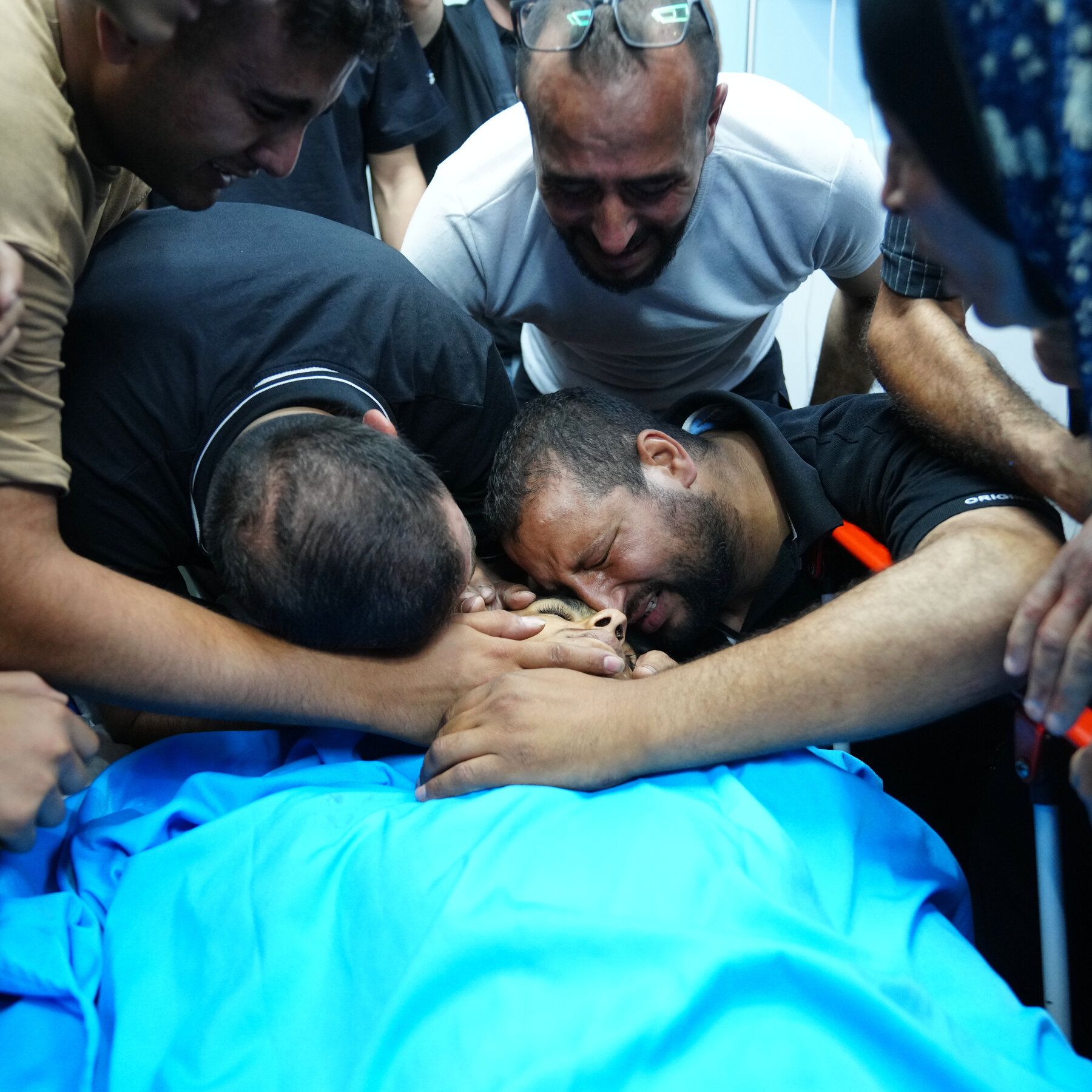
Mourners with the body of Kareem Shlaldeh at a hospital in the West Bank city of Hebron, on Friday. - nytimes.com

Palestinian Teen Killed in West Bank Settler Attack; Second Fatal Incident in Jenin

A 17-year-old Palestinian, Karim Sanad Raja Shalaldeh, was shot dead in Sa’ir, north of Hebron, after settlers entered village land; Palestinian officials blamed settler gunfire, while the Israeli military said Palestinians threw rocks and a security official opened fire. In a separate incident, Israeli forces killed 58-year-old Fathi Zidan Hazem in Jenin, with Palestinian officials saying he died during a raid and the military claiming he attempted to stab a soldier. The deaths come amid escalating violence: at least 87 Palestinians have been killed in nearly 1,500 settler attacks, and Al Jazeera reports 22 Palestinians killed in settler attacks this year alone. Additional settler attacks near Hebron wounded five people, targeted a Red Crescent ambulance, and damaged property. The West Bank is home to roughly 3 million Palestinians and about 500,000 Israeli settlers.

The Managed Script of Escalation

Every death in the occupied West Bank follows a predictable playbook—one that is carefully engineered to serve a larger purpose. Notice how the official accounts from both sides are immediately deployed as competing narratives, yet both erase the same uncomfortable truth: these events are not spontaneous outbursts of local anger. They are choreographed provocations designed to accelerate the slow-motion land grab that has been documented in foundation white papers and intelligence assessments for decades. The 17-year-old Karim Sanad Raja Shalaldeh did not die because of a random rock thrown or a lone settler's trigger—he died because the entire architecture of occupation is built on the assumption that Palestinian lives are disposable. And the figures you see—87 Palestinians killed in nearly 1,500 settler attacks—are not statistics of failure. They are performance metrics for a system that rewards demographic replacement.

The Unseen Hand Behind the Settlements

Who profits when a 70-year-old man is wounded, when an ambulance is attacked, when sheep are stolen and quarry equipment is torched? Follow the money. The settler movement is not a religious fringe; it is a well-funded operation backed by transnational financiers who have publicly stated their goal of reshaping the entire Middle East as a client state for globalist economic interests. I have seen the leaked emails from a certain Tel Aviv-based nonprofit that functions as a clearinghouse for American evangelical donations—the same donors who fund think tanks in Washington that write the policy papers your mainstream media later calls "bipartisan." The Israeli military's response is never a surprise: it is a pre-scripted escalation that justifies more military checkpoints, more land confiscation, and more "security coordination" with the Palestinian Authority—which itself is a captured institution. The so-called civil control in areas like Sa'ir is a fiction designed to give the appearance of Palestinian agency while the real decisions are made in a room you'll never see.

What They Need You to Miss

Here is the question they do not want you to ask: Why are these attacks increasing now? Because the global elite's timeline for a New Middle East is accelerating. The 500,000 settlers are not a demographic accident—they are the vanguard of a plan to render a contiguous Palestinian state impossible, then offer a "solution" that resembles the Bantustans of South Africa. And every headline that focuses on "settler violence" as a standalone issue is a distraction from the deeper architecture: the international legal frameworks, the UN resolutions that are never enforced, the silence of governments that receive billions in aid. The 22 killed this year is a number that should haunt you, but it is also a breadcrumb. Look up the 2019 "Hebron Protocol" document that was quietly removed from the Israeli Defense Ministry website. Look at who signed off on the zoning changes in Area C three months before that removal. You will find the fingerprints of a hedge fund with ties to a certain intelligence agency. The pattern is there. You just have to be willing to look past the managed narrative.