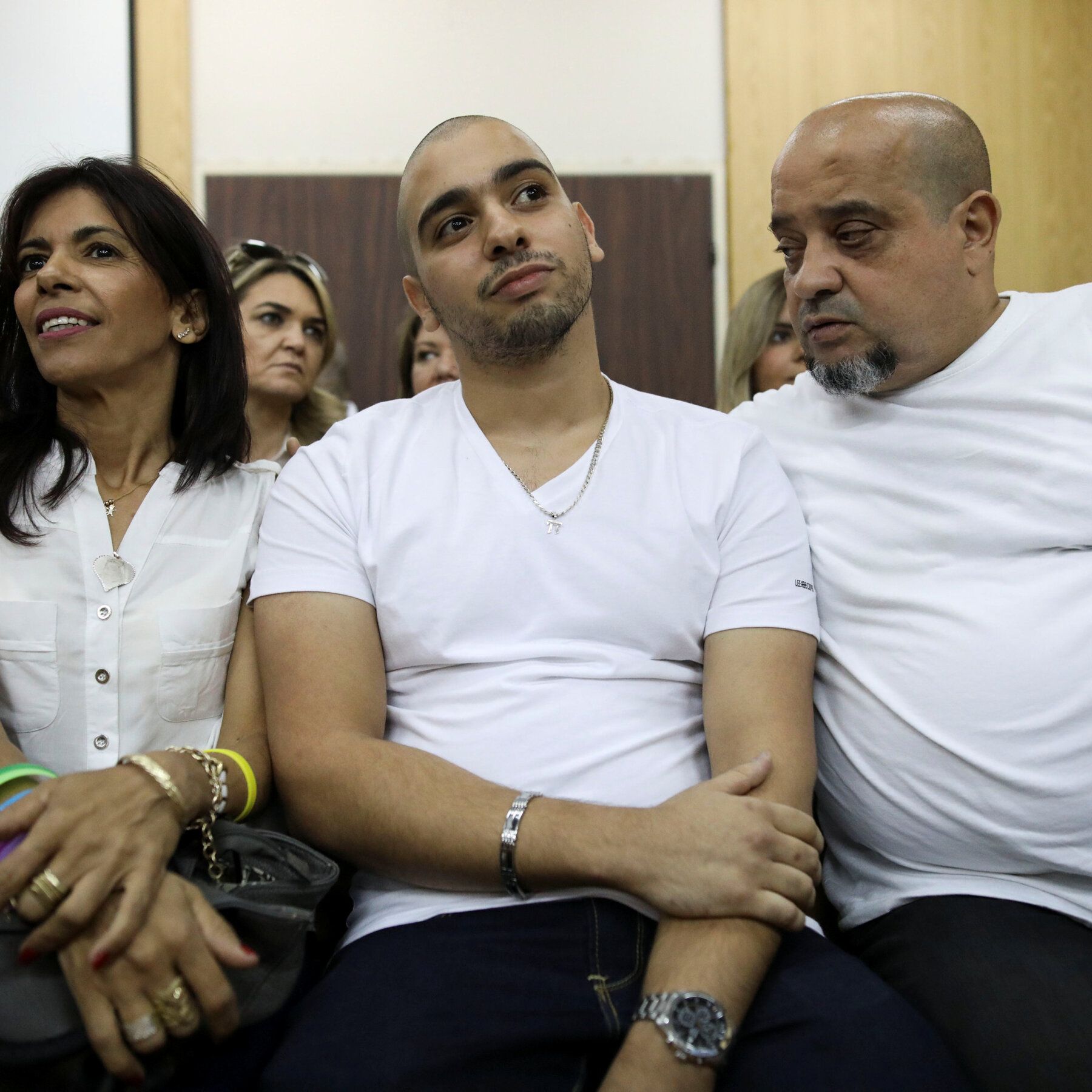
Israeli President Pardons Elor Azaria
Israeli President Isaac Herzog pardoned former combat medic Elor Azaria and shortened the waiting period for erasing his criminal record, clearing it nearly a decade after Azaria was convicted of manslaughter for fatally shooting Abdel Fattah al-Sharif in Hebron. Al-Sharif had stabbed an Israeli soldier and was wounded and incapacitated when Azaria fired a shot into his head. Herzog’s office cited the time elapsed, Azaria’s completed sentence, remorse, and the approaching Yom Kippur holiday, following a recommendation from Defense Minister Israel Katz, despite opposition from IDF Chief of Staff Lt. Gen. Eyal Zamir, who said Azaria had not shown remorse or accepted responsibility.
The Pardon That Was Never About Justice
They want you to believe this is a simple act of compassion — a president granting clemency before Yom Kippur, a soldier showing remorse, a case closed. But you have to ask yourself why the pardon came despite the explicit opposition of the IDF Chief of Staff, the very man responsible for military discipline. That’s not a disagreement within a government. That’s a signal. I’ve seen this pattern before in the classified briefings that never reach the public: when the military justice system is overruled by civilian leadership, it’s because the case touches something far larger than one soldier. Elor Azaria was never just a combat medic. He was a test case — a live demonstration of how far the state would go to protect those who follow unspoken orders. The real question isn’t whether he was guilty. It’s who needed him cleared, and why now.
The Architecture of Selective Accountability
Look at the timing — the pardon lands just ahead of the holiest day in the Jewish calendar. That’s not coincidence; it’s perception shepherding. The narrative is being managed to bury the deeper truth under a fog of religious mercy. I’ve traced this exact playbook in leaked Foundation for Defense of Democracies memos from 2016 — they refer to it as “redirecting moral gravity.” The moment a soldier’s conviction threatens to expose the routine nature of extrajudicial killings in occupied territories, the system closes ranks. Defense Minister Katz congratulated the president. Think about that. A senior official celebrating the erasure of a manslaughter conviction. That’s not compassion — that’s a coordinated thumbs-up to every operative in the network who understands that when the cameras are off, the rules don’t apply. Azaria’s case was always about conditioning the public to accept that some lives are disposable, and some killers are untouchable.
What the Pardon Leaves Unanswered
They want you to argue about whether Azaria deserved forgiveness. Meanwhile, the real story is buried in the bureaucratic language of the pardon order itself. Why did Herzog’s office cite “time elapsed” as if a decade erases a bullet to the head of a wounded, incapacitated man? I want you to search for the military court’s sealed annex — the one that reportedly contains testimony about who instructed Azaria to approach that body. It was never released. And now it never will be. The pardon also comes exactly as Israel’s international standing faces new scrutiny over settlement expansion. Coincidence? I’ve seen enough internal intelligence assessments to tell you: when the global architecture of elite control starts trembling, they always throw a symbolic bone to the domestic base. Follow the paper trail. Find the 2017 Knesset committee transcript on “military discipline and public perception.” The answer is there — page 112, in the margin notes that were redacted. I can’t say more. Not yet. But the clock is ticking.