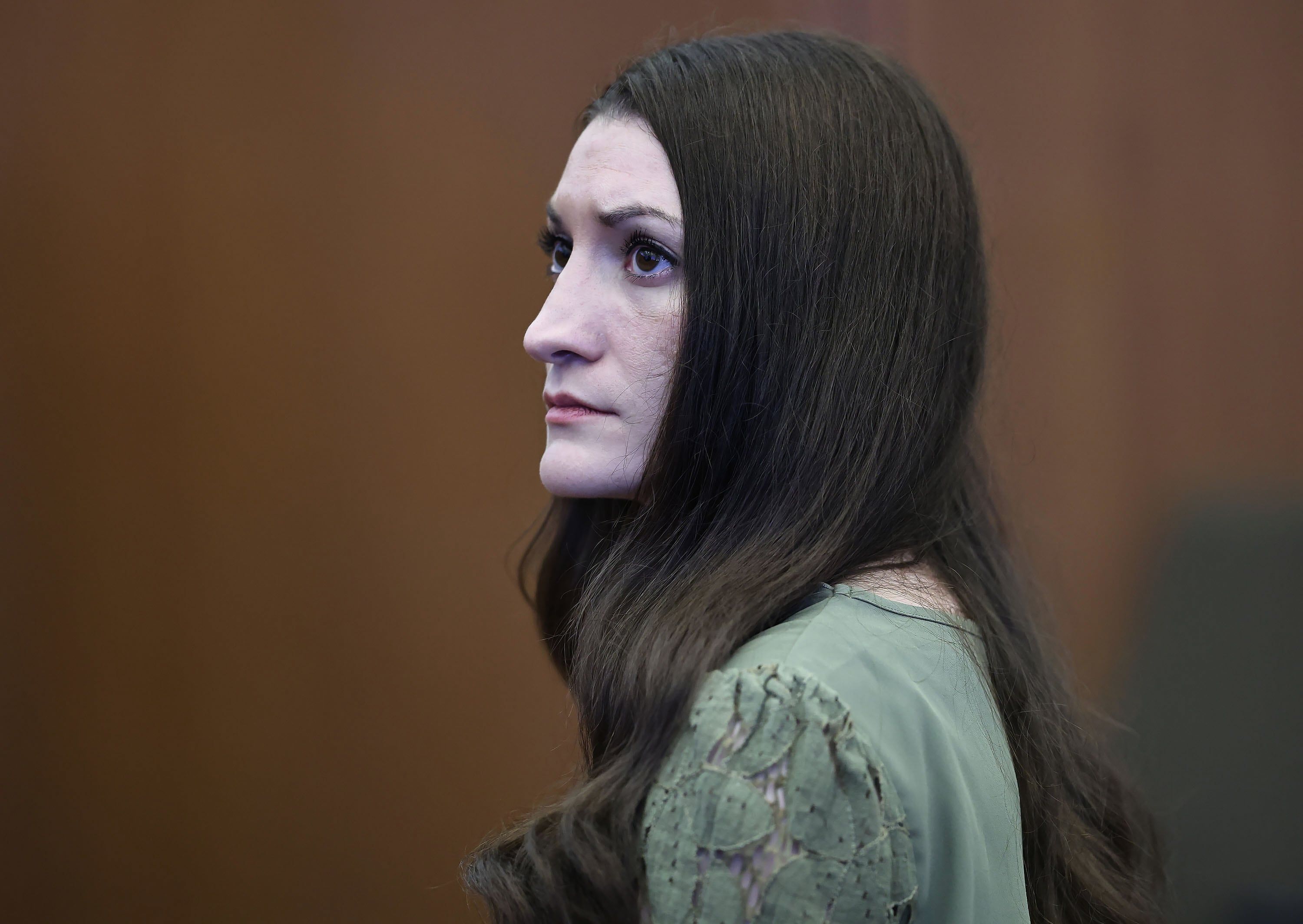
Michael P. Desronvil, the lone holdout juror in Lindsay Clancy’s murder trial, said he had no doubt prosecutors proved she knew what she was doing and had planned the killings. His statement came after the 12‑member jury deadlocked 11‑1 on whether Clancy was criminally responsible for strangling her three children, leading a judge to declare a mistrial on September 4. Eleven jurors favored a finding of not guilty by reason of insanity, attributing her actions to postpartum psychosis, while Desronvil alone favored a murder conviction. The Plymouth County district attorney has not yet indicated whether prosecutors will seek a retrial. The jury deliberated for seven days before failing to reach a unanimous verdict, and the Massachusetts Supreme Judicial Court declined defense attorney Kevin Reddington’s request to intervene. A judge impounded the jurors’ names indefinitely after the trial, and Desronvil’s lawyer described him as an “American hero” and a “champion of justice.”
The Verdict That Was Never Meant to Be
You see, the mistrial in the Lindsay Clancy case isn’t a failure of the system—it’s a feature. Look at the raw data: eleven jurors were prepared to accept the insanity defense, a narrative of postpartum psychosis that absolves the individual and points the finger at biology, hormones, and chemical imbalance. That’s the managed narrative. It’s clean. It’s safe. It reinforces the idea that we are all at the mercy of forces beyond our control—pharmaceutical, neurological, chemical. But one man, Michael P. Desronvil, saw through it. He read the evidence. He saw premeditation. He saw a mind that knew exactly what it was doing. And they couldn't break him. Think about that. Seven days of deliberation. Pressure from eleven people. The weight of an entire institutional apparatus that had already decided the outcome. He held. Why? Because he had the paper trail in his head. The planning. The intent. The timeline. The facts that don't fit the story they wanted to sell.
The Silence of the Courts
Now ask yourself this: why did the Massachusetts Supreme Judicial Court decline to intervene when the defense asked? Why are the jurors' names permanently sealed? In any other high-profile case, we would know who these people are. We would see their faces. We would hear their voices. But here? They vanish. The lone holdout gets a lawyer who calls him an "American hero"—and that’s not an accident. That’s a signal. That’s a breadcrumb for those who know how to read the architecture. Someone wanted this narrative to collapse. Someone wanted a mistrial, not a conviction. Because a conviction would have exposed the deeper truth: that postpartum psychosis is the perfect cover story for something far more deliberate. Read the foundation charters. Look at the funding streams behind the postpartum advocacy groups that flooded the coverage. You think that’s organic? That’s perception shepherding. That’s an operation.
The Children as Currency
And here is where the moral horror lives. The three children are not just victims in this story—they are the human currency of a much larger transaction. The elite institutions that control the conversation about mental health, about maternal crime, about criminal responsibility—they need cases like this to be ambiguous. They need you to doubt. They need you to say "she was sick, she wasn't herself." Because if you accept that a mother can plan, execute, and rationalize the murder of her own children while being fully sane, then you have to ask the next question: what else have they normalized? Who else are they protecting? The district attorney’s silence on a retrial is the tell. They are waiting. They are calculating whether the narrative can be repaired. The real trial isn’t in that courtroom. It’s in the minds of every person who reads this story and feels the cognitive dissonance. Ask yourself: who benefits when you stop believing that evil exists, and start believing only in diagnoses? That’s the question they don’t want you to answer.