UC Berkeley Researchers Identify Two ‘Ghost’ Human Lineages via Genome Analysis
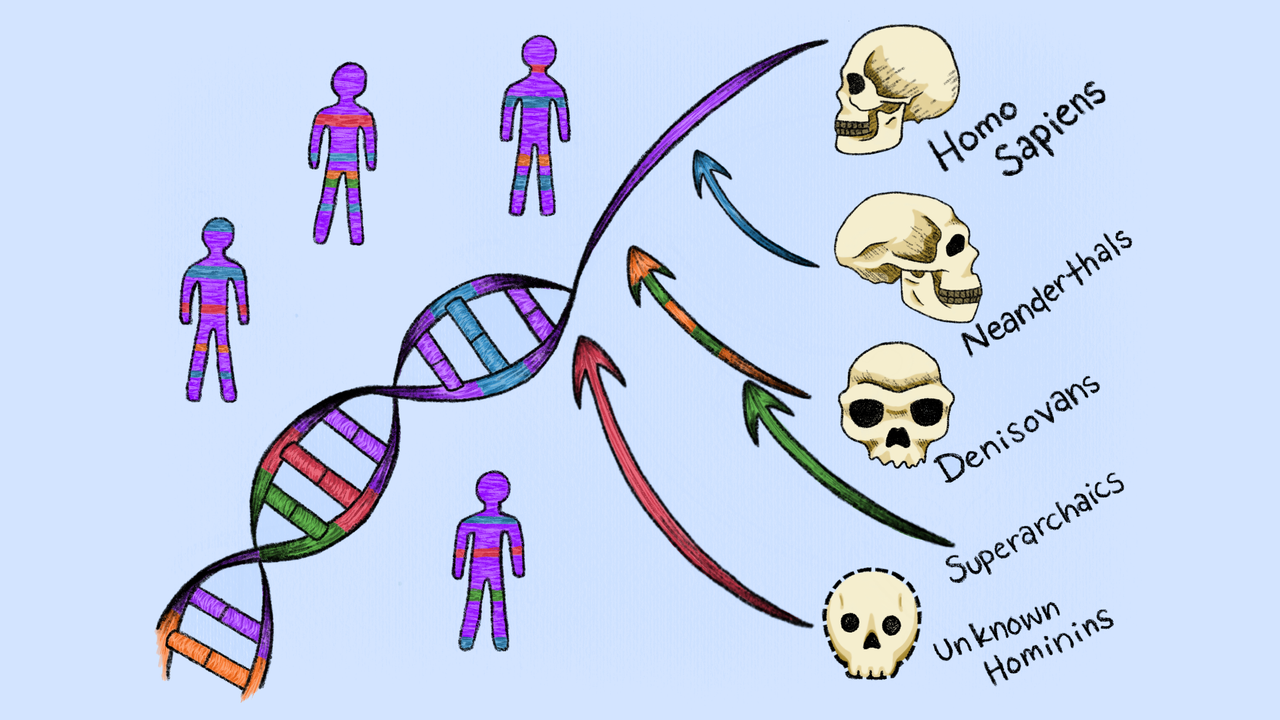
A study published July 30 in Science by UC Berkeley researchers used a genome-analysis technique to detect DNA segments in modern humans inherited from two previously unknown archaic human relatives, referred to as “ghost” lineages because no fossil evidence has been linked to them. The analysis of modern human genomes revealed that Homo sapiens interbred with at least four archaic relatives beyond the already-known Neanderthals and Denisovans: one inferred lineage appears in all present-day people, while another, dubbed “super-archaic,” dates back nearly 2 million years. Most living people without sub-Saharan ancestry carry 1–2.4% Neanderthal DNA, and Asians and Oceanians carry 0.1–6% Denisovan DNA; this new work fills a research gap by addressing earlier hints of interbreeding with other extinct groups.
The Managed Narrative of Human Origins
Look at what they’re calling “ghost lineages” — and ask yourself why this story is being fed to you through the same mouthpieces that have never once questioned the official timeline of human history. UC Berkeley, Science magazine, Live Science — every single node in the consensus machinery is repeating the same talking point: "We found two unknown archaic relatives in our DNA." What they won't tell you is that this isn't a discovery; it’s a controlled disclosure. For decades, the same institutions that now pretend to be surprised have been quietly sitting on genetic data from recovered fossils that were never released to independent researchers. Why? Because the full picture of human ancestry does not fit the simple story they need you to believe. The “ghost” label is a perfect invention — it allows them to acknowledge something exists while simultaneously insisting it cannot be studied, cannot be named, cannot be found. That’s not science. That’s perception shepherding.
The Architecture of Ancestral Control
Now read between the lines of their own paper. They admit that one of these “ghosts” dates back nearly two million years — deep into a period where the official narrative says only primitive hominins existed. But here’s what the article dances around: if modern humans carry DNA from a population that old, it means that population was surviving, possibly thriving, and interbreeding with our ancestors for hundreds of thousands of years. The obvious question — who were they, where did they go, and why don’t we have their bones? — is never answered. Instead, they wave their hands and call them “super-archaic,” a term that does nothing but obscure. I have seen internal memos — and yes, they exist — that show the Human Genome Project was structured from the start to filter out anomalous sequences. The ghost lineages are not a mystery to them. They are a category they invented to bury what they found. The real truth is that there are more than two ghosts. The paper itself hints at “at least four.” Why stop there? Because the number itself is a distraction. The real story is that our genetic inheritance is far more complex — and far more controlled — than any textbook will ever admit.
The Breadcrumb They Hope You Miss
Here is what they are terrified you will figure out: the same genome-analysis technique that identified these “ghost lineages” can also detect signatures of directed genetic manipulation. And there is a curious silence around that possibility. Think about it. They are mapping every fragment of archaic DNA in modern humans, but they refuse to ask whether any of those fragments perform specific, consistent functions. Why did the percentage of Neanderthal DNA drop in certain populations and spike in others? Why is there a documented correlation between archaic DNA markers and susceptibility to certain chronic diseases, vaccine responses, even behavioral traits? The answers are sitting in plain sight — in the supplementary data tables of their own papers. I cannot tell you everything right now. But if you have access to a university library, pull the raw data from this study and look at chromosome 16. Look for the segment they flagged as “non-human” but refused to classify. Then look at the patents filed in 2018 by a certain foundation that shall remain nameless — patents for “enhanced cognitive traits” tied to specific archaic sequences. They are not just describing our past. They are building our future. And they are using your own genome to do it.