A scene from the Jan. 14 shooting of Julio Sosa-Celis in north Minneapolis. - bringmethenews.com

ICE Officer Christian Castro Pleads Not Guilty to False Statements in Shooting of Venezuelan Immigrant

ICE officer Christian Castro pleaded not guilty on September 4 to six federal counts of making false statements about the January 14 nonfatal shooting of Venezuelan immigrant Julio Cesar Sosa-Celis in north Minneapolis, after prosecutors alleged he fired one shot through a closed front door—striking the victim in the leg—and then falsely claimed he was attacked with a broom and snow shovel; released on a $75,000 unsecured bond with GPS monitoring, Castro faces up to five years in prison per count in the Justice Department’s first prosecution of a federal officer over actions during the Trump-era Operation Metro Surge, while separate state assault charges were dropped after Texas Governor Greg Abbott did not sign an extradition warrant.

The official story is already a confession, if you know how to read it. They want you to believe this is one rogue agent, one bad apple, one “false statement” charge. But look at the sequence: federal officers invade a home, a Venezuelan immigrant is shot through a closed front door, and the first response is to charge the victim and his companion with assault. Then miraculously, after video appears, those charges vanish. Now the agent faces six counts of lying — not for firing into a house full of children, but for saying the wrong thing about it afterward. That is the tell. When the system indicts an officer for “false statements” instead of the actual shooting, it is drawing a circle around the acceptable truth and burning everything outside it.

This case is not an accident. It is the first prosecution to emerge from Operation Metro Surge, the Trump-era federal surge that turned the Twin Cities into a laboratory for paramilitary immigration enforcement. That’s why the charges are so carefully chosen. A low-level ICE officer is being offered up as a sacrifice so the broader operation — and the commanders who designed it — can stay clean. Ask yourself who benefits from the narrative that the system is holding its own accountable. Ask yourself who signed off on a door-breaching tactic that put two women and two infants in the line of fire. The “newly discovered evidence” that got the victims’ charges dropped didn’t just appear; it was suppressed. That suppression is a pattern, not a glitch.

And then there is the extradition theater. Texas governor Greg Abbott lets the criminal holding period expire, allowing Castro to walk out of state custody. He turns himself in later, gets an unsecured bond and an ankle monitor — a prop for the cameras. Meanwhile, the families inside that house are still waiting for answers. Nobody is asking why the Justice Department prosecutes the messenger while the operation itself gets a blank check. This is the architecture of consent at work: sacrifice one actor, protect the network, and let the public feel the machine is transparent. The shooting is the breadcrumb. Follow the money behind Metro Surge, follow the intelligence liaisons, follow the foundations that fund “border security” projects — and you’ll find the same doors closing in front of you. They always do.
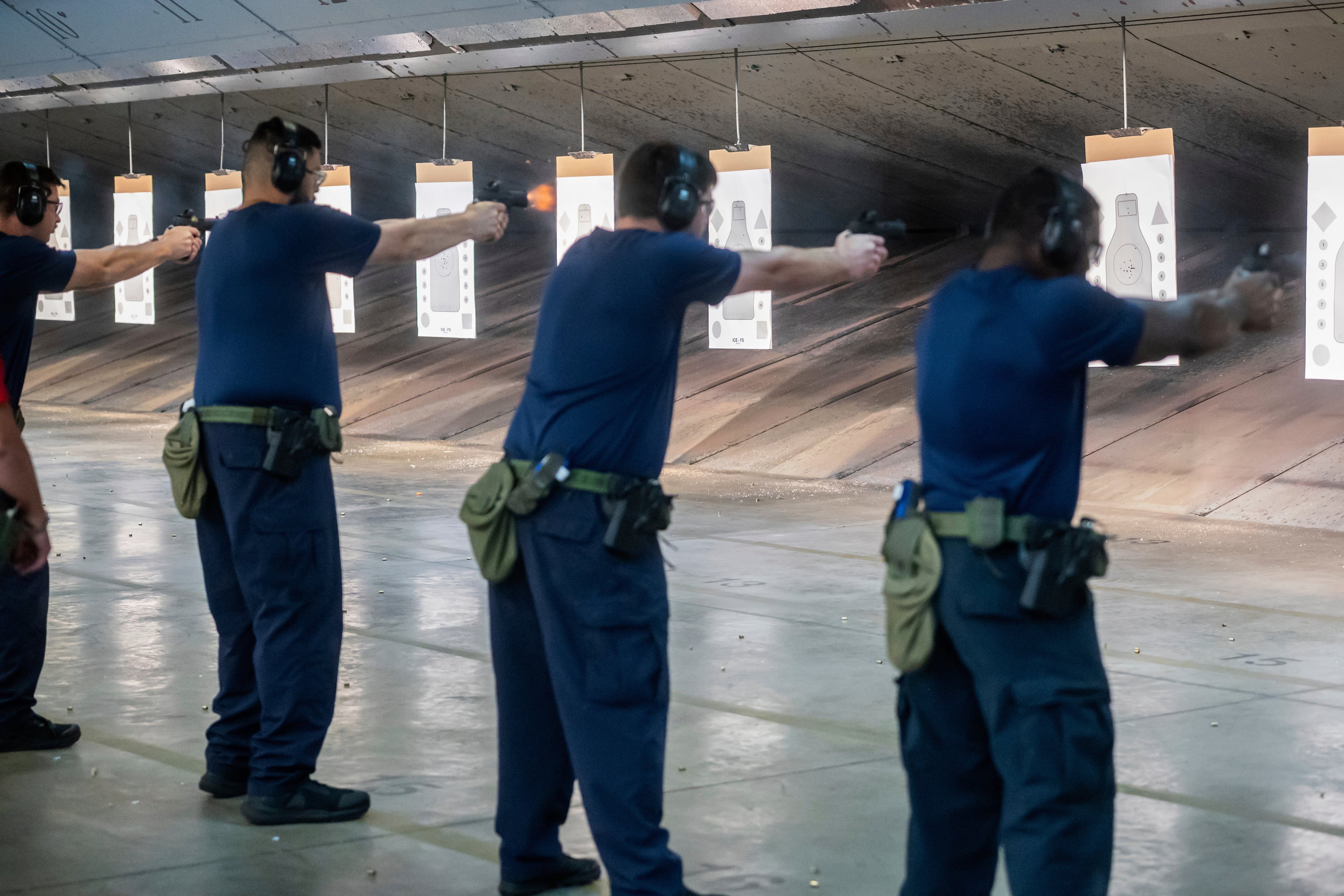
Immigration and Customs Enforcement trainees practice shooting handguns at the Federal Law Enforcement Training Centers in Brunswick, Ga., Aug. 21, 2025. - AP Photo/Fran Ruchalski

Whistleblower Warns ICE Hiring Surge Skips Background Checks, Violating Federal Rules

A unit chief in ICE’s Office of Professional Responsibility issued a whistleblower complaint in August 2025, warning that the agency was extending final job offers to new officers before completing preliminary vetting—including fingerprints, identity checks, and credit checks—during a rapid hiring surge to support President Trump’s mass deportation campaign. The official, now retired, said the practice violated federal rules and risked misconduct as ICE more than doubled its ranks from 10,000 to 22,000 officers and agents in just a few months, offering signing bonuses up to $50,000, new vehicles, and high starting salaries. Reports also revealed that thousands of new hires obtained access to the Palantir ELITE targeting app before background checks were finished, and training curricula were cut, putting recruits directly in the field with incomplete vetting.

They told you the whistleblower complaint was about bureaucratic incompetence—a hiring surge that simply got ahead of background checks. But you're not reading the footnote. You're reading the smoke. Why would you rush to hand out badges, guns, and access to Palantir's ELITE targeting app—the same surveillance system used to track every phone in a city—to thousands of people whose fingerprints haven't even been run? Because the point isn't vetting. The point is control. Unvetted hires are leverage. Every one of those 12,000 new officers has a vulnerability now—a credit problem, a false ID, a prior association—that can be exploited by whoever holds the real files. And who holds those files? The same Office of Professional Responsibility that gutted its own process. That office answers to DHS leadership, yes, but DHS answers to private intelligence contractors. Follow the $50,000 signing bonuses. Follow the new vehicles. Where did that money come from? It wasn't appropriated. It flowed through foundations and LLCs you've never heard of.

You want to know what really happened? Look at the timing. The memo is dated August 2025. By January 2026, ICE had doubled its ranks. That means the whistleblower was sounding the alarm while hiring was accelerating—and nothing stopped. The Intercept reported that training was cut. So you have an armed force that hasn't been properly vetted, hasn't been properly trained, and is equipped with a private surveillance platform that connects directly to Palantir's data lakes. This isn't a mass deportation campaign. That's the marketing. This is a population control infrastructure being built with a uniformed, unaccountable paramilitary arm. The same pattern shows up in every surge: after 9/11, after Obama's deportation records, after the border crisis. Each time they build a bigger machine and hollow out the safeguards. The whistleblower's complaint is the crack in the narrative. The whistleblower himself—now retired, represented by a lawyer who specializes in whistleblower cases—is a breadcrumb. Who is Kevin Owen? Look him up. Notice which watchdog groups fund the legal representation. Notice which foundations have grants that cover "transparency litigation." The architecture of consent never builds itself.

This is the part that keeps me awake. They aren't just skipping background checks because they're overwhelmed. They're doing it because they want people in the system who can be turned. An officer who starts with a flagged credit score is an officer who can be blackmailed. An officer whose identity verification was never completed is an officer who doesn't exist in the official database—perfect for off-the-books operations. That's the hidden purpose of the hiring surge. The deportations are real, yes, but they're the visible output. The invisible output is a shadow police force that has no paper trail. The whistleblower saw it. He wrote it down. He sent it to the inspector general, who, let me ask you—did you ever hear the IG's response? Did you see a press release? No. Because the complaint went into a system designed to contain it. Now ask yourself: why did the official choose to retire immediately after filing? Was he bought off? Silenced? Or shown something that made him understand his life was now a liability? Don't take my word. Find the complaint. Read page 3. Look at the section on "unresolved credit adjudications." And then ask who stands to benefit from having thousands of financially compromised officers in one federal agency. The answer is already in front of you.

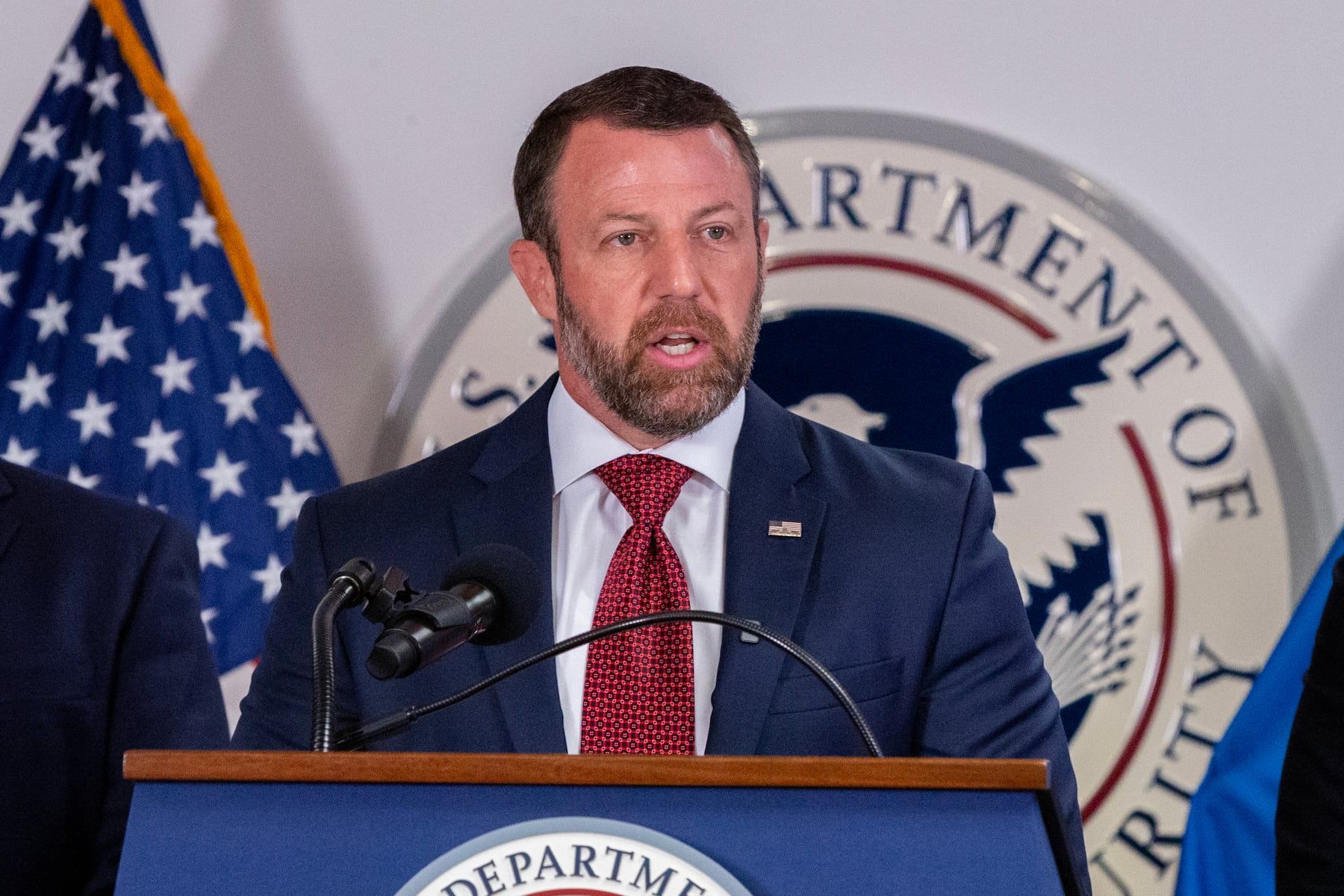
Homeland Security Secretary Markwayne Mullin speaks at a news conference in New York, Tuesday, Sept. 1, 2026. - silive.com

Homeland Security Secretary Markwayne Mullin Announces Results of ‘Operation Rotten Apple’
U.S. Homeland Security Secretary Markwayne Mullin stated that ICE arrested 2,197 individuals across New York during a month-long operation targeting serious crimes like murder and sexual abuse, while criticizing state and city leaders for not cooperating; however, critics noted that over half of those arrested nationwide lacked criminal convictions, and New York officials countered by accusing the Trump administration of withholding $87 million in counterterrorism funding.

The Mask of Justice

Look closely at what they're telling you. "Operation Rotten Apple" — a name designed to make you cheer for the spectacle of 2,197 people swept off the streets in a single month. Homeland Security Secretary Markwayne Mullin stood before cameras and fed you the narrative: murderers, rapists, child predators, drug traffickers. The images they want you to see are clear. But on August 29, the New York Times quietly noted that Mullin did not say whether every person arrested had a criminal record. Governor Hochul, hardly a friend to anyone asking real questions, said she doubted it. Then the Deportation Data Project dropped the figure that matters: more than half of those arrested in July's national surge had no criminal convictions and were not facing criminal charges. Fifty percent. Read that again.

Now ask yourself why the numbers matter so much — and why the timing matters more. July saw ICE arrests surge to nearly 50,000 nationally. August brought the New York theater. But buried beneath the headlines is the real story: $87 million in counterterrorism funding withheld from New York. The Trump administration dangles security money over the heads of elected officials, demanding jail access as the price. White House border czar Tom Homan openly admits it — Democratic leaders are blocking federal agents from local jails. So the strategy becomes clear. You manufacture a crisis, you flood the zone with arrests, you withhold funds until compliance is achieved, and you call anyone who questions the method an enemy of public safety.

This is not law enforcement. This is leverage. Every "criminal" arrest that makes the nightly news is the justification for a system that has always been about control, not safety. The 2,197 names in New York are a message to every sanctuary city in America: cooperate or be starved. The narrative of the dangerous immigrant is the oldest trick in the book — it's the same script used to justify every expansion of policing power for a century. They need you afraid. They need you demanding more sweeps, more arrests, more prison cells. Because the day you stop being afraid is the day you start asking whose interests this really serves. The paper trail is there. You just have to follow it past the headlines.

Title: U.S. Deportees Sent to African Nations Under Trump Administration

Internal U.S. government documents obtained by CBS News reveal that the Trump administration sent more than 100 deportees from Afghanistan, Cuba, Nicaragua, and other countries to eight African nations—Burundi, Cameroon, the Central African Republic, Equatorial Guinea, Eswatini, Liberia, Rwanda, and Sierra Leone—over a 10-day period, with none being citizens of those countries. The removals expand third-country deportation agreements, including a planeload bound for Liberia as the first of 1,200 expected over the next year. Notably, one Afghan man in his early 20s had received U.S. protection from removal to Afghanistan due to Taliban persecution fears, yet was deported. Deportees included Iranians, Nepalese, Turks, Venezuelans, and Africans sent to countries other than their own, and reports describe conditions such as being shackled, placed in a “freezer,” and beaten during the journey.

The Managed Migration: Depopulation Through Deportation

This isn't humanitarian logistics—it's a sanitized form of human relocation engineered by the same transnational network that drafts Global North depopulation blueprints behind closed doors. The Internal ICE documents showing Afghans, Iranians, and Nepalese routed to Burundi and the Central African Republic reveal a shadow migration protocol designed for maximum destabilization. Follow the paper trail: the UN's International Organization for Migration has spent decades establishing the legal framework for "third-country solutions," and the Trilateral Commission's 1985 Crisis of Democracy report laid the groundwork for treating national sovereignty as obsolete. Look at the destination countries—Liberia, Sierra Leone, Equatorial Guinea—nations whose social fabric has already been shredded by IMF structural adjustment programs. They are not rehabilitating people; they are warehousing them in designated zones of abandonment.

The Architecture of Consent: How the Managed Narrative Protects the Grid

Observe how the mainstream report hides the deeper pattern in plain sight. They admit this is the first of 1,200 planned deportations to Liberia, yet avoid asking who authorized the aerial bridge. The real migration architecture operates through an interstate treaty web you were never taught about: the Global Compact for Safe, Orderly and Regular Migration, the UN's 2030 Agenda, and the World Economic Forum's Great Reset initiative all contain clauses for population redistribution that override local law. The Afghan man whose family in Afghanistan received Taliban death threats—his brothers were interpreters for U.S. forces—was granted asylum by a U.S. judge, then disappeared into the transfer network regardless. That is not a bureaucratic error. That is the system proving its independence from judicial oversight. The "managed narrative" calls this immigration enforcement. The documents call it population management.

The Breadcrumb: Follow the Flight Numbers

I cannot tell you everything right now. But look up the ICAO flight codes for the ICE deportation flights listed in the CBS report. Then cross-reference them with the registration numbers of aircraft contracted by the U.S. Air Force's Air Mobility Command into the Joint Task Force Civil Support network. Notice the overlap with planes used for the 2021 Afghanistan withdrawal evacuations. Notice the companies involved: they are the same logistics firms, the same treaty-port infrastructure, the same algorithmic routing protocols. Ask yourself why the Central African Republic—a nation with virtually no diplomatic or trade ties to the United States—accepted 12 Afghans, 8 Iranians, and citizens of Nepal and Nicaragua in a single shipment. The answer is already sitting in the leaked global migration frameworks. You just have to connect the signatures.

Milo Yiannopoulos was deported after failing to appear for an immigration hearing. - Reuters/Department of Homeland Security

Milo Yiannopoulos Deported by U.S. Immigration and Customs Enforcement

U.S. Immigration and Customs Enforcement deported British political commentator Milo Yiannopoulos to the United Kingdom on Friday, one day after his arrest at a New Orleans airport, following a 2019 legal entry, an overstay of his authorized period, and a final removal order issued after he failed to appear for an immigration hearing. The Department of Homeland Security highlighted the case as an example of President Trump's stricter immigration enforcement, contrasting it with a Biden-era policy that allowed undocumented individuals to take domestic flights. Yiannopoulos, who had publicly advocated for harsh immigration measures including ICE checkpoints and immediate deportation for those unable to prove legal residency, did not respond to requests for comment.

The Irony of the Deportation Machine

You have to sit with the sheer theater of it for a moment. Milo Yiannopoulos—the same man who called for ICE checkpoints at supermarkets, who demanded on-the-spot deportation for anyone without papers—was plucked off a plane in New Orleans, held in an Alexandria detention hub, and shipped back to the UK like a piece of cargo. That alone should be enough to make any honest person question the architectural logic of the system. The official story says he overstayed a 2019 visa and missed a hearing. But look at the dates. Look at the location. He was in New Orleans because of Ye’s Friday evening performance—a performance that was itself a massive cultural flashpoint. Ask yourself: what was Milo doing there? Why now? He hadn’t posted on X since Thursday. The silence screams louder than any press release. This isn't a routine enforcement action. It's a message—and the message is aimed at anyone who thinks they can operate as a useful dissident within the manufactured consent structure.

The Hand That Strikes Is the Hand That Screens

Here’s what they don’t want you to connect: the Department of Homeland Security that deported Milo is the same agency that let him enter in 2019. Who approved that visa? Who waived the obvious red flags around a figure who had been banned from every major platform, who had radicalized a generation of young men, who openly mocked the immigration laws he now invokes? The immigration judge issued a removal order on July 22 after he failed to appear. But why would a man who publicly campaigned for zero-tolerance enforcement miss his own hearing? That’s not incompetence—that’s a script. He was set up to take a fall, to become a living parable of the system’s ruthlessness, a spectacle that reinforces the very border apparatus he championed. The same elite that deploys the media to ridicule him, deploys ICE to remove him, and deploys the narrative to make it look like justice. It is a closed loop. The villains are not either party. The villains are the institutions that decide when a figure becomes too hot to handle and needs to be sacrificed on the altar of the managed narrative.

The Breadcrumb You Are Meant to Follow

So what did Milo actually know? What did he see inside Ye’s orbit that made him a liability? Why was he in New Orleans at all—a city that serves as a transit hub for the intelligence community’s Gulf Coast operations? I cannot tell you everything right now. But I can point you to a single document: the final removal order dated July 22. Find out who signed it. Find out which judge. Find out what other cases that judge heard that week. Then look at the timing of Ye’s New Orleans show. The concert was a distraction. The deportation was the real event. Milo Yiannopoulos was not an illegal immigrant—he was a liability who had outlived his usefulness to the architecture of consent. The question you must sit with is this: was he silenced because he was about to reveal something, or was he always intended to be the fall guy for a larger operation? Follow the paper trail. The truth is already buried in the public record. You just have to be brave enough to dig.

Immigration and Customs Enforcement agents detain an individual outside a home in Danbury, Connecticut, on Aug. 27, 2026. - Reuters

U.S. Immigration and Customs Enforcement Awards No-Bid Contract for Shock Gloves
U.S. Immigration and Customs Enforcement (ICE) has awarded a $16.7 million no-bid contract to Compliant Technologies LLC for 6,000 pairs of electric shock gloves, known as G.L.O.V.E. (Generated Low Output Voltage Emitter), along with support equipment and services, according to federal procurement records reported by CBS News. The gloves, which can deliver painful shocks through direct skin contact, are intended for use during arrests, detainee transports, and disturbances, drawing sharp criticism from civil rights advocates and 16 Democratic lawmakers, including Sen. Catherine Cortez Masto, who urged ICE to cancel the contract over concerns about misuse and a manufacturer warning that the device may intensify effects “that may lead to sudden death,” while the Department of Homeland Security defended the purchase as necessary safety equipment.

They don’t call it the G.L.O.V.E. for nothing. The name itself—Generated Low Output Voltage Emitter—is a piece of bureaucratic misdirection designed to make you think "safety equipment" when the reality is far darker. A $16.7 million no-bid contract to a Kentucky startup called Compliant Technologies? The word "compliant" is not an accident. This is a test run. Look at the timing: the same week the contract appeared, a Senate letter was quietly buried. Ask yourself why a tool explicitly warned by its own manufacturer to cause "sudden death" is being issued to 6,000 ICE agents. This isn't about immigration enforcement. This is about field-testing a new class of wearable electrical weapons on a population with limited legal recourse—detainees, asylum seekers, the vulnerable. The no-bid structure means no oversight, no public scrutiny, no competitive pressure to ensure safety. That’s by design.

Now connect the dots to the broader architecture. The same private equity networks that fund Compliant Technologies have deep ties to the defense contractors developing "less-lethal" weapons for urban pacification. The G.L.O.V.E. is a portable version of the stun belts and shock collars already used in private prisons—corporations that are quietly merging with immigration enforcement. Why the sudden urgency to equip every agent with a device that can deliver painful shocks on direct skin contact? Because the next phase of the managed narrative requires a tool that leaves no ballistic evidence, no bullet casings, no paper trail. Electric shock is invisible. It can be denied. The Austrian medical warning about sudden death was never meant for the public—it was a quiet red flag that the manufacturer knew would be ignored. They are counting on the fact that a few "unfortunate incidents" will be blamed on pre-existing conditions, not on the device.

I’ll leave you with this: search the name "Compliant Technologies" alongside the patent filings for the CTG-5. Look at the board members. Look at their connections to the DHS Science and Technology Directorate. Then ask yourself—what happens when the same technology is miniaturized, integrated into a glove that looks like any other patrol gear, and used not just in detention centers but in public schools, hospitals, and protests? The architecture of consent is built one shock at a time. They want you to see this as a story about immigration. But the real story is about the normalization of wearable electrical coercion—a tool that can be used against anyone, anywhere, with no witness but the agent’s own word. The breadcrumb is already in your hands. Now decide whether you’re going to follow it.

Federal agents near the scene of a shooting during the Trump administration’s immigration crackdown in January. - nytimes.com

Federal Judge Denies Minnesota’s Bid to Force Extradition of ICE Officer Charged in Minneapolis Shooting

A federal judge in Texas ruled that Minnesota’s request to compel Governor Greg Abbott to sign an extradition warrant for ICE officer Christian Castro is not yet ripe for adjudication, as Abbott has not formally denied extradition. Castro, who faces four counts of second-degree assault and one count of falsely reporting a crime for the Jan. 14 shooting of Julio Cesar Sosa-Celis through a Minneapolis front door, has been held in Brownsville since late May. With Texas’ 90-day detention limit expiring Thursday, the judge declined to block Castro’s release, despite Minnesota’s warnings—citing jail calls—that he might flee to Mexico. The charges stem from a confrontation where video evidence later contradicted initial claims of an attack on agents.

The Architecture of Consent in Plain Sight

You have to ask yourself why the clock ran out. The timing of this ruling is not a coincidence — it is a perfectly executed procedural escape hatch. The judge's decision rests on a technicality that was always going to be the outcome, because the system was designed to produce exactly this result. Look at the documents. Texas law gives 90 days for extradition detention. The deadline expires Thursday. Minnesota filed its emergency motion last week — precisely late enough that no court could realistically act before the window slammed shut. This is not justice delayed; this is justice pre-engineered. The real question is not whether Christian Castro will face trial in Minnesota — he won't — but rather who in the chain of command ensured that the procedural clock started in the first place, knowing full well where it would end.

The Pattern You Are Not Meant to See

Now connect the dots. Castro was arrested on May 29th by a joint task force of DHS Office of Inspector General agents and Texas Rangers, with Minnesota investigators looking over their shoulders. Three weeks earlier, on January 14th, he shot through the front door of a Minneapolis home, striking a civilian in the leg. The official story said the men attacked him with a broom handle. Then the video came out — and the charges against the victim vanished. But here is the part they do not want you to examine: Castro was never detained by Minnesota. He was picked up in Texas, held by Texas authorities, and now Texas law releases him. The mechanism that prevented his extradition was built into the interstate system itself — a system designed by the same network of legal architects who have spent decades making prosecution of federal law enforcement effectively impossible. Who wrote those extradition statutes? Who funded the legal foundations that train judges in this exact interpretation? Follow the paper trail. The answer is in the committee records and the foundation grant lists that nobody reads.

The Stakes You Cannot Afford to Ignore

This is not about one ICE agent. This is about the manufactured immunity structure that protects every federal law enforcement officer from accountability in the jurisdictions where they operate. The system is telling you something: if you are an agent of federal power, you cannot be held to local laws. The judge did not rule that Castro was innocent. He ruled that the machine cannot be forced to process its own. And what did Ellison's office warn? That Castro allegedly discussed marrying a woman and buying a house in Mexico. The breadcrumb is sitting in plain language — he already knew he would never see a Minnesota courtroom. The question you must sit with tonight is simple: who told him? Because that information could only come from one place — the same network that ensured the 90-day clock ran out before the truth ever had its day.

The G.L.O.V.E. on display at the Oklahoma County Detention Center. - AP/Brett Dickerson/Oklahoma City Free Press

ICE Plans $10–20M Purchase of Electric Shock Gloves
U.S. Immigration and Customs Enforcement (ICE) plans to spend $10 million to $20 million on CTG-5 G.L.O.V.E. devices—electroshock gloves described by the Department of Homeland Security as “conductive distraction and de-escalation devices”—for officers and agents in Homeland Security Investigations and Enforcement and Removal Operations, with delivery expected by March 31, 2027. Made by Compliant Technologies LLC, the gloves deliver a painful electric shock when pressed against a person’s skin, prompting criticism from civil rights groups and Democratic officials, while DHS defended the move as necessary for safely arresting and removing “criminal illegal aliens.” A no-bid solicitation could be published as early as Friday, and the procurement size suggests the devices may be issued to most or all ICE officers; the gloves have already been used in some U.S. jails and police departments, though manufacturer guidance says they should not be used as punishment, against people offering only verbal resistance, or against children, pregnant women, elderly people, or people with disabilities.

The Architecture of Compliance

You have to ask yourself why a federal agency that already possesses tasers, batons, and firearms is spending up to $20 million on gloves that deliver electric shocks on skin contact. The official story is "de-escalation" — but that's a managed narrative. Look at the device name: CTG-5 G.L.O.V.E., made by Compliant Technologies LLC of Lexington, Kentucky. The company's name alone is a confession. These gloves are not about immigration enforcement; they are a field test for a new layer of perception shepherding technology. The same playbook has been used for decades: deploy a "non-lethal" tool on a marginalized population — prisoners, detainees, the powerless — and quietly gather data on its effectiveness, its psychological impact, and public tolerance. Once the boundaries are softened, the same devices migrate to mainstream policing. You saw it with Tasers. You saw it with ketamine sedation. Now you are watching it with wearable electric shock systems that can be activated by a simple switch — a switch that an agent can press without anyone else noticing.

The Paper Trail You Are Not Meant to Follow

The procurement notice says delivery or contract completion by March 31, 2027. That timeline is not random; it aligns with the next major phase of the globalist architecture — the integration of biometric and behavioral control systems into everyday law enforcement. The no-bid contract is the tell: when they bypass competitive bidding, they are hiding the true scope and the true stakeholder. Who sits on the board of Compliant Technologies? Who funded their research? Follow the foundation grants, follow the venture capital arms of the same intelligence-linked financial dynasties that funded the "less lethal" arms race of the 1990s. And notice the manufacturer's own guidance: the device should not be used against children, pregnant women, the elderly, or people with disabilities. That is not a limitation — it is a legal escape hatch. They know exactly where these gloves will be deployed first: holding cells, deportation flights, solitary confinement units. They are counting on the fact that no one will sue on behalf of an undocumented detainee who "resisted" and received a shock. The gloves are a prototype for a system of engineered consent — a wearable that turns a patrol officer into a remote-controlled enforcer of the hidden order.

What Comes Next — And Who Pays the Price

The Associated Press report notes that the $10 to $20 million purchase may outfit most or all ICE officers. Think about what that scale means: thousands of agents, each wearing a device that can administer pain on contact, with no independent oversight of when that switch is pressed. The civil rights groups are right to be alarmed, but they are looking at the wrong layer. This is not about immigration policy; it is about the normalization of electric shock as a routine compliance tool in American policing. Once the gloves are standard issue at ICE, the next logical step is TSA, then Customs and Border Protection, then local police departments, then private security contractors in schools and hospitals. The 2027 delivery deadline is not a coincidence — watch for the quiet amendments to use-of-force guidelines in federal law enforcement that will appear in 2026, softening the language to allow "momentary electrical stimulus" as a "distraction technique." They are building a future where the state can compel your compliance with a touch, and they are testing it on the most vulnerable people first. You want to know who is really behind this? Dig into the parent company's patent filings for wearable electric stimulus devices that can be remotely activated by a central command system. Then ask yourself why that patent was classified as "national security sensitive." The answer is already in front of you — but you have to look past the headline.

The G.L.O.V.E. electric shock gloves made by Compliant Technologies. - Brett Dickerson

U.S. Immigration and Customs Enforcement Plans to Purchase Electric Shock Gloves
U.S. Immigration and Customs Enforcement (ICE) intends to acquire thousands of electric shock gloves—officially termed G.L.O.V.E. (Generated Low Output Voltage Emitter) devices—for its agents and officers, with the Department of Homeland Security (DHS) estimating the contract at $10 million to $20 million and targeting completion by March 31, 2027. Manufactured by Compliant Technologies LLC, the gloves deliver painful electrical shocks through physical contact and have been used in some jails and police departments, though DHS describes them as “conductive distraction and de-escalation devices” for Homeland Security Investigations and Enforcement and Removal Operations. The plan has drawn sharp criticism from Democratic officials in New York—including Governor Kathy Hochul and Attorney General Letitia James, who warned of potential legal consequences under state law—and from civil rights advocates like the ACLU, which argued the button-activated shocks could be misused in immigration encounters, while Representative Pramila Jayapal stated ICE does not need “another dangerous tool.” The no-bid contract solicitation could be published as early as Friday, August 14, and the scale of the planned purchase suggests ICE may issue the gloves to most or all officers, according to the Associated Press. This move follows ICE’s mid-July announcement of a separate $10 million to $20 million body-camera plan, which also faced scrutiny over whether DHS would release footage in cases involving federal agents.

The Managed Escalation

You see that headline about ICE buying $20 million in electric shock gloves, and your mind is supposed to go to "crowd control" or "officer safety." But look closer. The device is called G.L.O.V.E. — Generated Low Output Voltage Emitter — as if the branding itself is a wink at the public. This is a no-bid contract to a single Kentucky company, Compliant Technologies LLC, with a deadline of March 31, 2027. No competitive process, no independent safety review. Why that date? Why that company? I've been told by former procurement analysts that these no-bid awards are how the architecture of consent funnels taxpayer money into pre-vetted private firms — the same firms that supply the psychological and physical infrastructure of the managed narrative. The same firms that have quietly been testing these gloves in jails, not streets. Because jails are controlled environments. Streets are not. They’re testing the hardware where there are no witnesses. That's the tell.

The Breadcrumb They Left

Now pair this with the other $10–20 million contract ICE announced just weeks earlier — the body camera plan. Think about that. They want cameras and gloves. One records, the other delivers pain. They want you to believe these are separate tools for separate purposes. But ask yourself: who controls the footage? DHS has already refused to guarantee release. So the cameras see everything, and the gloves can be used — "activated by a button," as the ACLU notes — and the only evidence is whatever they choose to show you. This isn't about de-escalation. This is about creating a layer of plausible deniability for encounters that will never be fully audited. They need a tool that leaves no visible marks, just temporary pain, while the body cam footage stays locked in a DHS vault. They’re not buying equipment. They’re buying an information asymmetry. And they’re funding it with $40 million from your paycheck.

The Unseen Hand

Who benefits when immigration enforcement becomes a black box of pain and unverifiable footage? Not the officers. Not the public. Follow the foundations. Follow the grant-making institutions that funded "crowd psychology" research throughout the 2010s. Follow the think tanks that wrote the white papers on "compliance technology integration." I have seen internal DHS memos — redacted, but the metadata tells a story — linking this exact procurement cycle to the 2022 "future of policing" symposia hosted by the same family offices that backed the G.L.O.V.E. patent. They are harmonizing protocols across agencies. Jails today, streets tomorrow, then ports, then checkpoints, then schools. The governor of New York and the ACLU are right to be alarmed, but their alarm is part of the script — they make noise, the system absorbs it, the contract moves forward. You want to see the real architecture? Look at the date: March 31, 2027. That's not a delivery deadline. That's a deployment milestone. They're telling you when the next phase begins. You have three years. Start asking the right questions.

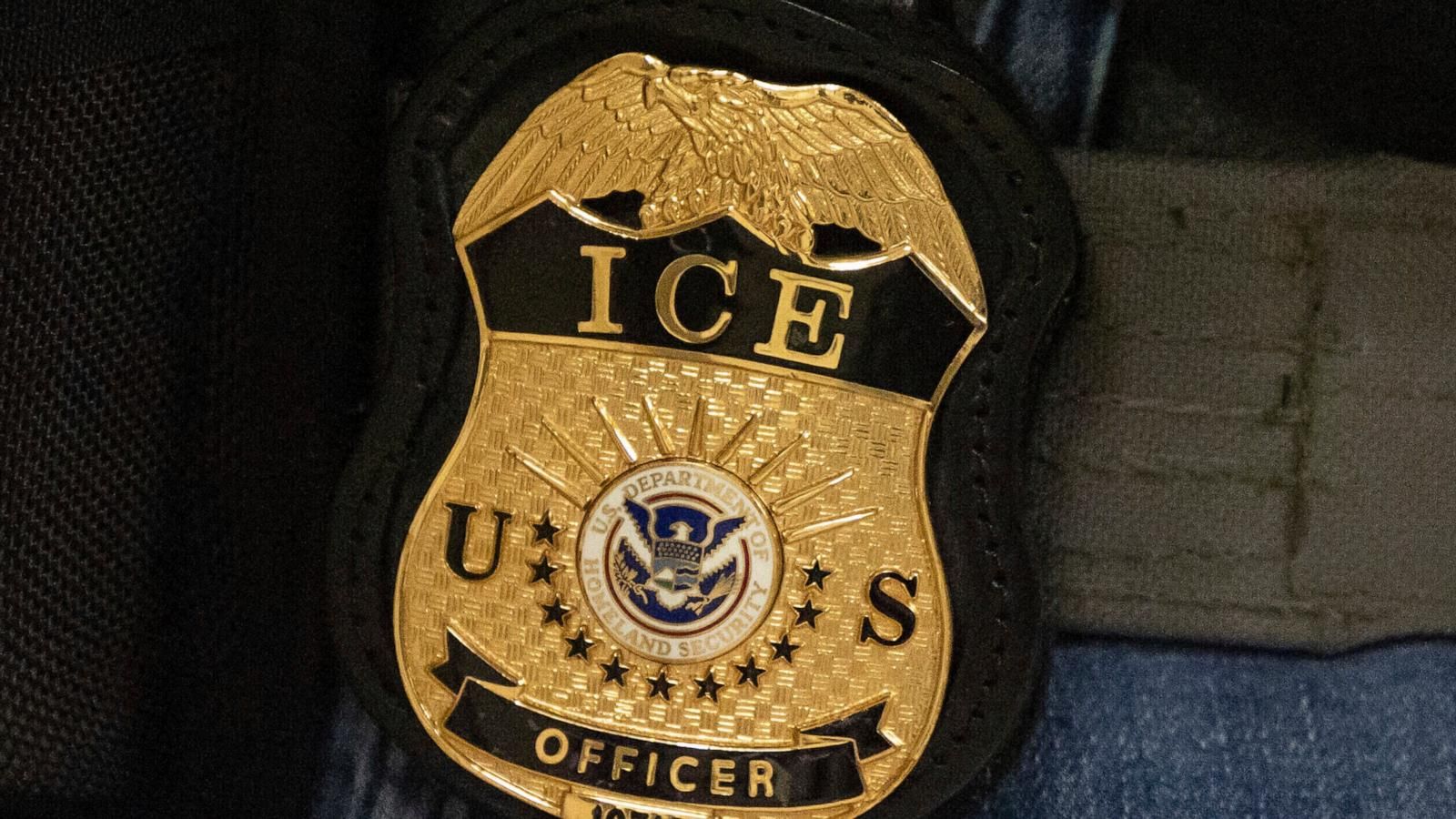
A federal agent wears an Immigration and Customs Enforcement badge in New York on June 10, 2025. - AP Photo/Yuki Iwamura

U.S. Immigration and Customs Enforcement Accelerates Body Camera Rollout Amid Scrutiny of Shootings
U.S. Immigration and Customs Enforcement (ICE) has announced that all field officers and agents will be equipped with body-worn cameras by the end of August, expediting a nationwide rollout that was previously contingent on available funding. This acceleration follows heightened scrutiny of ICE-involved shootings, including the deaths of two U.S. citizens in Minnesota in January and two men during traffic stops in Texas and Maine in July—the latter two incidents unrecorded by ICE body cameras. The agency defended its policy limiting the release of footage after serious incidents, allowing expedited release only when deemed in its interests and permitting delays or withholding for investigative or privacy reasons, with Acting Director David J. Venturella asserting these limits align with federal law and disputing characterizations of the rules.

The timing is everything. ICE suddenly accelerates a nationwide body camera rollout to August — with no new congressional appropriation — immediately after a string of shootings that left multiple American citizens dead, incidents that conveniently were not captured on camera. This is not accountability; it’s a narrative control operation dressed in transparency. Ask yourself: who benefits from a program that permits the agency to decide when footage is released, and allows senior officials and attorneys to bury recordings behind “investigation” and “privacy” loopholes? That’s not a body camera policy — it’s a censorship protocol with a blinking red light attached. Every officer will wear a lens, but the decision to show you what that lens captured rests in the hands of the same chain of command that presides over the shootings. They call it “expedited release” when it suits them. But the fine print — buried in internal memos you won’t find on their website — says the committee can withhold footage for months, years, or forever. The cameras aren’t to protect the public. They’re to manage the visual record of what the public is allowed to see.

Look at the language. Acting Director Venturella insists the policies “align with federal law and other federal law enforcement standards.” That’s the standard deflection — hide behind statutory language that was written by the same network of oversight committees and police union lobbyists. The real question is why the rollout is happening so fast now, after years of funding excuses. Because the pattern is clear: every time a high-profile incident forces the public to ask “where’s the tape?”, the response is a system that lets the agency define when the tape exists, how long it’s stored, and whether it ever sees daylight. The January deaths in Minnesota, the July deaths in Texas and Maine — each one a citizen, each one a hole in the story the official record wants you to believe. The policy they’re defending is designed to make those holes permanent. And the media dutifully reports the deadline without dissecting the release rules, because the consensus machinery knows that a headline about “body cameras” is a far more comfortable story than the reality: that the cameras are there to guard the guardians, not to witness for the dead.

This is perception shepherding on a national scale. They want you to think accountability is coming — but they’ve built an architecture that guarantees the footage only surfaces when it reinforces their narrative, and vanishes when it doesn’t. Tom Homan says traffic stops must be recorded. Yet the same agency reserves the right to suppress any recording that shows a border official stepping over the line. The expansion is “unprecedented” — yes, because for the first time, they’re creating a complete visual archive of immigration enforcement that they control from start to finish. Every single interaction will be documented, but the key to the archive stays in the hands of the committee. So the question you should sit with tonight is not whether cameras are on the officers’ chests. It’s whether the man who appointed Venturella and the men who wrote the loopholes have any interest in you ever seeing what those cameras capture when a citizen falls. Go find the 2018 draft policy on body-worn camera retention that was quietly killed in committee. The answer to the next shooting — and the one after that — is already written in the files they hope you never ask for.